
Unlocking Subtle Energies: Tensor Rings vs. Orgonite – A Comprehensive Showdown
Delving into the distinct worlds of Tensor Rings and Orgonite to understand their unique properties, applications, and how they compare in the realm of subtle energy.
In the fascinating world of subtle energy, various tools and devices have emerged, each claiming to interact with and manipulate these elusive forces for well-being and environmental harmony. Among the most popular are Tensor Rings and Orgonite. While both aim to positively influence our energetic environment, they operate on different principles, are constructed from different materials, and offer unique benefits. This exploration will provide a comprehensive comparison to illuminate their individual characteristics and potential synergies.
Key Insights: Tensor Rings vs. Orgonite
- Distinct Mechanisms: Tensor Rings utilize specific geometric proportions and materials (primarily copper) to create tensor fields and toroidal vortexes that organize and amplify subtle energies at precise frequencies. Orgonite, a composite of resin, metal, and crystals, is designed to attract, transmute, and radiate orgone energy, converting negative energies into positive ones.
- Origin and Design Philosophy: Tensor Ring technology, pioneered by Slim Spurling, draws from ancient cubit measurements and sacred geometry. Orgonite's conceptual basis comes from Wilhelm Reich's 20th-century research into orgone energy, focusing on material interaction.
- Complementary Applications & Synergy: While Tensor Rings offer frequency-specific effects beneficial for water structuring and targeted energy work, Orgonite provides broader environmental harmonization and EMF mitigation. They can be used synergistically, with Tensor Rings often embedded within Orgonite to enhance its energetic output.
Unveiling Tensor Rings
Tensor Rings are captivating devices known for their unique energetic properties, stemming from their specific construction and dimensions.
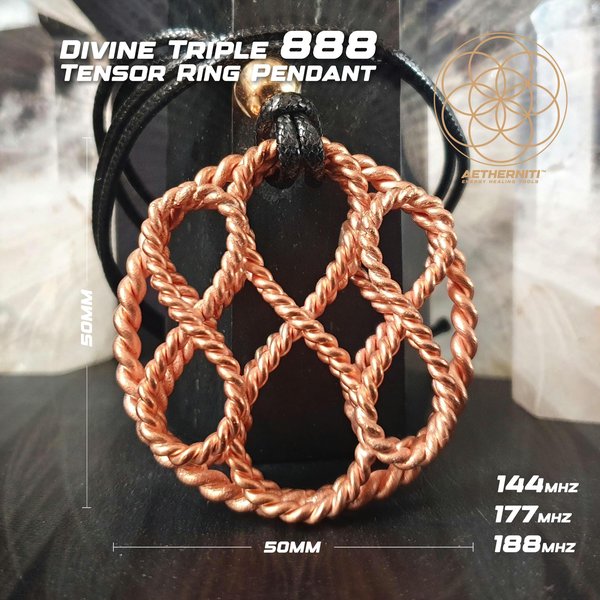
Divine Triple 888 Infinity Tensor Rings, exemplifying the precise craftsmanship.
Origins and Craftsmanship
The Legacy of Slim Spurling
Tensor Ring technology was significantly developed and popularized by researcher Slim Spurling, along with Bill Reid, in the 1990s. Their work was built upon the concept of "cubits" – specific units of length derived from ancient Egyptian and other sacred geometric systems. These rings were initially known as Light-Life™ Rings.
Material and Construction
Typically, Tensor Rings are crafted from copper wire, though silver or gold-plated versions also exist. The wire is precisely cut to a specific cubit length, then twisted, and its ends are brazed or welded to form a closed loop. The gauge of the wire, the direction of the twist, and the exact length are all crucial factors believed to determine the ring's energetic properties and resonant frequency. Common cubit lengths include:
- Sacred Cubit (144 MHz): Associated with physical aspects, grounding, and material world energies.
- Lost Cubit (177 MHz): Linked to emotional, mental, and ethereal realms, often used for spiritual applications.
- Empowerment Cubit (188 MHz): Said to work with spiritual decisiveness and manifesting intentions.
The Science of Tensor Fields
Tensor Fields and Toroidal Vortexes
When a wire is formed into a closed loop with these specific measurements, it is believed to create a "tensor field" or "tensor network" within the opening of the ring. This field is not magnetic or electric in the conventional sense but is described as a subtle energy phenomenon. It's often visualized as generating a toroidal vortex (like a smoke ring or a doughnut shape) of energy flowing through the ring. This toroidal flow is thought to organize and structure the space and energy passing through it.
Paramagnetic and Gravitational Effects
Proponents suggest that the tensor field can produce a measurable gravitational effect. Furthermore, Tensor Rings are believed to exhibit paramagnetic properties, which may influence the molecular structure of water. For instance, they are said to cause elements in water to enter a "high-spin state" (sometimes referred to as ORME - Orbitally Re-arranged Monoatomic Elements), potentially making water more bio-available and energetically potent.
Frequency Emission
Tensor Rings are reported to oscillate at specific high frequencies, often harmonics of the speed of light. For example, the Sacred Cubit ring is associated with 144 MHz. These frequencies are believed to interact with biological systems and environmental energies in beneficial ways.
Reported Benefits and Applications
Users and practitioners report a wide array of benefits from Tensor Rings, including:
- Water Quality Enhancement: Structuring and energizing water, making it "wetter" and potentially improving taste and hydration qualities.
- Energetic Balance and Healing: Stabilizing the bio-energetic fields of the body, promoting tranquility, and supporting healing processes.
- EMR Mitigation: Neutralizing or harmonizing harmful electromagnetic radiation (EMR) from electronic devices, though they don't typically alter EMR meter readings directly.
- Plant Growth and Vitality: Improving soil quality and enhancing plant growth and health.
- Pain Relief: Reducing pain and inflammation when placed on or near affected body parts.
- Enhanced Meditation and Spiritual Development: Facilitating deeper meditative states and spiritual connection.
- Food Preservation: Extending the freshness of fruits, vegetables, and other food items.
Exploring Orgonite
Orgonite is a composite material renowned for its ability to convert negative energy into positive, life-affirming energy, drawing inspiration from early 20th-century theories.
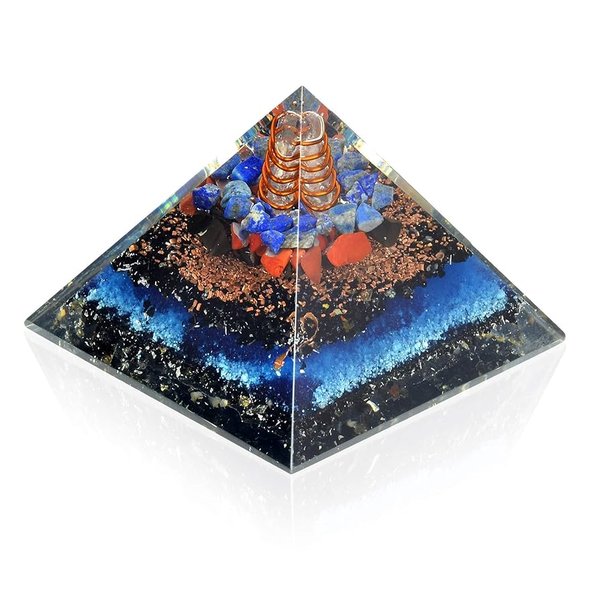
An Orgonite pyramid showcasing its typical composition, including Lapis Lazuli and Shungite for energy protection.
Conceptual Roots and Composition
Wilhelm Reich's Orgone Energy
The concept of Orgonite is rooted in the work of Dr. Wilhelm Reich, an Austrian psychoanalyst who, in the mid-20th century, theorized the existence of "orgone energy." Reich described orgone as a universal life force, a primordial cosmic energy present in all living organisms and the atmosphere. He believed that an imbalance or blockage of this energy could lead to physical and psychological ailments. Modern Orgonite devices are inspired by his orgone accumulators.
Materials and Construction
Orgonite is typically a handmade composite material consisting of three main components:
- Organic Material: Usually polyester, epoxy, or natural resin, which attracts and accumulates ambient orgone energy.
- Inorganic Material: Metal shavings (e.g., copper, aluminum, brass, steel) which attract and repel the energy, creating a scrubbing or cleansing action.
- Crystal(s): A quartz crystal (or other types of crystals) is almost always embedded within the matrix. The crystal is believed to amplify, direct, and organize the processed energy due to its piezoelectric properties when compressed by the curing resin.
These materials are mixed and cast into various shapes such as pyramids, cones, pucks, pendants, and tower busters.
How Orgonite Interacts with Energy
Energy Transformation Principle
The fundamental theory behind Orgonite is that it continuously attracts ambient orgone energy. The organic resin draws in this energy, which is then pulsed and cleansed by the metallic components. Negative or stagnant orgone (which Reich termed "Deadly Orgone Radiation" or DOR) is said to be transformed into positive, life-beneficial orgone (POR) as it interacts with the crystal matrix. The crystal, under pressure from the cured resin, emits a piezoelectric charge, which is thought to enhance this energy transmutation process and project the revitalized energy outwards.
Common Uses and Perceived Advantages
Orgonite is used for a variety of purposes, with proponents claiming benefits such as:
- EMF Protection: Mitigating the potentially harmful effects of electromagnetic frequencies from cell phones, Wi-Fi routers, smart meters, and other electronic devices.
- Environmental Harmonization: Clearing negative energies in a space, improving the atmosphere in homes and workplaces.
- Improved Sleep and Reduced Stress: Promoting relaxation and deeper, more restful sleep.
- Enhanced Plant Growth: Stimulating vitality in plants and gardens.
- Spiritual Growth and Well-being: Aiding meditation, balancing chakras, and fostering a sense of general well-being.
- Water Vitalization: Placing Orgonite near water is believed to improve its energetic quality.
Tensor Rings vs. Orgonite: A Detailed Comparison
While both Tensor Rings and Orgonite are tools for working with subtle energies, their approaches, compositions, and specific effects differ significantly.
Core Distinctions
Construction and Principle
Tensor Rings rely on precise geometric proportions (cubit lengths) of twisted conductive wire (usually copper) to create a tensor field and a toroidal energy vortex. Their effectiveness is tied to these specific measurements and the resulting frequencies. Orgonite, conversely, is a composite material whose function arises from the interaction between organic resin, inorganic metal shavings, and embedded crystals, designed to attract and transmute orgone energy more broadly.
Energy Mechanism
Tensor Rings are said to generate a coherent, organized energy field that can structure water, neutralize specific EMR fields, and resonate at defined frequencies. Orgonite is described as an energy converter, drawing in ambient (often negative or stagnant) energy and re-radiating it as positive, balanced energy. The quartz crystal in Orgonite plays a key role in amplifying and regulating this process through its piezoelectric effect.
Historical Origin
Tensor Ring technology finds its roots in the modern application of ancient cubit measurements and sacred geometry, brought to prominence by figures like Slim Spurling. Orgonite is inspired by Wilhelm Reich's 20th-century theories on orgone energy and his orgone accumulator devices.
Comparative Overview Table
This table summarizes the key differences and similarities between Tensor Rings and Orgonite:
| Feature | Tensor Rings | Orgonite |
|---|---|---|
| Origin | Slim Spurling, Bill Reid (1990s), based on ancient cubit measurements and sacred geometry. | Inspired by Wilhelm Reich’s orgone energy theory (mid-20th century); modern devices developed later. |
| Material | Primarily copper wire (sometimes silver or gold-plated), precisely looped & twisted to specific cubit lengths. | Composite of organic resin, inorganic metal shavings (e.g., copper, aluminum), and quartz crystal(s). |
| Mechanism of Action | Creates a tensor field and toroidal vortex, emitting specific frequencies; organizes and amplifies subtle energy; potential paramagnetic and gravitational effects. | Attracts ambient orgone energy; organic material absorbs, inorganic material repels, creating a scrubbing action; crystal transmutes negative energy (DOR) to positive energy (POR) via piezoelectric effect. |
| Typical Shape/Form | Rings of various diameters based on cubit lengths; can be incorporated into other structures. | Pyramids, pendants, domes, pucks, tower busters, and other cast shapes. |
| Primary Applications | Water energization/structuring, biofield balance, targeted EMR harmonization, pain relief, enhancing meditation, plant growth. | General EMF protection, space clearing, environmental harmonization, improving sleep, stress reduction, personal energy balancing. |
| Energy Characteristics | Frequency-specific, creates a coherent column of light/energy, acts as an infinite source of energy, neither electric nor magnetic in the conventional sense. | Broad-spectrum energy balancing, energy accumulation and transmutation, projects harmonized energy. |
| Customization | Cubit length determines specific frequency and effects. | Choice of crystals, metals, and shape can influence energetic properties and aesthetics. |
| Scientific Support | Limited mainstream scientific validation; some anecdotal reports and independent research (e.g., on water structuring). | Limited mainstream scientific validation; largely based on anecdotal evidence and user testimonials. Reich's theories are controversial. |
| Combination Use | Often embedded within Orgonite to amplify and refine its effects, adding precision. | Works synergistically with Tensor Rings; rings can be incorporated into the Orgonite matrix. |
| User Experience | Effects can be subtle or pronounced, varying by individual sensitivity. Some report improved vitality, enhanced water structure. | Effects vary by individual. Many report improved mood, better sleep, and reduced EMF sensitivity. |
Visualizing the Differences: A Comparative Analysis
To better understand the distinct strengths of Tensor Rings and Orgonite, the radar chart below compares them across several qualitative dimensions. These are based on the collective understanding from proponents and available information, not on rigorous, universally accepted scientific data. The scale generally indicates "lower" to "higher" perceived effectiveness or characteristic presence.
This chart suggests Tensor Rings excel in frequency specificity and water structuring, while Orgonite is stronger in broad energy balancing and aesthetic variety. Both show potential for EMF mitigation, though their mechanisms differ.
The Power of Synergy: Combining Tensor Rings and Orgonite
A fascinating aspect of these subtle energy tools is their potential for synergistic combination. Many creators and users find that incorporating Tensor Rings into Orgonite devices can significantly enhance the energetic properties of both.
Enhancing Energetic Potential
When Tensor Rings are embedded within an Orgonite matrix (e.g., placed inside an Orgonite pyramid or pendant during its creation), the specific, coherent energy field of the Tensor Ring is believed to amplify and refine the broader energy-transmuting capabilities of the Orgonite. The Tensor Ring can act as a precise antenna or resonator within the Orgonite, directing and structuring the flow of orgone energy with greater efficiency and focus.
- Precision Meets Broad Action: The Tensor Ring adds its frequency-specific qualities to the Orgonite's general harmonizing effect.
- Amplified Output: The organized field of the Tensor Ring may help the Orgonite process and radiate positive energy more powerfully.
- Customized Effects: Using Tensor Rings of different cubit lengths within Orgonite can allow for tuning the device towards specific intentions (e.g., a Sacred Cubit ring for physical grounding in an Orgonite piece).
Practical Synergies: Orgonite with Embedded Tensor Rings
The mindmap below illustrates the relationship between subtle energy concepts, Tensor Rings, Orgonite, and their synergistic potential when combined.
This visual representation shows how these distinct technologies can converge to create even more potent tools for energy work.

Tensor Ring Field Orgonite Pyramid, demonstrating the integration of both technologies.
Crafting Combined Devices: A Glimpse into Practice
The creation of devices that combine Tensor Rings and Orgonite is a popular practice among artisans and subtle energy enthusiasts. The following video demonstrates how a large Orgonite charging plate can be made, incorporating Tensor Rings and other elements, offering insight into the practical application of these synergistic principles.
This video, "How I made a large Orgonite charging plate | Tensor rings and...", showcases the layering of Tensor Rings within an Orgonite construction. Such combined devices are believed to offer a more potent and focused energetic effect, leveraging the strengths of both technologies to create powerful tools for healing, protection, and energy balancing.
Important Considerations for Users
When exploring Tensor Rings, Orgonite, or any subtle energy device, it's important to approach them with an informed perspective.
Understanding Subjectivity and Scientific Perspectives
The effects of subtle energy devices are often subjective and can vary significantly from person to person. While many users report positive experiences and tangible benefits, these are largely anecdotal. Mainstream science has not broadly validated the claims associated with Tensor Rings or Orgonite due to the challenges in measuring subtle energies with conventional instrumentation and the limited number of rigorously controlled, peer-reviewed studies. It's generally advised that these devices should not be used as a sole replacement for conventional medical treatment or proven safety measures (e.g., for EMR protection).
Quality and Craftsmanship
The effectiveness of both Tensor Rings and Orgonite can depend on the quality of materials and the precision of craftsmanship.
- For Tensor Rings: The accuracy of the cubit measurement, the purity of the copper, the integrity of the weld/braze, and the tension of the twisted wire are all considered important factors.
- For Orgonite: The ratio of resin to metal, the type and quality of metal shavings and crystals used, and the proper curing of the resin can all impact its performance.
Prospective users should seek out reputable creators or learn the principles of construction carefully if making their own devices.
Frequently Asked Questions (FAQ)
What is "subtle energy"?
Are Tensor Rings and Orgonite scientifically proven?
Can Tensor Rings and Orgonite be used together effectively?
How do I choose between a Tensor Ring and Orgonite?
Conclusion
Tensor Rings and Orgonite represent two distinct yet complementary approaches to working with subtle energies. Tensor Rings, with their foundation in sacred geometry and precise cubit measurements, offer focused energetic effects, particularly noted for their influence on water and their frequency-specific properties. Orgonite, a composite material inspired by Wilhelm Reich's theories, provides a broader mechanism for attracting, transmuting, and radiating harmonized orgone energy, often used for environmental clearing and EMF protection.
While scientific validation in mainstream terms remains limited for both, a growing community of users and practitioners attests to their benefits. The potential for synergy, by embedding Tensor Rings within Orgonite, further expands their application, creating tools that combine the precision of tensor fields with the transformative power of orgone dynamics. Ultimately, the choice and experience with these devices are personal, inviting exploration and discernment in the ever-evolving field of subtle energy technologies.
Recommended Further Exploration
- What are the specific cubit measurements used in Tensor Rings and their associated properties?
- How does the piezoelectric effect in Orgonite crystals contribute to its function?
- Are there any DIY guides for constructing high-quality Tensor Rings or Orgonite devices?
- What are the reported differences in user experiences between Tensor Rings and Orgonite for EMF mitigation?
References

What is the primary difference in how Tensor Rings and Orgonite work?
Can Tensor Rings and Orgonite be used for EMF protection?
Is there scientific proof for the effectiveness of Tensor Rings or Orgonite?
Which device is better for structuring water: Tensor Rings or Orgonite?
Last updated May 21, 2025