
Tether & Crypto: Unmasking a Digital Dilemma – Innovation or Illusion?
Exploring the controversies surrounding Tether (USDT) and the broader cryptocurrency landscape to help you discern legitimate financial tools from potential scams.
Knowledge cutoff: Friday, 2025-05-09
Key Insights at a Glance
- Tether (USDT) is a major stablecoin designed to maintain a 1:1 peg with the US dollar, widely used for crypto trading and liquidity. However, it's embroiled in controversy, primarily concerning the transparency and actual backing of its reserves.
- Cryptocurrency technology (blockchain) is legitimate and innovative, but the crypto space is fraught with scams, fraudulent schemes, and high volatility. Not all cryptocurrencies are scams, but extreme caution and thorough research are paramount.
- Regulatory scrutiny and lack of government insurance (like FDIC) are significant risk factors for Tether and many other cryptocurrencies. Users bear the full risk of potential losses.
Decoding Tether (USDT): The Digital Dollar's Controversial Twin
What Exactly is Tether?
Tether (USDT) is a type of cryptocurrency known as a "stablecoin." Launched in 2014 by Tether Limited (a company with ties to the Bitfinex cryptocurrency exchange), its primary design goal is to maintain a stable value, specifically a 1:1 peg with the U.S. dollar. This means, in theory, that for every USDT token in circulation, Tether Limited holds an equivalent U.S. dollar or dollar-denominated asset in its reserves.
As of early 2025, Tether is the largest stablecoin by market capitalization and trading volume, often surpassing even Bitcoin in daily trading. It operates on multiple blockchains, including Ethereum, Tron, and others, making it highly accessible within the crypto ecosystem.
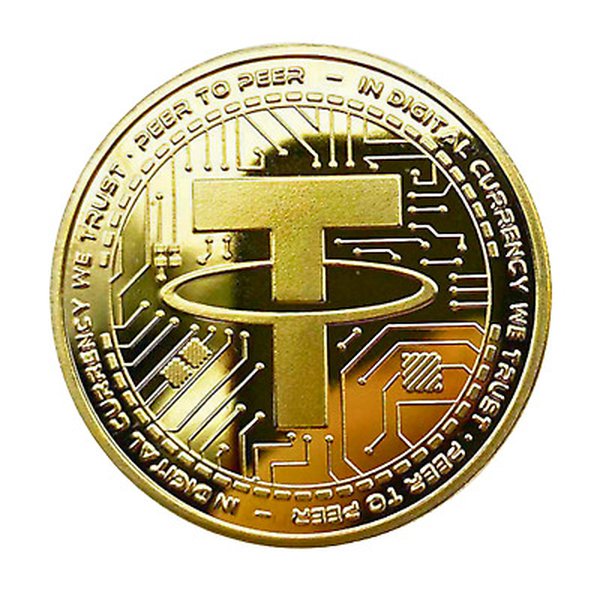
A conceptual physical representation of a Tether (USDT) token. USDT primarily exists as a digital asset.
The Allure of USDT: Why is it So Popular?
Tether's popularity stems from several key utilities within the cryptocurrency market:
- Stability in a Volatile Market: It provides a haven for traders looking to park their funds during periods of high volatility in other cryptocurrencies like Bitcoin or Ethereum, without exiting the crypto ecosystem entirely.
- Facilitating Trading: Many exchanges use USDT as a primary trading pair, allowing users to easily buy and sell other cryptocurrencies. Its stability simplifies profit calculation and risk management.
- Liquidity Provision: USDT is a crucial source of liquidity on numerous cryptocurrency exchanges worldwide, contributing to smoother and more efficient trading operations.
- Bridge Between Fiat and Crypto: It often serves as an on-ramp and off-ramp between traditional fiat currencies (like USD) and the digital asset space, especially in jurisdictions where direct banking for crypto exchanges is challenging.
- Fast Transactions: Compared to traditional banking systems, USDT transactions can be faster and cheaper, particularly for cross-border transfers.
The Shadows of Doubt: Unpacking Tether's Controversies
Despite its widespread adoption, Tether has been a focal point of significant skepticism and criticism within the financial and crypto communities.
The Billion-Dollar Question: What Backs Tether?
The most persistent controversy revolves around the transparency and composition of Tether's reserves. Tether Limited claims that all USDT tokens are 100% backed by its reserves. However, the nature of these reserves has evolved and drawn criticism:
- Initial Claims vs. Reality: Originally, Tether implied full backing by fiat currency (U.S. dollars held in bank accounts). Investigations revealed that this was not always the case. At times, reserves included a significant portion of commercial paper, secured loans, corporate bonds, and even other digital tokens.
- Attestations vs. Audits: Tether provides periodic "attestation" reports from accounting firms regarding its reserves. However, critics argue that attestations are not as rigorous or comprehensive as full, independent audits. The lack of a complete, transparent audit by a major, independent firm remains a significant concern.
- Asset Quality and Liquidity: Questions persist about the quality and liquidity of some assets held in reserve. If these assets were to lose value or become illiquid, Tether's ability to maintain its 1:1 peg could be compromised, especially during a market crisis or a "bank run" scenario. S&P Global Ratings, in a 2025 assessment, gave Tether a stability rating of 4 (on a scale of 1-very strong to 5-weak), indicating moderate stability but highlighting risks related to transparency and reserves.
While Tether has stated efforts to increase the proportion of highly liquid assets like U.S. Treasury Bills in its reserves, the historical lack of clarity has eroded trust for some market participants.
Navigating Murky Waters: Regulatory Scrutiny and Legal Battles
Tether and its affiliated companies have faced considerable regulatory scrutiny:
- New York Attorney General (NYAG) Settlement: In 2021, Tether and Bitfinex reached an $18.5 million settlement with the NYAG's office over allegations that they made false statements about USDT's backing and covered up massive losses. As part of the settlement, they were required to cease trading activity with New Yorkers and provide more detailed quarterly disclosures about their reserves.
- Lack of Government Insurance: Unlike traditional bank deposits, which are often insured by government entities like the Federal Deposit Insurance Corporation (FDIC) in the U.S., stablecoins like Tether carry no such protection. If Tether were to fail or lose its peg significantly, users could face substantial losses with little to no recourse.
- Ongoing Regulatory Uncertainty: The regulatory landscape for stablecoins is still evolving globally. Tether operates in a space with varying degrees of oversight, which adds to the risk profile.
Whispers of Manipulation: Tether's Alleged Role in Market Dynamics
There have been persistent allegations and academic research suggesting that unbacked or insufficiently backed Tether issuances may have been used to artificially inflate the prices of Bitcoin and other cryptocurrencies, particularly during bull runs. The theory posits that new USDT could be created and used to buy cryptocurrencies, driving up demand and prices without genuine U.S. dollar inflows. While definitive proof remains elusive and contested, these suspicions contribute to the cloud of controversy surrounding Tether.
Tether's Risk Profile: A Comparative Glance
To better understand Tether's standing, particularly concerning trust and safety, the following radar chart provides a visual comparison between Tether (USDT) and a conceptual "Ideal Stablecoin." This comparison is based on generally perceived characteristics and commonly discussed issues within the crypto community, rather than precise, audited data for the "Ideal Stablecoin," which serves as a benchmark for desired qualities.
The chart evaluates several key factors:
- Reserve Transparency: Clarity and verifiability of the assets backing the stablecoin.
- Regulatory Adherence: Compliance with financial regulations and oversight.
- Perceived Stability: Confidence in the stablecoin's ability to maintain its peg.
- Market Liquidity & Utility: Ease of trading and usefulness within the ecosystem.
- Investor Safeguards: Mechanisms to protect users from losses (e.g., insurance, clear recourse).
- Decentralization Grade: Degree to which control and issuance are distributed, reducing single points of failure.
As illustrated, while Tether (USDT) scores high on Market Liquidity & Utility due to its widespread adoption, it generally scores lower on aspects like Reserve Transparency, Regulatory Adherence, and Investor Safeguards compared to what an ideal, fully transparent, and regulated stablecoin might offer.
Tether and Illicit Finance: A Magnet for Scammers?
Due to its ease of use, speed of transaction, and perceived anonymity relative to traditional banking, Tether has unfortunately become a tool used in various illicit activities and scams. It's important to note that while Tether itself may not be the instigator of these scams, its features can be exploited by malicious actors.
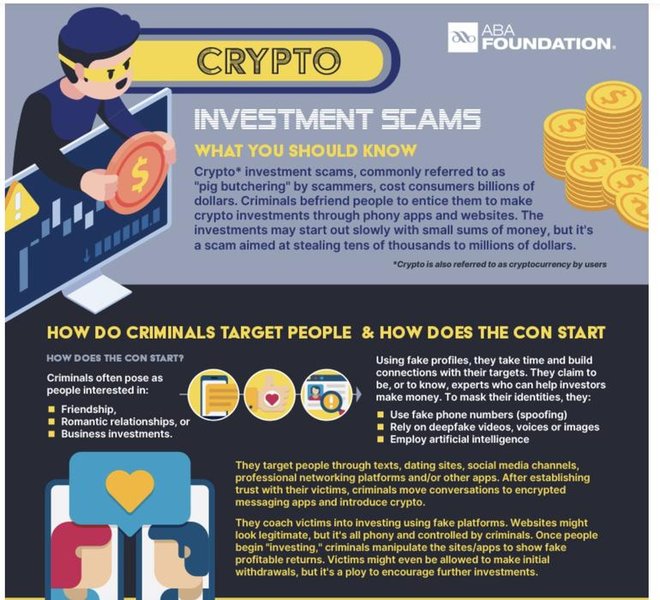
An infographic outlining common warning signs of cryptocurrency scams, which often involve stablecoins like USDT.
Tether as a Vehicle for Fraud
- "Pig Butchering" Scams: These sophisticated scams involve fraudsters building trust with victims over time (often through fake romantic or investment relationships) before convincing them to "invest" large sums of money, frequently converted into USDT and sent to scammer-controlled wallets. The U.S. Department of Justice (DOJ) and FBI have issued multiple warnings about these scams.
- Phishing Schemes: Scammers create fake websites or communications impersonating legitimate crypto services, wallets (like WalletConnect), or exchanges to trick users into revealing their private keys or sending USDT to fraudulent addresses.
- Investment Fraud: Many fraudulent crypto investment platforms promise unrealistically high returns and solicit investments in USDT, only to disappear with the funds. Law enforcement agencies have seized USDT in connection with such schemes. For example, one Ohio woman reportedly lost over $8.2 million.
- Money Laundering and Human Trafficking: The pseudo-anonymous nature of some crypto transactions has made USDT attractive for laundering illicit proceeds. In a notable case in November 2023, Tether, in collaboration with U.S. authorities, froze $225 million in USDT linked to an international human trafficking group involved in a "pig butchering" romance scam.
Law Enforcement's Watchful Eye
While Tether has cooperated with law enforcement in certain instances by freezing assets linked to illicit activities, the sheer volume of transactions and the global nature of crypto make policing challenging. The FBI has noted a significant rise in crypto scams involving stablecoins. This cooperation, while positive, doesn't negate the underlying risks or the frequency with which USDT is exploited.
Therefore, while Tether performs a functional role in the crypto markets, it is not inherently a "scam" in the sense of being a fraudulent project designed solely to steal funds from its inception by its creators. However, its controversial history, opaque reserve practices, and frequent involvement as a tool in financial crimes mean it carries substantial risks. Investors and users should exercise extreme caution.
The Broader Crypto Landscape: Innovation Laced with Risk
It's crucial to distinguish between Tether specifically and the wider world of cryptocurrencies. The following mindmap outlines key facets of this complex domain.
USD-Pegged Stablecoin"] id1_2["Primary Uses"] id1_2_1["Crypto Trading Liquidity"] id1_2_2["Fiat-to-Crypto Bridge"] id1_2_3["Cross-Border Transactions"] id1_3["Key Controversies"] id1_3_1["Reserve Transparency
(Attestations vs. Audits, Asset Mix)"] id1_3_2["Regulatory Scrutiny
(e.g., NYAG Settlement)"] id1_3_3["Market Manipulation Allegations"] id1_3_4["Lack of Govt. Insurance (FDIC)"] id1_4["Role in Illicit Activities"] id1_4_1["Vehicle in Scams
(Pig Butchering, Phishing)"] id1_4_2["Law Enforcement Actions"] id2["General Cryptocurrency Landscape"] id2_1["Underlying Technology"] id2_1_1["Blockchain: Innovative & Legitimate"] id2_1_2["Potential for Decentralization"] id2_2["Prevalence of Scams"] id2_2_1["Ponzi & Pyramid Schemes"] id2_2_2["Fake Initial Coin Offerings (ICOs)"] id2_2_3["Phishing & Wallet Theft"] id2_2_4["'Pump and Dump' Schemes"] id2_3["Investment Considerations"] id2_3_1["High Volatility & Risk"] id2_3_2["Importance of Due Diligence"] id2_4["Regulatory Environment"] id2_4_1["Largely Unregulated or Patchwork Regulation"] id2_4_2["Evolving Legal Frameworks"]
This mindmap illustrates that while Tether (USDT) has specific issues related to its operation and transparency, the broader cryptocurrency field is a mix of legitimate technological innovation (blockchain) and significant risks, including a high prevalence of various scams. Not every cryptocurrency project is a scam, but the environment demands extreme vigilance.
Cryptocurrency: Beyond the Hype
The core technology behind most cryptocurrencies, blockchain, is a legitimate and potentially transformative innovation. It offers new possibilities for decentralized systems, secure data management, transparent record-keeping, and novel financial applications (DeFi - Decentralized Finance). Many projects are genuinely working on innovative solutions.
The Dark Side of Digital Coins: Common Crypto Scams
Unfortunately, the hype, complexity, and often unregulated nature of the crypto space make it a fertile ground for scammers. Common types of crypto scams include:
- Ponzi and Pyramid Schemes: Promising high returns from new investor money, ultimately collapsing.
- Fake Initial Coin Offerings (ICOs) or Token Sales: Raising funds for non-existent projects.
- Phishing and Hacking: Stealing private keys or login credentials to access and drain crypto wallets.
- "Pump and Dump" Schemes: Artificially inflating the price of a low-value coin through misleading promotion, then selling off, causing the price to crash.
- Impersonation Scams: Fraudsters posing as celebrities, support staff, or officials to solicit crypto.
The FBI and other regulatory bodies regularly issue warnings about these types of fraud, emphasizing that if an investment sounds too good to be true, it probably is.
Comparing Stablecoins: Is There a Safer Harbor?
Given the concerns surrounding Tether, users often look for alternatives. USD Coin (USDC) is another prominent U.S. dollar-pegged stablecoin frequently cited as having a more transparent approach to reserves. The table below offers a brief comparison:
| Feature | Tether (USDT) | USD Coin (USDC) |
|---|---|---|
| Primary Issuer | Tether Limited (related to Bitfinex) | Circle (co-founded with Coinbase, part of the Centre Consortium) |
| Backing Claims & Asset Composition | Claims 100% backing by reserves; historically included cash, cash equivalents, commercial paper, secured loans, corporate bonds, digital tokens. Aims to increase U.S. T-bills. | Primarily backed by cash held in U.S. regulated financial institutions and short-duration U.S. Treasury bonds. |
| Transparency of Reserves | Publishes periodic "attestations" by accounting firms. Historically criticized for lack of full, independent audits and detailed, timely breakdowns of asset composition. | Publishes monthly attestations by a major accounting firm (e.g., Grant Thornton LLP). Generally considered more transparent regarding its reserve composition and custody. |
| Regulatory Scrutiny & Compliance | Faced significant regulatory actions (e.g., NYAG settlement for misrepresenting reserves). Not FDIC insured. Operates under various global regulatory frameworks. | Aims for greater regulatory compliance within established financial frameworks; Circle is a licensed money transmitter in many U.S. states. Not FDIC insured. |
| Key Controversies / Concerns | Historical opacity of reserve composition and sufficiency, past misstatements about backing, allegations of market manipulation. | Centralization (Circle, as the issuer, can freeze USDC associated with illicit activity, which is a feature for compliance but a concern for advocates of pure decentralization). Past temporary de-pegging incidents due to banking partner issues. |
| Primary Use Cases | High liquidity for trading, arbitrage across exchanges, DeFi protocols, cross-border payments. | Trading, DeFi protocols, payments, remittances, treasury management for businesses. |
While alternatives like USDC are often perceived as having more robust transparency and regulatory alignment, no stablecoin is entirely without risk. Due diligence is crucial regardless of the chosen asset.
Expert Opinions and Critical Views: A Deeper Dive
The controversies surrounding Tether have been a subject of intense discussion and investigation by journalists, analysts, and crypto enthusiasts. The following video explores some of the critical questions raised about Tether's operations and its significant role in the cryptocurrency ecosystem.
This video, "Tether: The $100000000000 Problem in Crypto - Episode 144," delves into the complexities and concerns surrounding Tether, reflecting common criticisms about its financial backing and market impact. Such analyses highlight the importance of critical thinking and thorough investigation when dealing with any financial instrument, especially in the fast-evolving crypto space.
Protecting Yourself in the Crypto World
Key Precautions and Due Diligence
Navigating the cryptocurrency space requires a vigilant and informed approach. Here are some general guidelines:
- Do Your Own Research (DYOR): Thoroughly investigate any cryptocurrency project, platform, or service before investing or using it. Understand its purpose, the team behind it, its technology, and its risk factors. Look for whitepapers, audits, and community discussions.
- Be Skeptical of High Returns: If an investment promises guaranteed high returns with little or no risk, it is very likely a scam.
- Secure Your Assets: Use strong, unique passwords for all crypto accounts and enable two-factor authentication (2FA). Consider using hardware wallets for storing significant amounts of cryptocurrency, as they are more secure than software or exchange wallets.
- Beware of Unsolicited Offers: Be wary of unsolicited emails, social media messages, or calls offering investment advice or opportunities.
- Verify Websites and Apps: Double-check URLs to ensure you are on a legitimate website before entering credentials or making transactions. Download apps only from official app stores.
- Understand Phishing: Learn to recognize phishing attempts that try to steal your login information or private keys. Never share your private keys or seed phrases with anyone.
- Use Reputable Exchanges: Stick to well-known and regulated cryptocurrency exchanges where possible.
- Start Small: If you are new to crypto, consider investing only a small amount that you can afford to lose until you become more familiar with the market.
Frequently Asked Questions (FAQ)
Is Tether (USDT) always worth $1?
While Tether (USDT) is designed to maintain a 1:1 peg with the U.S. dollar, its value can fluctuate slightly on exchanges due to market dynamics, supply and demand, and perceived risk. Historically, USDT has experienced minor deviations from its $1 peg, and on rare occasions, more significant de-pegging events (though often temporary). The stability of the peg depends on the market's confidence in Tether Limited's ability to honor redemptions and the actual backing of its reserves.
What are the main risks of using Tether?
The main risks include:
- Reserve Risk: Concerns that Tether's reserves may not be sufficient or liquid enough to back all USDT in circulation, potentially leading to a de-pegging.
- Transparency Risk: Lack of full, independent audits and complete transparency regarding the composition and location of reserves.
- Regulatory Risk: Potential for adverse regulatory actions against Tether or stablecoins in general, which could impact its usability or value.
- Counterparty Risk: Relying on Tether Limited to manage reserves and honor redemptions.
- Market Risk: USDT's value can deviate from $1 due to market sentiment and trading pressures.
- Security Risk: Like all digital assets, USDT is susceptible to theft through hacking or scams if not properly secured.
- No Government Insurance: Unlike bank deposits, USDT is not insured by any government agency like the FDIC.
How do "pig butchering" scams use cryptocurrencies like Tether?
"Pig butchering" (Sha Zhu Pan) scams are long-con frauds where scammers cultivate a relationship (often romantic) with a victim over weeks or months. Once trust is established, the scammer convinces the victim to "invest" in fraudulent cryptocurrency schemes. Tether (USDT) is often used because:
- It's perceived as stable, making it seem like a less risky entry point into crypto for novices.
- Transactions are relatively fast and can be harder to trace or reverse than traditional bank transfers, especially across borders.
- Scammers direct victims to send USDT to wallets they control, often on unregulated platforms, after which the funds are quickly moved and laundered.
Are all cryptocurrencies scams?
No, not all cryptocurrencies are scams. The underlying blockchain technology is a significant innovation with many legitimate uses. Projects like Bitcoin and Ethereum have established ecosystems and utility. However, the cryptocurrency space is also rife with scams, fraudulent projects, and highly speculative assets. It's crucial to differentiate between legitimate projects with real-world applications or technological innovation and those designed purely to deceive investors. Thorough research and due diligence are essential to avoid falling victim to scams.
What steps can I take to avoid crypto scams?
To avoid crypto scams:
- Be extremely wary of promises of guaranteed high returns or "risk-free" investments.
- Conduct thorough research (DYOR - Do Your Own Research) on any project or platform before investing. Check whitepapers, team credentials, and community feedback.
- Never share your private keys, seed phrases, or passwords with anyone.
- Use strong, unique passwords and enable two-factor authentication (2FA) on all accounts.
- Beware of unsolicited offers, especially via social media or email.
- Verify website URLs and app sources. Phishing sites often look identical to legitimate ones.
- Be cautious of celebrity endorsements; they can be faked or paid promotions for scams.
- Understand that if something sounds too good to be true, it almost certainly is.
- Report suspected scams to relevant authorities like the FBI's Internet Crime Complaint Center (IC3) or the Federal Trade Commission (FTC).
Recommended Further Exploration
- How does Tether (USDT) generate revenue and maintain its operations?
- What are the specific regulatory challenges faced by stablecoin issuers globally?
- Can you explain the technical differences between an attestation and a full financial audit for crypto reserves?
- What are the most common red flags to identify a cryptocurrency investment scam?
References
Last updated May 9, 2025