
The Thames Tideway Tunnel: London's Super Sewer and Its Legacy
A Deep Dive into an Ambitious Infrastructure Project and its Far-Reaching Impact
Project Highlights and Key Takeaways
- Addressing a Critical Environmental Need: The Thames Tideway Tunnel is London's vital response to a century-and-a-half-old problem of raw sewage overflowing into the River Thames, driven by an aging Victorian sewer system and a rapidly growing population.
- Innovative Funding and Risk Allocation: The project adopted a hybrid funding model, involving private investment (Bazalgette Tunnel Limited) with government support, to effectively allocate risks and secure the necessary capital for this multi-billion-pound undertaking.
- Complex Stakeholder Engagement: Success hinged on navigating a diverse landscape of stakeholders, from government bodies and regulators to local communities and environmental groups, requiring extensive consultation and adaptive management strategies.
The Thames Tideway Tunnel (TTT), often dubbed London's "super sewer," stands as one of the most significant infrastructure projects undertaken in the UK's water industry. Conceived as a direct response to the persistent pollution of the River Thames by untreated sewage overflows—a problem exacerbated by London's burgeoning population overwhelming its 150-year-old Victorian sewer system—the TTT represents a monumental engineering and environmental undertaking. The project involves constructing a 25-kilometer long, 7.2-meter diameter interceptor sewer deep beneath the River Thames, stretching from Acton in West London to Abbey Mills in the east. Its primary objective is to capture the millions of tonnes of raw sewage and rainwater that currently discharge into the tidal Thames each year, thereby bringing the UK into compliance with European environmental standards and significantly improving the river's ecological health and recreational potential. Scheduled for commissioning in 2025, the TTT is more than just a sewer; it’s a long-term investment in London’s future, aimed at safeguarding public health, revitalizing the river, and creating a lasting legacy of environmental improvement and community benefit.
A Proactive Approach to Risk Management
The Thames Tideway Tunnel project, by its sheer scale and complexity, inherently faced a multitude of risks, necessitating a robust and innovative approach to risk management. The project adopted a "hybrid approach" to infrastructure delivery, designed to effectively allocate and mitigate these risks across various parties. One of the central tenets of this approach was the establishment of Bazalgette Tunnel Limited (Tideway), a separate company independent of Thames Water, specifically tasked with financing, building, managing, and maintaining the tunnel. This model aimed to isolate, contain, and help deliver such large, complex, and high-risk infrastructure projects.
Key risks identified and addressed included construction challenges, financial exposure, and environmental and navigational issues. Construction risks, given the project's deep-level tunneling under a major urban environment and river, were significant. This involved extensive geological ground models and detailed pre-construction surveys to mitigate unforeseen subterranean conditions. The use of model-based design delivery, for example, reportedly led to substantial savings in design resources and shaved months off the project schedule, demonstrating the proactive integration of innovation to manage technical risks.
Financial risk management was paramount, especially given the multi-billion-pound investment. The project's funding model, which involved private investors (Allianz, Amber Infrastructure, and Dalmore Capital) alongside government assurances, was critical in securing the necessary capital and distributing financial liabilities. This included the issuance of Green Bonds to demonstrate commitment to sustainable financing. Management risk, arising from the project's size and the rapid expansion of capital expenditure, placed significant stress on Thames Water's existing operations, leading to the creation of Tideway as a dedicated delivery vehicle.
Furthermore, navigational issues and environmental impacts on the River Thames were meticulously assessed. Preliminary risk assessments identified potential hazards to river users from construction activities, particularly related to tug and barge operations, and the interim and permanent operation of combined sewer overflow (CSO) discharge points. Mitigation measures were developed to address these concerns, reflecting a comprehensive approach to operational and environmental risk. The overarching strategy was to identify, assess, and implement measures to control risks, ensuring the project's progress while minimizing adverse impacts.
Navigating the Complex Web of Stakeholders
The Thames Tideway Tunnel project involved a vast and intricate network of stakeholders, each with distinct interests and varying levels of influence. Effective stakeholder engagement was crucial for the project's approval, funding, and smooth execution. The primary stakeholders included:
- Consumers (Thames Water Customers): As the ultimate funders of the project through their utility bills, consumers had a significant financial stake. Their need for a cleaner river and improved public health was central. The project aimed to address this by eliminating sewage spills, a key benefit for health and environment. However, concerns regarding the increased cost on bills have been a point of contention, suggesting their financial needs were not fully aligned with the project's funding structure.
- UK Government & Regulators (Ofwat, Environment Agency, DEFRA, Greater London Authority): The government had ultimate responsibility for ensuring environmental compliance (specifically the EU Urban Waste Water Treatment Directive) and facilitating major infrastructure. Regulators like Ofwat oversaw the economic aspects and consumer protection, while the Environment Agency focused on environmental standards. Their needs for compliance, value for money, and robust project management were largely addressed through the hybrid funding model and detailed oversight.
- Thames Water: As the incumbent sewerage undertaker, Thames Water was instrumental in identifying the problem and advocating for the solution. While Tideway is a separate entity, Thames Water remains a key delivery partner and will operate the tunnel upon completion. Their need to integrate the TTT into their broader network and ensure long-term resilience was addressed through a formal interface agreement and operational plans.
- Tideway (Bazalgette Tunnel Limited) and its Shareholders/Investors: Tideway was established to build, manage, and maintain the tunnel, attracting private investment from consortia including Allianz, Amber Infrastructure, and Dalmore Capital. Their primary needs were to deliver the project on time and within budget, ensuring a return on investment. The successful securing of funding, including Green Bonds, indicates their financial and delivery needs were met, with shareholders actively supporting the project's progression.
- Main Works Contractors (e.g., Balfour Beatty, Ferrovial, Costain): These consortia were responsible for the physical construction of the tunnel. Their needs included clear contractual agreements, effective collaboration within an "alliance framework," and a safe working environment. The project's co-location strategy for the project owner, consultants, and contractors fostered collaboration and idea sharing, which positively impacted delivery.
- Local Communities and River Users: Communities along the Thames were directly impacted by construction activities (e.g., traffic, noise, temporary riverside closures). River users had concerns about navigational safety. Extensive public consultation processes were undertaken, and efforts were made to mitigate disruption and create legacy benefits like new public spaces and walkways, indicating an attempt to address their needs, though local impacts were inevitable.
- Environmental Groups (e.g., Thames Rivers Trust, Thames 21): These groups advocated for the environmental health of the River Thames and supported the project's ultimate goal of reducing pollution. Their needs for ecological improvement and restoration of the river habitat were foundational to the project's purpose, and the project's expected outcomes directly align with these interests.
Overall, the project demonstrated a significant effort in managing diverse stakeholder needs. While financial implications for consumers sparked debate, the overwhelming consensus among regulatory bodies and environmental advocates underscores that the project largely met the core objective of addressing London's sewage crisis and improving the Thames. The "Mendelow's Matrix" analysis, focusing on power and interest, would likely show that government regulators, contractors, and investors, given their high power and interest, had their needs significantly addressed, driving the project forward effectively.

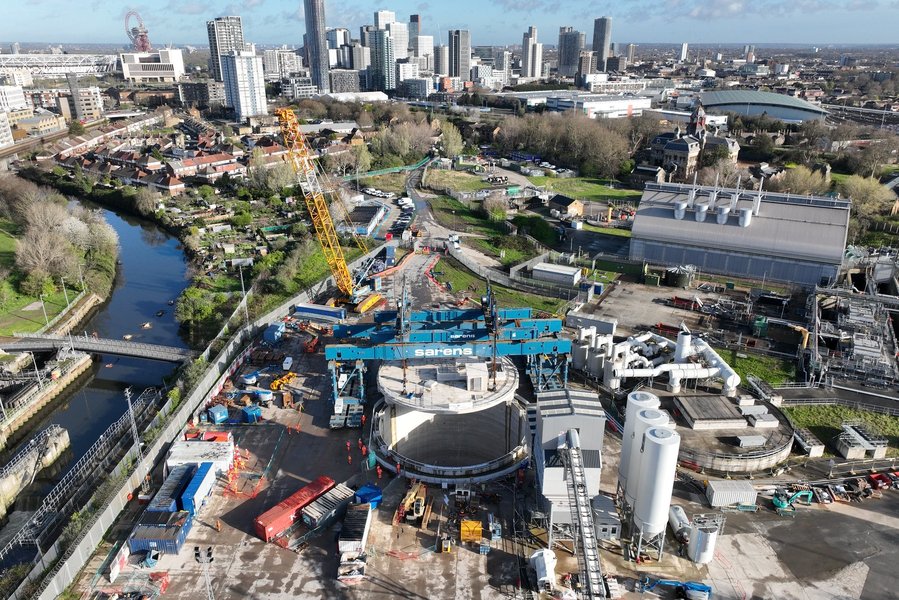
An aerial view of the Thames Tideway Tunnel project, highlighting its significant presence along the River Thames.
Defining Project Success: A Justified Decision
The Thames Tideway Tunnel project can be confidently defined as a success, particularly when viewed through the lens of its primary objectives, complex execution, and long-term impact. The justification for this decision rests on several critical factors:
- Achievement of Core Objective: The fundamental purpose of the TTT is to prevent millions of tonnes of raw sewage from overflowing into the River Thames, thereby complying with environmental directives and restoring the river's ecological health. The project is nearing completion and has already begun commissioning sections, successfully intercepting sewage. This direct achievement of its core environmental and public health goal is the most compelling indicator of success.
- Addressing a Long-Standing Problem: London's Victorian sewer system was built for a population less than half its current size. The TTT provides a solution that will serve London for at least the next 100 years, offering resilience against urban growth and climate change. This long-term vision and capacity enhancement underscore its success in providing a sustainable infrastructure solution.
- Innovative Delivery Model: The hybrid funding and delivery model, with Tideway as a dedicated infrastructure provider, was a novel approach for the UK water industry. It effectively mobilized private capital for a public good while insulating Thames Water customers from direct construction risks. The project's ability to attract significant investment, including green bonds, and maintain investor confidence despite its scale, speaks to the success of this innovative model.
- Social and Economic Benefits: Beyond environmental cleanup, the project has generated substantial social and economic benefits. Studies indicate that for every £1 spent, there is a social benefit of £3.19 through an improved natural environment, a rejuvenated river economy, and employment opportunities, including apprenticeships. The creation of new public spaces and riverside walkways also contributes to London's urban fabric.
- Overcoming Mega-Project Challenges: Mega-projects like the TTT are inherently complex and prone to delays and cost overruns. While there have been cost escalations from initial estimates (from £1.7bn in 2004 to approximately £4.2bn), these are attributable to increased scope, updated economic appraisals, and the sheer scale of the undertaking. The project has largely remained on track with its revised timelines, with underground construction completed and commissioning underway.
- Technological and Engineering Feats: The construction of a 25km, 7.2m diameter tunnel deep beneath a bustling metropolis and a tidal river is an extraordinary engineering feat. The application of advanced techniques, such as detailed geological modeling and model-based design, demonstrates successful technological innovation.
While consumer charges remain a sensitive issue, the broader environmental, social, and long-term infrastructure benefits, coupled with the successful implementation of a complex delivery model, firmly establish the Thames Tideway Tunnel as a successful project. It delivers on a critical public need, sets a precedent for large-scale infrastructure financing, and leaves a significant positive legacy for London and its iconic river.
Radar chart illustrating the perceived success factors for the Thames Tideway Tunnel, comparing its performance against typical mega-project benchmarks.
Lessons Learned for International Projects
Reflecting on the Thames Tideway Tunnel project provides invaluable insights applicable to the challenges of international infrastructure projects. The project's success, particularly in its innovative financing and complex stakeholder management, offers crucial lessons:
- The Imperative of Hybrid Funding Models: International projects, especially those addressing critical public infrastructure needs, often struggle with securing sufficient and stable funding. The TTT's hybrid approach, blending private investment with government guarantees and regulatory frameworks, demonstrates a viable pathway for large-scale capital mobilization. This model reduces direct state financial risk while still ensuring public good delivery. In an international context, adapting such models could unlock financing for projects in developing nations or those with nascent private infrastructure markets, potentially leveraging international development banks or private equity in a structured, risk-mitigated manner.
- Mastering Stakeholder Complexity: International projects inherently involve a more diverse and often politically sensitive array of stakeholders, including multiple national governments, diverse regulatory bodies, international organizations, varied local communities, and multinational corporations. The TTT's rigorous approach to identifying, engaging, and managing a broad spectrum of stakeholders—from consumers and regulators to environmental groups and contractors—underscores the need for robust stakeholder mapping, transparent communication, and adaptive conflict resolution strategies. For international projects, this means developing culturally sensitive engagement plans, ensuring clear communication across linguistic and regulatory divides, and establishing neutral platforms for dialogue and consensus-building.
- Strategic Risk Allocation and Mitigation: The TTT's detailed risk assessments and proactive mitigation strategies, especially concerning construction, financial, and environmental risks, are highly pertinent. In international projects, geopolitical risks, currency fluctuations, varying legal frameworks, and differing labor practices add layers of complexity. The lesson is to not only identify these risks but to design contractual and operational frameworks that appropriately allocate them to the parties best positioned to manage them. This could involve international arbitration clauses, robust insurance frameworks, and collaborative risk-sharing agreements between public and private entities.
- The Power of Defined Project Entities: The establishment of Tideway as a dedicated, independent entity for the TTT proved crucial in focusing expertise and resources solely on project delivery, largely insulating it from the broader operational complexities of Thames Water. For international mega-projects, especially those spanning multiple jurisdictions or involving numerous public and private partners, creating a dedicated project entity (e.g., a special purpose vehicle or a joint venture with a clear mandate) can streamline decision-making, enhance accountability, and provide a single point of responsibility, thereby improving overall project governance and efficiency.
In essence, the Thames Tideway Tunnel illustrates that success in complex, large-scale infrastructure projects, whether domestic or international, hinges on innovative financing, meticulous risk management, and a profound understanding and navigation of the diverse stakeholder landscape, all underpinned by a clear and dedicated project delivery structure.
Key Project Participants and Their Roles
The Thames Tideway Tunnel project involved a collaborative effort among numerous entities, each playing a critical role in its planning, financing, and execution. The table below outlines the main stakeholders and their respective contributions to this ambitious undertaking.
| Stakeholder | Primary Role and Impact on the Project | Needs Addressed |
|---|---|---|
| Thames Water Customers | Primary funders of the project through their water bills. Their demand for a cleaner river and better public health was the ultimate driver for the project. | Directly addressed through the tunnel's objective to eliminate sewage pollution, improving water quality and public health. Cost implications on bills remain a point of discussion. |
| UK Government (DEFRA, HM Treasury) | Provided political impetus and regulatory framework to ensure compliance with environmental directives (e.g., EU Urban Waste Water Treatment Directive). Enabled the innovative funding model. | Compliance with environmental laws, delivery of essential infrastructure, and demonstration of a viable public-private partnership model for large projects. |
| Ofwat (Water Services Regulation Authority) | Economic regulator for the water sector, overseeing financial arrangements and ensuring value for money for customers. Issued the license to Tideway. | Ensured financial prudence, justified costs, and set regulatory conditions for Tideway's operations and revenue collection. |
| Environment Agency | Environmental regulator, setting and enforcing water quality standards for the River Thames. Defined ecological objectives for the tidal Thames. | Achieved through the project's direct contribution to meeting water quality targets and improving the river's ecosystem. |
| Tideway (Bazalgette Tunnel Limited) | The Infrastructure Provider (IP) specifically created to finance, build, manage, and maintain the tunnel. Independent of Thames Water during construction. | Secured funding, managed construction across multiple sites, and delivered the project on time and within budget through dedicated focus. |
| Thames Water | Original proponent of the solution, provided input data, and will operate the tunnel upon completion. Integrates TTT into its existing network. | Enhanced network resilience, long-term operational sustainability, and compliance with their public service obligations. |
| Main Works Contractors (e.g., Balfour Beatty, Ferrovial, Costain, Morgan Sindall) | Responsible for the physical construction of the tunnel's three main sections (West, Central, East). | Clear contracts, collaborative working environment via "alliance framework," and successful execution of complex engineering tasks. |
| Shareholders/Investors (Allianz, Amber Infrastructure, Dalmore Capital) | Provided the substantial private capital required for the project's construction and operation. | Ensured a return on investment through the revenue stream charged to Thames Water customers via their bills. |
| Local Communities & Londoners | Impacted by construction activities (e.g., traffic, noise, disruption) but also benefit from the cleaner river and new public spaces. | Efforts made to mitigate construction impacts, create public amenities, and improve the river's recreational value and aesthetic appeal. |
| Environmental Charities/Groups | Advocated for the protection and enhancement of the River Thames ecosystem. | Realization of a healthier, thriving river ecosystem, aligning with their core mission of environmental conservation. |
A Visual Journey Through the Thames Tideway Tunnel
To fully appreciate the scale and ambition of the Thames Tideway Tunnel, it's beneficial to visualize its scope and the complex engineering involved. The following video provides an excellent overview of London's "super sewer" project.
This video, "London's $5BN New Super Sewer Explained," offers a concise yet comprehensive explanation of the Thames Tideway Tunnel, detailing its purpose, construction methods, and the significant impact it will have on London's infrastructure and environment. It provides a visual understanding of the immense engineering challenge and the innovative solutions employed.
The video highlights the underground construction process, the strategic placement of access shafts, and the ultimate goal of reconnecting Londoners with a healthier River Thames. It visually reinforces the importance of the project in addressing a critical environmental issue through advanced civil engineering.
An image showing the underground construction of the Thames Tideway Tunnel, with a tunnel boring machine in operation, illustrating the immense scale of the excavation.
Frequently Asked Questions (FAQ)
What is the primary purpose of the Thames Tideway Tunnel?
How is the Thames Tideway Tunnel being funded?
What are the environmental benefits of the Thames Tideway Tunnel?
When is the Thames Tideway Tunnel expected to be fully operational?
What challenges did the project face?
Conclusion
The Thames Tideway Tunnel stands as a monumental achievement in civil engineering and environmental stewardship. Born out of a pressing need to modernize London's overburdened Victorian sewer system and safeguard the iconic River Thames from chronic pollution, the project exemplifies a successful blend of innovative financing, meticulous risk management, and extensive stakeholder engagement. While its journey has involved significant financial investment borne by consumers, the long-term benefits in terms of environmental health, public amenity, and urban resilience unequivocally justify its classification as a success. The TTT is not merely a piece of infrastructure; it is a vital intervention that reconnects London with its historic river, ensuring a healthier and more sustainable future for generations to come. Its completion will mark a pivotal moment in the ongoing effort to balance urban development with environmental protection.
Recommended Further Exploration
- Explore the broader environmental impact of outdated urban sewage systems and the global challenge of wastewater management.
- Investigate various models of public-private partnerships (PPPs) in large-scale infrastructure development around the world.
- Delve deeper into comprehensive risk management strategies employed in other global mega-projects and their effectiveness.
- Understand best practices and challenges in community engagement for major urban infrastructure projects.
References
 assets.publishing.service.gov.uk
assets.publishing.service.gov.uk
Last updated May 21, 2025