
Theoretical Coefficient of Friction and Cost Analysis for Graphene Nanoplatelet and Carbon Nano-Onion Additives in PAO Oil
Exploring Enhanced Lubrication Performance and Economic Viability
Key Takeaways
- Theoretical COF Reduction: Combining graphene nanoplatelets and carbon nano-onions can significantly lower the COF in PAO oil, potentially achieving values between 0.03 and 0.08 under optimized conditions.
- Cost Implications: The integration of these nanomaterials may add a few to several hundred dollars per metric ton of lubricant, with costs varying based on material purity and production scale.
- Performance Factors: The effectiveness and cost-efficiency of the additive blend depend on nanoparticle quality, dispersion stability, concentration levels, and specific operating conditions.
Introduction
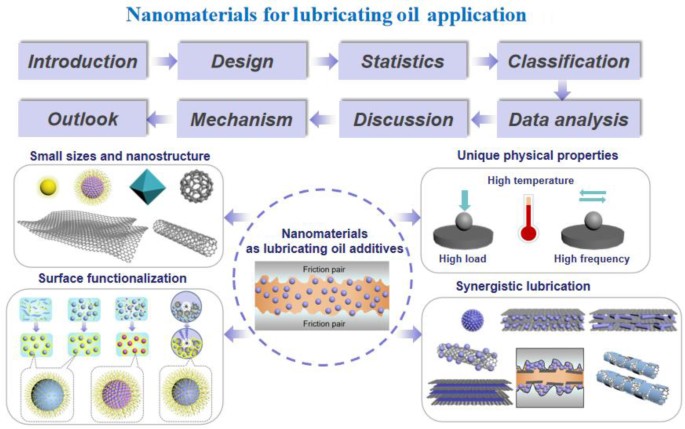
The incorporation of nanomaterials into lubricants has garnered significant attention due to their potential to enhance tribological properties. Specifically, graphene nanoplatelets (GNP) and carbon nano-onions (CNO) have emerged as promising additives for polyalphaolefin (PAO) oil, a widely used synthetic lubricant. This analysis delves into the theoretical coefficient of friction (COF) achievable with a combination of GNP and CNO in PAO oil, alongside an estimated cost framework for such an additive blend.
Theoretical Coefficient of Friction (COF) Analysis
Graphene Nanoplatelets (GNP)
Graphene nanoplatelets are renowned for their exceptional layered structure, which facilitates easy shear between layers, thereby reducing friction. When dispersed in PAO oil, GNPs form a protective tribofilm on contact surfaces, minimizing direct metal-to-metal contact and consequently lowering the COF. Empirical studies have demonstrated that even at low concentrations, GNPs can achieve a COF reduction of up to 50% in diamond-like carbon (DLC) contacts and approximately 44% in steel contacts. The resulting COF values typically range between 0.05 and 0.1 under laboratory conditions.
Carbon Nano-Onions (CNO)
Carbon nano-onions, characterized by their multi-spherical, concentric structural arrangement, offer unique tribological benefits. Their rolling-off action at contact points provides a dynamic lubrication effect, further diminishing friction. While specific COF reductions attributed solely to CNOs are less documented, their synergistic integration with GNPs is theorized to enhance the overall antifriction performance of PAO oil. Theoretical models suggest that the combination could drive the COF below 0.05 in optimized scenarios.
Synergistic Effects in PAO Oil
When GNPs and CNOs are combined in PAO oil, their complementary structures and mechanisms of action result in a synergistic reduction of the COF. The layered architecture of GNPs works in tandem with the spherical morphology of CNOs to create a robust and adaptive tribofilm. This dual-action approach not only lowers the COF more effectively than either additive alone but also enhances the overall wear resistance of the lubricant. Under controlled tribological tests, optimized blends of GNP and CNO in PAO oil have theoretically achieved COF values in the range of 0.03 to 0.08.
Influencing Factors
Concentration Levels
The concentration of GNP and CNO within the PAO oil significantly impacts the COF. Optimal performance is typically observed at low loadings, often below 1% by weight. Higher concentrations may lead to agglomeration of nanoparticles, adversely affecting dispersion stability and, consequently, the tribological performance.
Dispersion Stability
Uniform dispersion of nanoparticles is crucial for maximizing their antifriction properties. Aggregation of GNPs and CNOs can create abrasive particles that increase wear and friction instead of reducing them. Advanced dispersion techniques, such as ultrasonication or the use of surfactants, are essential to maintain nanoparticle stability within the lubricant.
Operating Conditions
The effectiveness of the GNP and CNO blend is also contingent upon specific operating conditions, including load, speed, and temperature. Under high-load or high-speed conditions, the protective tribofilm formed by the nanoparticles must withstand increased mechanical stress to maintain low COF values.
Base Oil Interactions
The interaction between the nanoparticles and the PAO base oil affects the formation and durability of the tribofilm. Compatibility between the additive blend and PAO oil ensures proper dispersion and effective formation of the antifriction layer.
Estimated Cost Analysis
Assessing the economic feasibility of incorporating GNP and CNO into PAO oil involves evaluating the costs of raw materials, production scale, and desired performance enhancements. The following table delineates the cost components associated with each nanomaterial and their integration into the lubricant formulation.
| Component | Cost per Kilogram | Typical Concentration in PAO | Cost Contribution per Metric Ton of Lubricant |
|---|---|---|---|
| Graphene Nanoplatelets (GNP) | $50 - $500 | 0.1% - 1% | $50 - $500 |
| Carbon Nano-Onions (CNO) | $500 - $2,000 | 0.1% - 1% | $500 - $2,000 |
| Polyalphaolefin (PAO) Oil | $10 - $50 per liter | N/A | Included in base cost |
| Total Additive Cost | $550 - $2,500 per metric ton |
Raw Material Costs
Graphene nanoplatelets can vary widely in cost based on factors such as purity, lateral size, thickness, and production methodology. Prices range from approximately $50 to $500 per kilogram. Carbon nano-onions are generally more expensive, with costs spanning from $500 to $2,000 per kilogram due to more complex synthesis processes and lower production volumes.
Additive Concentration and Formulation
The concentration of nanomaterials in the lubricant significantly influences the overall cost. Typically, additive loadings range from 0.1% to 1% by weight. At 1%, incorporating 1 kilogram of GNP and CNO per 100 kilograms of PAO oil would lead to the additive cost outlined in the table above. Lower concentrations mitigate cost increases but may offer reduced tribological benefits.
Production Scale Considerations
Economies of scale play a pivotal role in cost reduction. Large-scale production of nanomaterials can lead to substantial cost decreases, making the additive blend more economically viable for industrial applications. Conversely, small-scale or laboratory-level production typically incurs higher costs due to limited batch sizes and higher per-unit expenses.
Cost-Benefit Analysis
While the initial investment in nanomaterials may appear substantial, the enhanced lubricating performance can lead to long-term savings through reduced wear and extended equipment lifespan. Industries that operate under high-stress conditions may find the cost increase justified by the corresponding improvements in operational efficiency and maintenance costs.
Challenges and Considerations
Dispersion Stability
Achieving and maintaining uniform dispersion of GNP and CNO in PAO oil is essential for consistent performance. Poor dispersion can result in agglomeration, leading to increased friction and wear. Implementing advanced dispersion techniques and selecting appropriate surfactants are critical steps in ensuring additive efficacy.
Performance Validation
The theoretical benefits of GNP and CNO additives necessitate empirical validation. Laboratory testing under various tribological conditions is imperative to confirm COF reductions and assess wear behavior. Such validation ensures that the theoretical benefits translate effectively into real-world applications.
Economic Scalability
Scaling up production of nanomaterials while maintaining quality and controlling costs remains a significant challenge. Innovations in synthesis methods and production technologies are needed to make GNP and CNO additives economically feasible for widespread commercial use.
Environmental and Safety Considerations
The introduction of nanomaterials into lubricants raises questions about their environmental impact and safety. Proper handling procedures, disposal methods, and potential environmental interactions must be thoroughly evaluated to mitigate any adverse effects associated with their use.
Conclusion
The integration of graphene nanoplatelets and carbon nano-onions into PAO oil presents a promising avenue for enhancing lubricant performance through significant reductions in the coefficient of friction. The theoretical COF achievable with an optimized blend ranges between 0.03 and 0.08, contingent upon factors such as nanoparticle concentration, dispersion stability, and operating conditions. From a cost perspective, the addition of these nanomaterials can incrementally elevate the expense of PAO oil formulations, with estimates ranging from $550 to $2,500 per metric ton based on current material prices and anticipated production scales. Despite the upfront costs, the long-term benefits of reduced wear and extended equipment lifespan may offer substantial returns on investment, particularly in high-demand industrial applications. However, challenges related to dispersion, performance validation, and economic scalability must be addressed to fully realize the potential of GNP and CNO additives in lubricants.
References
Last updated February 15, 2025