
Unlocking the Secrets of Time: Is Travel Through the Fourth Dimension Theoretically Possible?
Exploring the scientific theories, possibilities, and paradoxes surrounding the fascinating concept of time travel.
Highlights: Key Insights into Time Travel
- Future Forward: Traveling into the future is considered theoretically possible and consistent with Einstein's theories of relativity, primarily through the phenomenon of time dilation caused by high speeds or strong gravity.
- Past Puzzles: Journeying into the past is highly speculative and fraught with theoretical challenges, including potential paradoxes (like the Grandfather Paradox) and the need for exotic physics (like wormholes or negative energy) that haven't been observed.
- Technological Limits: While theoretical frameworks exist, especially for future travel, the technological requirements to achieve significant time travel – manipulating spacetime, reaching near-light speeds, or creating stable wormholes – are far beyond our current capabilities.
The idea of traveling through time, moving forwards or backwards through the moments of existence, has captivated human imagination for generations. While often explored in science fiction, the question remains: is time travel actually possible according to the laws of physics? The answer, emerging from the depths of Albert Einstein's revolutionary theories, is nuanced and depends heavily on the direction you wish to travel.
The Foundation: Einstein's Relativity and Spacetime
Our modern understanding of time travel is intrinsically linked to Albert Einstein's theories of special and general relativity. These theories reshaped our perception of space and time, merging them into a single four-dimensional continuum known as spacetime.
Time as the Fourth Dimension
Relativity posits that time is not an absolute, universal clock ticking uniformly for everyone. Instead, it's interwoven with the three dimensions of space. The passage of time can be relative, meaning it can vary for different observers based on their motion or the gravitational field they are experiencing.
Special Relativity and Speed
Einstein's theory of special relativity (1905) revealed that the speed of light in a vacuum is constant for all observers, regardless of their own motion. A key consequence of this is time dilation: the faster you move through space, the slower you move through time relative to a slower-moving observer.
General Relativity and Gravity
His theory of general relativity (1915) expanded on this, describing gravity not as a force, but as a curvature of spacetime caused by mass and energy. Massive objects warp the spacetime around them, and this curvature dictates how objects (and even light) move. Crucially, this warping also affects the flow of time; time passes more slowly in stronger gravitational fields.
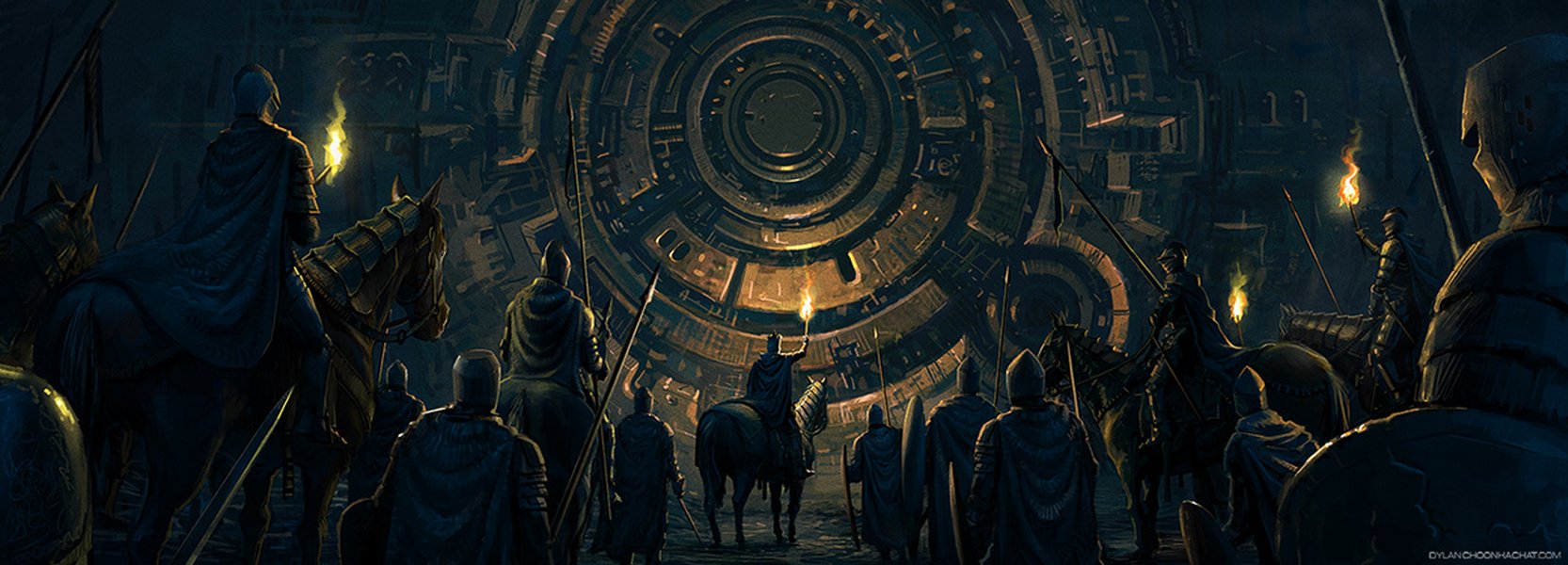
Conceptual artwork illustrating the distortion of spacetime, central to relativistic time travel theories.
Journeying Forward: Time Travel to the Future
Based on Einstein's relativity, traveling into the future is not just theoretical fantasy but a real physical phenomenon. We are all traveling into the future at a rate of one second per second, but relativity shows that this rate can be altered.
The Science of Time Dilation
Time dilation is the key mechanism for future time travel. It occurs in two primary ways:
Speeding Towards Tomorrow (Special Relativity)
If you were to travel in a spaceship at speeds approaching the speed of light, time would pass significantly slower for you compared to someone remaining on Earth. Upon returning, you would find that much more time had elapsed on Earth than you experienced, effectively landing you in Earth's future. This effect, though minuscule at everyday speeds, has been experimentally verified using extremely precise atomic clocks on airplanes and satellites. Astronauts aboard the International Space Station (ISS), for example, age slightly slower (by fractions of a second over their mission) than people on Earth due to their high orbital velocity.
Gravity's Grip on Time (General Relativity)
Similarly, gravitational time dilation means time moves slower in stronger gravitational fields. Someone near a very massive object, like a black hole or neutron star, would experience time more slowly than someone far away in weaker gravity. If they could spend time near such an object and then return, they would have traveled into the future relative to those who stayed away. This effect is also measurable and must be accounted for in technologies like the Global Positioning System (GPS), where satellites orbiting in weaker gravity experience time slightly faster than clocks on Earth's surface.
Therefore, traveling to the future is considered physically possible according to established science, although achieving significant time jumps would require technologies capable of reaching near-light speeds or navigating extremely strong gravitational fields safely.
The Great Enigma: Time Travel to the Past
While future travel rests on solid theoretical ground, traveling backward in time is far more speculative and confronts significant theoretical hurdles and paradoxes.
Theoretical Pathways
General relativity, while supporting future travel, doesn't completely rule out the possibility of past travel under certain exotic conditions. Some solutions to Einstein's field equations permit theoretical structures that could potentially allow backward time journeys:
Closed Timelike Curves (CTCs)
CTCs are hypothetical paths in spacetime that loop back on themselves, allowing an object or observer following such a path to return to their own past in space and time. Mathematician Kurt Gödel found solutions to Einstein's equations that contained CTCs in rotating universes. Other theoretical models involving cosmic strings or specific spacetime geometries might also allow for CTCs. However, these often require conditions like infinite structures or specific universal configurations not observed in our universe.
Wormholes (Einstein-Rosen Bridges)
Wormholes are hypothetical tunnels through spacetime that could connect two distant points in space, or potentially, two different points in time. If one end of a wormhole could be accelerated to near-light speed or placed in a strong gravitational field relative to the other end, time dilation could create a time difference between the two mouths. Entering one end and exiting the other might then allow travel to the past or future. However, wormholes themselves are purely theoretical, have never been detected, and are thought to be inherently unstable. Stabilizing a traversable wormhole would likely require vast amounts of "exotic matter" with negative energy density – something that has never been observed and may not exist.
The Paradox Problem
The most significant obstacle to past time travel is the potential for logical paradoxes that violate causality (the principle that cause must precede effect).
The Grandfather Paradox
This is the most famous paradox: What if you traveled to the past and prevented your own grandfather from meeting your grandmother, thus preventing your own birth? If you were never born, how could you have traveled back in time in the first place? This creates a logical contradiction.
Causality Concerns
Any action taken in the past could potentially alter the present in ways that lead to inconsistencies. The very possibility of changing the past seems to undermine the logical structure of cause and effect that governs our universe.
Potential Resolutions?
Physicists and philosophers have proposed several theoretical ways to resolve these paradoxes, should past time travel somehow be possible:
Novikov's Self-Consistency Principle
Proposed by physicist Igor Dmitriyevich Novikov, this principle suggests that the laws of physics conspire to prevent paradoxes. Any actions taken by a time traveler in the past were always part of history. You couldn't kill your grandfather because something would inevitably intervene, or perhaps you would find you were physically unable to do so. Essentially, the timeline is self-consistent, and free will might be an illusion in this context.
Parallel Universes/Timelines
Another idea is that traveling to the past doesn't alter your original timeline but instead leads you to a parallel universe or branching timeline. In this scenario, you could potentially prevent your grandparents from meeting in *that* timeline, but it wouldn't affect your own existence in the timeline you came from.
Self-Correcting Timelines (Recent Models)
Some recent mathematical models, exploring the intersection of general relativity and quantum mechanics, suggest that timelines might naturally "self-correct." Events could dynamically adjust around a time traveler's actions to prevent inconsistencies, allowing for paradox-free time travel even with apparent changes to the past. Other research suggests that for CTCs to exist without paradox, information or memory might need to be "reset" as the loop completes.
Despite these theoretical possibilities, the consensus remains that past time travel faces formidable obstacles, both in terms of the required physics (exotic matter, specific spacetime geometries) and the potential for logical paradoxes.
Visualizing Time Travel Concepts
To better grasp the complex ideas surrounding time travel, let's visualize the core concepts and challenges involved.
Mindmap of Time Travel Theories
This mindmap illustrates the main branches of theoretical time travel, stemming from Einstein's relativity and leading to the different possibilities and associated problems discussed.
(Speed)"] id1b["General Relativity
(Gravity & Spacetime Curvature)"] id2["Travel to the Future"] id2a["Mechanism: Time Dilation"] id2a1["High Velocity"] id2a2["Strong Gravity"] id2b["Status: Theoretically Possible
& Experimentally Verified (Small Scale)"] id3["Travel to the Past"] id3a["Hypothetical Mechanisms"] id3a1["Closed Timelike Curves (CTCs)"] id3a2["Wormholes"] id3b["Major Challenges"] id3b1["Paradoxes
(e.g., Grandfather Paradox)"] id3b2["Causality Violation"] id3b3["Requires Exotic Physics
(e.g., Negative Energy)"] id3c["Potential Resolutions"] id3c1["Novikov Self-Consistency"] id3c2["Parallel Universes"] id3c3["Self-Correcting Timelines"] id3d["Status: Highly Speculative
& Likely Impossible with Known Physics"]
Comparing Time Travel Aspects: A Radar Chart Analysis
The following radar chart provides a conceptual comparison of different facets of time travel theory, rating them based on scientific support, empirical evidence, technological hurdles, and paradox risks. These ratings reflect the general scientific consensus and are qualitative rather than precise measurements.
This chart highlights that while future time travel has strong theoretical backing and some evidence, past travel and the means to resolve its paradoxes are far more speculative, and the technology for any significant time travel remains a major barrier.
Future vs. Past Time Travel: A Comparative Table
This table summarizes the key differences between theoretical travel to the future and the past based on current scientific understanding.
| Feature | Travel to the Future | Travel to the Past |
|---|---|---|
| Theoretical Basis | Einstein's Special & General Relativity | Exotic solutions of General Relativity (speculative) |
| Key Mechanism | Time Dilation (due to speed or gravity) | Hypothetical Closed Timelike Curves (CTCs), Wormholes |
| Experimental Evidence | Yes (e.g., atomic clocks, GPS adjustments, particle accelerators) | None |
| Paradox Risk | None known | High (e.g., Grandfather Paradox, causality violations) |
| Requires Exotic Physics? | No (uses established relativistic effects) | Yes (likely requires negative energy/mass, specific spacetime geometries) |
| Technological Feasibility (Current) | Possible on minuscule scales; significant jumps require near-light speed or access to extreme gravity (currently impossible) | Considered impossible with current or foreseeable technology |
Expert Perspective: Neil deGrasse Tyson on Time Travel
Understanding the core concepts from experts can clarify the science. Astrophysicist Neil deGrasse Tyson frequently explains complex physics, including time travel based on Einstein's theories. The video below offers insights into how relativity makes future time travel a possibility.
Neil deGrasse Tyson discusses the possibility of time travel, focusing on the implications of Einstein's general relativity.
Technological Hurdles and Current Scientific Consensus
While the theories are fascinating, the practical realization of time travel, especially to the past, faces immense technological obstacles. Creating stable wormholes would require manipulating spacetime geometry and harnessing hypothetical exotic matter with negative energy density – feats far beyond our current grasp. Achieving speeds close enough to the speed of light for significant future time dilation would demand energy sources vastly more powerful than anything we possess today.
The scientific consensus as of May 2025 remains:
- Time travel to the future is theoretically sound based on relativity and has been experimentally verified on small scales. Significant journeys remain technologically unfeasible.
- Time travel to the past is highly speculative. While some mathematical models permit it, they often rely on unobserved phenomena (like stable wormholes or CTCs) or require exotic conditions. The potential for paradoxes further complicates its possibility, leading most physicists to consider it unlikely or impossible under the known laws of physics.
Frequently Asked Questions (FAQ)
+ Is time travel to the future definitely possible?
Yes, according to Einstein's theories of special and general relativity, traveling into the future relative to a stationary observer is definitely possible through time dilation. This occurs when traveling at very high speeds or experiencing strong gravitational fields. The effect has been experimentally measured with atomic clocks on airplanes, satellites (like those used for GPS), and in particle accelerators. However, achieving noticeable time jumps into the future would require extreme speeds or gravity, which is technologically beyond our current capabilities.
+ What are closed timelike curves (CTCs)?
Closed timelike curves (CTCs) are hypothetical paths in the geometry of spacetime that loop back onto themselves. Predicted as possible solutions to Einstein's equations of general relativity under certain conditions (like in some rotating universe models or potentially near cosmic strings), following a CTC would allow an object or person to return to their own past point in space and time. While mathematically intriguing, there is no evidence that CTCs exist in our universe, and their formation might require unrealistic physical conditions.
+ What is the Grandfather Paradox?
The Grandfather Paradox is a famous logical problem associated with backward time travel. It poses the question: If you were to travel back in time and kill your own grandfather before he met your grandmother, you would prevent your own birth. But if you were never born, how could you have traveled back in time to kill your grandfather in the first place? This self-contradiction highlights the potential inconsistencies that arise if one could alter past events that are prerequisites for present circumstances.
+ Could wormholes be used for time travel?
Theoretically, yes. Wormholes (or Einstein-Rosen bridges) are hypothetical shortcuts through spacetime. If a stable, traversable wormhole could be created, one could potentially turn it into a time machine. By moving one mouth of the wormhole at relativistic speeds or placing it in a strong gravitational field, time dilation would cause time to pass differently at the two ends. Traveling through the wormhole from the "slower" end to the "faster" end could result in travel to the past. However, wormholes remain entirely theoretical, and creating and stabilizing one would likely require exotic matter with properties like negative energy density, which has never been observed.
+ Do scientists believe past time travel is possible?
The majority scientific opinion is that time travel to the past is highly speculative and likely impossible according to our current understanding of physics. While some theoretical models within general relativity permit structures like CTCs or wormholes that could hypothetically enable past travel, these require exotic conditions or unobserved phenomena. Furthermore, the potential for causality violations and paradoxes presents significant theoretical challenges. Theories like the Novikov self-consistency principle or parallel universes attempt to resolve these issues, but they remain unproven. Most physicists view past time travel as firmly in the realm of science fiction unless new physics fundamentally changes our understanding of spacetime and causality.
Recommended Further Exploration
- How does Einstein's theory of relativity explain time dilation?
- What are wormholes and could they exist according to physics?
- Explore the Grandfather Paradox and other time travel paradoxes.
- What is the Novikov self-consistency principle in time travel theory?
References
Last updated May 4, 2025