
Advanced COMSOL Simulations for Thermal Treatment
A comprehensive guide to modeling and simulation in thermal processes
Key Highlights
- Modeling Complex Heat Transfer: Simulations integrate conduction, convection, and radiation for accurate thermal analysis.
- Coupled Physics and Parameter Studies: Advanced simulations feature multiphysics coupling and parameter sweeps to optimize treatment processes.
- Real-world Applications: From electronic device thermal management to metallurgical phase transformation and process control in manufacturing.
Understanding Thermal Processes in COMSOL
COMSOL Multiphysics is a powerful simulation platform that allows for advanced modeling of thermal treatment processes. These simulations cover a wide range of applications, including heat transfer phenomena, phase changes, and even coupled electrical effects. By integrating models for conduction, convection, and radiation, users can predict temperature distributions, optimize heat management solutions, and refine the performance of industrial processes. This integrated approach is invaluable for achieving greater efficiency and accuracy in thermal treatment.
Fundamental Concepts
At the core of advanced COMSOL simulations is the accurate modeling of heat transfer processes. The following three mechanisms are typically considered:
- Conduction: The simulation of heat transfer within solid materials. COMSOL allows users to define material properties that vary with temperature, enabling realistic analyses of how heat diffuses within objects.
- Convection: In scenarios where fluids play a critical role, COMSOL can model convection by coupling heat transfer with fluid dynamics. This is particularly important in applications like cooling systems, heaters, and process reactors.
- Radiation: Thermal radiation can be significant, especially in high-temperature processes. COMSOL enables the modeling of radiative heat transfer between surfaces and within participating media.
By addressing these facets, COMSOL creates a comprehensive picture of the thermal behavior in systems ranging from simple furnace setups to complex electronic assemblies.
Advanced Simulation Techniques in COMSOL
Coupled Physics and Multidisciplinary Integration
One of the significant strengths of COMSOL is its ability to handle coupled physics simulations. In thermal treatment processes, it is often necessary to integrate multiple physical phenomena to achieve a realistic model. For example, thermal simulations can be combined with electromagnetic fields in the case of induction heating or laser-based thermal processing. Moreover, fluid dynamics can be coupled with heat transfer to accurately simulate the cooling of electronic components or other thermally sensitive devices.
Example: Conjugate Heat Transfer (CHT) Simulations
Conjugate Heat Transfer (CHT) simulations are a prime example, where heat exchange between solids and fluids is closely analyzed. In these simulations, the heat transfer in a fuel cell, a cooling system, or a heat exchanger is modeled by simultaneously solving equations for both solid conduction and fluid convection. This comprehensive simulation technique aids in designing systems that are energy efficient and robust.
Parameterized Studies and Optimization
COMSOL offers extensive capabilities for parameter sweeps and optimization studies. Users can modify key parameters such as material properties, heating/cooling rates, and geometric configurations to study their effects on thermal performance. This is exceptionally useful in industrial applications, such as optimizing the thermal management of highly sensitive electronic devices or refining the metallurgical processes in manufacturing.
Through systematic parameter variation, engineers can determine the optimal conditions that minimize energy losses, reduce thermal stresses, and enhance the overall quality of the product. The insights gained from these parameter studies are essential in refining and improving thermal treatment protocols, ultimately leading to more efficient and cost-effective operations.
Time-Dependent and Nonlinear Effects
Many thermal treatment processes are inherently transient. Whether it is quenching, annealing, or rapid thermal processing (RTP), the model must account for dynamic changes in temperature over time. COMSOL provides time-dependent solvers along with the capacity to incorporate nonlinear material behavior. This means that properties such as thermal conductivity, specific heat, and density can change with temperature, presenting a realistic simulation environment.
For instance, in quenching simulations, the rapid change in temperature can lead to nonlinear stress distributions, which must be adequately captured to predict material behavior with high precision. This level of detail is critical for engineers looking to design processes that ensure the desired mechanical properties and structural integrity in the final product.
Practical Applications and Case Studies
Industrial Thermal Processes
Industrial applications of COMSOL simulations span a variety of sectors. In the manufacturing industry, thermal treatment processes such as rolling, quenching, and annealing are key to ensuring the mechanical and structural properties of metals. Advanced simulation not only reduces the need for experimental trial-and-error approaches but also provides insights for process optimization, resulting in improved product quality and energy efficiency.
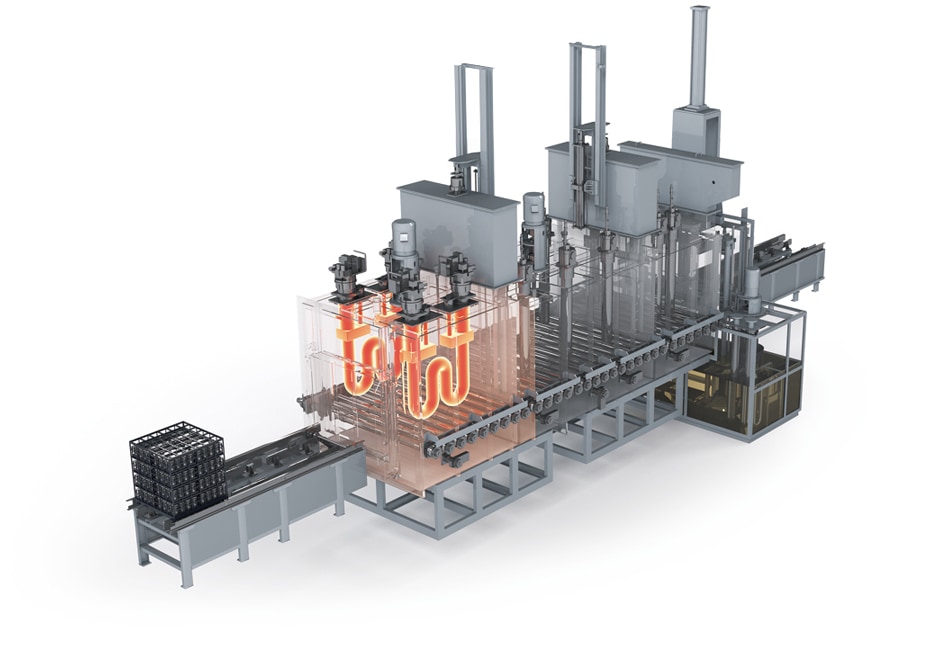
In carbon manufacturing, for example, the optimization of insulation materials and heater configurations is critical for achieving consistent quality in the final product. COMSOL’s ability to model complex three-dimensional heat transfer phenomena—including the interactions between conduction in solids and convection in surrounding fluids—makes it an attractive tool for companies looking to minimize heat losses and improve thermal efficiency.
Thermal Management in Electronics
The thermal management of electronic devices presents another area where COMSOL simulations are extensively applied. Electronic components generate significant heat, and improper heat dissipation can lead to performance degradation or even failure. By incorporating thermal simulations into the design process, engineers can predict hotspots, assess the effectiveness of cooling systems, and optimize thermal pathways.
A typical simulation may involve modeling the thermal performance of circuit boards, where multiple layers of materials with different thermal properties interact. Coupled with electromagnetic simulations, these studies help in designing more reliable systems that maintain acceptable operating temperatures even under high load conditions.
Metallurgical Phase Transformations
COMSOL also provides robust tools to simulate metallurgical phase transformations that occur during thermal treatment. These simulations are vital for understanding how rapid heating and cooling cycles affect the microstructure of metals, and consequently, their mechanical properties. By modeling the kinetics of phase transformations and the associated thermal profiles, engineers can optimize heat treatment processes to achieve desired characteristics in alloy compositions.
This coupled thermal and metallurgical analysis not only aids in predicting the performance of materials but also provides secondary insights into residual stresses and potential defect formations during manufacturing.
Simulation Tools and Modules
Heat Transfer Module
The Heat Transfer Module in COMSOL is specifically designed for the simulation of thermal processes. It allows the user to define the appropriate physics of conduction, convection, and radiation within a single environment. The module’s flexibility in handling multi-domain and multi-physics problems is one of its significant advantages.
Users can apply this module to a range of problems—from the simple thermal analysis of a static furnace to complex simulations involving Joule heating, laser heating, or the thermal effects within composite materials. Its built-in solvers and visualization tools enable engineers to not only simulate but also interpret complex thermal behavior efficiently.
Additional Modules and Extensions
Beyond the basic heat transfer capabilities, COMSOL offers various additional modules that further enhance its application in thermal treatment:
- Metal Processing Module: This module extends the simulation capabilities to processes such as welding, quenching, and other thermally driven metallurgical processes. It provides detailed modeling of phase transformations and residual stress analyses.
- Fluid Flow Module: Particularly useful for conjugate heat transfer problems, this module allows for the integration of fluid dynamics simulations with thermal analysis. It is essential for applications where fluid cooling or forced convection is employed.
- Electromagnetics Module: When thermal treatment involves induction heating or other electromagnetic phenomena, this module allows for the coupling of electrical fields with heat generation, providing a more comprehensive simulation output.
Table: COMSOL Modules for Thermal Simulations
| Module Name | Primary Application | Key Features |
|---|---|---|
| Heat Transfer Module | Conduction, Convection, Radiation | Temperature fields, Energy balances, Material property variation |
| Metal Processing Module | Quenching, Annealing, Welding | Phase transformations, Residual stress analysis |
| Fluid Flow Module | Fluid-Structure Interaction | Coupled heat and fluid flow, Convection models |
| Electromagnetics Module | Induction and Laser Heating | Coupled electromagnetic and thermal analysis |
Advanced Case Studies and Real-World Applications
Case Study: Thermal Analysis of Electronic Devices
In a typical thermal management study, the objective is to optimize the cooling of a high-density circuit board in an electronic device. The simulation involves:
- Modeling the material properties of the circuit board and heat sinks.
- Defining boundary conditions for thermal convection along with adiabatic (or isothermal) boundaries where applicable.
- Coupling the analysis with electromagnetic simulations to account for additional heat generated by electrical components.
- Visualizing temperature gradients and predicting hotspots through post-processing tools provided by COMSOL.
This kind of simulation is critical in the design phase because maintaining optimum temperature profiles is crucial for the reliability and performance of electronic devices. The insights allow engineers to adjust the layout and sizes of heat dissipation components efficiently.
Case Study: Optimization in Metallurgical Processing
In the field of metallurgy, simulations are used to refine and control processes such as quenching and annealing, where rapid temperature changes directly affect material properties. A detailed COMSOL simulation would include:
- Defining a detailed geometric representation of the industrial furnace or quench bath.
- Modeling heat transfer through conduction within the material, convection in the surrounding medium, and radiation effects at the boundaries.
- Incorporating time-dependent effects to simulate rapid cooling or controlled heating cycles, with material properties that vary in tandem with temperature changes.
- Using parameter sweeps to discover optimal processing conditions that minimize internal stresses and maximize desired metallurgical characteristics.
The results from these simulations directly influence process improvements, reducing manufacturing defects and ensuring that the material properties consistently meet the required specifications.
Visualization, Analysis Tools, and Feedback Control
Visualization and Results Interpretation
COMSOL Multiphysics is renowned for its robust visualization capabilities. The simulation output includes detailed temperature maps, volumetric plots, and time-dependent graphs that allow engineers to interpret the results intuitively. These visualization tools play a crucial role in diagnosing issues with thermal performance by clearly showing heat distribution, flux paths, and potential thermal bottlenecks in complex systems.
Feedback Control in Thermal Systems
Maintaining stable thermal conditions in industrial processes often requires integrated feedback control systems. In COMSOL, simulations can be coupled with control models—such as Proportional-Integral-Derivative (PID) controllers—to design and assess feedback mechanisms. For example, a simulation of a Rapid Thermal Processing (RTP) system might incorporate a feedback loop that adjusts the heating elements in real time based on sensor data, ensuring consistent output despite external variations.
The ability to incorporate control strategies into the simulation allows process engineers to predict how the system will respond to changes in operational parameters, reducing both experimental costs and potential downtime.
References
- Heat Transfer Modeling Software for Analyzing Thermal Effects - COMSOL
- Optimizing Thermal Processes in Carbon Manufacturing with Simulation - COMSOL Blog
- Introduction to Thermal Management Modeling with COMSOL® - COMSOL
- Tutorial Model: Thermal Analysis of a Bipolar Transistor - COMSOL
- Development of Quenching Process Recipe Using Simulation - COMSOL
Recommended Queries
Last updated March 13, 2025