
Comprehensive Third Grade Curriculum Planning with Workshops and Assignments
Detailed Curriculum Planning for Third Grade in Accordance with the Colombian Ministry of Education (MED) Guidelines
Key Highlights for Third Grade Curriculum Planning
- Holistic Development: Focus on cognitive, social, and emotional growth through diverse activities.
- Contextual Learning: Integrate local and national contexts into the curriculum to make learning relevant.
- Active Engagement: Emphasize hands-on workshops and projects that encourage student participation and critical thinking.
Introduction to Third Grade Curriculum Planning
Curriculum planning for the third grade, aligned with the Colombian Ministry of Education (MED), involves creating a structured and engaging learning environment. This includes detailed planning across various subjects with integrated workshops and assignments designed to foster a comprehensive educational experience. The goal is to ensure students not only grasp fundamental concepts but also develop critical thinking, problem-solving, and collaborative skills.
Importance of Comprehensive Planning
Effective curriculum planning is crucial for third-grade students as it sets the foundation for future academic success. A well-structured plan ensures that all essential topics are covered comprehensively and that learning activities are age-appropriate and engaging. This approach helps in creating a positive learning environment where students are motivated to learn and participate actively.
Curriculum Components
A third-grade curriculum should cover a range of subjects including Spanish, Mathematics, Natural Sciences, Social Sciences, Arts, and Ethics. Each subject should have specific learning objectives, activities, and assessment methods tailored to the developmental stage of the students. Integrating workshops and hands-on activities helps reinforce learning and makes the curriculum more interactive and enjoyable.
Detailed Subject-Wise Curriculum Plan
Spanish Language and Literature
The Spanish curriculum aims to enhance students' reading, writing, and oral communication skills. It focuses on developing vocabulary, grammar, and comprehension through various literary texts and writing exercises.
Key Topics
- Reading comprehension of stories and poems
- Grammar: nouns, adjectives, verbs, and adverbs
- Writing: descriptive paragraphs, short stories, and simple reports
- Oral communication: presentations, discussions, and storytelling
Workshops and Assignments
- Reading Workshops: Interactive sessions where students read and discuss various texts, focusing on comprehension and vocabulary.
- Creative Writing Projects: Assignments that encourage students to write their own stories and poems, fostering creativity and language skills.
- Grammar Games: Fun activities and games that reinforce grammar concepts.
- Presentation Skills: Opportunities for students to present their work and ideas to the class, improving oral communication skills.

Example of Third Grade Curriculum Planning
Mathematics
The mathematics curriculum focuses on building a strong foundation in arithmetic, geometry, and problem-solving. It aims to develop students' logical thinking and mathematical reasoning skills.
Key Topics
- Number sense: place value, number patterns, and operations (addition, subtraction, multiplication, division)
- Geometry: shapes, lines, angles, and spatial reasoning
- Measurement: length, weight, volume, and time
- Data analysis: collecting, organizing, and interpreting data using charts and graphs
Workshops and Assignments
- Math Games: Interactive games that reinforce basic arithmetic operations and number concepts.
- Geometry Projects: Hands-on activities where students create and explore different shapes and geometric patterns.
- Measurement Activities: Practical exercises involving measuring objects and spaces using different units.
- Data Analysis Projects: Assignments that require students to collect and analyze data, creating charts and graphs to represent their findings.
Natural Sciences
The natural sciences curriculum aims to introduce students to the basic concepts of biology, chemistry, and physics. It focuses on developing their understanding of the natural world and fostering a sense of curiosity and inquiry.
Key Topics
- Living things: plants, animals, and their life cycles
- Ecosystems: habitats, food chains, and environmental interactions
- Matter and energy: properties of matter, sources of energy, and their uses
- The human body: organs, systems, and health
Workshops and Assignments
- Science Experiments: Simple experiments that demonstrate basic scientific principles, such as the properties of matter and the life cycle of plants.
- Nature Walks: Outdoor activities where students explore and observe different ecosystems, identifying plants and animals in their natural habitats.
- Science Projects: Assignments that require students to research and present on various scientific topics, such as the solar system or the human body.
- Guest Speakers: Inviting scientists or environmental experts to talk to the class about their work and inspire students to pursue careers in science.
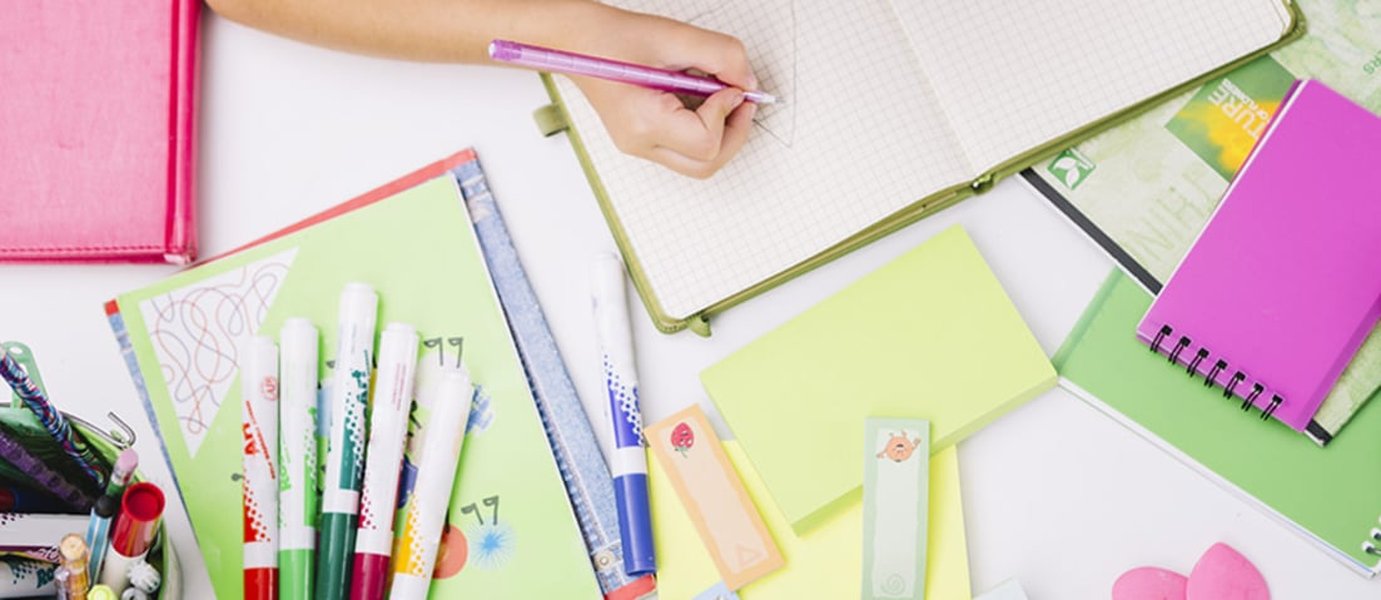
Materiales escolares
Social Sciences
The social sciences curriculum aims to introduce students to the basic concepts of history, geography, and civics. It focuses on developing their understanding of the world around them and fostering a sense of social responsibility.
Key Topics
- History: important events, people, and cultures in Colombian history
- Geography: maps, landforms, climate, and natural resources of Colombia
- Civics: government, laws, and citizenship
- Culture: traditions, customs, and diversity of Colombian society
Workshops and Assignments
- History Timelines: Activities where students create timelines of important historical events, helping them understand the sequence of events.
- Map Reading Exercises: Practical exercises involving reading and interpreting maps, identifying different geographical features and locations.
- Civics Debates: Discussions and debates on important civic issues, encouraging students to think critically and express their opinions.
- Cultural Presentations: Assignments that require students to research and present on different aspects of Colombian culture, promoting cultural awareness and appreciation.
Arts and Crafts
The arts and crafts curriculum aims to develop students' creativity, imagination, and artistic skills. It focuses on exploring different art forms and techniques, and encouraging students to express themselves through art.
Key Topics
- Drawing: basic techniques, perspective, and shading
- Painting: color theory, different painting styles, and techniques
- Sculpture: working with different materials, creating three-dimensional art
- Crafts: paper crafts, fabric crafts, and recycling projects
Workshops and Assignments
- Drawing Workshops: Interactive sessions where students learn and practice different drawing techniques, such as sketching and shading.
- Painting Projects: Assignments that encourage students to experiment with different painting styles and techniques, such as watercolor and acrylic painting.
- Sculpture Projects: Hands-on activities where students create sculptures using different materials, such as clay and paper mache.
- Craft Workshops: Practical sessions where students learn and create different crafts, such as paper flowers and fabric collages.
Sample Third Grade Schedule
Below is a sample weekly schedule for a third-grade class, incorporating various subjects and activities:
| Time | Monday | Tuesday | Wednesday | Thursday | Friday |
|---|---|---|---|---|---|
| 8:00 - 9:00 AM | Spanish | Mathematics | Spanish | Mathematics | Social Sciences |
| 9:00 - 10:00 AM | Mathematics | Natural Sciences | Mathematics | Natural Sciences | Arts and Crafts |
| 10:00 - 10:30 AM | Recess | ||||
| 10:30 - 11:30 AM | Natural Sciences | Social Sciences | Natural Sciences | Social Sciences | Ethics |
| 11:30 AM - 12:30 PM | Arts and Crafts | Spanish | Arts and Crafts | Spanish | Review and Catch-Up |
This table provides an example of how subjects can be distributed throughout the week. The schedule can be adjusted based on the specific needs and priorities of the school.
Assessment and Evaluation
Assessment and evaluation are integral parts of the curriculum planning process. They help in monitoring student progress and identifying areas that need improvement. Various assessment methods should be used to evaluate student learning, including tests, quizzes, projects, and class participation.
Assessment Methods
- Formative Assessments: Ongoing assessments that provide feedback to students and teachers, helping to adjust teaching and learning strategies.
- Summative Assessments: End-of-unit or end-of-term assessments that evaluate student learning and achievement.
- Performance-Based Assessments: Assessments that require students to demonstrate their knowledge and skills through projects, presentations, and performances.
- Portfolio Assessments: Collections of student work that showcase their learning and progress over time.
Resources and Materials
Effective curriculum planning requires access to a variety of resources and materials, including textbooks, workbooks, multimedia resources, and online tools. It is important to ensure that these resources are age-appropriate, culturally relevant, and aligned with the curriculum objectives.
Essential Resources
-
Textbooks and workbooks for each subject
-
Multimedia resources, such as videos, audio recordings, and interactive simulations
-
Online learning platforms and educational websites
-
Art supplies, such as paper, paints, and brushes
-
Science equipment, such as beakers, test tubes, and microscopes
-
Manipulatives for math, such as counters and geometric shapes
FAQ Section
What are the main subjects in the third-grade curriculum?
The main subjects include Spanish, Mathematics, Natural Sciences, Social Sciences, Arts, and Ethics.
How can workshops and assignments enhance learning?
Workshops and assignments provide hands-on experiences that reinforce learning, making the curriculum more interactive and enjoyable. They also help develop critical thinking and problem-solving skills.
What are some effective assessment methods for third grade?
Effective assessment methods include formative assessments, summative assessments, performance-based assessments, and portfolio assessments.
Why is it important to integrate local contexts into the curriculum?
Integrating local contexts makes learning more relevant and meaningful for students, helping them connect with their community and culture.
References
 estudiandoencasasantaluisa.wordpress.com
Last updated April 15, 2025