
Unlock Your Movement Potential: A Focused Session for Thoracic Mobility & Glute Power
Boost overhead reach and hip drive with this targeted workout plan designed for structure, efficiency, and confidence.
This session is meticulously designed for a fit, strong, and capable individual experiencing limitations due to suboptimal thoracic mobility (leading to a flexed upper back posture and restricted overhead movement) and underactive glutes, often linked to tight hip flexors and quad dominance. We'll employ a structured approach, integrating mobility throughout, to enhance movement efficiency, build confidence, and introduce greater movement diversity.
Session Highlights
Key Takeaways from This Plan
- Integrated Mobility: Mobility drills are woven throughout the warm-up and main workout phases, targeting the thoracic spine and hip flexors precisely when the body is receptive, ensuring continuous improvement rather than isolated stretching.
- Targeted Activation: Exercises specifically focus on waking up underactive glutes and encouraging thoracic extension, directly counteracting quad dominance and upper back flexion to improve posture and functional strength.
- Confidence-Building Flow: The session progresses logically from foundational movements to more integrated patterns, using clear cues and explanations to enhance body awareness (presence) and build confidence through achievable challenges and noticeable improvements.
The RAMP Warm-Up: Preparing for Optimal Movement (15-20 Minutes)
Setting the Stage: Raise, Activate, Mobilise, Potentiate
The RAMP protocol provides a systematic way to prepare the body and mind for the demands of the session. It progressively increases readiness, focusing specifically on the areas needing attention: the thoracic spine and the glutes/hips.
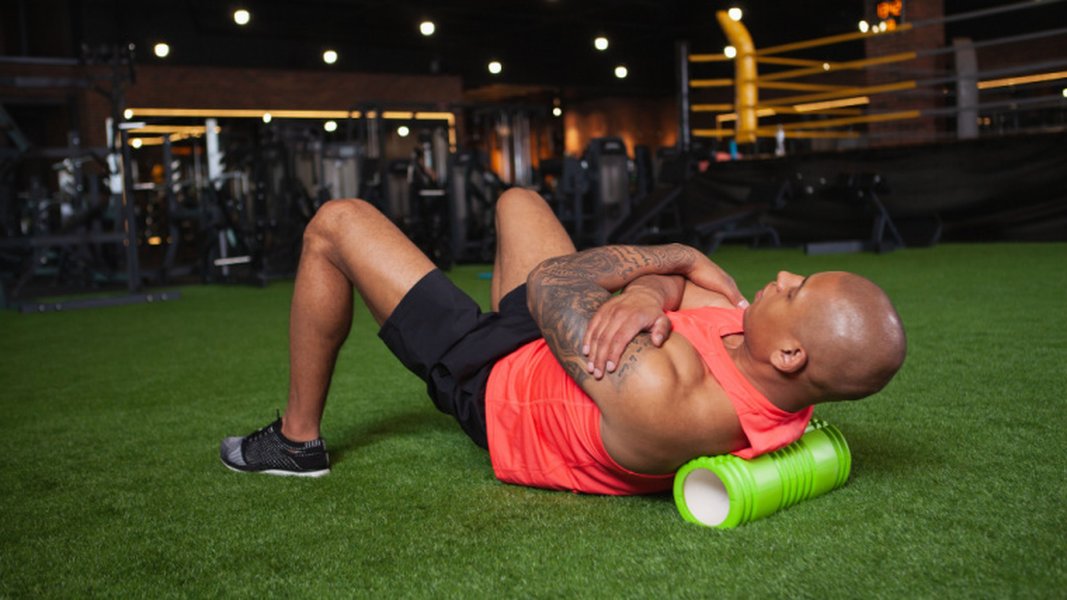
Mobilizing the thoracic spine is key for overhead movements.
Raise (5 Minutes)
Goal: Increase heart rate, core body temperature, and blood flow to muscles.
- Light Jogging / Dynamic Movement (3 mins): Start with jogging in place or light cycling. Incorporate high knees and butt kicks (30 seconds each, repeat). Cue: "Focus on keeping your chest lifted and shoulders relaxed as you move."
- Arm Circles & Swings (1 min): Forward and backward arm circles, gradually increasing range. Add gentle torso twists. Cue: "Feel your upper back moving as you swing your arms."
- Jumping Jacks (1 min): Standard jumping jacks. Cue: "Maintain a steady rhythm, breathing consistently."
Rationale: This phase gently elevates physiological systems, preparing muscles and connective tissues for more specific work. The focus on posture cues begins early.
Activate & Mobilise (7-10 Minutes)
Goal: Activate target muscles (glutes) and mobilize key joints (thoracic spine, hips).
- Glute Activation Circuit (Repeat 2x):
- Glute Bridges (12 reps): Lie on back, knees bent, feet flat. Lift hips by squeezing glutes. Cue: "Drive through your heels and squeeze your glutes hard at the top. Avoid arching your lower back."
- Clamshells (12 reps per side): Lie on side, knees bent, feet together. Lift top knee using glute muscles. Add a resistance band above knees for challenge. Cue: "Keep your hips stacked and core engaged. Initiate the movement from your glutes."
- Bird-Dog (8 reps per side): Start on all fours. Extend opposite arm and leg simultaneously, maintaining a flat back. Cue: "Reach long through your heel and fingertips. Keep your core braced and avoid hip rotation."
- Thoracic & Hip Mobility:
- Cat-Cow (10 reps): On all fours, alternate arching (cow) and rounding (cat) the spine. Cue: "Focus the movement between your shoulder blades. Inhale as you arch, exhale as you round, emphasizing thoracic extension."
- Thoracic Rotations / Thread the Needle (8 reps per side): On all fours, reach one arm under the body, then rotate open towards the ceiling. Cue: "Follow your hand with your eyes. Feel the stretch and rotation in your upper back."
- World's Greatest Stretch (5 reps per side): Step into a deep lunge. Place one hand on the floor, rotate torso opening chest towards the front knee. Add elbow-to-instep for hip flexor stretch. Cue: "Sink into the hip stretch while actively rotating your upper back."
Rationale: Directly targets the client's limitations. Glute activation primes the muscles needed to counteract quad dominance. Thoracic and hip mobility drills address stiffness, improving potential for better posture and overhead movement. Integrating activation and mobilization enhances neuromuscular connection.
Potentiate (3-5 Minutes)
Goal: Increase the intensity and prepare the nervous system for the main workout patterns.
- Bodyweight Squats (10 reps): Focus on depth and maintaining an upright torso. Cue: "Drive your knees out, keep your chest up, and engage your glutes as you stand."
- Walking Lunges (6 reps per side): Focus on hip extension of the back leg and stable torso. Cue: "Step long, drive through the front heel, and squeeze the glute of the back leg."
- Light Medicine Ball Rotational Throws (Optional, 5 reps per side) or Dynamic Arm Swings across body (10 reps): If available, gentle throws against a wall. Otherwise, dynamic swings. Cue: "Generate power from your hips and core, allowing your upper back to rotate."
Rationale: These exercises are more dynamic and closer to the movement patterns in the main session. They improve coordination and power output, ensuring the client is ready for load and complexity.
Main Movement Session: Building Strength and Control (25-30 Minutes)
Integrating Patterns for Efficiency and Diversity
This section focuses on reinforcing good movement mechanics, enhancing thoracic extension, promoting glute activation, and controlling movement against resistance. Mobility drills are integrated between sets to maintain range of motion and reinforce the session's goals.
Movement Block 1: Posterior Chain & Thoracic Extension Focus
- Goblet Squats (3 sets of 10-12 reps): Holding a weight at the chest naturally encourages an upright posture.
- Cues: "Keep the weight close to your chest. Drive the floor away through your heels, squeezing glutes at the top. Imagine lengthening your spine upwards."
- Integrated Mobility (Between Sets): 15-20 seconds of gentle Thoracic Extension over a foam roller or seated chest openers.
- Romanian Deadlifts (RDLs) (3 sets of 10-12 reps): Focus on the hip hinge pattern to target hamstrings and glutes.
- Cues: "Maintain a flat back throughout. Push your hips back as if closing a car door, feeling a stretch in your hamstrings. Squeeze glutes to return to standing. Avoid rounding your shoulders."
- Integrated Activation (Between Sets): 10 reps of Banded Glute Bridges focusing on the squeeze.
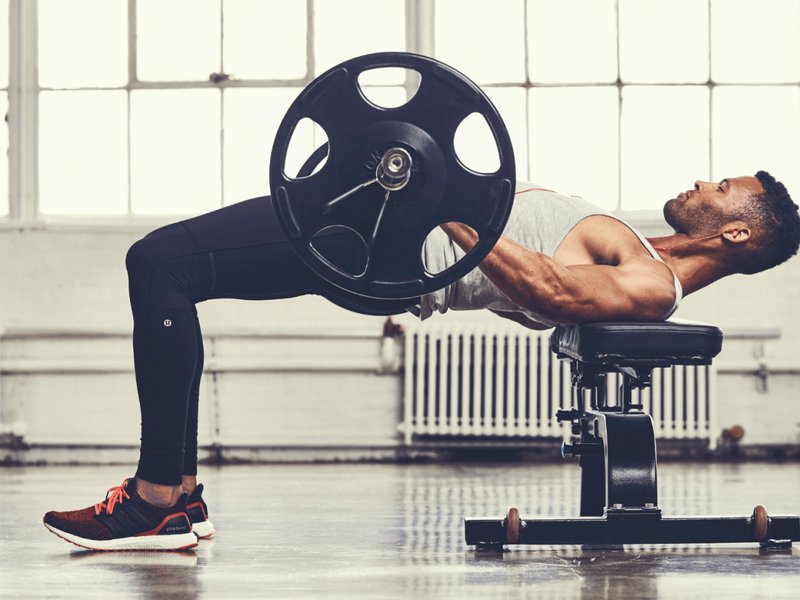
Exercises like Hip Thrusts (similar mechanism to Glute Bridges) are excellent for glute activation.
Movement Block 2: Overhead Mobility & Core Stability
- Seated Dumbbell Overhead Press (or Band Press) (3 sets of 8-10 reps): Sitting helps isolate the upper body and control lumbar position. Start light.
- Cues: "Press directly overhead, keeping your ribs down and core engaged. Think about lifting your chest towards the weight to encourage thoracic extension, rather than arching your lower back. Reach full extension if possible without pain."
- Integrated Mobility (Before Sets): 5 reps per side of standing Wall Slides focusing on scapular movement and thoracic extension.
- Pallof Press (Anti-Rotation) (3 sets of 10-12 reps per side): Using a cable or resistance band anchored at chest height.
- Cues: "Stand perpendicular to the anchor point. Press the band/handle straight out from your chest and resist the rotational pull. Keep your hips and shoulders square. Feel the tension in your core, glutes, and upper back stabilizing you."
Visualizing Session Focus: Key Performance Areas
Radar Chart Breakdown
This chart visually represents the primary focus areas of the session. While all components are important, the emphasis is skewed towards addressing the client's specific needs – enhancing Thoracic Mobility and Glute Activation, while also incorporating essential supporting elements like Core Stability and Hip Mobility. Confidence Building reflects the attention given to coaching cues and progressive overload.
Mindmap: Session Structure Overview
Visualizing the Workout Flow
This mindmap outlines the structure of the session, starting from the RAMP warm-up, progressing through the main movement patterns focused on the client's needs, and ending with a cool-down. It visually connects the different phases and key exercises.
+ Thoracic Mobility"] id2a2["Romanian Deadlifts
+ Glute Activation"] id2b["Block 2: Overhead & Core"] id2b1["Seated OHP / Band Press
+ Wall Slides"] id2b2["Pallof Press"] id3["Cool Down & Mobility (5 min)"] id3a["Static Stretching (Hip Flexors, Pecs)"] id3b["Foam Rolling (Thoracic Spine - optional)"]
Exercise Focus: Thoracic vs. Glute Activation
Targeting Specific Movement Goals
This table highlights key exercises from the session and categorizes them based on their primary focus – improving thoracic mobility (extension and rotation) or enhancing glute activation (maximus and medius). Some exercises contribute to multiple goals.
| Exercise | Primary Focus | Secondary Focus / Benefit | Cue Emphasis |
|---|---|---|---|
| Cat-Cow | Thoracic Mobility (Flexion/Extension) | Spinal Awareness | Move segmentally through the upper back |
| Thoracic Rotations (Thread the Needle) | Thoracic Mobility (Rotation) | Shoulder Girdle Mobility | Rotate from the upper back, not lumbar |
| Goblet Squat | Glute Activation (Maximus) / Quad Strength | Thoracic Extension (Postural) | Chest up, drive through heels |
| Romanian Deadlift (RDL) | Glute Activation (Maximus) / Hamstring Flexibility | Hip Hinge Pattern | Flat back, push hips back |
| Glute Bridge | Glute Activation (Maximus) | Hip Extension | Squeeze glutes hard at the top |
| Clamshell | Glute Activation (Medius/Minimus) | Hip Abduction / Stability | Initiate from glutes, avoid hip rolling |
| Seated Overhead Press | Overhead Mechanics / Shoulder Strength | Thoracic Extension (Active) | Lift chest, keep ribs down |
| Pallof Press | Core Stability (Anti-Rotation) | Glute Engagement (Isometric) | Resist rotation, stay square |
Visual Demonstration: Thoracic Mobility Flow
See Key Movements in Action
Understanding how to perform mobility exercises correctly is crucial. This video provides a short flow focusing on thoracic mobility, similar to the movements incorporated in our warm-up and integrated mobility sections (like Cat-Cow and rotational movements). Observing the controlled pace and range of motion can help reinforce proper technique for improving upper back movement and reducing stiffness.
Cool Down & Final Mobility (5 Minutes)
Consolidating Gains and Promoting Recovery
Transitioning out of the workout with gentle stretching helps restore muscles to their resting length and can aid recovery.
- Kneeling Hip Flexor Stretch (Couch Stretch - modified if needed) (30-45 seconds per side): Focus on tucking the pelvis slightly (posterior pelvic tilt) to deepen the stretch in the front of the hip. Cue: "Gently squeeze the glute of the stretching leg to intensify the hip flexor stretch. Breathe deeply."
- Seated Pec Stretch or Doorway Stretch (30 seconds): Open the chest, stretching the pectoral muscles. Cue: "Feel the stretch across your chest and the front of your shoulders. Keep shoulders down away from ears."
- Supine Thoracic Extension over Foam Roller (Optional, 60 seconds): Lie with the roller perpendicular to your spine, under the upper back. Gently extend backward, supporting your head. Cue: "Relax over the roller, allowing your chest to open. Breathe into the stretch."
Delivery Approach: Building Confidence and Presence
Coaching for Success
Delivering this session effectively involves more than just listing exercises. Here’s how to foster confidence and presence:
- Clear Communication: Use concise, positive language. Explain the "why" behind exercises (e.g., "We're doing RDLs to strengthen your glutes and hamstrings, which helps counterbalance tight hip flexors").
- Confident Presence: Maintain good posture and eye contact (if applicable). Speak clearly and calmly. Demonstrate exercises with control and precision.
- Focus on Quality: Emphasize proper form over speed or weight. Provide specific, actionable cues (e.g., instead of "straight back," try "imagine a straight line from your tailbone to the crown of your head").
- Positive Reinforcement: Acknowledge effort and improvements, no matter how small ("Great control on that rep!" or "Notice how much higher you can reach now?").
- Encourage Awareness (Presence): Ask questions that guide internal focus ("Where do you feel this stretch?" or "Can you feel your glutes working here?").
- Adaptability: Be prepared to modify exercises based on the client's feedback and ability. Offer regressions or progressions as needed to ensure success and appropriate challenge.
Frequently Asked Questions (FAQ)
Common Questions About Thoracic Mobility and Glute Activation
Why is thoracic mobility important?
Good thoracic mobility (movement in the upper/mid-back) is crucial for overall posture, shoulder health, and efficient movement. It allows for proper rotation and extension needed for overhead activities (like reaching or pressing), throwing, and even breathing mechanics. Limited thoracic mobility often leads to compensation in the lower back or shoulders, increasing injury risk and reducing performance.
What does 'glute activation' mean and why focus on it?
Glute activation refers to consciously engaging and using the gluteal muscles (buttocks) during movement. Many people, especially those who sit a lot or are quad-dominant, underutilize their glutes. Focusing on activation helps "wake up" these powerful muscles, improving hip extension, pelvic stability, and power generation. Strong, active glutes reduce strain on the lower back and knees and counteract the effects of tight hip flexors.
How does integrating mobility help more than just stretching at the end?
Integrating mobility means performing mobility drills during the warm-up and between sets of strength exercises. This approach has several benefits: 1) It prepares the specific joints for the movements ahead. 2) It takes advantage of post-activation potentiation (muscles are more receptive after being worked). 3) It allows you to immediately use any newly gained range of motion in the subsequent strength exercise, helping to solidify better movement patterns. Stretching only at the end is still beneficial, but integration can lead to more immediate improvements in movement quality during the session.
What if I feel my quads or lower back working instead of my glutes?
This is common, especially initially. Try these tips: 1) Slow down the movement and focus intently on the mind-muscle connection with your glutes. 2) Reduce the weight or resistance. 3) Ensure your form is correct – for example, in a glute bridge, make sure you're driving through your heels and not excessively arching your lower back. 4) Perform specific glute activation exercises (like clamshells or bridges) right before the main lift to "prime" the muscles. If it persists, ask for a form check or try a different exercise variation.
Recommended Next Steps
Explore Further Insights
- What are effective long-term strategies for sustaining thoracic mobility improvements?
- Can you explore advanced glute activation techniques suitable for strength athletes?
- How exactly does hip flexor tightness contribute to poor posture and affect athletic performance?
- What is the role of breathing exercises in enhancing mobility training effectiveness?
References
Sources Used for Session Design
Last updated May 4, 2025