
Trapped in the Open During a Thunderstorm? Discover Life-Saving Actions You Must Take!
Navigating the dangers of an open field when lightning strikes: a guide to minimizing risk and staying safe.
Being caught in an open field during a thunderstorm is a perilous situation. Lightning is a significant and unpredictable threat, particularly in exposed areas where you might become the tallest object, or be near conductive elements. Understanding and implementing immediate safety measures can dramatically reduce your risk of injury or death. This guide synthesizes expert advice to help you navigate this dangerous scenario.
Essential Safety Highlights
- Prioritize Enclosed Shelter: The safest places are substantial buildings (with plumbing and wiring) or hard-topped metal vehicles with windows closed. If thunder is audible, you are within striking distance of lightning.
- The Lightning Crouch: If no shelter is available, adopt the lightning safety position: crouch low with feet together, head tucked, and ears covered. Do not lie flat on the ground.
- The 30-30 Rule: After seeing lightning, count the seconds until you hear thunder. If it's 30 seconds or less, seek shelter immediately. Wait at least 30 minutes after the last clap of thunder before resuming outdoor activities.
Understanding the Peril: Why Open Fields Are Treacherous
Open fields are particularly dangerous during thunderstorms primarily because they offer no substantial protection from lightning. Lightning seeks the path of least resistance to the ground, and in an open area, a person can easily become the tallest object, making them a prime target. More than half of all lightning-related fatalities occur during outdoor recreational activities, with many of these in open fields or yards. It's crucial to remember that lightning can strike up to 10 miles away from the storm's center, meaning you can be at risk even if it's not raining heavily or the storm seems distant.
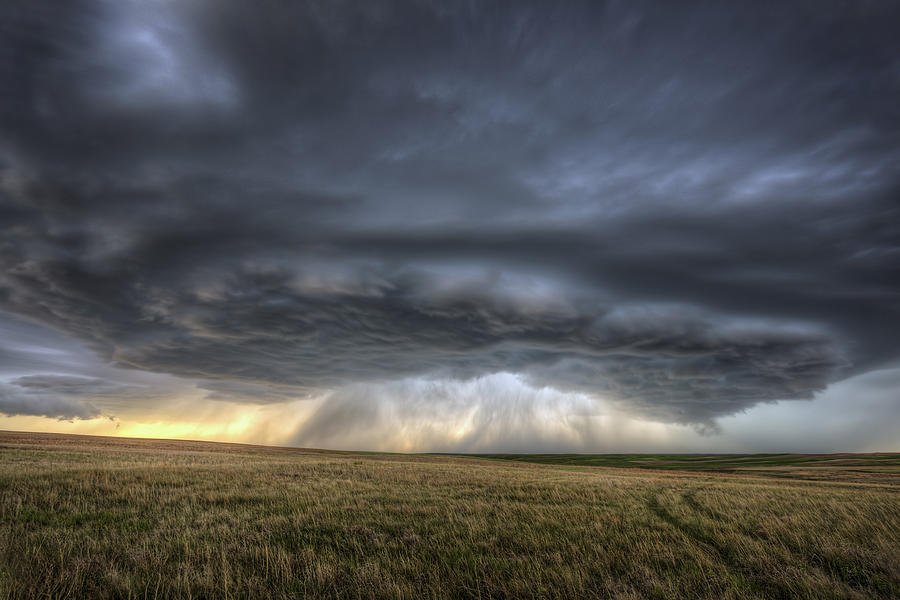
A supercell thunderstorm developing over an open plain, highlighting the vulnerability when no shelter is nearby.
Key Dangers in Open Fields
Direct Strikes
A direct lightning strike occurs when a person becomes part of the main lightning discharge channel. This is most likely to happen to individuals in open areas or near isolated tall objects.
Ground Current
When lightning strikes the ground, the electrical charge can spread outwards along the surface. This ground current is a major cause of lightning casualties. Lying flat on the ground increases your contact area and thus your risk from ground current.
Side Flashes (or Side Splashes)
If lightning strikes a taller object nearby (like a tree or pole), a portion of the current can jump from that object to a nearby victim. This is why standing near isolated tall objects is dangerous.
Immediate Actions: Your Survival Guide in an Open Field
If you hear thunder, "When thunder roars, go indoors" is the cardinal rule. However, if you are caught out, swift and correct action is vital.
Seek Immediate Shelter (If Possible)
Your first and foremost priority should be to get to a safe shelter. The best options are:
- Substantial Buildings: Look for fully enclosed buildings with electrical wiring and plumbing. Avoid small, open structures like picnic shelters, dugouts, or gazebos, as these do not offer adequate protection.
- Hard-Topped Vehicles: A hard-topped metal car, van, or bus with the windows rolled up provides good protection. The metal shell acts like a Faraday cage, directing the current around the occupants to the ground. Avoid contact with metal parts of the vehicle's interior.
If Shelter is Unreachable: Defensive Measures
If you cannot reach a safe building or vehicle, you must take steps to reduce your risk in the open field. Remember, no place outdoors is completely safe during a thunderstorm.
Find the Lowest Ground
Move away from elevated areas like hilltops, ridges, or peaks. Seek out the lowest possible spot, such as a ravine, valley, ditch, or depression in the ground. This reduces your chances of being the highest point in the vicinity.
Adopt the Lightning Safety Position (Crouch)
This position is a last resort if caught in the open and is designed to minimize your height and contact with the ground:
- Crouch down on the balls of your feet, keeping your feet as close together as possible.
- Tuck your head towards your knees and cover your ears with your hands to protect them from the loud thunder.
- Make yourself the smallest target possible.
- Crucially, do NOT lie flat on the ground. Lying flat increases your body's contact with the ground, making you more vulnerable to potentially deadly ground currents.
Recognize signs of an imminent strike: if your hair stands on end, your skin tingles, or you hear crackling, buzzing, or clicking sounds, immediately assume the lightning safety position. These sensations may indicate that lightning is about to strike.
If in a Group: Maintain Distance
If you are with other people, spread out, maintaining a distance of at least 50-100 feet between each person. This will reduce the risk of multiple casualties if lightning strikes nearby, as the current is less likely to jump between individuals.
Avoid Conductors and High-Risk Objects
Stay away from objects that can conduct electricity or are known lightning attractors:
- Water: Get out of and away from any bodies of water, including ponds, lakes, streams, or even large puddles, as water is an excellent conductor of electricity.
- Metal Objects: Avoid contact with metal objects such as fences (especially wire fences), gates, metal poles, power lines, machinery, golf clubs, or bicycles. Put down any metal items you might be carrying.
- Isolated Tall Objects: Do not take shelter under isolated trees, flagpoles, or telephone poles. These objects are more likely to be struck by lightning, and you could be injured by a side flash or ground current. If in a forest, seek shelter in a low area under a thick growth of small trees, surrounded by taller trees.
The "30-30 Rule": When is it Safe to Emerge?
A critical aspect of thunderstorm safety is knowing when the danger has passed. The "30-30 Rule" is a widely recommended guideline:
- Count to 30: If you see lightning, count the number of seconds until you hear thunder. If that count is 30 seconds or less, the thunderstorm is within six miles, and you are in immediate danger. Seek shelter immediately.
- Wait 30 Minutes: After the last clap of thunder, wait at least 30 minutes before resuming any outdoor activities. Lightning can strike even after the main part of the storm has passed, sometimes called "bolts from the blue." Each new clap of thunder resets the 30-minute clock.
Adhering to this rule significantly reduces the risk of being struck by lightning as the storm approaches or recedes.
Visualizing Risk Factors: Key Considerations During a Thunderstorm
To better understand the varying levels of danger associated with different situations during a thunderstorm, the following radar chart provides an illustrative comparison. This chart is based on general safety principles and expert recommendations, assigning relative risk scores (from 1, lowest risk, to 10, highest risk) to common scenarios. It emphasizes that being in a substantial, enclosed building is by far the safest option, while being in open water or standing tall in an open field presents the highest risk.
This visualization underscores the importance of making informed decisions based on your surroundings and the available protective measures during a thunderstorm.
Mapping Your Safety Strategy: A Mindmap for Thunderstorm Preparedness
Navigating a thunderstorm in an open field requires quick thinking and adherence to safety protocols. This mindmap outlines the critical decision-making process and actions to take, from recognizing the initial threat to implementing last-resort safety measures.
This mindmap serves as a quick visual reference to reinforce the key steps for minimizing risk when caught in an open field during a thunderstorm.
Thunderstorm Safety: Expert Insights and Demonstrations
Visual demonstrations and expert advice can further clarify the best practices for staying safe during a thunderstorm, especially when caught outdoors. The following video provides practical tips on lightning safety when outside, reinforcing many of the points discussed.
This video discusses how to react if you find yourself in an area with no immediate shelter during a storm, emphasizing the importance of making yourself a smaller target and avoiding conductive elements. It aligns with guidance from meteorological services and safety organizations on minimizing lightning risk in exposed environments.
Comparative Safety Measures: Shelter vs. Open Field Tactics
Understanding the difference in safety actions based on your location is crucial. The table below compares recommended behaviors when in an ideal shelter versus being caught in an open field with no immediate shelter.
| Safety Aspect | Ideal Shelter (Substantial Building/Hard-Topped Vehicle) | Open Field (No Shelter Available - Last Resort) |
|---|---|---|
| Primary Goal | Remain inside until the storm passes (30 min after last thunder). | Minimize personal risk until shelter can be reached or storm passes. |
| Body Position | Normal, comfortable position. | Lightning safety crouch: low, feet together, head tucked, ears covered. Do NOT lie flat. |
| Proximity to Conductors | Avoid contact with plumbing, electrical appliances, corded phones, and windows/doors. In a vehicle, avoid touching metal components. | Stay far away from water, metal objects (fences, poles), and isolated tall trees. |
| Height Factor | Not a direct concern inside a protective structure. | Actively seek the lowest ground; avoid being the tallest object. |
| Group Behavior | Stay together, ensuring everyone is safe within the shelter. | Spread out at least 50-100 feet apart. |
| Risk Level | Very low, if guidelines are followed. | Significantly higher; actions aim to mitigate, not eliminate, risk. |
This comparison highlights that while actions in an open field can reduce risk, they are fundamentally last-ditch efforts. The priority should always be to reach a proper shelter.
Frequently Asked Questions (FAQ)
Is it true that lightning never strikes the same place twice?
No, this is a myth. Lightning can, and often does, strike the same place multiple times, especially tall, isolated, or conductive objects. For example, the Empire State Building is struck by lightning numerous times each year.
Are rubber tires on a car what protect you from lightning?
No, it's the metal roof and sides of a hard-topped vehicle that protect you, not the rubber tires. The metal shell conducts the lightning current around the occupants and into the ground (acting as a Faraday cage). Convertibles, vehicles with fiberglass or plastic shells, and open-sided vehicles offer little to no protection.
If I'm caught in an open field, should I lie flat on the ground?
No, absolutely not. Lying flat on the ground increases your contact with the ground, making you more susceptible to dangerous ground currents if lightning strikes nearby. Instead, adopt the lightning safety crouch: feet together, head low, making yourself as small a target as possible.
What if I'm near a group of trees but not an isolated one?
While an isolated tree is extremely dangerous, if you are in a forested area and cannot get to a building or vehicle, seek shelter in a low-lying area under a dense growth of smaller trees that are surrounded by taller ones. Avoid being near the tallest trees in the grove. This is still less safe than a proper building or vehicle.
Can I use my cell phone during a thunderstorm?
Using a cell phone (cordless) outdoors during a thunderstorm is generally considered safe as it doesn't attract lightning. However, it's crucial to avoid using corded phones or any electronic device plugged into an electrical outlet while indoors, as lightning can travel through wiring systems.
Recommended
- What are the early warning signs of an approaching thunderstorm?
- How does the 30-30 rule for lightning safety work in detail?
- What are the differences in lightning risk between various types of outdoor shelters?
- What first aid should be administered to a lightning strike victim?
References
Last updated May 6, 2025