

The rise of social media platforms like TikTok has dramatically reshaped how individuals, particularly younger generations, engage with everyday activities. For Technical-Vocational-Livelihood (TVL) students, who are often immersed in practical skill development, TikTok has become an influential medium for exploring and adopting home cooking practices. Understanding these "lived experiences" requires a robust theoretical lens that can capture the intricate interplay between individual motivations, social influences, digital content, and the actual practice of cooking. By examining this phenomenon through established frameworks, we can gain deeper insights into how TVL students learn, perform, and find meaning in home cooking within a digitally mediated environment.
Key Insights into Digital Culinary Experiences
- Social Cognitive Theory (SCT) highlights how TVL students observe and imitate cooking behaviors on TikTok, driven by perceived self-efficacy and the entertaining nature of the content, fostering practical skill development.
- The Theory of Planned Behavior (TPB) explains how TikTok content influences students' attitudes towards home cooking, their perceptions of social norms, and their confidence in their cooking abilities, ultimately shaping their intentions and actual cooking practices.
- Practice Theory provides a comprehensive view of home cooking as a dynamic activity, where TikTok acts as a mediating force, influencing the materials, competencies, and meanings associated with culinary engagement among TVL students.
Navigating Home Cooking: Theoretical Lenses for TVL Students on TikTok
To thoroughly investigate the lived experiences of home cooking practices on TikTok among TVL students, several theoretical frameworks offer powerful analytical tools. These frameworks help in dissecting the complex motivations, behaviors, and contextual factors that shape how students interact with and learn from culinary content on the platform. We will explore two primary frameworks: the Theory of Planned Behavior (TPB) and Practice Theory, also incorporating elements of Social Cognitive Theory (SCT) and the PERMA Model where relevant to provide a comprehensive understanding.
Theory of Planned Behavior (TPB): Decoding Culinary Intentions
The Theory of Planned Behavior (TPB), developed by Icek Ajzen, is a highly influential social psychological framework used to predict and understand human behavior. At its core, TPB posits that an individual's intention to perform a behavior is the most immediate determinant of that behavior. This intention, in turn, is shaped by three crucial constructs:
- Attitude Toward the Behavior: This refers to an individual's positive or negative evaluation of performing the behavior. For TVL students, this would encompass their personal beliefs about home cooking—whether they perceive it as enjoyable, healthy, cost-effective, or a valuable skill to possess. TikTok's visually appealing and often simplified cooking content can significantly influence these attitudes by presenting cooking as a fun, accessible, and rewarding activity.
- Subjective Norms: This component reflects the perceived social pressure to perform or not perform a behavior. It involves a student's beliefs about what important others—such as family, friends, peers, or even popular TikTok food influencers—think they should do regarding home cooking, and their motivation to comply with these perceived expectations. When cooking trends go viral on TikTok, or when peers share their culinary creations, it can create a social environment that encourages engagement in home cooking.
- Perceived Behavioral Control (PBC): This construct relates to an individual's belief in their ability to perform the behavior successfully. It considers their perceptions of their own skills, resources (e.g., ingredients, kitchen tools), and the presence of opportunities or barriers. TikTok's short-form video format, often demonstrating easy-to-follow steps and budget-friendly recipes, can significantly enhance TVL students' PBC by making cooking seem less daunting and more achievable. This aligns closely with the concept of self-efficacy from Social Cognitive Theory.
In the context of TVL students and TikTok, TPB can explain why some students are more motivated to engage in home cooking, how their exposure to TikTok content influences their intentions, and ultimately, how these intentions translate into actual culinary practices. TikTok acts as a powerful mediator, shaping attitudes through engaging content, reinforcing subjective norms via popular trends and influencer culture, and enhancing perceived behavioral control by providing accessible recipes and practical tips.
Review of Related Literature (RRL) for TPB
Literature extensively supports the application of TPB in predicting health-related behaviors, including dietary choices and home meal preparation. Studies have consistently shown that strong positive attitudes towards cooking, favorable social norms, and high perceived behavioral control are significant predictors of an individual's intention to cook at home and the frequency of their cooking activities. Research on media influence indicates that digital platforms can effectively alter these TPB constructs. For instance, exposure to food-related content on social media has been linked to shifts in attitudes towards healthier eating and increased self-efficacy in cooking. The "Cooking at Home: Correlates of Frequency and Intention" study (PMC10981176) explicitly utilizes TPB to understand cooking intentions, underscoring its relevance for this topic. Furthermore, the role of perceived ease and accessibility offered by online videos in boosting self-efficacy, a key element of PBC, has been highlighted in various culinary interventions.
Research Results Synthesis (RRS) for TPB
Empirical studies applying TPB to cooking behaviors among students or young adults consistently demonstrate its predictive power. For example, research on elementary students (which can be extended to TVL learners due to similar developmental stages of learning practical skills) has shown a strong correlation between intentions to cook and actual cooking frequency, influenced by their attitudes towards healthy practices. Regarding digital media, studies investigating the impact of social media influencers indicate that observing them can trigger behavioral changes, with participants reporting increased control over their cooking behaviors after viewing instructional content. This aligns with findings from the "Home cooking in the digital age: When observing food influencers..." study (researchgate.net). Moreover, the PERMA model, when integrated with TPB-based studies, has shown how cooking experiences, potentially influenced by TikTok, contribute to well-being gains, reinforcing the motivational stages in cooking, especially among student populations. This suggests that TikTok's normative influence can normalize and promote cooking among youth, serving as a powerful tool for skill acquisition and positive lifestyle changes.
Practice Theory: Unraveling the Fabric of Culinary Routines
Practice Theory offers another compelling lens for examining home cooking, viewing it not merely as a series of individual choices but as complex "practices" embedded in broader social, material, and cultural contexts. Drawing from theorists like Theodore Schatzki, this framework emphasizes that everyday activities, including cooking, are dynamic wholes comprising interconnected elements:
- Materials: These are the physical objects and infrastructure involved in the practice. For home cooking, this includes ingredients, kitchen tools, appliances, recipes, and the kitchen space itself. On TikTok, students encounter new ingredients, innovative gadgets, and creative uses for common materials.
- Competencies: These encompass the skills, knowledge, and tacit understandings required to perform the practice effectively. This involves everything from basic knife skills and understanding cooking temperatures to more nuanced flavor combinations and meal planning. TikTok acts as a direct conduit for demonstrating and disseminating these competencies through visual tutorials and step-by-step guides.
- Meanings: These are the cultural understandings, beliefs, and emotional associations tied to the practice. This includes perceptions of what constitutes "good food," the significance of family meals, the role of food in identity formation, and the emotional satisfaction derived from cooking. TikTok can reshape these meanings by presenting cooking as a creative outlet, a form of self-care, or a way to connect with a community.
From a practice theoretical standpoint, home cooking among TVL students on TikTok is not simply about consuming content; it's about how the entire practice of cooking is enacted, understood, and potentially transformed through continuous engagement with the platform. TikTok influences all three elements: it introduces new materials through trending recipes, cultivates competencies by demonstrating techniques, and shapes meanings by framing home cooking as an aspirational, social, or skill-developing activity. This framework is particularly potent for understanding how digital platforms become integrated into the performance and evolution of everyday practices, especially for students engaged in vocational training focused on practical skills.
Review of Related Literature (RRL) for Practice Theory
Literature utilizing practice theory highlights its effectiveness in analyzing cooking as a dynamic, socially embedded activity rather than a series of discrete acts. Research in this area often emphasizes how digital platforms, particularly those with strong visual components like TikTok, can trigger imitative behaviors in home cooking, leading to the development of new competencies and fostering healthier culinary practices. The "Engagements in situationally appropriate home cooking" (tandfonline.com) article and "Foodwork: Practice theoretical approach to cooking in families with children" (researchgate.net) are excellent examples of how practice theory has been applied to understand the nuances of everyday cooking engagements and "foodwork" within family contexts, which can be extrapolated to TVL students. Additionally, studies on the impact of new media on contemporary home cooking practices ("Modern Home Cooking Practices, the Role of New Media, and...") illustrate how digital tools reconfigure cooking routines, material use, and social aspects of food preparation.
Research Results Synthesis (RRS) for Practice Theory
Empirical research supports the view that platforms like TikTok serve as powerful catalysts in shaping cooking practices. Studies have shown that observing food influencers on social media can significantly increase cooking frequency and skill acquisition among young adults, including students. This is because TikTok-style videos make complex techniques seem accessible and provide a sense of accomplishment. Analyses of family cooking practices further reveal how digital media integrates into daily routines, enhancing engagement and skill development, which is highly relevant for TVL students whose curricula focus on practical vocational skills. The integration of virtual observation with real-world application, as highlighted in studies on young adults, points to TikTok acting as a "digital kitchen" where students can experiment and learn. A grounded theory study on family meals also indicated that situational cooking practices evolve through shared digital inspirations, contributing to positive psychosocial outcomes like well-being, further aligning with the PERMA model. This demonstrates how TikTok is not just a content platform but a vital part of the lived culinary experience, influencing how competencies are gained and meanings are ascribed to home cooking.
Synergistic Application of Frameworks
While distinct, TPB and Practice Theory offer a complementary lens for a holistic understanding. TPB helps explain the individual psychological processes—attitudes, norms, and control—that drive a student's intention to cook from TikTok. Practice Theory, on the other hand, illustrates how these intentions manifest within the broader socio-material landscape of cooking, detailing how TikTok reconfigures the materials, competencies, and meanings embedded in the daily practice of home cooking. Together, they paint a comprehensive picture of how TVL students engage with and transform their culinary lives through TikTok.
This mindmap visually represents the interconnections between the Theory of Planned Behavior and Practice Theory, illustrating how TikTok influences various aspects of home cooking experiences among TVL students.
Impact of TikTok on Culinary Skill Development and Well-being
TikTok, beyond being a platform for entertainment, plays a significant role in the practical skill development of TVL students in home cooking. The visual and concise nature of TikTok videos makes complex recipes and techniques digestible, fostering a sense of mastery and accomplishment. This engagement also extends to the psychosocial benefits, aligning with the PERMA model's elements of Positive emotion, Engagement, Relationships, Meaning, and Accomplishment. Students often experience joy in the cooking process, become deeply engaged in mastering new recipes, build relationships through sharing their culinary creations, find meaning in preparing food for others, and derive a sense of accomplishment from successfully executing a dish.
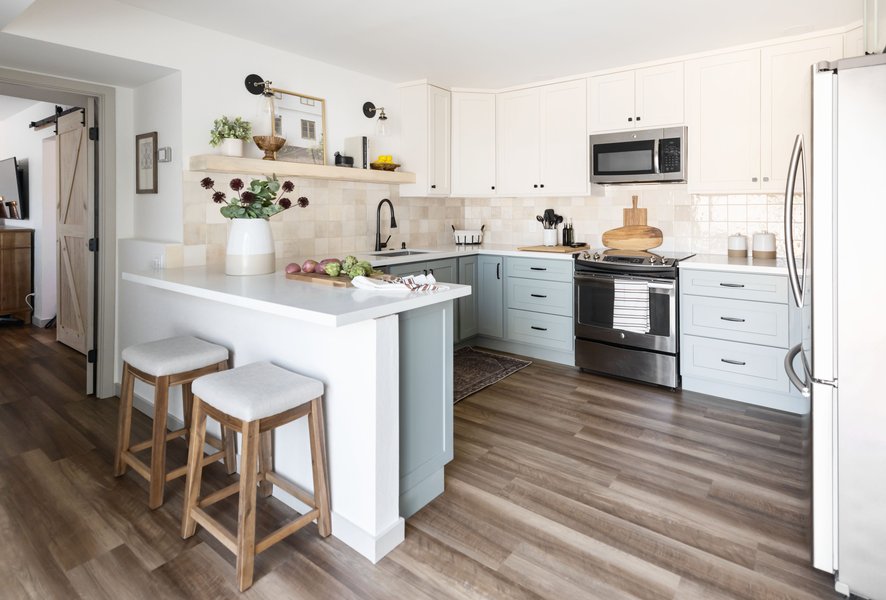
A modern kitchen setup, illustrating an environment conducive to home cooking, where TVL students might apply skills learned from TikTok.
Furthermore, TikTok's unique features, such as short-form video content and trending challenges, cultivate an environment ripe for observational learning and skill adoption, a concept central to Social Cognitive Theory (SCT). TVL students learn by watching others, particularly when the content is presented in an engaging and accessible manner. The entertainment value and perceived feasibility of cooking practices shown on TikTok directly contribute to their motivation and adoption of these behaviors. This dynamic underscores how digital platforms like TikTok are not just repositories of information but active facilitators of learning and practice, blurring the lines between vocational training and informal education.
The Digital Kitchen: TikTok as a Learning Environment
For TVL students, who are by nature hands-on learners, TikTok provides a supplementary and often highly effective learning environment. It democratizes access to diverse culinary techniques and recipes that might not be covered in traditional curricula. The platform allows for continuous learning, experimentation, and peer interaction, fostering a community of practice among aspiring chefs and home cooks. This integration of formal vocational training with informal digital learning creates a powerful synergy that enhances both practical skills and theoretical understanding.
This video, "How I would learn to cook if I could start over," offers valuable insights into effective learning strategies for cooking, mirroring how TVL students might approach culinary skill development, often influenced by digital resources like TikTok.
Comparative Analysis of Framework Contributions
To summarize, here's how each framework contributes uniquely to understanding the lived experiences of TVL students' home cooking practices on TikTok:
| Framework | Core Focus | Relevance to TVL Students & TikTok | Key Constructs Explained |
|---|---|---|---|
| Theory of Planned Behavior (TPB) | Individual intentions and volitional behavior | Explains why students choose to engage in home cooking, influenced by TikTok's impact on attitudes, social norms, and perceived abilities. | Attitude, Subjective Norms, Perceived Behavioral Control, Behavioral Intention. |
| Practice Theory | Cooking as a socially embedded routine activity | Describes how TikTok reshapes the actual practice of cooking, including the use of materials, skill development, and the cultural meanings attributed to food. | Materials, Competencies, Meanings, Social Routines. |
| Social Cognitive Theory (SCT) | Learning through observation and self-efficacy | Highlights how students imitate cooking behaviors observed on TikTok, driven by engaging content and confidence in their ability to replicate techniques. | Observational Learning, Self-Efficacy, Entertainment Value. |
| PERMA Model | Psychological well-being elements | Addresses the holistic benefits of home cooking, such as joy, engagement, social connection, and a sense of accomplishment derived from culinary activities on TikTok. | Positive Emotion, Engagement, Relationships, Meaning, Accomplishment. |
This table outlines the distinct contributions of the discussed theoretical frameworks to understanding the multifaceted nature of home cooking practices on TikTok among TVL students.
Frequently Asked Questions
What is the main purpose of using theoretical frameworks in this study?
How does TikTok specifically influence the "Perceived Behavioral Control" in the Theory of Planned Behavior?
Can Practice Theory explain how cooking becomes a part of a TVL student's identity?
Is TikTok's influence on home cooking always positive for TVL students?
How can this research benefit TVL programs or culinary education?
Conclusion
The lived experiences of home cooking practices on TikTok among TVL students represent a rich and dynamic area of study. By applying theoretical frameworks such as the Theory of Planned Behavior, Practice Theory, Social Cognitive Theory, and the PERMA model, researchers can meticulously unpack the intricate layers of motivation, behavior, social influence, and well-being that characterize this phenomenon. TikTok emerges not merely as a platform for passive consumption but as an active agent in shaping culinary attitudes, enhancing practical competencies, redefining social norms, and imbuing cooking with deeper personal meanings. This comprehensive theoretical lens provides a robust foundation for understanding how digital media is transforming vocational students' engagement with an essential life skill, ultimately contributing to both their culinary proficiency and overall psychosocial flourishing.
Recommended Further Reading
- The role of social media influencers in culinary education for vocational students
- Impact of short-form video content on skill acquisition in practical arts
- Psychological benefits of home cooking and digital community engagement
- How digital platforms integrate into everyday household practices