
Review of Related Literature: Time Management for Working Students
A Comprehensive Analysis on Balancing Work, Study, and Life
Key Takeaways
- Integration of Strategies: Successful time management for working students hinges on creating structured schedules, prioritizing tasks, and maintaining flexibility.
- Role of Technology and Institutional Support: Digital tools and flexible academic policies play a significant role in easing the challenges faced by working students.
- Emphasis on Self-Regulatory Skills: Psychological factors, including self-discipline, goal setting, and stress management, are essential to effective time management.
Introduction
Managing time effectively is a critical skill for working students who must juggle academic obligations and work commitments, all while maintaining personal well-being. This thorough review of the related literature merges perspectives on time management strategies, challenges, technological interventions, and institutional policies. It provides a cohesive outlook on how working students can optimize their schedules and stick to a disciplined routine, ensuring both academic success and professional development.
The Fundamental Components of Time Management
1. Comprehensive Scheduling and Prioritization
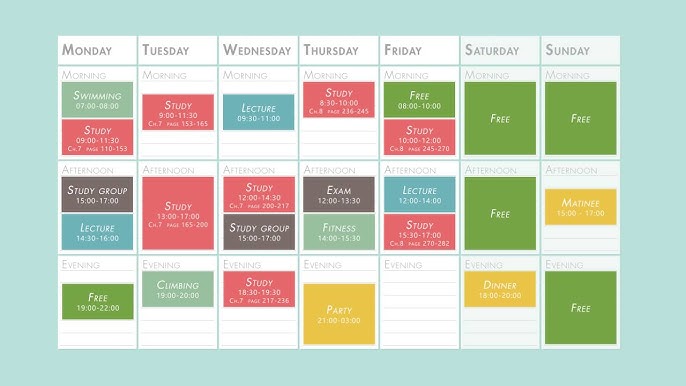
A full-scale, structured schedule forms the backbone of effective time management for working students. Developing a master schedule that incorporates academic classes, work shifts, study sessions, and personal time is essential. Many working students utilize digital tools such as calendar applications and planning apps that allow them to set color-coded entries for different tasks, streamlining the visual organization of their daily, weekly, and monthly commitments.
Prioritization remains a crucial aspect. It is important to distinguish between tasks that are urgent and those that hold long-term importance. Methods such as the "big three" approach help in focusing on critical academic and personal goals. Breaking larger projects into manageable activities with specific deadlines not only prevents procrastination but also boosts productivity by ensuring steady incremental progress.
2. Leveraging Technology and Digital Tools
With the expansion in digital technology, the utilization of various time management apps has surged. Mobile applications like Google Calendar, Todoist, Trello, and specialized study planning apps facilitate efficient task tracking, reminders, and deadline notifications. These digital tools not only help keep academic obligations in check but also integrate work schedules, making the entire balancing process more seamless.
Moreover, the integration of technology extends to virtual learning management systems (LMS) which incorporate calendar functions and automated notifications. Such systems are increasingly adaptive to the needs of working students, prompting them when assignments are due and even assisting them in developing adaptive study schedules tailored to their peak productivity hours.
3. Psychological and Self-Regulatory Factors
Underpinning effective time management is the realm of self-regulation and intrinsic motivation. Psychological theories, including Self-Regulation Theory and Stress and Coping frameworks, highlight the importance of planning, monitoring, and evaluating personal goals. Working students who exhibit high levels of discipline and self-efficacy are better prepared to mitigate academic burnout and manage the stress that arises from a demanding schedule.
The establishment of clear, incremental goals combined with self-care strategies—such as regular physical activity, mindfulness, and ensuring adequate sleep—bolsters the mental resilience required to tackle both work and study. Emphasizing a balance between active work periods and meaningful breaks, including techniques such as the Pomodoro method, reinforces productivity while safeguarding against fatigue.
Challenges Faced by Working Students
Scheduling Conflicts and Fatigue
One of the most significant obstacles working students encounter is managing overlapping schedules. Clashing deadlines, last-minute assignments, and unpredictable work shifts cause scheduling conflicts that can compromise both academic and professional responsibilities. This often leads to substantial physical and mental fatigue, diminishing cognitive performance.
Research indicates that fatigue not only interrupts productive study sessions but also reduces overall focus during work hours. An effective strategy to combat these challenges involves creating an adaptable study plan, one that is resilient to sudden changes and can incorporate additional rest or study periods as needed.
Stress and Mental Health Considerations
Balancing work and study responsibility often results in increased stress and anxiety among students. Elevated stress levels can lead to burnout, adversely affecting academic performance and workplace productivity. This phenomenon is significantly addressed within the literature, which suggests that effective time management—when coupled with self-care practices—can considerably reduce stress levels.
Implementing flexible scheduling, practicing organized communication with employers and professors, and seeking support from academic advisors are recommended strategies to ensure that stress does not overwhelm the student. Many studies underscore the importance of maintaining a balanced life by intentionally scheduling leisure time, exercise, and even regular short breaks to recharge.
Limited Resources and External Pressures
Another challenge that emerges repeatedly is the barrier of limited resources. Many working students do not have sufficient access to academic help or tutoring services due to time constraints. Financial pressures, which propel students into part-time or full-time work, can also reduce their availability for academic consultations and extracurricular academic enrichment.
These external pressures can compound the internal challenges of time management. Consequently, both academic and workplace institutions need to adopt supportive measures, such as more flexible class schedules, online courses, and increased career services. Such supportive measures ensure that students can leverage their limited time most effectively, often resulting in better academic outcomes and enhanced career prospects.
Effective Time Management Strategies Explored
Creating a Master Schedule
Building an all-encompassing master schedule is a foundational strategy for managing competing demands. This involves:
- Mapping out weekly, monthly, or even semester-long schedules incorporating class times, work shifts, designated study sessions, and personal time slots.
- Utilizing digital calendars to set up visual notifications and color-coded entries that differentiate academic tasks from professional obligations.
- Breaking down larger tasks into smaller, actionable items, thereby reducing the likelihood of procrastination and overwhelming workloads.
Prioritization and Goal Setting
The ability to prioritize tasks directly influences the efficiency of time management. Effective goal setting involves distinguishing the hierarchy of tasks based on their urgency and academic importance. Techniques include:
- Determining the "big three"—the three most urgent or critical tasks each day.
- Setting mid-term and long-term goals that help in both academic achievement and professional growth.
- Continually reassessing priorities based on imminent deadlines and changing circumstances.
Establishing clear boundaries and open lines of communication with both employers and academic advisors is equally significant to ensure that everyone's expectations are aligned with the student's available capacity.
Utilizing Productivity Tools and Techniques
The past decade has seen an explosion in productivity tools designed to optimize personal time management. Technologies like digital planners and dedicated time management apps allow students to mange their tasks efficiently:
-
Tools like Google Calendar, Todoist, Trello, and similar applications streamline the process of scheduling and provide automation features that reduce the burden of manual planning.
-
Techniques like time blocking and the Pomodoro Technique, where focused 25-minute work intervals are interspersed with short breaks, have been proven to improve productivity and concentration.
-
Some emerging tools even incorporate artificial intelligence to develop adaptive schedules tailored to day-to-day productivity trends and priorities.
In addition to digital tools, traditional methodologies such as maintaining a physical journal or planner can complement digital aids by offering a tangible overview of the week or month. Many students find that writing down tasks using different colored pens or highlighters reinforces their memory and provides an immediate audit of their workload.
Flexibility and Adaptability in Scheduling
Due to the dynamic nature of both academic and work environments, it is critical for working students to adopt a flexible mindset regarding scheduling. The ability to adapt to unexpected changes—such as shift alterations, sudden academic deadlines, or personal emergencies—is crucial. Flexibility ensures that even when disruptions occur, students can redistribute the workload without experiencing drastic decreases in performance.
This kind of adaptable planning often involves setting aside buffer periods within the schedule that can absorb fluctuations, thereby maintaining a semblance of order even during periods of unpredictability.
Institutional and Policy Considerations
Institutional Support for Working Students
Universities and colleges play an influential role in assisting working students through their policies and institutional support. Flexible class timings, asynchronous online courses, extended assignment deadlines, and responsive academic advising practices are among the measures that can significantly ease the burden on students.
Institutions are increasingly aware of the unique challenges experienced by working students and are motivated to provide tailored support services. Regular workshops on time management, stress reduction techniques, and career planning not only improve academic performance but also contribute to better mental health and job satisfaction.
Workplace Flexibility and Understanding
Equally important is the role of the employer. Student-friendly workplaces that acknowledge academic commitments offer flexible working hours and adaptability in scheduling to match school calendars. Such environments reduce the pressure on students by recognizing the inherently fluctuating nature of student schedules, and they foster a supportive work culture that values long-term professional development.
The Empirical Evidence and Case Studies
Several empirical studies confirm the positive correlation between effective time management practices and enhanced academic performance. Quantitative data suggests that students who adhere to well-planned schedules and utilize digital organizational tools often achieve higher GPAs. Qualitative research further emphasizes the importance of self-discipline and proactive communication in mitigating the effects of work-study conflict.
Moreover, mixed-method studies combine both statistical and narrative insights, revealing that while technology and innovative scheduling techniques provide a measurable benefit, the success of these methods is highly dependent on individual personality traits, including motivation, self-regulatory capacity, and resilience in the face of external pressures.
RRL Matrix Example
| Study | Year | Key Findings | Methodology | Implications |
|---|---|---|---|---|
| Study A | 2020 | Structured time management tools lead to improved academic performance. | Survey of working students | Highlights the significance of planning and using digital tools. |
| Study B | 2019 | Psychological factors and self-discipline significantly affect time management success. | Qualitative interviews | Emphasizes the role of motivation and internal regulation |
| Study C | 2022 | Digital productivity applications enhance work-study balance. | Experimental study | Demonstrates the effectiveness of technology-enhanced scheduling |
Practical Applications and Future Directions
Implementing Personalized Time Management Plans
The diversity in job types, course loads, and personal obligations among working students indicates that there is no singular blueprint for success. Instead, personalized time management plans that cater specifically to an individual's unique circumstances yield the best outcomes.
Working students are encouraged to experiment with various methodologies—combining digital tools with traditional planning—and to continuously evaluate their effectiveness. Self-assessment and iterative adjustments are central to tailoring these plans, ensuring that both short-term productivity and long-term academic and career goals are simultaneously addressed.
Technology-Driven Innovations and Adaptive Learning
Looking ahead, there is considerable promise in investments toward technology-driven solutions, such as adaptive scheduling systems that utilize artificial intelligence. These systems have the potential to predict periods of high productivity and adjust schedules accordingly, thereby providing custom recommendations for optimal work-study-life balance.
With a continual rise in digital and remote work environments, leveraging sophisticated learning platforms and productivity analytics will be essential. Future research is expected to explore these avenues in greater depth, particularly through longitudinal studies and interdisciplinary approaches that merge educational psychology with technological innovation.
Institutional and Policy Enhancements
Lastly, substantive improvements in institutional policies and workplace practices will further enhance the capabilities of working students. By adopting more inclusive academic schedules, providing targeted support for stress management, and encouraging a culture of balance both within academic institutions and workplaces, a robust ecosystem can be established that nurtures overall student success.
Both educational institutions and employers have much to gain by investing in supportive practices for working students—a synergy that promises better educational outcomes and a more competent, resilient future workforce.
Conclusion
In summary, the comprehensive review of related literature clearly illustrates that effective time management for working students involves a multifaceted approach that combines structured scheduling, digital tools, sound psychological practices, and supportive institutional policies. Balancing work, study, and personal life is not only about meticulous planning but also about adapting dynamically to unexpected challenges and leveraging both individual and external support systems. If working students can implement a blend of these strategies, they will not only perform better academically but also gain essential life skills that will serve them well in the professional world.
References
10 Time Management Tips for Students - GradePowerLearning
Essential Time Management Tips for Students - CollegeNP
Time Management Tips for Students - TimeHackHero
8 Time Management Tips for Students - Harvard Summer
Time Management Tips for Students - AmberStudent
How to Maintain a Work-Study-Life Balance - CzechUniversities
Studying and Working at the Same Time - IU
Working Full Time and Going to School - UMass Global
How to Balance Work, Study, and Family - 300Hours
How to Balance Work, Study, and Sports - Iberdrola
How to Balance Work and Study - AmberStudent
Learn More
Last updated February 18, 2025