
Top 10 Strange Animals
Discover the most bizarre and unique creatures on Earth
Key Takeaways
- Evolution's Creativity: The animal kingdom exhibits extraordinary adaptations that allow creatures to survive in diverse environments.
- Unique Physical Traits: Many strange animals possess distinctive anatomical features that set them apart from typical fauna.
- Conservation Importance: Several of these unique species are endangered, highlighting the need for preservation efforts.
1. Axolotl (Ambystoma mexicanum)
The Marvel of Regeneration
The axolotl, often referred to as the "Mexican walking fish," is an amphibian renowned for its extraordinary ability to regenerate lost body parts. Unlike most amphibians that undergo metamorphosis, axolotls retain their larval features throughout their lives, including external gills and a finned tail. This neotenic trait allows them to thrive in the aquatic habitats of Mexico's high-altitude lakes. Their regenerative capabilities extend to limbs, spinal cord, heart, and even parts of the brain, making them invaluable to scientific research in regenerative medicine.
2. Blobfish (Psychrolutes marcidus)
The Depths' Underdog
The blobfish inhabits the deep waters off the coasts of Australia and New Zealand, typically residing at depths between 600 to 1,200 meters. Adapted to the intense pressure of its environment, the blobfish has a gelatinous flesh with a density slightly less than water, allowing it to float effortlessly above the sea floor without expending energy on swimming. This unique adaptation gives the blobfish its characteristic saggy appearance when brought to the surface, where the drastic pressure change makes it appear more like a gelatinous blob. In its natural habitat, however, it maintains a more streamlined form suited for its deep-sea lifestyle.
3. Platypus (Ornithorhynchus anatinus)
Nature's Enigmatic Mammal
The platypus is a living marvel of evolutionary divergence, native to the freshwater regions of eastern Australia and Tasmania. This semi-aquatic mammal defies conventional classification with its unique blend of features: a duck-like bill, webbed feet, and a beaver-like tail. Unlike most mammals, the platypus lays eggs, a trait shared only with the echidna among monotremes. Additionally, male platypuses possess venomous spurs on their hind legs, a rare trait in mammals. The platypus also employs electroreception to hunt underwater, detecting the electrical signals emitted by their prey, making them one of the few venomous and egg-laying mammals in existence.
4. Aye-Aye (Daubentonia madagascariensis)
The Nocturnal Forager with a Unique Tactile Finger
The aye-aye is a nocturnal lemur endemic to Madagascar, distinguished by its large, sensitive eyes and elongated middle finger. This specialized digit is used in a foraging technique known as percussive foraging, where the aye-aye taps on trees to locate hollow chambers filled with insect larvae. Once detected, it uses its thin finger to extract the prey. The aye-aye's unusual appearance and eerie call have led to local superstitions, branding it as an omen of bad luck. Despite these myths, the aye-aye plays a crucial role in controlling insect populations and aiding in seed dispersal within its ecosystem.
5. Pangolin (Manis spp.)
The Scaly Armor-Clad Mammal
Pangolins are the only mammals wholly clad in scales, which are made of keratin—the same material as human nails. When threatened, pangolins curl into tight balls, with their scales acting as armor to deter predators. They possess long, sticky tongues that can extend up to 16 inches, enabling them to feed on ants and termites efficiently. Unfortunately, pangolins are the most trafficked animals globally, hunted for their scales and meat, leading to a severe decline in their populations. Conservation efforts are critical to protect these unique creatures from extinction.
6. Saiga Antelope (Saiga tatarica)
The Nose of the Steppes
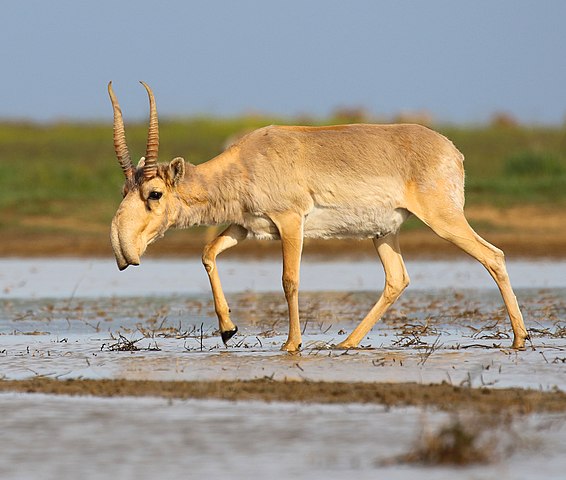
The saiga antelope is native to the grasslands and semi-desert regions of Central Asia, particularly in Kazakhstan, Uzbekistan, and Russia. It is easily identifiable by its large, bulbous nose, which serves multiple functions: filtering out dust during the dry season and regulating blood temperature during the winter. The saiga's unique nasal structure enhances its sense of smell, aiding in the detection of predators and locating food sources. Despite these remarkable adaptations, saiga antelopes face threats from habitat loss, hunting, and disease, rendering them critically endangered.
7. Red-Lipped Batfish (Ogcocephalus darwini)
The Ocean's Quirky Walker
The red-lipped batfish is a striking inhabitant of the Galápagos Islands, known for its vivid red lips and unique mode of locomotion. Unlike typical fish that rely on swimming, the red-lipped batfish "walks" along the ocean floor using its modified pectoral fins. These fins act like legs, allowing the fish to maneuver across the sandy seabed in search of prey. Additionally, the batfish uses a fleshy, antenna-like structure called an illicium to lure unsuspecting prey within striking distance. Its vibrant appearance and unconventional movement make it one of the ocean's most recognizable and intriguing species.
8. Goblin Shark (Mitsukurina owstoni)
The Living Fossil of the Deep
The goblin shark is a rare deep-sea species known for its elongated, flattened snout and highly protrusible jaws. Often referred to as a "living fossil," the goblin shark has changed little over millions of years, retaining primitive features that link it to ancient shark ancestors. Its translucent skin and bioluminescent organs allow it to navigate the dark depths of the ocean, typically inhabiting waters deeper than 100 meters. The goblin shark's ability to effectively ambush prey with sudden jaw extensions makes it a formidable predator in its secluded habitat.
9. Tarsier (Tarsius spp.)
The Tiny Primate with Enormous Eyes
Tarsiers are small primates found in Southeast Asia, notable for their disproportionately large eyes, which are each as big as their brains. These nocturnal creatures possess incredible vision adapted for low-light environments, facilitating their night-time hunting activities. Tarsiers have elongated fingers and toes, enabling them to grasp branches securely and perform agile leaps between trees. Their unique anatomy, including a completely carnivorous diet consisting mainly of insects and small vertebrates, sets them apart from other primates. Unfortunately, habitat destruction and hunting have led to several tarsier species becoming endangered.
10. Echidna (Tachyglossus aculeatus)
The Spiny Egg-Laying Mammal
The echidna, also known as the spiny anteater, is one of the only five extant species of monotremes, mammals that lay eggs instead of giving birth to live young. Native to Australia and New Guinea, echidnas are covered in sharp spines made of keratin, providing defense against predators. They possess a long, sticky tongue specialized for catching ants and termites. Unique among mammals, male echidnas have a four-headed penis, a rare anatomical feature. Echidnas are solitary and primarily nocturnal, spending much of their time burrowing or foraging for food in the underbrush.
Comparative Overview
| Animal | Habitat | Unique Trait |
|---|---|---|
| Axolotl | High-altitude Mexican lakes | Incredible regeneration abilities |
| Blobfish | Deep-sea waters off Australia and New Zealand | Gelatinous body adapted to high pressure |
| Platypus | Freshwater regions of Australia and Tasmania | Venomous spurs and electroreception |
| Aye-Aye | Madagascar's dark forests | Elongated middle finger for foraging |
| Pangolin | Forests and grasslands of Africa and Asia | Scales made of keratin and curled defense mechanism |
| Saiga Antelope | Grasslands and semi-deserts of Central Asia | Bulbous nose for air filtration and temperature regulation |
| Red-Lipped Batfish | Galápagos Islands' seabed | Red lips and walking ability using pectoral fins |
| Goblin Shark | Deep-sea environments worldwide | Protrusible jaws and living fossil status |
| Tarsier | Southeast Asian rainforests | Enormous eyes and agile leaping abilities |
| Echidna | Australia and New Guinea | Spiny exterior and egg-laying reproduction |
Conclusion
The natural world teems with astonishing and peculiar creatures that challenge our understanding of biology and evolution. From the regenerative axolotl to the elusive pangolin, each of these animals showcases the incredible diversity and adaptability of life on Earth. Their unique traits not only fascinate scientists and nature enthusiasts but also highlight the intricate balance of ecosystems. Preserving these unique species is crucial not only for maintaining ecological balance but also for inspiring future scientific discoveries and fostering a deeper appreciation for the wonders of the natural world.
References
Last updated February 2, 2025