
Top Formula 1 Circuits: The Ultimate Ranking
1. Circuit de Spa-Francorchamps (Belgium)
Standout Features and Design Elements
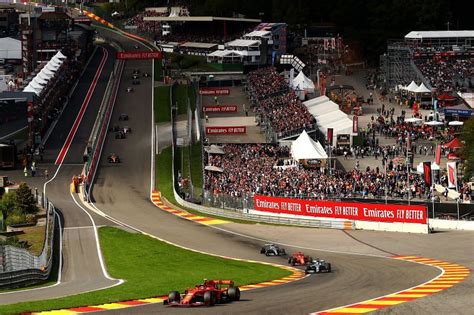
Circuit de Spa-Francorchamps is celebrated as one of the most iconic and challenging tracks in Formula 1. Stretching over 7.004 km, it is the longest circuit on the F1 calendar, renowned for its undulating terrain and picturesque Ardennes forest setting. The track's most famous sections include the Eau Rouge-Raidillon complex, a high-speed uphill corner that tests the limits of driver skill and car performance, and the Kemmel Straight, which offers prime overtaking opportunities.
Unique Challenges
Spa-Francorchamps is notorious for its unpredictable weather, often featuring rain in one part of the track while remaining dry in another. This variation requires drivers to adapt their strategies on the fly. Additionally, the circuit's elevation changes and high-speed corners demand a perfect balance between aerodynamic efficiency and mechanical grip, making tire management a critical aspect of race strategy.
Historical Context and Reception
Since its first Grand Prix in 1950, Spa-Francorchamps has been a cornerstone of the Formula 1 calendar. It has witnessed legendary performances, including Ayrton Senna's mastery in wet conditions and Michael Schumacher's record-breaking victories. The circuit's rich history and scenic beauty make it a perennial favorite among fans and drivers alike, often topping community rankings and surveys as the best F1 track.
Community Rankings and Driver Strategies
In numerous fan surveys and expert rankings, Spa consistently holds the top position. Drivers often emphasize the importance of maintaining momentum through the technical sections and managing tire wear over the long lap distance. Teams typically adopt low-downforce setups to maximize straight-line speed while ensuring sufficient grip for the challenging corners.
2. Suzuka International Racing Course (Japan)
Standout Features and Design Elements
Suzuka Circuit is renowned for its unique figure-eight layout, which includes a series of high-speed corners and technical sections that test both driver skill and car balance. Key features include the Esses, Spoon Curve, and the legendary 130R, a high-speed corner that requires complete commitment and precision.
Unique Challenges
The narrow track limits overtaking opportunities, making qualifying and strategic pit stops crucial for success. Suzuka's demanding layout requires drivers to maintain high levels of concentration, especially through the high-speed sections where aerodynamic stability is paramount. Weather conditions, including frequent rain, add an additional layer of complexity to races.
Historical Context and Reception
Suzuka has been a staple of the F1 calendar since the 1980s and has been the venue for numerous championship-deciding races. Iconic moments include the intense rivalry between Ayrton Senna and Alain Prost, with their infamous collisions in 1989 and 1990. Suzuka is highly regarded by both fans and drivers for its challenging layout and vibrant atmosphere, consistently ranking among the top circuits in community surveys.
Community Rankings and Driver Strategies
Fans and experts frequently place Suzuka among the top five F1 circuits due to its technical complexity and thrilling racing action. Drivers focus on maintaining momentum through the S Curves and optimizing tire performance to navigate the demanding 130R. Teams prioritize balanced car setups to handle the mix of high-speed and technical corners effectively.
3. Monaco Grand Prix Circuit (Monte Carlo, Monaco)
Standout Features and Design Elements
The Monaco Grand Prix is synonymous with glamour and precision, featuring a tight, twisty street circuit that weaves through the luxurious streets of Monte Carlo. Key sections include the Casino Square, the Fairmont Hairpin, and the Tunnel, each presenting unique challenges that require flawless driving.
Unique Challenges
Monaco's narrow streets and lack of overtaking opportunities make qualifying performance critical. The circuit's unforgiving barriers leave no room for error, and even minor mistakes can result in collisions. Drivers must navigate elevation changes and sharp corners with millimeter precision, making it the ultimate test of skill and concentration.
Historical Context and Reception
First held in 1929, the Monaco Grand Prix is one of the oldest and most prestigious races in motorsport. It has been a fixture on the F1 calendar since 1955 and has seen legendary victories from drivers like Ayrton Senna and Lewis Hamilton. Despite criticisms regarding limited overtaking, Monaco remains a fan favorite for its rich history and unique atmosphere.
Community Rankings and Driver Strategies
Monaco is frequently ranked within the top five F1 circuits due to its historical significance and demanding layout. Drivers prioritize securing pole position to maximize their chances of victory, as overtaking opportunities are scarce. Teams focus on car setups that provide excellent grip and stability to handle the circuit's tight corners and elevation changes.
4. Silverstone Circuit (United Kingdom)
Standout Features and Design Elements
Known as the "Home of British Motorsport," Silverstone is one of the oldest and most revered circuits in Formula 1. The track boasts a mix of high-speed corners and technical sections, including iconic bends like Maggotts, Becketts, and Chapel. The Hangar Straight offers ample overtaking opportunities, adding to the circuit's dynamic nature.
Unique Challenges
Silverstone's fast-paced layout demands high downforce and excellent car stability. Wind conditions can significantly impact car handling, and tire degradation is a key factor due to the abrasive surface. Drivers must balance speed with precision to navigate the challenging corners effectively.
Historical Context and Reception
Silverstone hosted the first-ever F1 World Championship race in 1950 and has since been a regular feature on the calendar. It is renowned for its passionate British fans and has been the stage for many memorable races and driver performances. Silverstone consistently receives high praise for its exciting layout and historical significance.
Community Rankings and Driver Strategies
Silverstone is consistently ranked among the top F1 circuits, admired for its high-speed action and rich heritage. Drivers focus on maximizing aerodynamic efficiency and managing tire performance to maintain speed through the fast corners. Teams often prioritize setups that offer a balance between downforce and straight-line speed to optimize performance throughout the race.
5. Autodromo Nazionale Monza (Italy)
Standout Features and Design Elements
Monza, often referred to as the "Temple of Speed," is the fastest circuit on the Formula 1 calendar. The layout features long straights and fast corners, including the iconic Parabolica and Lesmo corners. The high-speed nature of the track demands powerful engines and precise braking performance.
Unique Challenges
Monza's emphasis on speed places immense stress on engines and brakes, requiring optimal performance and reliability from the cars. The narrow straights and tight chicanes make overtaking both easier and riskier, as drivers must execute precise maneuvers to gain positions without losing time.
Historical Context and Reception
Monza has been a part of the F1 World Championship since its inception in 1950 and is synonymous with Ferrari and the passionate Italian "Tifosi" fans. The track's history is filled with memorable races and legendary driver moments, making it a beloved venue among the F1 community.
Community Rankings and Driver Strategies
Monza is frequently ranked high in community rankings due to its historical significance and thrilling high-speed action. Drivers focus on optimizing their setups for maximum straight-line speed while ensuring sufficient braking performance for the tight chicanes. Teams emphasize engine reliability and efficient energy deployment to excel on this high-speed circuit.
6. Red Bull Ring (Austria)
Standout Features and Design Elements
The Red Bull Ring in Spielberg, Austria, is known for its flowing layout and scenic backdrop. The circuit features a mix of fast corners and slow hairpins, with the Rindt corner and the final banking corner being particularly notable. The design encourages close racing and offers multiple overtaking opportunities.
Unique Challenges
The combination of high-speed corners and slow sections requires drivers to be adaptable and precise. The elevation changes add to the circuit's complexity, demanding a well-balanced car setup. The final banking corner provides a dramatic finish to each lap, often setting the stage for intense battles.
Historical Context and Reception
Originally hosting races in the 1960s, the Red Bull Ring returned to the F1 calendar in 2014 and has quickly become a modern favorite. Its picturesque setting and exciting racing action have earned it a strong reputation among fans and drivers, consistently placing it in the top tier of community rankings.
Community Rankings and Driver Strategies
Austria frequently ranks within the top ten F1 circuits, praised for its exciting layout and scenic beauty. Drivers focus on maintaining momentum through the flowing corners and leveraging braking zones to set up overtakes. Teams prioritize versatile setups that can handle both high-speed and technical sections effectively.
7. Circuit of the Americas (COTA), United States
Standout Features and Design Elements
The Circuit of the Americas in Austin, Texas, is a relatively new addition to the F1 calendar, debuting in 2012. The track combines elements from iconic circuits worldwide, featuring a steep climb into Turn 1, a series of high-speed esses, and significant elevation changes. The layout is designed to provide both technical challenges and high-speed excitement.
Unique Challenges
The substantial elevation changes and variety of corner types require a versatile car setup that can handle both slow, technical sections and fast, sweeping bends. The abrasive surface increases tire wear, making tire management a critical factor in race strategy. Additionally, the mix of high-speed and low-speed corners demands precise braking and acceleration techniques.
Historical Context and Reception
Since its introduction, COTA has become a fan favorite due to its modern facilities and exciting layout. The circuit has hosted memorable races, including Lewis Hamilton's title-clinching victory in 2015. Its integration of diverse design elements ensures that races are both technically challenging and thrilling to watch.
Community Rankings and Driver Strategies
COTA is highly rated among newer F1 circuits, praised for its challenging layout and vibrant atmosphere. Drivers focus on maximizing exit speed from the technical sections to maintain momentum on the straights. Teams prioritize efficient energy deployment and tire management to optimize performance throughout the race.
8. Circuit Gilles Villeneuve (Canada)
Standout Features and Design Elements
The Circuit Gilles Villeneuve in Montreal is renowned for its fast straights and heavy braking zones. The "Wall of Champions" at the final chicane is infamous for catching out even the most skilled drivers. The track's combination of high-speed sections and technical corners makes it a complex and exciting circuit.
Unique Challenges
Brake wear and tire degradation are critical factors at Zandvoort, requiring effective management throughout the race. The proximity to the St. Lawrence River often leads to variable weather conditions, adding unpredictability to each Grand Prix. The demanding layout tests every aspect of a car's performance, from aerodynamics to mechanical grip.
Historical Context and Reception
Named after Canadian F1 legend Gilles Villeneuve, the circuit has hosted numerous memorable races, including Jenson Button's dramatic victory in 2011. Its vibrant atmosphere and challenging layout make it a beloved venue among fans and drivers alike, consistently ranking within the top ten F1 circuits.
Community Rankings and Driver Strategies
Canada's Circuit Gilles Villeneuve is frequently praised in community rankings for its thrilling layout and passionate fanbase. Drivers focus on maintaining tire performance to navigate the heavy braking zones effectively. Teams emphasize setups that balance straight-line speed with cornering stability to excel at this demanding circuit.
9. Interlagos (Autódromo José Carlos Pace, Brazil)
Standout Features and Design Elements
Interlagos is known for its passionate fans and unpredictable weather. The track features a mix of high-speed straights and technical corners, including the challenging Senna S and the long pit straight. The layout's undulating nature adds to the circuit's complexity, making it a favorite for exciting races.
Unique Challenges
The unpredictable weather often leads to sudden rain showers, testing drivers' adaptability and strategy. The circuit's high altitude and long lap distance increase tire wear, requiring meticulous management throughout the race. The tight chicanes and limited overtaking opportunities demand precise driving and strategic pit stops.
Historical Context and Reception
Interlagos has hosted numerous dramatic championship deciders and is renowned for its electric atmosphere created by the passionate Brazilian fans. Legendary moments include Ayrton Senna's thrilling victories and multiple rain-soaked races that have become part of F1 lore.
Community Rankings and Driver Strategies
Interlagos consistently ranks high in community surveys due to its exciting races and passionate fanbase. Drivers focus on tire management and adaptability to changing weather conditions to succeed. Teams prioritize flexible race strategies that can accommodate sudden shifts in weather and track conditions.
10. Marina Bay Street Circuit (Singapore)
Standout Features and Design Elements
The Marina Bay Street Circuit is renowned for being the first night race in Formula 1 history. Its challenging layout features a mix of slow corners and fast chicanes, including the tight Turn 10 and the long back straight leading to the chicane. The circuit's urban setting provides a spectacular backdrop for the race.
Unique Challenges
Singapore's humid and hot conditions place significant demands on both drivers and cars. The track surface can be slippery, especially in the tropical climate, requiring precise handling and tire management. The combination of tight corners and long straights necessitates a well-balanced car setup.
Historical Context and Reception
Since its debut in 2008, the Singapore Grand Prix has become a fan favorite for its unique night race ambiance and challenging circuit. Memorable moments include Sakhir races under intense rain conditions and dramatic late-race overtakes that have decided championships.
Community Rankings and Driver Strategies
The Marina Bay Street Circuit is highly regarded in community rankings for its unique night race experience and challenging layout. Drivers concentrate on maintaining control in the high-humidity conditions and mastering the complex corner sequences. Teams focus on optimizing cooling systems and tire performance to handle the demanding environment.
Honorable Mentions
Hungaroring (Hungary)
The Hungaroring is known for its slow and twisty layout, making it a unique challenge for drivers. While it is often criticized for limited overtaking opportunities, the continuous string of corners and elevation changes provide a demanding test of driver skill and car setup.
Other Notable Circuits
- Monaco Grand Prix: Renowned for its glamour and precision driving.
- Zandvoort (Dutch Grand Prix): Celebrated for its unique banking corners and challenging layout.
- Marina Bay Street Circuit: Praised for being the first night race and its scenic urban setting.
Conclusion
Ranking the best Formula 1 circuits involves considering a myriad of factors, including track layout, historical significance, unique challenges, and fan reception. Circuit de Spa-Francorchamps stands out as the pinnacle of F1 tracks, celebrated for its challenging layout and rich history. Suzuka, Monaco, and Silverstone follow closely, each offering a unique blend of technical complexity and memorable racing moments. Monza and the Red Bull Ring add to the list with their high-speed action and passionate fanbases.
These top circuits not only provide thrilling racing action but also embody the spirit and tradition of Formula 1. As the sport continues to evolve, these iconic tracks will remain integral to the F1 experience, captivating fans and drivers alike with their unique characteristics and storied histories.
For more detailed rankings and insights into each circuit, explore the following resources:
Last updated December 28, 2024