
Mastering Doorway Calm: Training Your Dog to Greet Visitors Peacefully
Transforming Excitement into Serenity at Your Front Door
A dog barking at the door is a common concern for many pet owners, often stemming from excitement, anxiety, or a territorial instinct. While barking is a natural form of canine communication, excessive or frantic barking can be disruptive for both residents and guests. The good news is that with consistent training, patience, and positive reinforcement, you can teach your dog to react calmly and appropriately when someone approaches or enters your home.
Key Insights for a Tranquil Doorway
- Understanding the Root Cause: Before tackling the barking, identify if your dog's reaction is due to excitement, fear, or territorial guarding. This understanding will inform the most effective training approach.
- Desensitization and Counter-Conditioning: Gradually expose your dog to doorbell sounds or knocks while associating them with positive experiences, such as high-value treats or favorite toys, to change their emotional response.
- Establishing a "Go-To" Spot: Train your dog to move to a designated calm area, like a mat or bed, when visitors arrive, giving them a clear alternative behavior to barking and jumping.
Understanding Your Dog's Doorway Behavior
Dogs bark at the door for various reasons, and identifying the underlying cause is crucial for effective training. Some common motivations include:
- Excitement: Many dogs are simply overjoyed by the prospect of new people, leading to enthusiastic barking, jumping, and lunging. This is often accompanied by full-body wags and a circular tail motion.
- Territorial Guarding/Alarm: Dogs naturally alert their household to perceived intruders. They may bark to signal a stranger's presence or to try and scare them away. This can be fueled by a sense of needing to be "in charge" of the relationship with their owner.
- Anxiety or Fear: For some dogs, the doorbell or a knock can trigger anxiety due to a fear of the unknown. They might be scared of who is behind the door and what their arrival signifies.
- Demand Barking: If barking has previously resulted in attention (even negative attention), your dog may continue to bark to get what they want.
Observing your dog's body language will provide clues. A dog barking happily might have loose body language, while a fearful or territorial barker might appear tense or rigid.
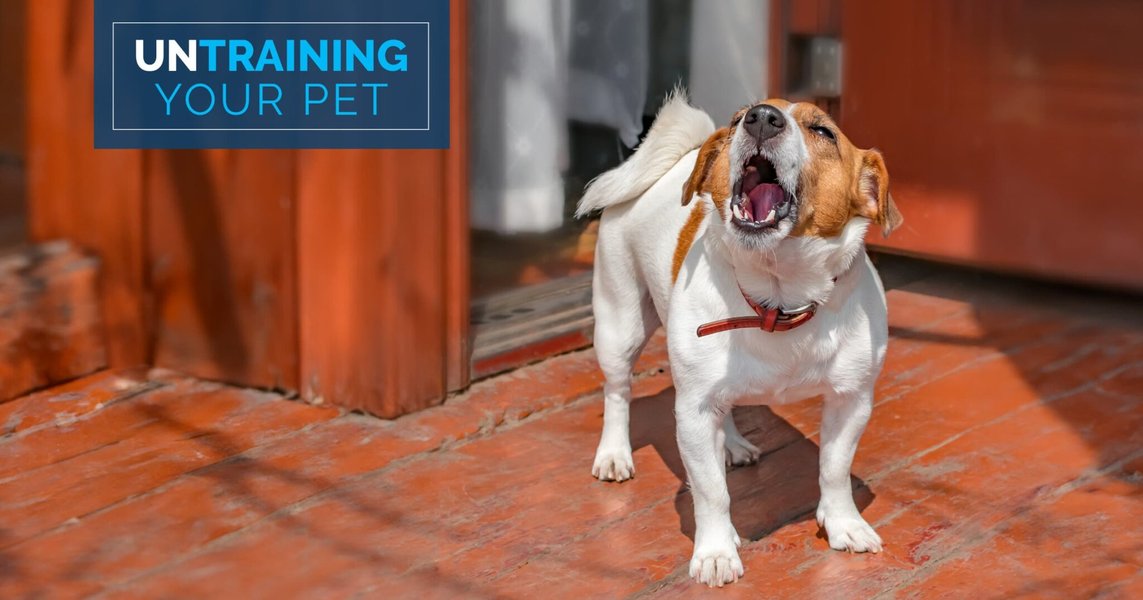
A small dog barks at the doorbell, illustrating a common reaction to visitors.
Core Training Principles for Calm Greetings
Successful training relies on consistency, patience, and positive reinforcement. Avoid punishment, as it can increase fear or aggression and make your dog more anxious around visitors. Instead, focus on rewarding desired behaviors.
Desensitization and Counter-Conditioning
This technique involves gradually exposing your dog to the trigger (doorbell or knock) while associating it with something positive. The goal is to change your dog's emotional response from excitement/fear to calm anticipation of a reward.
Starting with Gentle Sounds
Begin by knocking on a nearby surface (like a table) or playing a doorbell sound at a very low volume. The moment your dog hears the sound, immediately scatter high-value treats on the floor. This distracts them and teaches them that the sound predicts treats, not a reason to bark. Gradually increase the volume and proximity of the sound. If your dog reacts, make the sound quieter again.
Incorporating the Actual Door
Once your dog is calm with sounds from various surfaces, move to the actual door. Have a helper gently knock or ring the doorbell while you stand ready with treats. The instant your dog hears the sound and remains quiet (even for a second), reward them. If they bark, wait for a momentary pause, then reward. The key is to reward silence, not barking. You can also try giving a "quiet" command: teach your dog to bark on command ("speak!"), then use "quiet" and reward them for stopping.
Establishing a "Go-To" Spot
Teaching your dog to go to a specific mat or bed when the doorbell rings gives them an alternative, incompatible behavior to barking and rushing the door. This creates a clear role for them during greetings.
Training the "Go to Mat" Command
Place a mat or bed in a quiet spot away from the door. Lure your dog to the mat with a treat, saying "Go to your mat." Reward them when they settle on it. Practice this command regularly in different rooms of the house until your dog reliably goes to their mat on cue. Gradually increase the duration they must stay on the mat before receiving a reward.
Integrating with Door Sounds
Once your dog masters the "go to mat" command, combine it with the doorbell training. When the doorbell rings, immediately tell your dog "Go to your mat." Once they are on their mat and quiet, reward them. You may need to use a leash initially to guide them to their spot. As they improve, gradually add the presence of a real person at the door, increasing the duration they stay calm on their mat while you interact with the visitor.
Managing Excitement and Anxiety
For highly excited or anxious dogs, additional strategies can help create a calmer environment.
Pre-Visitor Exercise
A tired dog is often a calm dog. Ensure your dog gets sufficient physical and mental exercise before guests arrive. A long walk or a stimulating play session can help burn off excess energy and reduce the likelihood of frantic behavior.
Controlled Exposure
Introduce your dog to new people in a controlled and gradual manner. Start with a trusted friend or family member who understands your training goals. Have them approach at a distance, gradually reducing it as your dog remains calm. Ask guests to ignore your dog initially, as direct attention can sometimes overstimulate them.
Using a Leash for Management
During training sessions, keeping your dog on a loose leash can help manage their behavior. If they try to rush the door or jump, the leash provides a gentle way to redirect them back to their calm spot. Reward them when all four paws are on the ground.
Creating a Safe Haven
For dogs prone to anxiety, having a designated quiet room or crate where they can retreat can be beneficial. Fill it with their favorite bedding, toys, and a chew treat. This provides a safe space away from the hustle and bustle of visitors, allowing them to relax and feel secure.
Putting It All Together: A Step-by-Step Approach
Here's a structured approach to integrating these techniques:
- Foundational Training: Ensure your dog understands basic commands like "sit," "stay," and "quiet." Practice these commands in various environments to solidify their understanding.
- Desensitize to Sounds: Start with knocking on surfaces, then recorded doorbell sounds, gradually increasing volume and moving closer to the actual door. Reward quiet behavior consistently.
- Teach a "Go-To" Spot: Train your dog to go to their mat or bed on command, rewarding them for staying there calmly.
- Combine & Practice:
- Have a helper lightly knock/ring the doorbell.
- Immediately give your "go to mat" command or distract with treats.
- Reward your dog for being quiet and going to their spot.
- Repeat, gradually increasing the sound volume and adding the presence of a person at the door.
- Introduce Real Guests: Once your dog is consistently calm during practice sessions, introduce real guests. Brief your guests on your training goals and ask them to cooperate by ignoring your dog until they are calm or on their designated spot.
- Consistency is Key: Everyone in the household must follow the same training protocols. Inconsistency can confuse your dog and slow down progress.
Assessing Your Dog's Progress
It's helpful to visualize your dog's progress across different aspects of doorbell and visitor greetings. This radar chart provides an opinionated assessment of typical progress points in training:
This radar chart illustrates the journey from an initial state where the dog exhibits high reactivity to doorbell sounds and struggles with calmness, to a desired outcome where these reactions are minimized. A higher score indicates a stronger negative behavior (e.g., barking, jumping), while a lower score indicates calm, desired behavior. The "Mid-Training Progress" dataset shows improvement across most areas, indicating that consistent training yields positive results. The "Desired Outcome" demonstrates significant reduction in unwanted behaviors and high responsiveness to commands.
Common Challenges and Solutions
Training can present hurdles, but understanding common issues can help you overcome them.
| Challenge | Description | Solution |
|---|---|---|
| Inconsistent Barking | Dog barks sometimes, but not always, or stops then starts again. | Ensure every household member follows the training plan consistently. Reward quiet behavior immediately and consistently, even for short durations of silence. Lengthen quiet times gradually. |
| Over-Excitement/Anxiety | Dog gets frantic, jumps, or appears stressed when visitors arrive. | Increase exercise before visitors. Provide a safe "retreat" area. Practice desensitization at lower intensities and slowly increase. Consider professional help for severe anxiety or aggression. |
| Ignoring Commands | Dog does not respond to "quiet" or "go to mat" commands. | Go back to basics with these commands in a calm environment. Ensure high-value treats are used. Make sure your dog understands the command before adding distractions. Use a leash for gentle guidance. |
| Relapse | Dog reverts to old barking habits after a period of improvement. | Revisit the foundational training steps. Life changes, stress, or inconsistent practice can lead to relapses. Be patient and re-establish consistency. |
This table outlines common challenges encountered during dog training for doorbell and visitor greetings, along with practical solutions to address them.
The Importance of "Quiet" Command and Alternative Behaviors
Teaching a "quiet" command is fundamental. You can do this by letting your dog bark a few times, then saying "quiet." When they stop, even for a second, reward them. Gradually increase the time they must be silent. Alternatively, train your dog to perform a specific, incompatible behavior, such as bringing you a toy or going to their bed, whenever the doorbell rings. This redirects their energy into a positive action.
Visualizing Effective Training
Many resources offer visual demonstrations of these training techniques. This video effectively demonstrates how to manage and train your dog to calmly greet visitors, reducing barking and chaotic behavior at the door.
The video provides a step-by-step guide on how to train your dog to greet guests politely and stop excessive door barking. It emphasizes creating calm rather than chaos, which aligns perfectly with the desensitization and counter-conditioning methods discussed. Watching such demonstrations can be incredibly helpful for visualizing the timing of rewards and the precise execution of commands.
Frequently Asked Questions (FAQ)
Why does my dog bark excessively when someone comes to the door?
Is it normal for a dog to bark when someone is at the door?
How long does it take to train a dog to stop barking at the door?
Should I punish my dog for barking at the door?
What if my dog barks at neighbors walking by or other outside noises?
Conclusion
Teaching your dog to stop barking excessively when someone comes to the door is an achievable goal that significantly improves household harmony. By understanding the reasons behind your dog's barking, employing consistent positive reinforcement, practicing desensitization, and establishing alternative behaviors like going to a designated calm spot, you can transform chaotic greetings into peaceful encounters. Patience and persistence are your greatest tools, ensuring that your dog learns to trust your control of the situation and feels secure and calm when visitors arrive.
Recommended Further Exploration
- Understanding dog body language around strangers for better behavior management.
- Explore advanced desensitization techniques for dogs with severe anxiety.
- Learn about the benefits of crate training for promoting calmness in dogs.
- Identify situations where professional dog trainer assistance is beneficial.
References
Last updated May 21, 2025