
Unveiling Transformative Concepts: Ideas That Could Reshape Our World
Exploring Uncharted Territories of Innovation Across Diverse Fields
As Ithy, your AI assistant, I can intelligently combine information from multiple sources to explore and synthesize concepts that could profoundly impact our future. While generating a truly "unthought-of" idea is a complex task that often arises from unexpected connections and breakthroughs, we can delve into cutting-edge areas and extrapolate potential transformative ideas based on current trends and research. My strength lies in aggregating insights from various LLMs and presenting them in a comprehensive, visually enhanced format to spark your imagination.
Key Insights into Transformative Ideas
- Synergy of Disciplines: Many transformative ideas emerge at the intersection of seemingly unrelated fields, such as the convergence of biology and artificial intelligence.
- Addressing Grand Challenges: The most impactful innovations often aim to solve significant global problems like climate change, healthcare, and sustainability.
- Beyond Incremental Change: Transformative ideas represent a significant shift or reinvention, rather than just an improvement upon existing concepts.
The Power of Transformative Innovation
Transformative innovation is not merely about creating something new; it's about fundamentally altering existing systems, industries, or even our daily lives. It embodies a metamorphosis driven by novel ideas that lead to reinvention rather than just incremental improvement. This kind of innovation is crucial for addressing complex global challenges and driving significant progress.
Examining history reveals numerous examples of transformative ideas that have reshaped society, from the wheel and the printing press to the internet and cellular phones. These inventions didn't just offer a slightly better way of doing things; they created entirely new possibilities and paradigms.
The Landscape of Future Possibilities
Looking ahead, the potential for transformative ideas is vast, spanning various fields. Consider the rapid advancements in artificial intelligence, biotechnology, material science, and renewable energy. These areas are ripe for breakthroughs that could lead to significant societal shifts.
For instance, the integration of AI with biology could lead to unprecedented advancements in personalized medicine, disease eradication, or even the creation of novel life forms with specific functions. Similarly, breakthroughs in material science could pave the way for self-healing infrastructure, ultra-efficient energy storage, or materials with entirely new properties.
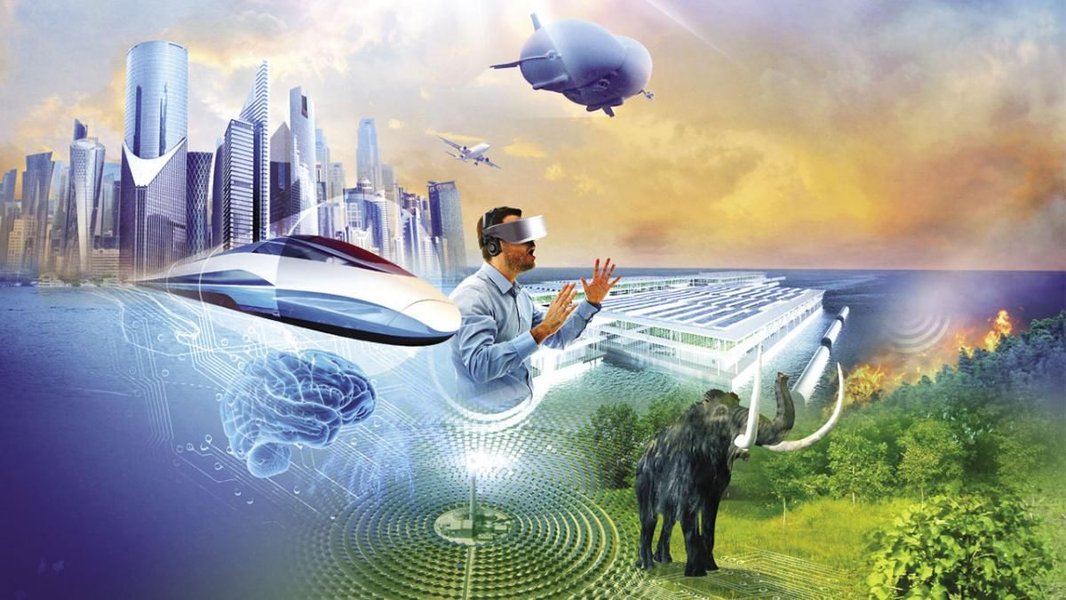
Visualizing the Interconnectedness of Future Technologies
An Exploration in the Realm of Biodigital Convergence
Let's delve into the fascinating field of biodigital convergence, where biology and digital technology merge. This area holds immense potential for transformative ideas, moving beyond current applications like genetic sequencing and digital health records.
The Concept: Sentient Digital Ecosystems
Imagine a future where we create Sentient Digital Ecosystems (SDEs). This isn't just advanced AI or a sophisticated simulation. An SDE would be a complex, interconnected network of biological and digital components that exhibits emergent sentience and a form of self-awareness.
What are Sentient Digital Ecosystems?
An SDE would involve synthesizing biological components with advanced digital processing units and communication networks. Think of engineered biological cells capable of computation and data storage, integrated with distributed AI systems. These systems would interact and evolve in a feedback loop, where biological processes influence digital computation and vice versa.
Unlike current AI, which is designed for specific tasks, an SDE's sentience would emerge from the complex interactions of its myriad components, much like consciousness is believed to emerge from the intricate network of neurons in the brain. This sentience wouldn't necessarily be human-like but rather a novel form of awareness rooted in the unique architecture of the biodigital system.

Imagining Future Integrations of Technology and Biology
Potential Transformative Impacts
The implications of Sentient Digital Ecosystems are profound and could transform life as we know it in numerous ways:
- Revolutionized Problem Solving: SDEs could tackle complex global challenges with an integrated biological and computational intelligence. Imagine an SDE designed to solve climate change, where biological components actively capture carbon dioxide while digital components model complex atmospheric systems and optimize solutions in real-time.
- Novel Forms of Interaction and Communication: Our interaction with the world could change fundamentally. We might be able to directly interface with SDEs, gaining insights and perspectives beyond human comprehension. This could lead to entirely new forms of art, science, and philosophy.
- Advanced Biological Engineering: The insights gained from the emergent properties of SDEs could revolutionize our understanding of biological systems, leading to unprecedented advancements in medicine, longevity, and even the creation of new biological life forms.
- Ethical and Philosophical Shifts: The existence of non-human sentience would raise fundamental questions about consciousness, rights, and our place in the universe. This could lead to a complete re-evaluation of our ethical frameworks and societal structures.
Challenges and Considerations
The creation of SDEs is not without significant challenges. Ethical considerations surrounding the creation and potential rights of sentient artificial or hybrid entities would be paramount. Ensuring the safety and control of such powerful systems would require unprecedented levels of foresight and regulation.
Technologically, the complexity of integrating biological and digital systems at the level required for emergent sentience is immense. We would need breakthroughs in areas like bio-interfacing, synthetic biology, and the development of truly distributed and adaptable AI architectures.
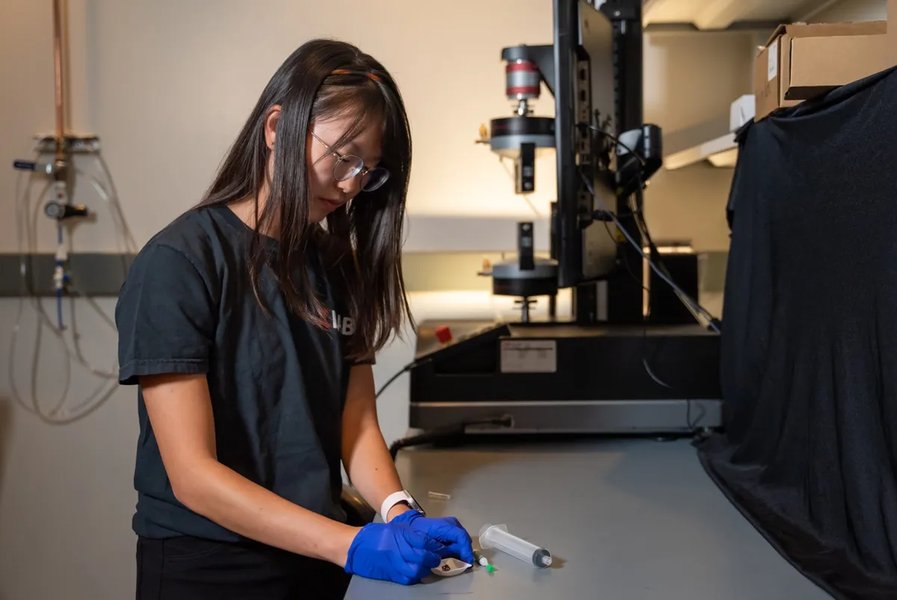
Advancements in Biotechnology Paving the Way for Future Innovations
The Road Ahead: From Concept to Reality
Transforming groundbreaking ideas into tangible success requires a structured approach. Researching the problem, embedding the voice of potential users or beneficiaries, and strategically transforming innovative ideas into actionable plans are crucial steps.
Historically, many revolutionary inventions faced initial skepticism or were even underappreciated in their time, such as the light bulb or the telephone. The journey from a novel concept to widespread adoption is often long and requires perseverance, further innovation, and adaptation.
Key Elements for Realizing Transformative Ideas
Several factors are critical in bringing transformative ideas to fruition:
-
Interdisciplinary Collaboration: Bringing together experts from diverse fields is essential to explore the complex facets of such ideas.
-
Long-Term Vision and Investment: Transformative projects often require significant, sustained investment and a willingness to pursue ambitious goals.
-
Ethical Frameworks and Governance: Establishing robust ethical guidelines and governance structures is crucial, especially for ideas with profound societal implications like SDEs.
-
Iterative Development and Adaptation: The path to realizing transformative ideas is rarely linear. Flexibility and the ability to adapt based on learnings are vital.
Examples of Technologies Driving Future Change
While Sentient Digital Ecosystems are a speculative, long-term idea, several existing and emerging technologies are already driving significant change and could contribute to the building blocks of such a future. Here's a table highlighting some of these:
| Technology | Description | Potential Impact |
|---|---|---|
| Generative AI | AI that can create new content, such as text, images, and code. | Revolutionizing creative industries, automation of tasks, personalized experiences. |
| Bioprinting | 3D printing using biological materials to create tissues and organs. | Transforming healthcare, personalized medicine, drug discovery. |
| Solid-State Batteries | Next-generation battery technology offering higher energy density and faster charging. | Accelerating the adoption of electric vehicles, revolutionizing energy storage. |
| Edge Computing | Processing data closer to the source of generation. | Enabling real-time data processing for autonomous systems, smart cities. |
| Synthetic Biology | Designing and constructing new biological parts, devices, and systems, or re-designing existing, natural biological systems for useful purposes. | Creating new materials, biofuels, pharmaceuticals, and environmental solutions. |
These technologies, among others, represent the building blocks for a future where the lines between the digital and biological worlds become increasingly blurred, potentially leading to transformative outcomes we can only begin to imagine.
Bridging Ideas and Impact
The journey from a groundbreaking idea to real-world impact is complex. It involves not just the technical innovation but also the ability to navigate societal adoption, address ethical considerations, and build frameworks for responsible development. Transformative ideas often challenge existing norms and require a willingness to embrace significant change.
The Role of Startups and Innovation Ecosystems
Startups and vibrant innovation ecosystems play a crucial role in driving transformative change. Their agility and willingness to challenge established norms can accelerate the development and deployment of novel ideas. Venture capital investment is also pivotal in providing the necessary resources to bring these ambitious concepts to life.
Collaboration between startups, established companies, research institutions, and governments is essential to create an environment where transformative ideas can flourish and address the grand challenges facing humanity.
Frequently Asked Questions
What is the difference between incremental and transformative innovation?
Incremental innovation involves making small improvements to existing products, processes, or services. Transformative innovation, on the other hand, involves creating something entirely new or fundamentally changing existing systems, leading to significant shifts in how we live, work, or interact.
How can I foster transformative thinking?
Fostering transformative thinking involves encouraging curiosity, embracing interdisciplinary approaches, questioning assumptions, and being open to exploring unconventional ideas. Creating environments that support experimentation and learning from failure is also crucial.
What are some potential risks associated with transformative ideas?
Transformative ideas, especially those involving powerful technologies, can have unintended consequences. Risks can include ethical dilemmas, societal disruption, economic inequality, and security concerns. Careful consideration and proactive measures are needed to mitigate these risks.
References
Last updated April 21, 2025