
Unveiling the Cost Leap: Why a 400kV Transformer Commands a Premium Over a 155kV Unit
Exploring the significant price escalation when stepping up primary voltage in large power transformers with identical power ratings.
When evaluating power transformers with similar power ratings (130/160 MVA ONAN/ONAF) and identical secondary voltages (30kV), a substantial cost difference emerges when the primary voltage increases from 155kV to 400kV. This escalation is not linear but rather exponential, driven by a confluence of design, material, and manufacturing complexities. Understanding these factors is crucial for accurate project budgeting and asset management in the power industry.
Key Insights: The Price of Higher Voltage
- Increased Insulation Demands: Higher voltages necessitate significantly more robust and complex insulation systems to prevent electrical breakdown, directly impacting material costs and manufacturing intricacy.
- Design and Material Escalation: A 400kV transformer requires superior grade materials, larger physical clearances, more substantial bushings, and often a more complex core and winding design compared to a 155kV unit, even at the same MVA rating.
- Substantial Cost Multiplier: Industry estimates suggest that a 400kV transformer can cost approximately 1.8 to 2.5 times more, and in some cases up to 5 times more, than a 155kV transformer of the same power capacity, primarily due to the challenges posed by the higher voltage level.
Dissecting the Cost Drivers: 155kV vs. 400kV Transformers
While both transformers share the same power rating (130/160 MVA ONAN/ONAF) and secondary voltage (30kV), the leap in primary voltage from 155kV to 400kV introduces profound changes in design philosophy, material requirements, and manufacturing processes. These changes are the primary contributors to the significant cost differential.
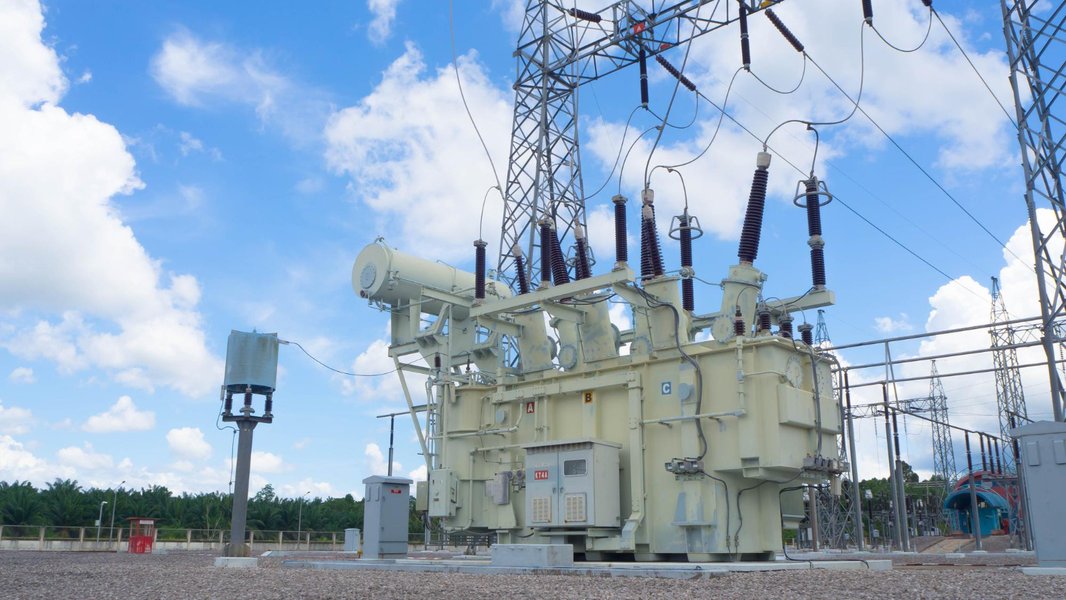
A typical large power transformer, illustrating the scale and complexity of such equipment.
The Dominance of Voltage: Insulation and Clearances
Insulation Requirements
The primary voltage dictates the electrical stress the transformer's insulation system must withstand. A 400kV system operates at a significantly higher potential than a 155kV system. This necessitates:
- Enhanced Dielectric Materials: Superior quality and greater quantities of insulating materials (e.g., transformer oil, insulating paper, pressboard) are required. The oil must have higher dielectric strength, and solid insulation must be thicker and more carefully applied.
- Basic Insulation Level (BIL): The BIL rating, which indicates the transformer's ability to withstand lightning impulses and switching surges, is substantially higher for 400kV equipment. Meeting a higher BIL requires more sophisticated insulation coordination and design.
- Bushings: The high-voltage bushings, which carry current into and out of the transformer tank, become significantly larger, more complex, and more expensive for 400kV applications. They require advanced materials and designs to manage the high electrical fields.
Physical Clearances
To prevent arcing and flashovers, electrical clearances (the distance between live parts and grounded components, or between different phases) must be much larger in a 400kV transformer. This impacts:
- Tank Size: The overall dimensions of the transformer tank increase to accommodate the larger internal clearances and the greater volume of insulating oil.
- Winding Design: Windings must be designed with greater spacing and more insulation, which can affect their overall size and the amount of conductor material (copper or aluminum) required.
Impact on Materials, Manufacturing, and Size
Core and Winding Materials
While the MVA rating is the same, the design considerations for 400kV can influence material choices:
- Core Steel: Higher voltage transformers may use higher-grade core steel to manage magnetic flux and minimize losses, although the fundamental core size is primarily driven by MVA and frequency.
- Conductor Material: The increased insulation around conductors might necessitate adjustments in winding techniques or overall conductor volume to manage current density and thermal performance.
Manufacturing Complexity and Testing
Manufacturing a 400kV transformer is a more intricate process:
- Precision and Quality Control: Tighter tolerances and more stringent quality control measures are essential due to the higher electrical stresses.
- Specialized Equipment and Skills: Handling larger components and implementing complex insulation systems require specialized manufacturing equipment and highly skilled labor.
- Testing Procedures: High-voltage testing for 400kV transformers is more extensive, involves higher test voltages, and requires more sophisticated testing facilities, adding to the overall cost.
Size, Weight, and Logistics
The cumulative effect of increased insulation, larger clearances, and more robust components is a significant increase in the physical size and weight of the 400kV transformer compared to its 155kV counterpart, even with the same MVA rating. This leads to:
- Increased Material Usage: More steel for the tank and core, more oil, and potentially more conductor material.
- Higher Transportation Costs: Larger and heavier transformers are more challenging and expensive to transport and install.
Visualizing Cost Influences: Transformer Factor Comparison
The radar chart below illustrates how different factors contribute to the overall cost profile of the 155kV and 400kV transformers. The scores are indicative, representing the relative impact of each factor, with higher scores indicating a greater contribution to cost or complexity. For the 400kV transformer, factors like 'Insulation Complexity,' 'BIL Requirements,' and 'Manufacturing Precision' are significantly higher, driving up the overall cost.
Mapping Transformer Cost Factors
The mindmap below provides a hierarchical view of the primary factors influencing power transformer costs, with a special emphasis on how increasing the primary voltage significantly branches out into multiple cost-adding sub-factors. This visual representation helps in understanding the interconnectedness of these elements.
Quantifying the Cost Difference: Order of Magnitude
Given the factors discussed, the cost increase from a 155kV primary to a 400kV primary, with other major specifications like MVA rating (130/160 MVA) and secondary voltage (30kV) remaining constant, is substantial. Industry data and manufacturer insights consistently point to the 400kV transformer being significantly more expensive.
Estimated Cost Multiplier
While exact figures vary based on manufacturer, specific design nuances, raw material costs at the time of order, and included accessories, a general order of magnitude for the cost increase can be estimated. The transformer with a 400kV primary voltage is likely to be 1.8 to 2.5 times more expensive than the 155kV transformer. Some analyses suggest this multiplier could even reach up to 3 to 5 times depending on the specifics and market conditions.
For instance, if a 155kV, 130/160 MVA transformer is estimated to cost in the range of $700,000 to $1,200,000, the equivalent 400kV unit could range from approximately $1,200,000 to $2,700,000, or even higher in some scenarios. This price jump is primarily attributed to the increased insulation, materials, size, weight, and manufacturing complexity associated with the much higher primary voltage.
Comparative Overview
The table below summarizes the key differences and their implications for cost between the two transformer configurations.
| Characteristic | Transformer 1 | Transformer 2 | Impact on Cost for Transformer 2 |
|---|---|---|---|
| Power Rating (ONAN/ONAF) | 130/160 MVA | 130/160 MVA | Neutral (Same) |
| Primary Voltage | 155 kV | 400 kV | Very High Increase (Primary cost driver) |
| Secondary Voltage | 30 kV | 30 kV | Neutral (Same) |
| Insulation Requirements | Standard for 155kV | Significantly Enhanced for 400kV | Major cost increase |
| Physical Clearances | Standard | Significantly Larger | Increased material and tank size costs |
| Bushings & Accessories | Standard for 155kV | Larger, More Complex, Higher Rated | Substantial cost increase |
| Size & Weight | Baseline | Considerably Larger & Heavier | Increased material, transport, and installation costs |
| Manufacturing Complexity | Moderate | High | Increased labor and quality control costs |
| Estimated Cost Ratio (vs. 155kV unit) | 1x (Baseline) | ~1.8x to 2.5x (or higher) | Significant overall cost premium |
The Rationale Behind High Voltage Transmission
Understanding why higher voltages like 400kV are used in power transmission can provide context to the necessity and complexity of such transformers. Higher transmission voltages are employed to minimize power losses over long distances. Power loss in a conductor is proportional to the square of the current (\(P_{loss} = I^2R\)). By stepping up the voltage, the current can be proportionally reduced for the same amount of power transmitted (\(P = VI\)), thereby significantly cutting down on these \(I^2R\) losses. This efficiency gain often justifies the higher initial investment in high-voltage equipment, including transformers.
The following video explains the benefits of using higher voltages in power transmission, which underscores the engineering challenges and thus the costs associated with equipment designed for these levels.
This video discusses how increasing transmission voltage can reduce the total cost of power transmission by minimizing losses, despite the higher initial cost of equipment.
Frequently Asked Questions (FAQ)
Why does a higher voltage increase transformer cost so much if the power rating is the same?
Higher voltage necessitates significantly more insulation, larger physical clearances between live parts, and more robust components (like bushings) to prevent electrical breakdown (arcing). These requirements lead to increased material usage (e.g., more copper/aluminum for windings if they need to be larger due to insulation, more insulating oil, larger tank), more complex designs, and more rigorous manufacturing and testing processes. Even if the power (MVA) handled is the same, managing the higher electrical stress is a major engineering challenge that directly translates to higher costs.
Are there other factors besides primary voltage that significantly impact transformer cost?
Yes, several other factors are critical. These include the MVA (power) rating, type of cooling (ONAN, ONAF, OFAF, etc.), impedance value, inclusion of on-load tap changers (OLTCs), type of transformer oil (mineral vs. ester), core material, winding material (copper vs. aluminum), BIL (Basic Insulation Level) rating beyond standard for voltage class, specific efficiency (losses) requirements, and any special design considerations for environmental conditions (e.g., high altitude, extreme temperatures, seismic requirements). Market conditions, raw material prices, and manufacturer-specific technologies also play a role.
How does the MVA rating affect transformer cost?
The MVA (Mega Volt-Ampere) rating represents the apparent power capacity of the transformer. Generally, a higher MVA rating means a larger transformer that requires more core steel, more conductor material for the windings, a larger tank, and a more substantial cooling system. Therefore, cost increases with MVA rating, assuming other factors like voltage class are comparable. In your specific query, the MVA rating is constant, so it doesn't contribute to the cost difference between the two options.
Can using an autotransformer reduce costs at high voltages like 400kV?
Yes, in certain applications, autotransformers can be more cost-effective, smaller, and more efficient than two-winding transformers. This is particularly true when the voltage ratio between the primary and secondary sides is relatively small (typically less than 3:1). Autotransformers use a single winding that is common to both the primary and secondary circuits. However, your query specifies a step-down from 155kV or 400kV to 30kV, which is a large transformation ratio. For such ratios, a two-winding transformer is standard. If the application was, for example, interconnecting 400kV and 220kV grids, an autotransformer would be a strong candidate.
Recommended Further Exploration
- What are the specific cost implications of different insulation materials used in high voltage transformers?
- How does the Basic Insulation Level (BIL) requirement influence the design complexity and overall price of power transformers?
- What are the unique manufacturing challenges and specialized testing protocols involved with Extra High Voltage (EHV) transformers like those rated for 400kV?
- How does the choice between copper and aluminum windings affect the cost and performance of large power transformers at different voltage levels?
References
 cdn.misoenergy.org
 amazon.com
Last updated May 19, 2025