
Exploring the Dual World of Transformers
Discovering the Power of Electrical and AI Transformers
Key Insights at a Glance
- Essential Electrical Devices: Transformers play a key role in shaping voltage levels for safe and efficient power distribution.
- Innovative AI Models: Transformer models revolutionize natural language processing by leveraging self-attention mechanisms.
- Wide-Ranging Applications: From power grids to modern AI systems, transformers demonstrate versatile and critical functionality.
Understanding Electrical Transformers
Fundamental Principles and Functions
An electrical transformer is a fundamental device in power systems that facilitates the conversion of voltage levels using the principle of electromagnetic induction. This conversion is critical for ensuring that electrical power can be safely transmitted over long distances and effectively utilized for everyday applications. Essentially, transformers convert high-voltage electricity, ideal for efficient long-distance transmission, to lower voltages that are safe for household and industrial use.
Core Components
The basic structure of an electrical transformer consists of:
- Primary Winding: This coil receives the input voltage and current.
- Secondary Winding: This coil delivers the transformed voltage which may be either stepped up or stepped down.
- Magnetic Core: Typically composed of iron or other ferromagnetic materials, the core focuses and enhances the magnetic field, improving the efficiency of the voltage transformation process.
Types of Electrical Transformers
Based on application and construction, transformers can be classified into several categories:
| Type | Function | Application |
|---|---|---|
| Step-Up Transformer | Increases voltage | Long-distance power transmission |
| Step-Down Transformer | Decreases voltage | Household electricity supply |
| Isolation Transformer | Separates circuits electrically | Safety and noise reduction |
| Autotransformer | Shared winding for primary and secondary | Voltage regulation in specific applications |
Operating Principle
The operating principle underlying electrical transformers is electromagnetic induction. A change in current flowing through the primary winding produces a varying magnetic field in the transformer's core. This time-varying magnetic field then induces a voltage in the secondary winding, generating a corresponding current. The voltage induced in the secondary coil depends on the ratio of the number of turns in the secondary coil to the primary coil, characterized by the relation:
\( \frac{\text{V}_{\text{secondary}}}{\text{V}_{\text{primary}}} = \frac{\text{N}_{\text{secondary}}}{\text{N}_{\text{primary}}} \)
This transformational capability makes electrical transformers indispensable in power generation, transmission, and distribution systems. Their ability to regulate voltage is essential for minimizing energy losses and ensuring safe power delivery.
Transformer Models in Artificial Intelligence
Revolutionizing Natural Language Processing
In the field of artificial intelligence (AI), the term "transformer" refers to a pioneering deep learning model designed for natural language processing (NLP) and other machine learning tasks. Introduced in 2017 in the seminal paper "Attention is All You Need", transformer models have rapidly become the backbone of numerous AI applications such as language translation, sentiment analysis, and text generation.
Key Architecture and Mechanisms
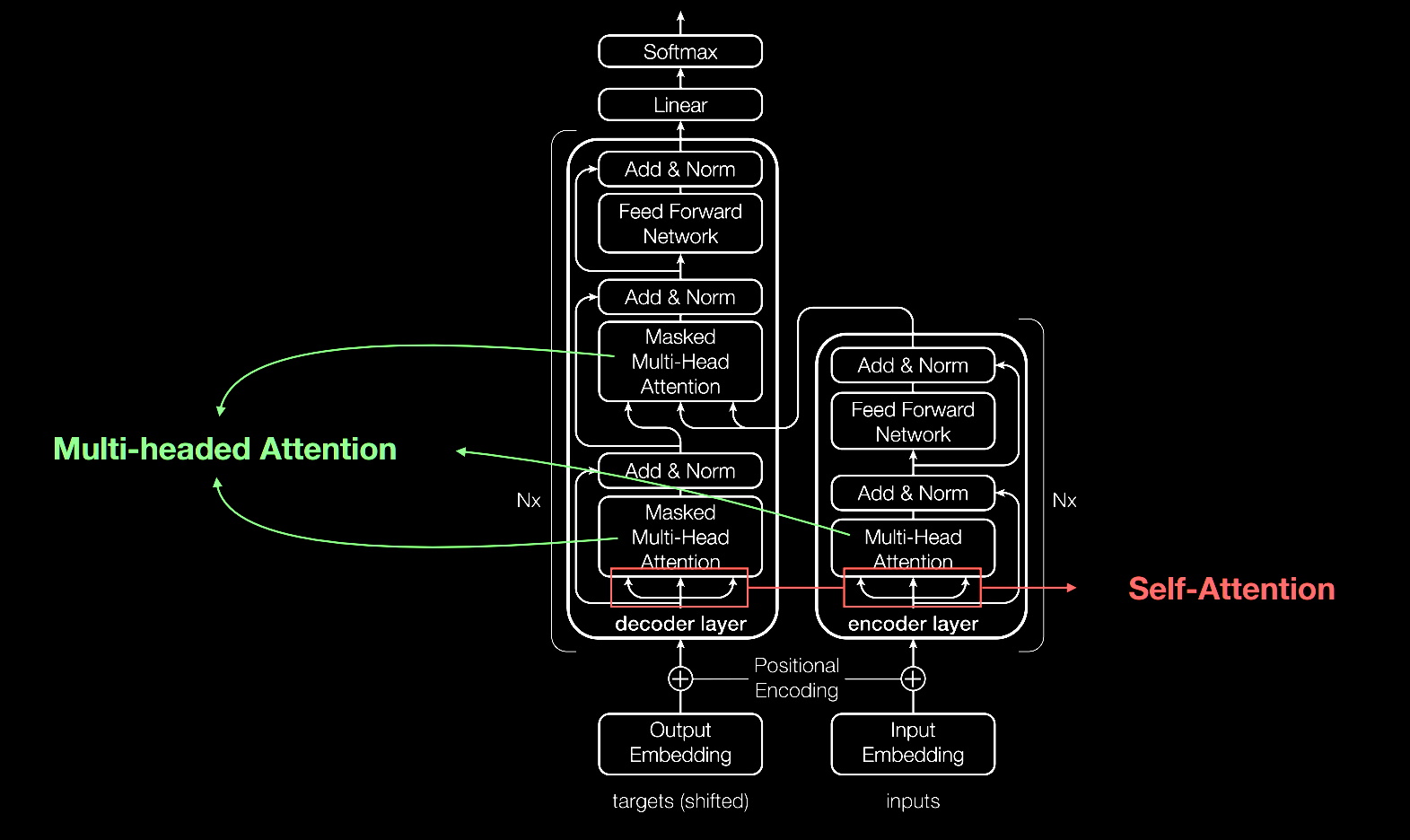
The transformer model utilizes a sophisticated architecture built around the concept of self-attention. Unlike traditional RNNs (Recurrent Neural Networks), which process data sequentially, transformers process entire sequences simultaneously. This approach significantly improves computational efficiency and allows the model to capture complex contextual relationships between words.
Encoder-Decoder Structure: The classic transformer architecture is split into two main sections:
- Encoder: Processes and encodes the entire input sequence into a set of embeddings that capture contextual information.
- Decoder: Uses the encodings produced by the encoder to generate output sequences, often applied for tasks such as language translation.
The Self-Attention Mechanism
At the heart of the transformer architecture is the self-attention mechanism. This mechanism enables the model to weigh the influence of different parts of the input data dynamically. Essentially, each token in the input sequence is evaluated against every other token, allowing the model to discern subtle patterns and dependencies regardless of their position in the sequence.
The attention value can mathematically be represented as:
\( \text{Attention}(Q, K, V) = \text{softmax}\left( \frac{QK^T}{\sqrt{d_k}} \right) V \)
where \( Q \), \( K \), and \( V \) denote the query, key, and value matrices, respectively, and \( d_k \) is the dimension of the key vectors. This formula signifies the computation employed to determine the weight assigned to each token in the sequence.
Applications and Impact
Transformers have transformed the landscape of artificial intelligence. They serve as the core architecture for renowned AI models such as BERT (Bidirectional Encoder Representations from Transformers) and GPT (Generative Pre-trained Transformer). Their high efficiency and accuracy have led to significant advancements in machine translation, summarization, and sentiment analysis.
Comparative Overview of Electrical and AI Transformers
Diverging Fields, Unified Terminology
Although both electrical transformers and transformer models in AI share the same name, they operate in entirely distinct areas, each essential to their respective fields. The electrical transformer is instrumental in regulating and distributing power efficiently, while the AI transformer revolutionizes how machines interpret and generate human language.
Side-by-Side Comparison Table
| Aspect | Electrical Transformer | AI Transformer |
|---|---|---|
| Purpose | Converts and regulates voltage for efficient power distribution. | Processes and generates language through self-attention mechanisms. |
| Operating Principle | Electromagnetic induction between coils. | Self-attention and parallel processing. |
| Main Components | Primary winding, secondary winding, magnetic core. | Encoder, decoder, self-attention layers. |
| Primary Application | Power generation, transmission, and distribution. | Natural language processing, machine translation, and more. |
| Historical Impact | Critical for the development of modern electrical grids and electronics. | Redefined AI research and powered breakthroughs in NLP models. |
Further Information and Detailed Exploration
Areas of Focus and Deep Dive Topics
Both electrical transformers and AI transformer models have expanded their reach into multiple sectors. In electrical engineering, transformers are fundamental to managing power flow in cities, industrial installations, and renewable energy systems. Understanding how transformers step-up or step-down voltage and protect circuits from irregularities is vital for energy efficiency and grid security.
Historical Evolution
The evolution of transformers in the electrical domain dates back to the late 19th century. Their invention has enabled the efficient transmission of electricity, reducing resistive losses in power lines and paving the way for the widespread electrification of homes and industries. As electrical power systems scaled, the role of the transformer grew, and advancements in materials and design further optimized their performance.
In addition to their technical functionality, transformers have an aesthetic and engineering appeal. Many modern transformers combine advanced insulation techniques, digital monitoring systems, and sophisticated cooling methods to maximize lifespan and performance.
Cutting-Edge AI Applications
In the AI realm, transformer models have sparked a surge of research and commercial application. Their capacity to analyze entire sequences in parallel opens up unique opportunities in real-time language translation, voice recognition, and content summarization. Researchers continuously advance transformer technologies to improve efficiency and reduce computational complexity. With further development, such models are expected to lead to even more groundbreaking applications ranging from medical diagnosis to autonomous systems.
The impact of transformers on AI is evident in the leaps in model performance, enabling more natural interactions between humans and machines. Their flexible architecture supports a wide variety of tasks and underpins state-of-the-art conversational agents, recommendation systems, and information retrieval frameworks.
References
- Electrical Transformers in Daily Life - EngineerFix
- Electrical Transformers Explained - Britannica
- Transformer Definition and Operation - GeeksforGeeks
-
Uses of Transformers in Daily Life - StudiousGuy
- Transformer - Wikipedia
Recommended Related Queries
 aws.amazon.com
Last updated March 25, 2025