
Transparent Frenulum Post-Circumcision: To Remove or Not to Remove?
Understanding the implications of a thin frenulum and your options for preventing tears.
It's understandable to be concerned if you've noticed your frenulum appears almost transparent, especially being circumcised and wanting to avoid a potential tear. Let's delve into what this means, the potential risks, and the recommended course of action based on current medical understanding.
Key Insights at a Glance
- Transparency & Fragility: An "almost transparent" frenulum likely indicates that the tissue is very thin. While not inherently a problem, thin tissue can sometimes be more susceptible to stretching or tearing, particularly during sexual activity.
- Preventive Removal Isn't Standard: Surgeons typically do not recommend removing the frenulum solely based on its appearance (e.g., being thin or transparent) if it's not causing any symptoms like pain, discomfort, or recurrent tears.
- Consult a Specialist: The most crucial step is to consult a urologist. They can perform a physical examination to assess the actual condition of your frenulum, its elasticity, length, and any signs of tightness (frenulum breve) that might predispose it to tearing, and discuss personalized recommendations.
Understanding Your Frenulum Post-Circumcision
The frenulum of the penis is a small, elastic band of tissue located on the underside of the penis, connecting the glans (head) to the shaft. Its primary role is to help the foreskin retract over the glans. Even after circumcision, where most or all of the foreskin is removed, a portion of the frenulum often remains. The characteristics of this remaining frenulum can vary.
What Does a "Transparent" Frenulum Signify?
If your frenulum appears "almost transparent," it suggests that the tissue is particularly thin. This thinness might mean it has less tensile strength compared to a thicker frenulum, potentially making it more vulnerable. However, appearance alone isn't a definitive indicator of a problem. Many individuals may have a thin frenulum that causes no issues throughout their lives.
It's important to distinguish between a thin frenulum and a condition known as frenulum breve, which means the frenulum is too short or tight. A short frenulum can restrict the movement of the remaining foreskin (if any) or pull on the glans, leading to discomfort, pain during erections or sexual activity, and an increased risk of tearing.
Anatomical illustration showing the location of the penile frenulum.
Frenulum Tears: Risks and Symptoms
A frenulum tear can occur if the tissue is stretched beyond its capacity. This is more common if the frenulum is short, tight, or particularly delicate.
Common Causes of Tearing:
- Vigorous sexual activity or masturbation, especially with insufficient lubrication.
- A pre-existing short or tight frenulum (frenulum breve).
- Accidental trauma.
Symptoms of a Frenulum Tear:
- Pain: Often sharp and occurring at the moment of the tear.
- Bleeding: The frenulum is rich in blood vessels, so tears can bleed significantly. Bleeding may take time to stop, especially if an erection is present.
- Discomfort: Soreness or tenderness in the area, especially during erections or when touched.
- Inflammation: Redness and swelling around the tear site.
Minor tears often heal on their own with proper care. However, recurrent tears can lead to scarring. Scar tissue is less elastic than normal tissue, which can further shorten or tighten the frenulum, creating a cycle of re-injury.
To Remove or Not? Considering Prophylactic Intervention
The decision to surgically address the frenulum—either by lengthening it (frenuloplasty) or removing it (frenulectomy or frenectomy)—is typically based on symptoms and functional impairment, rather than its appearance alone.
When is Surgical Intervention Usually Recommended?
Healthcare providers generally recommend surgical intervention for the frenulum if:
- You experience recurrent frenulum tears.
- You have persistent pain or discomfort related to the frenulum, especially during erections or sexual activity.
- The frenulum is clearly too short or tight (frenulum breve), causing restriction or pulling.
- The condition significantly impacts your sexual life or causes psychological distress.
Preventive removal solely because the frenulum appears thin, without any history of problems, is not standard practice. However, if a urologist assesses your frenulum and deems it exceptionally fragile and at high risk for tearing, they might discuss prophylactic options in your specific case.
Surgical Options: Frenuloplasty vs. Frenulectomy
If intervention is deemed necessary, two main procedures are considered:
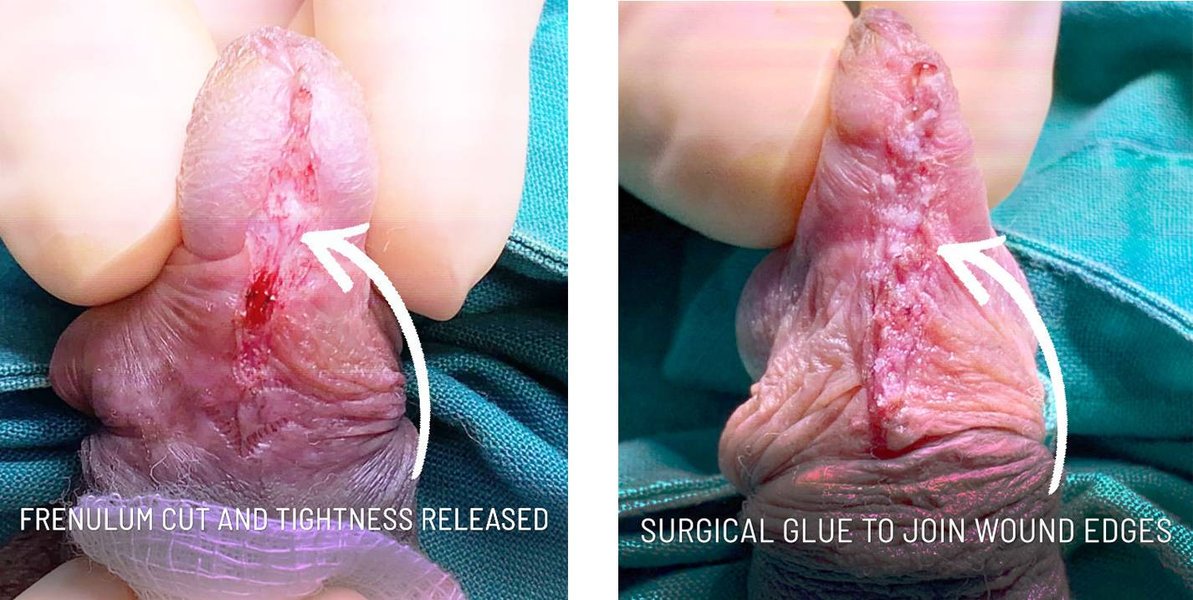
- Frenuloplasty: This procedure aims to lengthen the frenulum, relieving tension and reducing the risk of tearing. It involves making one or more small incisions in the frenulum, which are then sutured in a way that elongates the tissue. This is often preferred when the goal is to preserve the frenulum while correcting tightness.
- Frenulectomy (or Frenectomy): This procedure involves the complete removal of the frenulum. It is typically considered when the frenulum is severely problematic, causing recurrent tears or pain, or if frenuloplasty is not suitable or has failed.
Both procedures are usually minor and can often be performed under local anesthesia in an outpatient setting. Recovery typically involves a few weeks of avoiding sexual activity and following specific wound care instructions.
Potential Risks of Surgery
Like any surgical procedure, frenuloplasty and frenulectomy carry potential risks, although they are generally low:
- Bleeding
- Infection
- Scarring
- Changes in sensation (rarely, increased or decreased sensitivity)
- Pain or discomfort during healing
- Adhesions or skin bridges
A thorough discussion with your urologist about the benefits and risks specific to your situation is essential.
Visualizing Factors for Frenulum Intervention
The decision to proceed with a frenulum procedure is multifaceted. The radar chart below illustrates hypothetical relative importance of various factors when considering different management approaches. A score of 1 indicates low relevance/severity, while 10 indicates high relevance/severity for a particular approach.
This chart is for illustrative purposes and highlights that more severe symptoms and higher impact typically steer considerations towards more definitive interventions. Your urologist will make an assessment based on your individual clinical picture.
Exploring the Concepts: A Mindmap Overview
To better understand the interconnected aspects of your concern, the following mindmap outlines the key areas related to frenulum issues post-circumcision, potential problems, assessment, and management pathways.
This mindmap provides a visual summary of the key elements to consider regarding your frenulum.
Expert Insights on Frenulum Treatment
Understanding surgical options can be helpful. The following video discusses frenulum conditions and treatments, offering insights from a medical professional. This particular video provides information about why a frenulectomy (removal of the frenulum) might be performed and the benefits it can offer for patients experiencing pain or other issues related to their frenulum.
Video discussing frenulectomy as a treatment for frenulum-related pain.
While this video discusses frenulectomy, remember that it's one of several options, and the best course of action depends on your individual assessment by a urologist.
Comparative Overview of Management Approaches
The table below summarizes different approaches to managing frenulum concerns, from observation to surgical intervention. This can help you understand the spectrum of options a healthcare provider might discuss with you.
| Approach | Description | When Typically Considered | Potential Pros | Potential Cons/Risks |
|---|---|---|---|---|
| Observation / Watchful Waiting | Monitoring the frenulum without active intervention, focusing on avoiding triggers for tears. | Asymptomatic or very minor, infrequent symptoms; transparent appearance without pain or tears. | Avoids surgery and its associated risks; no recovery time. | Risk of future tear if frenulum is indeed vulnerable; ongoing anxiety for some individuals. |
| Conservative Measures | Using lubricants during sexual activity, gentle sexual practices, good hygiene. | Mild discomfort; preventing initial or infrequent tears. | Non-invasive; can reduce friction and stress on the frenulum. | May not be sufficient for significant tightness or recurrent tears. |
| Frenuloplasty | Surgical procedure to lengthen the frenulum. | Frenulum breve (short/tight frenulum) causing pain, discomfort, or minor tears; desire to preserve frenulum tissue. | Relieves tension, reduces tear risk, improves comfort; preserves frenulum. | Surgical risks (bleeding, infection, scarring); recovery period; may not resolve issues if frenulum is severely damaged. |
| Frenulectomy / Frenectomy | Surgical removal of the frenulum. | Recurrent, painful tears; significant frenulum breve unresponsive to other treatments; severe scarring or damage. | Definitive solution for problems caused by the frenulum; high success rate for symptom relief. | Surgical risks (bleeding, infection, scarring); loss of the frenulum (which has some sensory nerves); recovery period; potential minor changes in glans sensation or appearance. |
Frequently Asked Questions (FAQ)
1. If my frenulum is transparent, does it mean it will definitely tear?
Not necessarily. A transparent appearance suggests the tissue is thin, which could make it more prone to tearing under stress compared to thicker tissue. However, many individuals with thin frenula experience no problems. The risk of tearing also depends on factors like its length, elasticity, and the types of activities it's subjected to. Only a physical examination by a doctor can better assess its actual vulnerability.
2. I'm circumcised, so why do I still have a frenulum that could tear?
Circumcision primarily involves the removal of the foreskin. Depending on the circumcision technique used, the frenulum may be partially or fully preserved, or it might be divided. It's quite common for a significant portion of the frenulum to remain intact after circumcision. This remaining frenulum can still be subject to issues like tightness or tearing if it's short or put under undue stress.
3. What should I do if my frenulum tears?
If a tear occurs, apply gentle pressure with a clean cloth to control bleeding. Clean the area with mild soap and water. An over-the-counter antibiotic ointment can be applied. Avoid sexual activity until it's fully healed (usually a week or two for minor tears). If bleeding is heavy or doesn't stop, pain is severe, or you see signs of infection (increasing redness, swelling, pus, fever), seek medical attention promptly. Recurrent tears should always be evaluated by a doctor.
4. Can I prevent frenulum tears without surgery?
In some cases, yes. Using ample lubrication during sexual activity can significantly reduce friction and stress on the frenulum. If tightness is mild, avoiding overly vigorous activities that strain the area might help. However, if the frenulum is anatomically short (frenulum breve) or already scarred from previous tears, these measures might not be enough, and a medical consultation is advisable to discuss other options. Do not attempt aggressive stretching exercises without medical guidance, as this could cause injury.
5. How long is the recovery after a frenuloplasty or frenulectomy?
Recovery varies but generally, initial healing takes about 1-2 weeks. Most discomfort subsides within a few days to a week, managed with pain medication if needed. Stitches, if used, are often dissolvable. You'll typically be advised to avoid sexual activity and strenuous exercise for about 4-6 weeks to allow for complete healing and to prevent re-injury. Your urologist will provide specific post-operative care instructions.
Recommended Further Exploration
To deepen your understanding, consider exploring these related queries:
- What are the signs and symptoms of frenulum breve?
- Compare frenuloplasty versus frenulectomy for penile frenulum issues.
- How to care for a torn frenulum at home.
- Long-term outcomes of frenulum surgery after circumcision.
References
Last updated May 17, 2025