
Advancements in Transparent Wood Polymer Composites
Exploring Innovations in Sustainable, High-Performance Materials
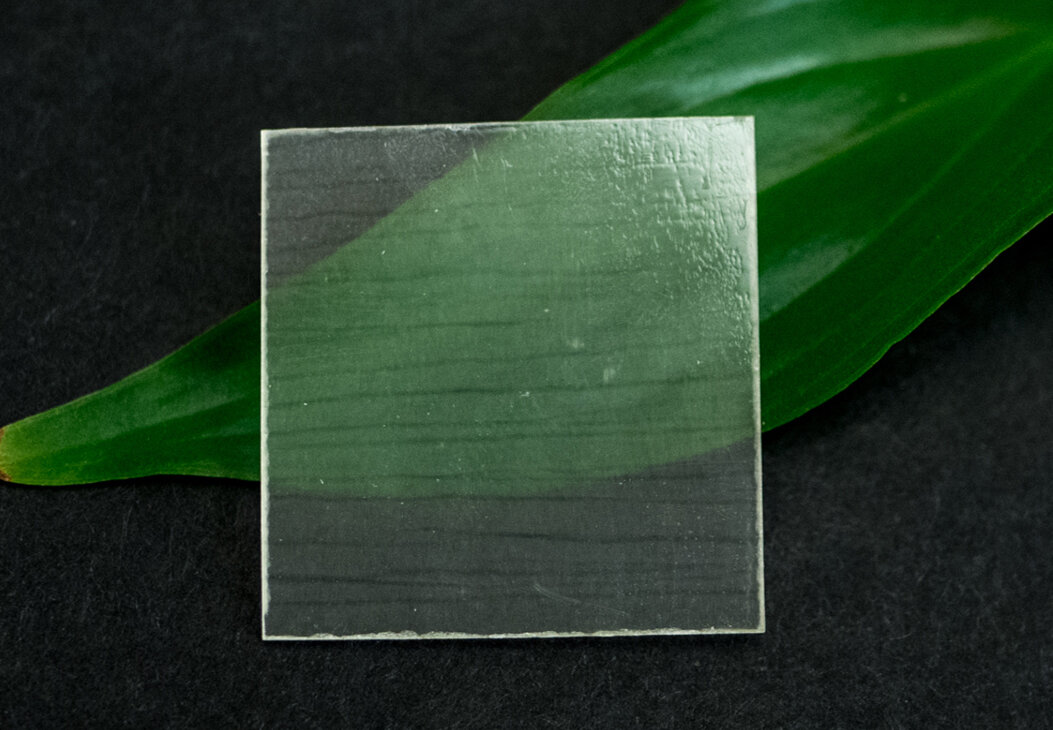
Key Highlights
- Enhanced Material Properties: Improvements in mechanical strength, optical transmittance, and thermal insulation.
- Sustainable Production and Scalability: Green chemical processes and cost-effective, large-scale manufacturing methods.
- Functional Enhancements and Applications: Integration of smart functionalities and versatile applications in construction and optoelectronics.
Introduction to Transparent Wood Polymer Composites
Transparent wood polymer composites (TWPCs) have emerged as a promising class of advanced materials owing to their unique combination of excellent optical and mechanical properties along with environmental sustainability. Over recent years, research has focused on the development, validation, and continual improvement of these composites to address challenges related to scalability, cost, sustainability, and performance. This document provides an in-depth analysis of key technological areas that are being addressed to advance TWPCs, and the initiatives to further integrate these materials into various industry applications.
Technologies to be Developed, Validated, and Improved
1. Material Synthesis and Delignification Processes
Delignification Techniques
The process of removing lignin is critical to achieving the high transparency characteristic of TWPCs. Current delignification methods tend to be time-consuming and expensive, and they may lead to structural damage in the wood substrate. As a result, researchers are actively exploring more efficient, cost-effective, and less destructive chemical treatments. These improvements aim to:
- Optimize chemical bleaching methods for lignin removal while preserving the structural integrity of the wood fibers.
- Minimize the use of harsh chemicals by adopting greener reagents and solvents.
- Reduce processing time by leveraging novel catalysts and process intensification techniques.
Advanced delignification protocols are critical for ensuring that the resulting wood substrate, once infiltrated with the chosen polymer, exhibits high optical transmittance and retains mechanical robustness.
Polymer Infiltration and Controlled Polymerization
Following delignification, the wood skeleton is impregnated with polymers such as polyvinyl alcohol (PVA), epoxy, or newly developed bio-based polymers. Research in controlled polymerization and curing processes is imperative to tailor the optical, thermal, and mechanical properties of the composite. Key objectives include:
- Achieving high transparency (up to 90%) through polymers with matching refractive indexes.
- Enhancing durability by optimizing cross-linking and polymer network formation.
- Developing new polymer formulations that yield superior mechanical strength, low haze, and thermal insulation properties.
2. Interface Engineering for Enhanced Structural Integrity
Improving Wood-Polymer Bonding
One of the crucial challenges in TWPCs is ensuring a robust interface between the wood substrate and the infiltrated polymer. Inconsistent bonding can diminish both optical quality and structural performance. Recent technological advances focus on:
- Surface Modification: Employing surface treatments on wood fibers to increase compatibility with the polymer matrix through chemical or plasma treatments.
- Functionalized Polymers: Synthesizing polymers with functional groups that promote strong covalent or hydrogen bonds with the cellulose fibers.
- Nano-structural Tailoring: Fine-tuning the nanostructure at the interface to improve load transfer and enhance mechanical properties.
These techniques help to secure a durable composite material that is less prone to delamination and has improved performance under mechanical stress.
3. Scalability and Sustainability of Production Methods
Green Chemical Processes and Sustainable Materials
A significant thrust in TWPC research is ensuring that production methods are not only scalable but also environmentally responsible. Efforts in this domain include:
- Replacing fossil-based components with renewable, bio-based polymers derived from sources like citrus peels or other agricultural byproducts.
- Adopting green chemistry principles to reduce the environmental impact of chemical processes, including energy consumption and hazardous waste generation.
- Developing lifecycle assessment models to evaluate and minimize the carbon footprint across production, usage, and disposal stages.
Cost-Effective Manufacturing Strategies
To transition TWPCs from laboratory innovations to industrial applications, efforts to streamline manufacturing are essential. Key strategies being explored include:
- Automation: Utilizing automated systems for the impregnation and curing processes to enhance consistency and reduce labor costs.
- Additive Manufacturing: Exploring large-scale additive manufacturing techniques that allow for precise control over material deposition and product geometry.
- Simplified Processing: Innovating process development to minimize the number of steps required while maintaining the quality and performance of the composite.
4. Multifunctional Enhancements and Smart Applications
Incorporation of Additional Functional Features
Beyond structural and optical properties, transparent wood composites are being designed with multifunctional capabilities intended to expand their range of applications. Research areas include:
- Flame Retardancy: Developing composites with enhanced fire-resistant properties to meet safety standards, particularly for building and construction applications.
- Energy Storage: Integrating energy storage elements or phase-change materials, transforming the composite into a smart energy storage medium ideal for thermal regulation in buildings.
- Electrochromic Functionality: Incorporating electrochromic polymers to create adaptive or tunable transparency windows, which can respond to environmental stimuli or user preferences.
Emerging Applications
The unique balance of transparency, strength, and thermal insulation positions TWPCs for a variety of emerging applications. Some notable application domains include:
- Solar Cells: Using transparent wood as a substrate for solar panels can potentially enhance the aesthetic integration of renewable energy systems in building facades while offering mechanical durability.
- Building Materials: TWPCs are being assessed for use in load-bearing windows, thermal insulation panels, and sustainable interior design elements that capitalize on their unique thermal management properties.
- Optoelectronics: With high optical transmittance, these composites can serve as substrates for display screens, sensors, and smart surfaces in next-generation electronic devices.
Comparative Overview of Key Technological Areas
| Area of Focus | Technological Challenges | Recent Advancements | Potential Applications |
|---|---|---|---|
| Material Synthesis | Time-consuming delignification; chemical damage | Optimized chemical methods; greener reagents | High transparency composites; improved mechanical properties |
| Interface Bonding | Poor adhesion between wood and polymer | Surface modification; functionalized polymers | Enhanced load bearing; long-lasting composites |
| Scalability | Labor-intensive processes; cost issues | Automated manufacturing; additive manufacturing | Commercial production; broad industrial use |
| Functional Enhancements | Limited multifunctionality | Inclusion of flame retardants, phase-change materials | Smart windows; energy storage; optoelectronic applications |
| Sustainability | High environmental impact of fossil-based components | Use of bio-based polymers; green chemistry processes | Eco-friendly building materials; sustainable design |
Challenges and Future Directions
Testing and Performance Validation
Comprehensive testing of TWPCs is essential to validate their mechanical, thermal, and optical properties under varied environmental conditions. Future research must focus on:
- Developing standardized testing protocols to accurately measure durability, UV resistance, and moisture absorption.
- Characterizing long-term stability to ensure that the composites maintain their performance over time.
- Utilizing advanced imaging and spectroscopy techniques to analyze the interface bonding at the nanoscale.
Such rigorous testing not only validates the performance of TWPCs but also drives process improvements and material optimization for specific end-use applications.
Economic and Environmental Assessments
As TWPCs move from laboratory proof-of-concept to industrial production, cost-effectiveness and environmental impact become major considerations. Current directions include:
- Conducting detailed economic analyses to compare the cost benefits of TWPCs with conventional materials such as glass and plastics.
- Implementing life cycle assessments (LCAs) to evaluate the sustainability credentials of the composites, from raw material extraction to end-of-life disposal.
- Optimizing energy use and recycling processes to further reduce the carbon footprint of production.
Integration of Production and Application Technologies
Bridging Lab-Scale Innovations with Industrial Production
Scaling up the production of transparent wood composites remains a critical step. This requires:
- Refining pilot-scale production processes to ensure consistency in quality and performance.
- Investing in automation and novel manufacturing technologies to reduce human error and production times.
- Working closely with industry partners to tailor the composites for specialized market needs, such as architectural components or consumer electronics.
As these challenges are overcome, TWPCs are poised to become a central material in sustainable construction, energy-efficient buildings, and advanced optoelectronic devices.
References
- Transparent Wood: A Revolutionary Material For Multiple Applications - Architecture Lab
- Transparent Wood Polymer Composites Research - Nature
-
Sustainable Advances in Transparent Wood - ScienceDirect
- Why Scientists are Making Transparent Wood - Ars Technica
- Transparent Wood Market Trends - Straits Research
Recommended Related Queries
Last updated March 20, 2025