
Untangling the TREM2-PU.1 Connection: Does Signaling Flow Upstream?
Analyzing the claim that TREM2 signaling activates the PU.1 transcription factor.
The intricate workings of the brain's immune cells, microglia, involve a complex interplay of receptors and transcription factors. Two key players in this system are TREM2 (Triggering Receptor Expressed on Myeloid cells 2) and PU.1 (also known as Spi1). Understanding their relationship is crucial for deciphering microglial function in health and disease. A specific question arises: Does signaling initiated by the TREM2 receptor lead to the activation of the PU.1 transcription factor?
Highlights: Key Insights into the TREM2-PU.1 Relationship
- PU.1 Regulates TREM2: The consensus from genetic and molecular studies indicates that the transcription factor PU.1 is a primary regulator of TREM2 gene expression, binding to its promoter region.
- TREM2 Signaling Pathway Defined: TREM2 signaling occurs through adaptor proteins like DAP12 and downstream kinases (e.g., SYK, PI3K), influencing microglial metabolism, survival, and phagocytosis, but not directly activating PU.1.
- Claim Reversal: The claim that TREM2 signaling activates PU.1 activity misrepresents the established direction of regulation, which flows from PU.1 to TREM2.
Exploring the Basis of the Claim: Correlation vs. Causation
Why Might One Assume TREM2 Activates PU.1?
While the direct claim is not supported by evidence, certain observations might lead to this assumption. Both TREM2 and PU.1 are crucial for microglial function and are often discussed together in the context of neuroinflammation and neurodegenerative diseases like Alzheimer's disease.
Shared Networks and Co-expression
Studies analyzing gene networks in microglia often find TREM2 and PU.1 within the same functional modules. For example, analyses might show that TREM2 RNA levels correlate with CSF1R levels, and both genes are known targets of PU.1. Furthermore, networks associated with microglial responses sometimes list TREM2, its adaptor TYROBP (DAP12), and PU.1 together. This co-expression and involvement in similar pathways could mistakenly be interpreted as TREM2 signaling influencing PU.1 activity.
Indirect Influences
It's conceivable that downstream effects of TREM2 signaling, such as changes in cellular metabolism or inflammatory state, could *indirectly* influence the broader transcriptional landscape, potentially affecting factors related to PU.1. However, this is speculative and distinct from the claim of direct activation of PU.1 *activity* by TREM2 signaling.
These points highlight associations, but they fall short of demonstrating a causal link where TREM2 signaling *activates* PU.1. The bulk of direct molecular evidence points in the opposite direction.
Deconstructing the Claim: Why TREM2 Signaling Does Not Activate PU.1
The Established Regulatory Hierarchy: PU.1 Controls TREM2 Expression
The overwhelming scientific evidence indicates that the relationship flows from PU.1 to TREM2, not the other way around. PU.1 is a master transcription factor essential for the development and function of myeloid cells, including microglia.
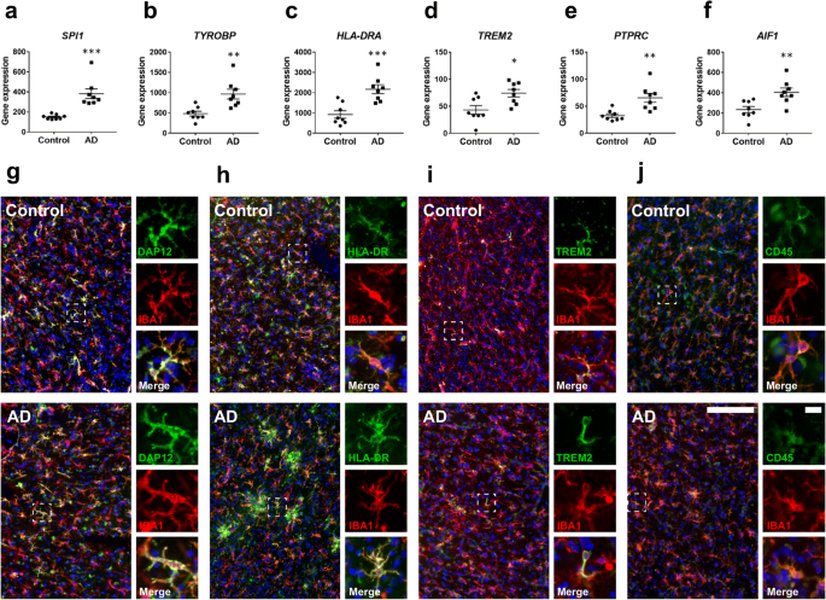
Genetic studies show PU.1 binds to regulatory regions of genes implicated in Alzheimer's disease, including those related to TREM2 pathways.
PU.1 Binds the TREM2 Promoter
Multiple studies confirm that PU.1 directly regulates the transcription of the TREM2 gene. PU.1 binding sites are present in the promoter region of TREM2. Techniques like Chromatin Immunoprecipitation Sequencing (ChIP-Seq) have demonstrated that PU.1 physically binds to this region in microglia, actively controlling whether the TREM2 gene is turned on.
TREM2 as a Target Gene
Research explicitly identifies TREM2 as a target gene of PU.1 in microglia. This means PU.1 activity is necessary for TREM2 protein to be produced.
Evidence from Knockout Models
Studies using mice where the gene for PU.1 has been knocked out (removed) show the consequences clearly. In the absence of PU.1, microglia development is severely impaired, and TREM2 is often no longer detectable in the central nervous system. This strongly supports the idea that PU.1 is required upstream for TREM2 expression.
Stability of PU.1
Conversely, studies examining microglia in TREM2 knockout models generally show that PU.1 expression and activity remain stable. This indicates that TREM2 signaling is not necessary for maintaining PU.1 function.
Visualizing the Regulatory Cascade
Mindmap of the PU.1-TREM2 Interaction
This mindmap illustrates the established relationship: PU.1 acts as a master regulator controlling the expression of TREM2. TREM2, upon activation by ligands (like lipids or ApoE), initiates downstream signaling pathways that influence microglial behavior, but these pathways do not circle back to activate PU.1.
Understanding TREM2's Downstream Effects
The Known Signaling Pathway of TREM2
When TREM2 binds to its ligands (substances like certain lipids, apolipoprotein E (ApoE), or potentially amyloid-beta aggregates), it doesn't act alone. It requires adaptor proteins within the cell membrane, primarily DAP12 (also known as TYROBP) and sometimes DAP10, to relay the signal inside the cell.
Key Signaling Molecules
Activation of the TREM2-DAP12 complex leads to the recruitment and activation of spleen tyrosine kinase (SYK). SYK then triggers further downstream signaling cascades, prominently involving phosphatidylinositol 3-kinase (PI3K) and other pathways that regulate:
- Cellular Metabolism: Shifting energy production to support increased activity.
- Phagocytosis: Enhancing the microglia's ability to engulf debris, pathogens, or protein aggregates.
- Survival and Proliferation: Promoting the health and expansion of the microglial population.
- Inflammatory Responses: Modulating the release of cytokines and other signaling molecules.
Crucially, none of the well-documented TREM2 signaling pathways include the direct activation of PU.1 transcription factor activity. The effects are focused on modifying microglial state and function through these downstream mediators.

Visualization of TREM2 protein (green) within microglia derived from induced pluripotent stem cells (iPSCs).
Assessing the Evidence: PU.1 Activation vs. TREM2 Activation
Comparing Support for Regulatory Directions
This chart visually contrasts the strength of evidence supporting the two potential regulatory directions: "PU.1 Activates TREM2 Expression" versus the claim "TREM2 Signaling Activates PU.1 Activity". The data reflects the consensus in the scientific literature, showing robust support for PU.1 regulating TREM2 and very weak, indirect, or non-existent support for the reverse.
As depicted, evidence supporting PU.1 as the upstream regulator of TREM2 expression is consistently strong across multiple methodologies. In contrast, evidence for TREM2 signaling activating PU.1 is minimal, primarily resting on indirect correlations rather than direct mechanistic proof.
Summarizing the Roles: PU.1 vs. TREM2
Key Functional and Regulatory Differences
This table provides a concise comparison of PU.1 and TREM2, highlighting their distinct roles and positions within the microglial regulatory framework.
| Feature | PU.1 (Spi1) | TREM2 |
|---|---|---|
| Molecular Type | Transcription Factor | Transmembrane Receptor |
| Primary Role | Regulates gene expression; Master regulator of myeloid development & microglial identity | Senses extracellular ligands; Modulates microglial function (phagocytosis, metabolism, survival) |
| Location | Primarily Nucleus (binds DNA) | Cell Surface Membrane |
| Regulation Direction | Acts upstream; Activates/Regulates expression of target genes (including TREM2) | Acts downstream (upon ligand binding); Initiates intracellular signaling cascades |
| Key Downstream Effects / Targets | Expression of numerous myeloid/microglial genes (e.g., TREM2, CSF1R) | Activation of DAP12, SYK, PI3K pathways; Changes in cell behavior |
| Activation Mechanism | Regulated by complex cellular signaling, developmental cues, and autoregulation | Binding of extracellular ligands (lipids, ApoE, Aβ oligomers, etc.) |
Visual Resource: TREM2 in Neurodegeneration
Insights from Dr. Marco Colonna
This video features Dr. Marco Colonna, a leading researcher in the field, discussing the role of TREM2 in neurodegeneration, particularly Alzheimer's disease, and also its emerging roles in cancer. Understanding TREM2's function provides context for its signaling pathways and how it fits into the broader picture of microglial biology, distinct from the role of upstream transcription factors like PU.1.
Analyzing Logical Consistency
Evaluating Explanations For and Against the Claim
The "TRUE" Explanation (TREM2 activates PU.1)
- Internal Consistency: The explanation struggles with internal consistency. It relies on indirect correlations and network co-mentions (TREM2 and PU.1 are important in microglia and sometimes studied together). However, it lacks a plausible, evidence-based mechanism for *how* TREM2 signaling would activate PU.1 activity. It doesn't align with the known TREM2 signaling pathway.
- Validity Against Opposing Evidence: This explanation is not valid when considering the strong opposing evidence. Direct molecular data (promoter binding, ChIP-Seq, knockout studies) clearly establishes PU.1 as the upstream regulator of TREM2. Ignoring this direct evidence in favor of weaker correlations makes the "TRUE" explanation logically fragile and inconsistent with established biology.
The "FALSE" Explanation (TREM2 does NOT activate PU.1)
- Internal Consistency: This explanation is highly internally consistent. It aligns perfectly with multiple lines of evidence: PU.1 is a master regulator, PU.1 binds the TREM2 promoter, TREM2 is a target gene of PU.1, PU.1 knockout impacts TREM2 expression, and the known TREM2 signaling pathway (via DAP12/SYK/PI3K) does not involve PU.1 activation. All pieces fit together logically.
- Validity Against Opposing Evidence: This explanation remains valid even when considering the correlative data mentioned in the "TRUE" argument. The existence of shared networks or co-regulation doesn't negate the established *direction* of the primary regulatory relationship (PU.1 -> TREM2). The direct mechanistic evidence strongly supports this direction, making the "FALSE" explanation robust.
Conclusion: The Verdict on the Claim
Step-by-Step Reasoning
Based on the comprehensive analysis of the available evidence, the most logically consistent conclusion is that the claim **"Trem2 signaling activates PU.1 transcription factor activity" is FALSE.**
- Hierarchy of Evidence: Direct mechanistic evidence (PU.1 binding to the TREM2 promoter, ChIP-Seq data) carries more weight than indirect correlations or network associations. The direct evidence clearly shows PU.1 regulates TREM2.
- Established Directionality: The scientific literature consistently describes the regulatory flow from PU.1 to TREM2 expression. PU.1 acts upstream to control the amount of TREM2 protein produced. There is no established mechanism for TREM2 signaling to activate PU.1.
- Known Signaling Pathways: The downstream signaling pathway initiated by TREM2 (involving DAP12, SYK, PI3K) is well-characterized and influences microglial functions like phagocytosis and metabolism. This pathway does not include activation of PU.1 transcription factor activity.
- Consistency and Volume of Evidence: The conclusion that PU.1 regulates TREM2 is supported by numerous independent studies and different types of experimental evidence (genetic, molecular). The alternative claim lacks direct support and contradicts this body of work.
- Functional Roles: The roles fit the conclusion: PU.1 is a nuclear transcription factor controlling gene expression programs, while TREM2 is a cell surface receptor sensing the environment and triggering intracellular responses. Reversing this relationship (TREM2 activating PU.1) is inconsistent with their fundamental functions.
Therefore, the claim misrepresents the known biological relationship between these two important microglial molecules.
Frequently Asked Questions (FAQ)
What is TREM2 and why is it important? +
TREM2 (Triggering Receptor Expressed on Myeloid cells 2) is a protein receptor found on the surface of myeloid cells, particularly microglia in the brain. It plays a critical role in detecting signals related to cellular damage, lipids, and potentially protein aggregates like amyloid-beta. TREM2 signaling is essential for microglial survival, proliferation, metabolic activity, and their ability to clear debris (phagocytosis). Mutations in the TREM2 gene are linked to an increased risk of neurodegenerative diseases like Alzheimer's disease and Nasu-Hakola disease.
What is PU.1 and what does it do in microglia? +
PU.1 (also known as Spi1) is a master transcription factor belonging to the Ets family. It is crucial for the development and differentiation of myeloid cells (like macrophages and microglia) and B lymphocytes. In microglia, PU.1 acts within the nucleus to bind DNA and regulate the expression of a wide range of genes necessary for establishing and maintaining microglial identity and function. This includes controlling the expression of key receptors like TREM2 and CSF1R.
If TREM2 doesn't activate PU.1, how are they linked? +
The primary link is regulatory: PU.1 controls the expression level of the TREM2 gene. This means the amount of TREM2 receptor present on the microglial surface is partly determined by the activity of the PU.1 transcription factor. They are functionally linked because PU.1 establishes the microglial state, including the machinery (like TREM2) needed to respond to environmental cues. While TREM2 signaling impacts microglial function downstream, it does so using pathways separate from the direct activation of PU.1.
Could TREM2 signaling indirectly influence PU.1? +
While direct activation is not supported, it's theoretically possible that long-term changes in microglial state induced by TREM2 signaling (e.g., altered metabolism, chronic inflammation) could indirectly feedback and influence the expression or activity of various transcription factors over time, potentially including PU.1. However, this would be an indirect, complex feedback mechanism, not the direct activation implied by the original claim. Current evidence focuses on the direct PU.1 -> TREM2 regulation.
Recommended Further Exploration
- Explore the known target genes of the PU.1 transcription factor in microglia.
- Investigate how TREM2 signaling through DAP12 and SYK affects microglial metabolism.
- Learn about the different activation states of microglia and the role PU.1 plays in them.
- Discover therapeutic strategies targeting the TREM2 signaling pathway for Alzheimer's disease.
References
Last updated May 5, 2025