
Unveiling the Ecosystem Engine: How Trophic Levels and Predator-Prey Dynamics Shape Our World
Exploring the intricate dance of energy flow and survival that dictates life's balance.
The natural world operates on a complex system of energy transfer and species interactions. Central to this are the concepts of trophic levels and the predator-prey relationship. Understanding these interconnected ideas is essential for grasping how ecosystems function, maintain stability, and evolve. Trophic levels describe the feeding positions organisms occupy, outlining the flow of energy from producers to top consumers, while the predator-prey dynamic represents a fundamental interaction driving population control, natural selection, and ecological balance. Our current understanding, as of Tuesday, 2025-05-06, reveals the profound importance of these relationships for biodiversity and ecosystem health.
Core Insights
- Trophic Levels Dictate Energy Flow: Ecosystems are structured hierarchically based on feeding relationships, determining how energy moves from primary producers up to apex predators.
- Predator-Prey Dynamics Drive Stability: The interaction between predators and prey regulates populations, preventing resource depletion and maintaining ecological equilibrium through cyclical patterns.
- Interconnectedness Creates Cascading Effects: Changes at higher trophic levels, especially involving predators, can ripple down the food web (trophic cascades), significantly impacting lower levels and overall ecosystem structure.
Understanding Trophic Levels: The Ecosystem's Energy Ladder
Trophic levels provide a framework for visualizing the structure of ecosystems based on feeding relationships. Essentially, they represent the different positions an organism occupies in a food chain or food web, indicating its source of energy and its role in the flow of energy through the ecosystem.
The Hierarchical Structure
The trophic structure is typically organized into distinct levels:
- Trophic Level 1: Primary Producers - These are the foundation of almost all ecosystems. They are autotrophs, meaning they produce their own food, usually through photosynthesis using sunlight, water, and carbon dioxide. Plants on land, algae in water, and certain bacteria fill this crucial role. They convert light energy into chemical energy stored in organic molecules.
- Trophic Level 2: Primary Consumers - These organisms are herbivores, feeding directly on primary producers. They obtain energy by consuming plants or algae. Examples range from small insects grazing on leaves to large mammals like deer or elephants browsing vegetation.
- Trophic Level 3: Secondary Consumers - These are carnivores or omnivores that prey on primary consumers. They gain energy by eating herbivores. A fox hunting a rabbit or a bird eating insects are examples of secondary consumption.
- Trophic Level 4: Tertiary Consumers - This level consists of carnivores or omnivores that feed on secondary consumers. They are often larger predators. For example, a lion hunting a wildebeest (which might have eaten grass) or a hawk eating a snake (which might have eaten a mouse).
- Trophic Level 5: Quaternary Consumers (Apex Predators) - At the top of the food chain reside the apex predators. These animals have few or no natural predators in their ecosystem. Examples include killer whales in the ocean, eagles in the sky, and lions on the savanna. They often consume organisms from multiple lower trophic levels.
The Role of Decomposers
While not always assigned a specific trophic level number in the same way as consumers, decomposers (like bacteria and fungi) play a vital role. They break down dead organic matter from all trophic levels—dead plants, animal carcasses, and waste products—returning essential nutrients to the soil and water, which primary producers can then reuse. This nutrient cycling is fundamental to ecosystem sustainability.
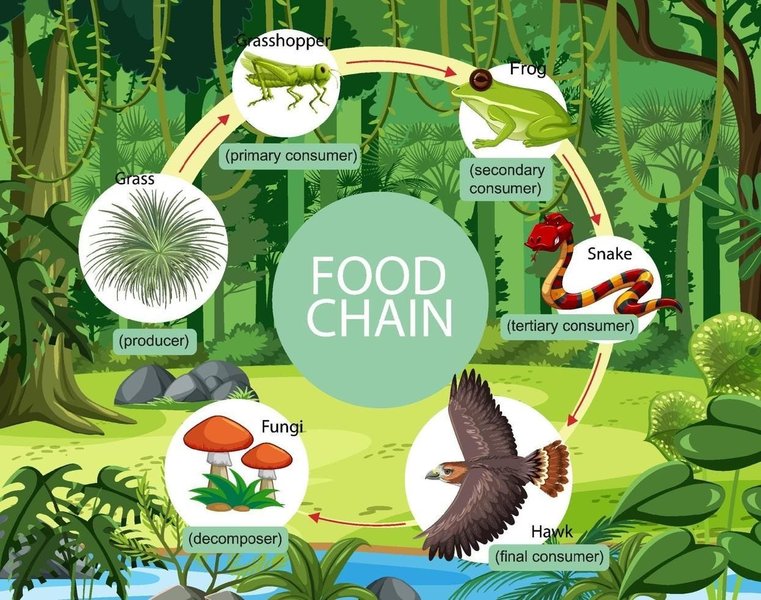
A visual representation of a food chain within a forest ecosystem, showing the flow of energy through different trophic levels.
Energy Transfer Efficiency
A key principle associated with trophic levels is that energy transfer between levels is inefficient. Only about 10% of the energy consumed at one trophic level is typically converted into biomass at the next higher level. The rest is lost as heat through metabolic processes, used for movement, or remains uneaten. This energy loss limits the number of trophic levels an ecosystem can support and explains why biomass generally decreases at higher trophic levels.
The Predator-Prey Relationship: A Dance of Survival
The predator-prey relationship is a fundamental ecological interaction where one organism, the predator, hunts and kills another organism, the prey, for food. This dynamic occurs across adjacent trophic levels (e.g., secondary consumers preying on primary consumers) and is a powerful force shaping ecosystems.
A classic example of a predator (lioness) targeting its prey (zebra), illustrating the direct interaction central to this relationship.
Population Dynamics and Cycles
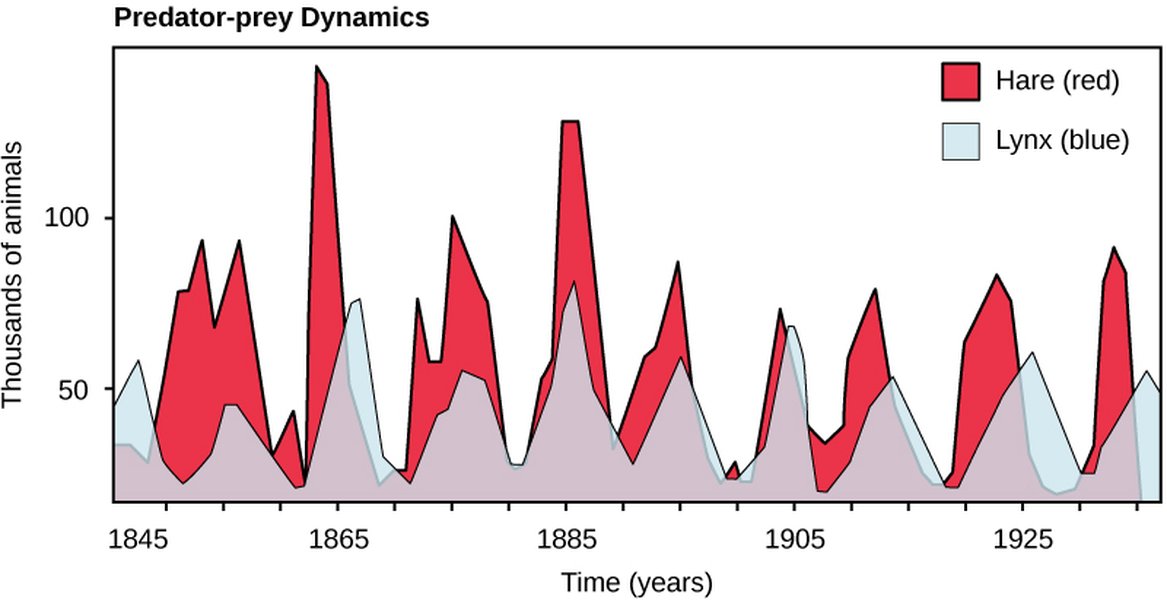
Predator and prey populations often exhibit linked cyclical fluctuations. An abundance of prey allows the predator population to grow due to ample food. However, as predator numbers increase, they consume more prey, leading to a decline in the prey population. This scarcity of food then causes the predator population to decrease due to starvation or reduced reproduction. With fewer predators, the prey population can recover, starting the cycle anew. The classic example is the approximately 10-year cycle observed between the Canadian lynx (predator) and the snowshoe hare (prey).
Maintaining Ecological Balance
Predators play a crucial role in maintaining the health and balance of ecosystems. By controlling prey populations, they prevent overgrazing or overconsumption of resources at lower trophic levels. This regulation helps maintain biodiversity by preventing any single prey species from becoming overly dominant and outcompeting others.
Co-evolutionary Arms Race
The predator-prey relationship is a major driver of evolution. Prey species continually evolve defenses to avoid being eaten, such as:
- Camouflage: Blending in with the environment.
- Speed and Agility: Escaping pursuit.
- Armor or Spines: Physical protection.
- Toxins or Warning Coloration: Chemical defenses.
- Mimicry: Resembling dangerous or unpalatable species.
- Behavioral Adaptations: Herding, vigilance, alarm calls.
Simultaneously, predators evolve counter-adaptations to overcome these defenses and improve hunting success, such as:
- Enhanced Senses: Keen eyesight, hearing, or smell.
- Stealth and Ambush Techniques: Surprise attacks.
- Speed and Endurance: Chasing down prey.
- Specialized Weapons: Sharp teeth, claws, venom.
- Cooperative Hunting: Working in groups (e.g., wolves, lions).
This ongoing reciprocal evolution, often termed a "co-evolutionary arms race," contributes significantly to the diversity of life.
Visualizing Ecosystem Structure: Mindmap of Key Concepts
This mindmap provides a visual overview of the core concepts discussed, illustrating the relationships between trophic levels, energy flow, predator-prey dynamics, and their ecological consequences.
Interplay and Ecosystem-Wide Effects
The concepts of trophic levels and predator-prey relationships are deeply intertwined and their interactions create far-reaching effects throughout ecosystems.
Trophic Cascades: Ripples Through the Food Web
One of the most significant consequences of predator-prey interactions is the trophic cascade. This occurs when the impact of a predator on its prey cascades down through lower trophic levels, affecting the abundance or behavior of organisms indirectly. Removing or adding a top predator can trigger these cascades.
Examples of Trophic Cascades
- Yellowstone Wolves: The reintroduction of wolves (apex predators) to Yellowstone National Park led to a decrease in the elk (herbivore) population. This reduction in elk browsing allowed willow and aspen trees (producers) to recover along rivers, which in turn benefited beaver populations and changed river dynamics.
- Overfishing: The removal of large predatory fish (e.g., cod) from marine ecosystems can lead to an increase in their prey (smaller fish or invertebrates). These intermediate predators might then overconsume their own prey (e.g., zooplankton), potentially leading to an increase in phytoplankton (primary producers) due to reduced grazing pressure. Conversely, removing apex predators like sharks can allow mid-level predators to increase, decimating populations of commercially important shellfish or causing other imbalances.
- Salt Marshes: Studies in New England have shown that recreational overfishing of predatory fish led to an increase in herbivorous crabs, which then overgrazed salt marsh cordgrass, destabilizing the marsh ecosystem.
Trophic cascades demonstrate the profound interconnectedness within ecosystems and highlight the critical role that predators, particularly apex predators, play in structuring communities.
Impact on Biodiversity and Stability
Predator-prey dynamics contribute significantly to maintaining biodiversity. By preventing competitive exclusion (where one species outcompetes others for resources), predators can allow more species to coexist. Their influence on habitat structure (as seen in trophic cascades) can also create niches for other organisms. Healthy predator populations are often indicative of a stable and resilient ecosystem. Conversely, disruptions to these relationships, such as the loss of a key predator, can destabilize the food web, leading to biodiversity loss and ecosystem degradation.
Comparing Trophic Level Characteristics
This chart provides a comparative visualization of hypothetical characteristics across different trophic levels. It illustrates general trends, such as the decrease in energy availability and typical population size as one moves up the food chain, alongside increasing reliance on lower levels. Keep in mind these are generalized representations and actual values vary greatly between ecosystems.
Trophic Level Summary
This table summarizes the key characteristics of the main trophic levels within a typical food web.
| Trophic Level | Description | Primary Energy Source | Examples | Ecological Role |
|---|---|---|---|---|
| Level 1 | Primary Producers | Sunlight (Photosynthesis) or Chemical Energy (Chemosynthesis) | Plants, Algae, Phytoplankton, Cyanobacteria | Form the base of the food web; convert inorganic energy into organic compounds. |
| Level 2 | Primary Consumers | Primary Producers | Herbivores (e.g., Rabbits, Deer, Grasshoppers, Zooplankton) | Transfer energy from producers to higher levels; control plant populations. |
| Level 3 | Secondary Consumers | Primary Consumers | Carnivores (e.g., Foxes, Snakes, Spiders) or Omnivores (e.g., Bears eating berries and fish) | Control herbivore populations; serve as prey for tertiary consumers. |
| Level 4 | Tertiary Consumers | Secondary Consumers | Carnivores (e.g., Lions, Hawks, Orcas) or Omnivores | Control populations of secondary consumers; often large predators. |
| Level 5 | Quaternary Consumers (Apex Predators) | Tertiary Consumers (and potentially lower levels) | Eagles, Large Sharks, Polar Bears, Tigers | Regulate populations across multiple lower levels; have significant impact on ecosystem structure (e.g., trophic cascades); have few or no natural predators. |
| (All Levels) | Decomposers | Dead Organic Matter | Bacteria, Fungi, Earthworms | Break down dead organisms and waste products; recycle nutrients back into the ecosystem. |
Human Impact on Trophic Dynamics
Humans are unique in their position within global food webs. While biologically omnivores, our technological advancements and activities have profound impacts on trophic levels and predator-prey relationships worldwide.
The Human Trophic Level
Studies estimate the average human trophic level (HTL) to be around 2.21 on a scale of 1 (primary producer) to 5 (apex predator). This value is comparable to that of an anchovy or a pig, reflecting a global diet weighted more towards plants and herbivores than top carnivores. However, this is an average, and the HTL varies significantly based on regional diets.
Disrupting Natural Balances
Human activities often disrupt established predator-prey dynamics and trophic structures:
- Overfishing and Hunting: Humans often target top predators (e.g., sharks, tuna, wolves, big cats), leading to their decline or removal. This can trigger trophic cascades, causing imbalances like the explosion of prey populations or the degradation of habitats (trophic downgrading).
- Habitat Destruction and Fragmentation: Altering landscapes reduces the available habitat for both predators and prey, impacting their populations and interactions.
- Introduction of Invasive Species: Introducing non-native predators or competitors can decimate native prey populations or disrupt existing food webs.
- Pollution: Contaminants can accumulate up the food chain (biomagnification), disproportionately affecting top predators.
Understanding our impact is crucial for developing sustainable practices and conservation strategies aimed at restoring or maintaining the ecological balance driven by natural trophic interactions.
Exploring Trophic Levels Visually
This video provides a helpful overview of trophic levels, illustrating how energy flows through different feeding positions within an ecosystem, from producers to various levels of consumers.
Frequently Asked Questions (FAQ)
What are trophic levels?
Trophic levels represent the position an organism occupies in a food chain or food web. They describe the successive stages of energy transfer, starting with primary producers (Level 1, e.g., plants) that create their own food, followed by primary consumers (Level 2, herbivores), secondary consumers (Level 3, carnivores/omnivores eating herbivores), tertiary consumers (Level 4, eating other carnivores), and potentially apex predators (Level 5) at the top.
What is the predator-prey relationship?
It's a biological interaction where one organism, the predator, hunts, kills, and consumes another organism, the prey. This relationship is a key driver of natural selection, leading to adaptations in both predator (e.g., better hunting skills) and prey (e.g., camouflage, speed). It also plays a vital role in regulating population sizes and maintaining ecosystem balance.
How are trophic levels and predator-prey relationships connected?
Predator-prey interactions occur between adjacent trophic levels. Predators occupy higher trophic levels than their prey. For example, a secondary consumer (Level 3) preys on a primary consumer (Level 2). These interactions dictate the flow of energy up the trophic levels and structure the food web. Changes in predator populations can cascade down through trophic levels, affecting organisms multiple steps away.
What is a trophic cascade?
A trophic cascade is an ecological phenomenon triggered by the addition or removal of top predators, resulting in dramatic and reciprocal changes in the relative populations of predator and prey through a food chain. These changes cascade down, indirectly affecting lower trophic levels. For instance, removing wolves (predators) can lead to an increase in deer (prey), which can then overgraze plants (producers), fundamentally altering the ecosystem.
Why is energy transfer between trophic levels inefficient?
Only about 10% of the energy from one trophic level is incorporated into the biomass of the next level. The majority of energy is lost primarily as metabolic heat during respiration, used for movement and other life processes, or is inaccessible (e.g., bones, fur) or uneaten. This "10% rule" limits the length of food chains and the total biomass that can be supported at higher trophic levels.
Recommended Further Exploration
- Explore examples of trophic cascades in marine ecosystems.
- Investigate the co-evolutionary adaptations between specific predators and prey.
- How does climate change affect predator-prey dynamics and trophic structures?
- Analyze the role of keystone species within food webs and trophic levels.
References
Last updated May 6, 2025