
Unveiling the Odds: The Surprising Probability of Two Boys Given a Tuesday Birth
Delving into the famous "Boy Born on a Tuesday" probability puzzle and why the day matters.
Highlights
- The specific probability: Given a family has two children and at least one is a boy born on a Tuesday, the probability that both children are boys is 13/27.
- Why it's not 1/3 or 1/2: Unlike the simpler "at least one boy" paradox (where the probability is 1/3), adding the specific detail "born on a Tuesday" significantly alters the underlying sample space and calculation.
- Conditional Probability in Action: This puzzle beautifully illustrates how additional information, even seemingly irrelevant details like the day of the week, refines the set of possible outcomes and changes the calculated probability.
Setting the Stage: Assumptions and Basics
Understanding the Ground Rules
Before diving into the calculation, let's establish the standard assumptions used in solving this type of probability puzzle:
- Equal Gender Probability: The probability of having a boy (B) is equal to the probability of having a girl (G), both being 1/2 or 50%.
- Equal Day Probability: A child's birth is equally likely to occur on any of the 7 days of the week (Monday through Sunday), with a probability of 1/7 for each day.
- Independence: The gender and birth day of one child are independent of the gender and birth day of the other child.
Calculating the Probability: A Step-by-Step Breakdown
From All Possibilities to the Specific Scenario
To find the probability that both children are boys given that at least one is a boy born on a Tuesday, we use the formula for conditional probability:
\[ P(\text{Both Boys} | \text{At least one Boy born on Tuesday}) = \frac{P(\text{Both Boys AND At least one Boy born on Tuesday})}{P(\text{At least one Boy born on Tuesday})} \]We can calculate this by determining the number of outcomes in the relevant sets.
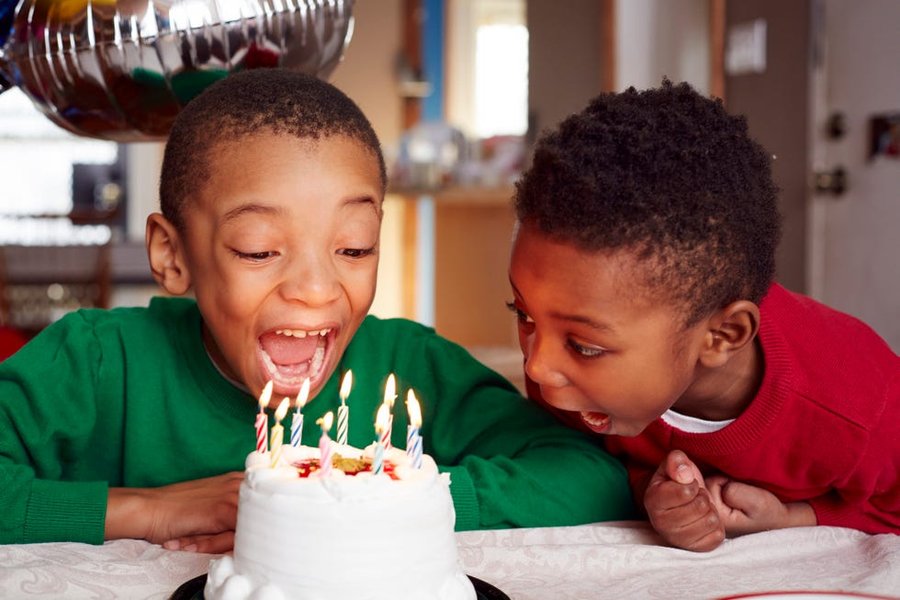
Understanding family compositions requires looking at all possibilities.
Step 1: Defining the Full Sample Space
First, consider all possible combinations for two children, including gender and day of birth. For each child, there are 2 genders × 7 days = 14 possibilities (e.g., Boy-Monday, Boy-Tuesday, ..., Girl-Sunday). For two children, the total number of equally likely combinations is:
\[ \text{Total Combinations} = 14 \times 14 = 196 \]Step 2: Identifying the Conditioned Sample Space (The Denominator)
We are given the condition that "at least one child is a boy born on a Tuesday" (let's denote this specific type as B-T). We need to find the number of combinations in our sample space of 196 where this condition holds true. It's often easier to calculate this using the complement: find the number of combinations where *neither* child is a B-T and subtract this from the total.
- A child is *not* a B-T if they are a Girl (7 possibilities: G-Mon to G-Sun) or a Boy born on any day *other* than Tuesday (6 possibilities: B-Mon, B-Wed, B-Thu, B-Fri, B-Sat, B-Sun).
- So, there are 7 + 6 = 13 possibilities for a single child *not* being a B-T.
- The number of combinations where *neither* of the two children is a B-T is 13 × 13 = 169.
- Therefore, the number of combinations where *at least one* child is a B-T is the total minus the complement:
So, our relevant sample space, given the condition, consists of 27 possible family combinations.
Step 3: Identifying the Favorable Outcomes (The Numerator)
Now, we need to find how many of these 27 combinations satisfy the outcome we're interested in: "both children are boys". This means we need the number of families with two boys where at least one of them was born on a Tuesday.
- First, consider all possible combinations for two boys (BB), considering their birth days. There are 7 days for the first boy and 7 days for the second boy, giving 7 × 7 = 49 possible BB combinations (e.g., B-Mon/B-Mon, B-Mon/B-Tue, etc.).
- Next, find the number of these BB combinations where *neither* boy was born on a Tuesday. This means both boys must have been born on one of the other 6 days. The number of such combinations is 6 × 6 = 36.
- The number of BB combinations where *at least one* boy was born on a Tuesday is the total BB combinations minus those where neither was born on Tuesday:
There are 13 combinations where the family has two boys, and at least one of them was born on a Tuesday.
Step 4: Calculating the Final Probability
Now we can apply the conditional probability formula using the numbers we've calculated:
\[ P(\text{Both Boys} | \text{At least one B-T}) = \frac{|\text{Both Boys AND At least one B-T}|}{|\text{At least one B-T}|} = \frac{13}{27} \]Converting this fraction to a decimal gives approximately 0.4815, or 48.15%.
\[ \frac{13}{27} \approx 0.4815 \]Visualizing the Probability Space
A Mindmap of the Problem Structure
This mindmap illustrates the logical flow used to solve the "Boy Born on a Tuesday" problem, starting from the initial setup and narrowing down the possibilities based on the given information.
Why Does "Tuesday" Matter?
Comparing Probabilities Under Different Conditions
It might seem counterintuitive that specifying "Tuesday" changes the probability compared to simply knowing "at least one child is a boy". Let's compare the probabilities of having two boys (BB) under different conditions:
- No Information: \( P(BB) = 1/4 = 0.25 \). There are four equally likely combinations (GG, GB, BG, BB).
- Given "At Least One is a Boy": \( P(BB | \text{At least one B}) \). The sample space reduces to GB, BG, BB. Only one of these is BB. So, \( P = 1/3 \approx 0.333 \).
- Given "At Least One is a Boy Born on Tuesday": \( P(BB | \text{At least one B-T}) \). As calculated, \( P = 13/27 \approx 0.481 \).
- Given "The *Older* Child is a Boy Born on Tuesday": \( P(BB | \text{Older is B-T}) \). Here, the state of the older child is fixed. The younger child can be B or G, each with probability 1/2. So, \( P = 1/2 = 0.5 \). (The day of the week for the younger child doesn't affect the probability of it being a boy).
The "Tuesday" information provides more granularity than just knowing "at least one is a boy". It filters the sample space differently. The 27 combinations satisfying "at least one B-T" include 13 BB cases and 14 BG/GB cases. In contrast, the 3 combinations satisfying "at least one B" (ignoring days) include 1 BB case and 2 BG/GB cases. The relative proportion of BB cases increases when the specific "Tuesday" condition is added.
The radar chart above visually compares the probability of having two boys under various initial conditions. Notice how \(P(BB | \text{At least one B-T})\) (13/27 ≈ 0.481) is significantly higher than \(P(BB | \text{At least one B})\) (1/3 ≈ 0.333) and \(P(BB)\) (1/4 = 0.25), approaching the 1/2 probability seen when a specific child's identity (e.g., the older child) is known.
The Paradox Explained Visually
Insights from Video Explanations
The "Boy Born on a Tuesday" problem is a variation of the Boy or Girl paradox. Understanding how the sample space shifts based on the information given is key. This video provides a clear explanation of the paradox involving a boy born on a Tuesday.
The video explores the nuances of conditional probability and why specifying the day of the week leads to the 13/27 answer, helping to resolve the apparent counter-intuitiveness of the result.
Summary Table: Key Calculations
Consolidating the Numbers
This table summarizes the key steps and numbers involved in calculating the probability.
| Component | Description | Calculation | Result |
|---|---|---|---|
| Total Sample Space | All possible gender/day combinations for two children | 14 possibilities/child × 14 possibilities/child | 196 |
| Complement Condition Space | Combinations where *neither* child is a Boy-Tuesday (B-T) | 13 non-B-T options/child × 13 non-B-T options/child | 169 |
| Conditioned Sample Space (Denominator) | Combinations where *at least one* child is B-T | Total Space - Complement Condition Space (196 - 169) | 27 |
| Total Both-Boy Space | All BB combinations considering birth days | 7 days/boy × 7 days/boy | 49 |
| Complement Favorable Space | BB combinations where *neither* boy is B-T | 6 non-Tuesday days/boy × 6 non-Tuesday days/boy | 36 |
| Favorable Outcomes (Numerator) | BB combinations where *at least one* boy is B-T | Total BB Space - Complement Favorable Space (49 - 36) | 13 |
| Final Probability | P(Both Boys | At least one B-T) | Numerator / Denominator (13 / 27) | 13/27 (≈ 48.15%) |
Frequently Asked Questions (FAQ)
Clarifying Common Doubts
Why isn't the probability just 1/2? If we know one is a boy, doesn't that leave a 50/50 chance for the other?
This reasoning applies if you identify a *specific* child (e.g., "the older child is a boy") and ask about the other. However, the statement "at least one is a boy born on a Tuesday" doesn't specify *which* child. It describes a property of the family unit. We filter the entire sample space (all 196 combinations) down to the 27 that fit this description. Within those 27 possibilities, 13 have two boys, leading to 13/27, not 1/2.
How does this differ from the classic "at least one boy" problem where the answer is 1/3?
In the classic problem, we ignore the day of birth. The initial sample space is {GG, GB, BG, BB}. The condition "at least one boy" reduces this to {GB, BG, BB}. Out of these 3 equally likely outcomes, only 1 is BB, giving a probability of 1/3. Adding the "born on a Tuesday" detail expands the sample space significantly (to 196 possibilities) and changes the relative frequencies of outcomes within the conditioned subset (the 27 possibilities), leading to the different probability of 13/27.
Does the specific day "Tuesday" matter, or would any day yield the same result?
Any specific day of the week (Monday, Wednesday, etc.) would yield the same probability of 13/27. The calculation relies on distinguishing one specific day from the other six. The key is that *some* specific, low-probability information (like being born on a particular day) is added to the "at least one boy" condition.
What if the question phrasing changes slightly?
Probability puzzles like this are highly sensitive to phrasing, which determines how the sample space is constructed or conditioned. For example, if you met the father and he said, "I have two children, and my son was born on a Tuesday," the interpretation might differ depending on whether he *always* mentions a son born on Tuesday if he has one, or if he selected one child at random who happened to be a boy born on Tuesday. The standard interpretation assumes we are selecting from all families that meet the criteria ("at least one boy born on Tuesday").
Recommended
- What is the Boy or Girl paradox?
- Explain conditional probability with examples.
- How does sample space affect probability?
- Bayes' theorem explanation and applications.
References
 robinryder.wordpress.com
Last updated April 30, 2025