
Crosstalk Relationships in the Tumor Microenvironment (TME)
Introduction
The tumor microenvironment (TME) is a complex and dynamic network comprising various cell types, extracellular matrix (ECM) components, signaling molecules, and physical conditions that surround and interact with tumor cells. The crosstalk within the TME refers to the intricate communication and interactions among these components, which collectively influence tumor growth, progression, metastasis, and response to therapy. Understanding the crosstalk relationships in the TME is crucial for developing effective cancer treatments and improving patient outcomes.
Components of the Tumor Microenvironment
The TME is composed of both cellular and non-cellular elements, each playing distinct roles in the behavior of tumors:
Cellular Components
- Tumor Cells: These are the malignant cells that proliferate uncontrollably, driving the growth and spread of cancer.
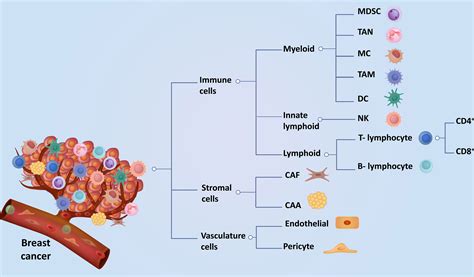
- Immune Cells: The immune landscape within the TME includes a variety of cells such as dendritic cells (DCs), natural killer (NK) cells, regulatory T cells (Tregs), macrophages, and myeloid-derived suppressor cells (MDSCs). These cells can have dual roles, either suppressing or promoting tumor growth depending on the context.
- Stromal Cells: Primarily composed of cancer-associated fibroblasts (CAFs), stromal cells provide structural support and secrete factors that influence tumor progression.
- Endothelial Cells: These cells line blood vessels and are pivotal in angiogenesis, the formation of new blood vessels that supply nutrients and oxygen to tumors.
- Pericytes: These contractile cells wrap around the endothelial cells of capillaries and venules, contributing to blood vessel stability and integrity.
Non-Cellular Components
- Extracellular Matrix (ECM): A network of proteins and polysaccharides that provide structural support to cells. The ECM also influences cell behavior through mechanical and biochemical signals.
- Cytokines and Chemokines: These signaling molecules mediate communication between cells, influencing processes such as inflammation, cell proliferation, and migration.
- Growth Factors: Proteins like VEGF, EGF, and TGF-β that stimulate cell growth, differentiation, and survival.
- Exosomes: Small vesicles released by cells that carry proteins, lipids, and nucleic acids, facilitating intercellular communication.
- Metabolites: Small molecules resulting from cellular metabolism, which can influence cell signaling and behavior.
Mechanisms of Crosstalk in the TME
Cellular Interactions
The cellular components within the TME interact through direct cell-cell contact and the secretion of soluble factors. These interactions are mediated by various mechanisms:
- Cell Signaling Molecules: Cytokines, chemokines, and growth factors serve as messengers that coordinate the behavior of different cell types. For example, interleukin-6 (IL-6) can promote inflammation and support tumor growth by activating STAT3 signaling pathways.
- Immune Modulation: Immune cells such as Tregs and MDSCs can suppress anti-tumor immune responses, enabling cancer cells to evade immune detection and destruction.
- Stromal Support: CAFs secrete ECM components and growth factors like fibroblast growth factor (FGF) that facilitate tumor cell proliferation, migration, and invasion.
Signaling Pathways
- VEGF/VEGFR/NRP Pathway: Vascular Endothelial Growth Factor (VEGF) binds to its receptors (VEGFR) on endothelial cells, promoting angiogenesis. Neuropilins (NRPs) act as co-receptors enhancing VEGF signaling, leading to increased vascularization and potential drug resistance.
- Notch/Delta Signaling: This pathway plays a critical role in cell differentiation and proliferation. In the TME, aberrant Notch signaling can contribute to tumor invasion and therapy resistance by modulating the behavior of vascular endothelial cells and other stromal components.
- Cytokine Signaling: Cytokines like TGF-β and IL-10 can create an immunosuppressive environment by inhibiting the activity of cytotoxic T cells and promoting the differentiation of Tregs.
- Exosome-Mediated Communication: Exosomes from tumor cells can transfer oncogenic proteins and RNAs to recipient cells, altering their behavior to support tumor growth and metastasis.
Inflammatory Responses
- Pyroptosis: A form of programmed cell death characterized by the release of pro-inflammatory cytokines such as IL-1β and IL-18. In the TME, pyroptosis can contribute to a pro-inflammatory state that supports tumor growth and immune evasion.
- Cytokine Dynamics: The balance between pro-inflammatory and anti-inflammatory cytokines determines the overall immune response within the TME. For instance, high levels of pro-inflammatory cytokines like IL-6 can promote tumor progression, while anti-inflammatory cytokines like IL-10 can suppress effective anti-tumor immunity.
Effects of Crosstalk in the TME
Immune Evasion
Tumor cells exploit the TME to evade immune surveillance. Regulatory T cells (Tregs) and MDSCs within the TME suppress the activity of cytotoxic T lymphocytes (CTLs), reducing the immune system's ability to target and destroy cancer cells. Additionally, the expression of immune checkpoints like PD-L1 on tumor cells binds to PD-1 receptors on T cells, inhibiting their function.
Angiogenesis
Angiogenesis is essential for tumor growth as it supplies the necessary nutrients and oxygen. The VEGF/VEGFR pathway is a primary driver of angiogenesis in the TME. Enhanced vascularization not only supports tumor metabolism but also provides routes for metastasis. However, abnormal vessel structures can lead to hypoxia, further promoting aggressive tumor behavior and resistance to therapy.
Metastasis
The TME facilitates metastasis through several mechanisms:
- Epithelial-Mesenchymal Transition (EMT): Tumor cells undergo EMT, acquiring migratory and invasive properties that enable them to disseminate to distant sites.
- Matrix Remodeling: Enzymes like matrix metalloproteinases (MMPs) degrade the ECM, creating pathways for tumor cells to invade surrounding tissues.
- Pre-Metastatic Niche Formation: Primary tumors can induce changes in distant organs to create a favorable environment for future metastatic colonies.
Drug Resistance
The crosstalk within the TME contributes to both intrinsic and acquired drug resistance:
- Survival Signaling: Cytokines and growth factors activate survival pathways (e.g., PI3K/Akt, MAPK) in tumor cells, making them less susceptible to chemotherapy and targeted therapies.
- Physical Barriers: The dense ECM and abnormal vasculature in the TME can impede drug delivery, reducing therapeutic efficacy.
- Cellular Heterogeneity: Diverse cell populations within the TME can harbor resistant clones that survive treatment and repopulate the tumor.
Clinical Implications
Therapeutic Targets
Targeting the crosstalk mechanisms in the TME presents several therapeutic opportunities:
- Anti-Angiogenic Therapies: Inhibitors of the VEGF pathway, such as bevacizumab, aim to disrupt blood vessel formation, starving the tumor of nutrients and oxygen.
- Modulating Immune Checkpoints: Immune checkpoint inhibitors targeting PD-1, PD-L1, and CTLA-4 have revolutionized cancer therapy by reactivating suppressed immune responses against tumors.
- Targeting CAFs: Therapies that disrupt CAF function or signaling can reduce stromal support for tumor growth and metastasis.
- Exosome Inhibitors: Blocking exosome release or uptake can prevent the transfer of oncogenic factors that promote tumor progression and metastasis.
Immune Checkpoints
Immune checkpoints are regulatory pathways that maintain self-tolerance and modulate immune responses. Tumors exploit these pathways to evade immune detection:
- PD-1/PD-L1 Axis: Programmed death-1 (PD-1) on T cells binds to PD-L1 on tumor cells, inhibiting T cell activation. Blocking this interaction with antibodies like pembrolizumab can restore T cell function.
- CTLA-4: Cytotoxic T-lymphocyte-associated protein 4 (CTLA-4) competes with CD28 for binding to B7 molecules on antigen-presenting cells, reducing T cell activation. Ipilimumab is an antibody that inhibits CTLA-4, enhancing immune responses against tumors.
Enhancing Anti-Tumor Immunity
Strategies to enhance anti-tumor immunity involve boosting the immune system's ability to recognize and eliminate cancer cells:
- Adoptive Cell Therapy: Techniques like CAR-T cell therapy involve engineering a patient's T cells to target specific tumor antigens.
- Vaccines: Cancer vaccines aim to stimulate the immune system to recognize and attack tumor-specific antigens.
- Cytokine Therapy: Administering cytokines such as IL-2 or interferons can enhance immune cell proliferation and activity within the TME.
Research Significance
Investigating the crosstalk within the TME is pivotal for advancing our understanding of cancer biology and developing novel therapeutic approaches. Key areas of research include:
-
Molecular Mechanisms: Elucidating the signaling pathways and interactions that drive tumor-stroma and tumor-immune cell communications.
-
Biomarkers: Identifying biomarkers within the TME that predict response to therapies, enabling personalized treatment strategies.
-
TME Heterogeneity: Studying the diversity of cell populations and their interactions within different tumor types to tailor targeted interventions.
-
Resistance Mechanisms: Understanding how the TME contributes to therapy resistance to develop strategies that overcome or prevent resistance.
Conclusion
The crosstalk relationships within the tumor microenvironment are fundamental to the progression and treatment resistance of cancers. By unraveling the complex interactions between tumor cells, immune cells, stromal components, and signaling molecules, researchers can identify novel therapeutic targets and improve existing treatment modalities. Comprehensive knowledge of TME crosstalk is essential for the development of more effective and personalized cancer therapies, ultimately enhancing patient outcomes.
Further Reading and References
Last updated January 7, 2025