
Unlocking Startup Potential: Could UK's Investor Tax Incentives Ignite Finnish Growth?
A deep dive into how EIS, SEIS, and VCTs fuel innovation and what Finland might learn.
As the Chief Economist of the Finnish Startup Community, your interest in the UK's Enterprise Investment Scheme (EIS), Seed Enterprise Investment Scheme (SEIS), and Venture Capital Trusts (VCTs) is highly relevant. These schemes are designed to channel private capital into early-stage companies by offering significant tax advantages to investors. Understanding their mechanics and impact can provide valuable insights for potentially fostering a more vibrant startup ecosystem in Finland. This response offers clear descriptions of these policies and a review of empirical evidence regarding their effects on funding and growth, with a focus on causal inference where possible.
Highlights: Key Insights into UK's Startup Investment Schemes
- Risk Mitigation Drives Investment: SEIS, EIS, and VCTs fundamentally work by reducing the financial risk for investors through substantial tax reliefs (on income tax, capital gains, and losses), thereby encouraging investment in high-risk, high-potential early-stage companies.
- Boosted Capital Availability: Empirical evidence strongly suggests these schemes have significantly increased the amount of equity funding available to UK startups, with SEIS being particularly crucial for seed-stage capital and VCTs providing a resilient funding source even in economic downturns.
- Tangible Growth Impact: Companies benefiting from these schemes, especially VCT-backed ones, demonstrate notable improvements in growth metrics, including sales, export performance, and employment, indicating the capital is often effectively utilized for expansion and scaling.
Understanding the Schemes: A Layman's Guide to UK Investor Incentives
How EIS, SEIS, and VCTs Make Investing in Startups More Attractive
Imagine you have some savings and are considering investing in a new, exciting company. However, young companies are risky – many don't succeed. The UK government created three key schemes to make this type of investment more appealing by offering tax breaks. These schemes essentially act as a safety net, making potential losses less painful and successes even more rewarding for investors. This, in turn, helps startups get the funding they desperately need to grow.
The Seed Enterprise Investment Scheme (SEIS): Nurturing the Smallest Seeds
SEIS is designed for the very newest and smallest startups, often those less than three years old and just starting their journey. Think of it as a supercharged incentive for investors willing to take a chance on a company at its riskiest, "seed" stage.
For the investor: If they invest, say, £10,000 into an SEIS-qualifying company, they can receive up to 50% of that investment back as a reduction in their income tax bill (£5,000 in this example). If the company does well and they sell their shares after three years, any profit is typically exempt from Capital Gains Tax (CGT). If the company fails, they can also offset some of the loss against their income or capital gains, reducing the financial blow. This makes putting money into brand-new ventures much more palatable. Companies can raise up to £250,000 in total through SEIS.
The Enterprise Investment Scheme (EIS): Fuelling Early Growth
EIS targets slightly more established, but still early-stage, companies. These are businesses that have likely moved beyond the initial idea phase and are looking to grow.
For the investor: The incentives are still very attractive, though slightly less generous than SEIS. An investor might receive up to 30% income tax relief on their investment. Similar to SEIS, there's potential CGT exemption on profits if shares are held for at least three years, and loss relief if the investment doesn't work out. EIS helps these young companies secure larger sums of money (up to £5 million per year for the company, or £12 million in total under current rules) to scale their operations, hire more staff, and expand into new markets.
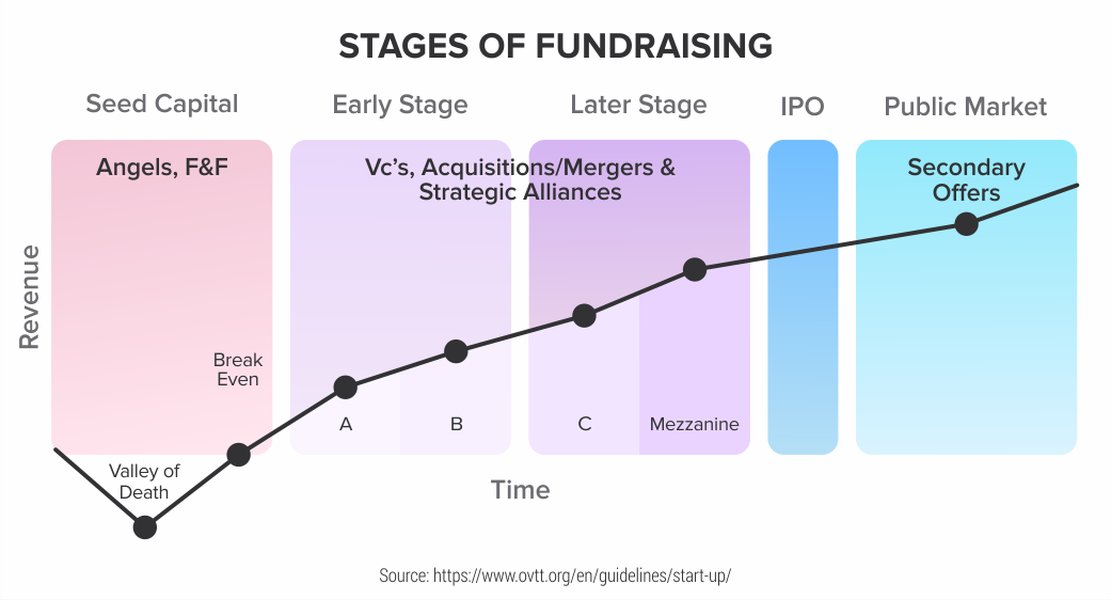
Typical stages of startup fundraising, where schemes like SEIS and EIS play a crucial role in the earlier phases.
Venture Capital Trusts (VCTs): Diversified Investing in Innovation
VCTs offer a different way to invest in startups. A VCT is a company listed on a stock exchange that pools money from many individual investors. This fund is then professionally managed, and the money is invested in a portfolio of various small, qualifying, often unquoted, high-growth-potential companies.
For the investor: Investing in a VCT allows individuals to spread their risk across many startups instead of betting on just one. Investors can also receive 30% upfront income tax relief on amounts invested (up to £200,000 per tax year), provided they hold their VCT shares for at least five years. Any dividends paid out by the VCT are usually tax-free, and there's no CGT to pay when they sell their VCT shares. VCTs provide a way for retail investors to access early-stage investments with professional management and built-in diversification.
The Impact: Empirical Evidence and Causal Insights
The core question for policymakers is whether these tax incentives genuinely lead to increased funding and better growth outcomes for startups, or if they simply reward investments that would have happened anyway. The literature, including reports and academic studies, has sought to provide answers, often employing sophisticated statistical methods to infer causality.
Do These Schemes Increase Capital Availability?
The evidence strongly suggests that EIS, SEIS, and VCTs have significantly boosted the flow of capital to UK startups.
- SEIS: Research indicates SEIS has been particularly effective at unlocking "seed" capital for the riskiest ventures. Studies have shown sharp increases in seed investment rounds following the introduction of SEIS, suggesting a causal link. Its generous 50% income tax relief appears to be a powerful motivator for investors to enter this market segment.
- EIS: This scheme has facilitated a substantial volume of investment over its lifespan—nearly £30 billion into almost 53,000 companies since its inception in 1994. Studies suggest EIS-eligible firms are more likely to receive venture capital and attract larger funding amounts. Causal analyses point to EIS having a positive impact on follow-on funding.
- VCTs: VCTs have proven to be a resilient source of funding. For example, in the 2023-24 tax year, VCTs raised £882 million, the third-highest amount on record. Notably, VCT investments increased by 8% in 2022 even when wider venture capital funding experienced a significant 23% drop, indicating their counter-cyclical or stabilizing role in the funding landscape.
This increased funding availability is crucial, especially for companies that might otherwise struggle to attract investment due to high perceived risk or information asymmetries common in early-stage ventures.
Fostering Growth: Beyond the Capital Injection
The availability of capital is one thing; its effective use towards growth is another. Evidence suggests these schemes contribute to tangible business development:
- Employment and Revenue: Companies benefiting from EIS and SEIS tend to show higher growth in employment and revenues compared to similar non-beneficiary firms.
- Sales and Export Performance (VCTs): The impact is particularly well-documented for VCT-backed companies. A notable report highlighted that companies receiving VCT investment experienced a remarkable 54% growth in sales compared to the previous year, with export sales also surging significantly (e.g., from £2.9 billion in 2021 to £3.7 billion in 2022 for VCT-backed firms). This suggests the funding, often coupled with strategic support from VCT managers, translates into substantial business expansion.
- Non-Financial Support: VCTs, in particular, often provide more than just money. They bring valuable business expertise, strategic and governance support, access to networks, and human capital, which can be instrumental for a startup's development and scaling. This "added value" component is considered a key contributor to the positive outcomes observed.
- Innovation and Survival: Some studies using quasi-experimental methods suggest that these tax incentives causally increase startup survival rates and innovation output, such as patenting activity.
Methodological Considerations in Assessing Impact
Establishing direct causality (i.e., proving the scheme *caused* the outcome, rather than just being correlated with it) is a complex task in economics. Researchers often use techniques like:
- Difference-in-Differences: Comparing the outcomes of companies eligible for the schemes with similar ineligible companies, before and after policy changes.
- Regression Discontinuity Designs: Examining outcomes for companies just above and below eligibility thresholds (e.g., size or age limits).
- Natural Experiments: Leveraging changes in the schemes' rules or introductions as events to study their impact.
While perfect randomized controlled trials (the gold standard for causality) are rare in this policy area, the convergence of evidence from various studies using these robust methods lends credibility to the positive impact of EIS, SEIS, and VCTs. The consistency of findings—such as increased investment flows and improved growth metrics in supported companies, particularly when compared to control groups or wider market trends—points towards a causal relationship rather than mere correlation.
Visualizing Scheme Effectiveness: A Comparative Look
To better understand the distinct roles and characteristics of SEIS, EIS, and VCTs, the radar chart below offers a visual comparison across several key dimensions. This can help illustrate how each scheme is tailored to different investor preferences and company stages, contributing uniquely to the startup funding ecosystem. The scores are illustrative, based on the general attributes of each scheme.
This chart highlights SEIS's high upfront relief for very early-stage, high-risk investments. EIS offers substantial relief for slightly more mature companies, while VCTs provide similar tax relief but with the added benefit of inherent diversification and professional management, typically resulting in a lower perceived risk for the end investor compared to direct single-company investments.
Connecting the Dots: Ecosystem Dynamics
The mindmap below illustrates the interconnectedness of these investment schemes, the key stakeholders involved, and their collective impact on the startup ecosystem. It shows how tax incentives for investors ultimately translate into tangible benefits for startups and the broader economy.
(e.g., <3 yrs old, pre-revenue)"] id1_2["Key Investor Incentive:
Up to 50% Income Tax Relief"] id1_3["Primary Impact:
Unlocks 'Seed' Capital,
Addresses Highest Risk Funding Gap"] id2["Enterprise Investment Scheme (EIS)"] id2_1["Focus: Early-Stage Growth Companies
(e.g., post-seed, pre-Series A/B)"] id2_2["Key Investor Incentive:
Up to 30% Income Tax Relief"] id2_3["Primary Impact:
Fuels Expansion & Scaling,
Supports Job Creation"] id3["Venture Capital Trusts (VCTs)"] id3_1["Focus: Portfolio of Qualifying Small/Medium Companies"] id3_2["Key Investor Incentive:
30% Income Tax Relief,
Tax-Free Dividends/Gains,
Risk Diversification"] id3_3["Primary Impact:
Provides Managed Access to VC,
Offers Strategic Support to Portfolio Companies"] id4["Core Mechanisms & Goals"] id4_1["Tax Reliefs for Investors
(Income Tax, Capital Gains Tax Exemption, Loss Relief)"] id4_2["Reduced Net Cost & Risk of Investment"] id4_3["Stimulate Private Sector Investment into SMEs"] id4_4["Bridge the 'Equity Gap' for Startups"] id5["Intended Outcomes for Startups"] id5_1["Increased Availability of Funding"] id5_2["Improved Survival & Growth Rates
(Sales, Employment, Exports)"] id5_3["Enhanced Innovation & Competitiveness"] id5_4["Access to Expertise & Networks (especially via VCTs)"] id6["Broader Economic Impact"] id6_1["Job Creation"] id6_2["Increased Tax Revenue (from successful companies)"] id6_3["Fostering an Entrepreneurial Culture"] id6_4["Development of Innovative Products & Services"]
This mindmap demonstrates that while each scheme has its nuances, they all operate on the principle of leveraging tax policy to de-risk private investment into unquoted companies, thereby fostering a more dynamic and well-funded startup landscape.
Summary Table: Key Features and Impacts at a Glance
The following table provides a concise comparison of the SEIS, EIS, and VCT schemes, highlighting their main characteristics and empirically observed impacts. This allows for a quick understanding of how they differ and cater to various stages of startup development and investor profiles.
| Feature | Seed Enterprise Investment Scheme (SEIS) | Enterprise Investment Scheme (EIS) | Venture Capital Trusts (VCTs) |
|---|---|---|---|
| Target Company Stage | Very early-stage (typically <3 years old, "seed" phase) | Early-stage, growth-focused (unlisted) | Portfolio of small, unlisted, qualifying growth companies |
| Max Investor Income Tax Relief | 50% on investment | 30% on investment | 30% on investment in VCT shares |
| Capital Gains Tax (CGT) Exemption on Profit | Yes, if shares held for 3+ years (on SEIS investment) | Yes, if shares held for 3+ years | Yes, on disposal of VCT shares |
| Loss Relief | Yes, can offset loss against income or capital gains | Yes, can offset loss against income or capital gains | N/A directly for investor (losses contained within VCT) |
| Max Company Fundraising (Lifetime/Annual) | £250,000 (total SEIS) | £12 million (total risk finance), £5 million (annual EIS) | VCT invests in multiple companies, specific limits apply to investee companies |
| Primary Impact on Funding | Significantly increases seed capital availability; crucial for first funding rounds. | Boosts follow-on funding; supports scaling post-seed. | Provides substantial, stable funding source; offers diversification. |
| Observed Impact on Growth | Improves survival rates; supports initial innovation. | Higher employment and revenue growth in beneficiary firms. | Significant sales and export growth; strategic support enhances scaling. |
| Investor Risk Profile | Very High (single, very early-stage company) | High (single, early-stage company) | Medium (diversified portfolio, professionally managed) |
Explaining EIS: A Video Overview
To further clarify one of these schemes, the following video provides a detailed explanation of the Enterprise Investment Scheme (EIS), covering how it works and its benefits for both investors and companies. While focused on EIS, it helps illustrate the general principles behind such government-backed tax incentives.
An explanatory video detailing the Enterprise Investment Scheme (EIS).
Considerations for Finland
The success of EIS, SEIS, and VCTs in the UK provides a compelling case study. For the Finnish Startup Community, these schemes demonstrate how targeted tax incentives can effectively de-risk private investment and unlock significant capital for early-stage companies. While direct replication might not be feasible due to differences in legal, tax, and economic frameworks (including EU regulations), the underlying principles are transferable:
- Mitigating Investor Risk: The core success factor is the substantial reduction of financial risk for investors, making high-risk startup investments more attractive.
- Targeted Support: Different schemes cater to different stages of startup development, ensuring a pipeline of funding from seed to growth stages.
- Ecosystem Development: Beyond just funding, these schemes can foster a more sophisticated investment culture and provide startups with valuable expertise.
Adapting such models for Finland would require careful consideration of the local context, investor profiles, and strategic priorities for the Finnish startup ecosystem. The empirical evidence from the UK strongly suggests that well-designed policies in this vein can have a powerful positive impact on innovation, growth, and job creation.
Frequently Asked Questions (FAQs)
What is the main difference between SEIS and EIS?
SEIS (Seed Enterprise Investment Scheme) is targeted at very early-stage companies (typically less than 3 years old and smaller in size) and offers investors a higher rate of income tax relief (50%) due to the higher risk. EIS (Enterprise Investment Scheme) is for slightly more established early-stage companies and offers 30% income tax relief. Essentially, SEIS is for 'seed' funding, while EIS helps companies 'grow'.
How do VCTs differ from directly investing in startups via EIS/SEIS?
When investing through EIS or SEIS, an investor typically picks individual companies to invest in directly. This means their risk is concentrated in those specific companies. VCTs (Venture Capital Trusts) are investment companies that pool money from many investors and then invest in a portfolio of qualifying early-stage companies. This provides diversification for the investor, spreading risk. VCTs are also managed by professional fund managers. The tax reliefs are similar (30% income tax relief for VCTs and EIS), but VCTs also offer tax-free dividends.
Is there strong evidence these schemes *cause* startup growth?
Yes, there is substantial empirical evidence suggesting a causal link. Studies often use quasi-experimental methods (like comparing eligible firms to similar ineligible ones) to isolate the schemes' effects. Findings consistently show that companies receiving investment via these schemes tend to have higher growth in employment, revenues, and export sales compared to what would be expected without such investment. For instance, VCT-backed firms show significant sales growth. While perfect causality is hard to prove outside a lab, the weight of evidence points to a positive causal impact.
What are the risks for investors despite the tax reliefs?
Investing in early-stage companies is inherently high risk. Many startups fail, and investors can lose their entire investment. Tax reliefs mitigate some of this risk but don't eliminate it. Other risks include illiquidity (it can be hard to sell shares in private companies), long holding periods required to obtain full tax benefits (3 years for EIS/SEIS, 5 years for VCTs), and changes in company circumstances or government legislation. The value of tax reliefs also depends on the individual investor's tax situation.
Could these schemes be directly copied to Finland?
Direct copying is unlikely to be optimal or even feasible due to differences in national tax laws, legal systems, EU regulations (especially regarding state aid), and the specific characteristics of the Finnish startup ecosystem and investor base. However, the principles behind these UK schemes—using tax incentives to reduce investor risk and stimulate investment in high-growth potential startups—can certainly inform the design of similar policies tailored to Finland's unique context. Any such initiative would require careful study and adaptation.
Recommended Further Exploration
- How do startup tax incentives compare across different EU countries and what are the best practices?
- What is the differential impact of angel investment versus venture capital on early-stage startup success?
- How can Finland design effective state aid compliant tax incentives to boost its startup ecosystem?
- What is the long-term economic impact of sustained government support for venture capital markets on national innovation and competitiveness?
References
Last updated May 14, 2025