
Decoding Your 2017/18 UK Tax: A Clear Calculation for Johnny
Calculating income tax liability with employment, dividend, and interest income for the tax year ending April 5, 2018.
Key Takeaways: Johnny's 2017/18 Tax Position
- Total Tax Liability Calculated: Johnny's total income tax due for the 2017/18 tax year, based on his combined income sources, was calculated to be £3,600.
- Allowances Maximised: His interest income (£250) and dividend income (£2,400) were completely covered by the Personal Savings Allowance (£1,000) and the Dividend Allowance (£5,000) respectively, resulting in £0 tax on these amounts.
- Final Balance - No Additional Tax Owed: After accounting for the £3,600 already deducted through PAYE, Johnny's final tax liability for the year is £0. He owes no further tax, nor is he due a refund.
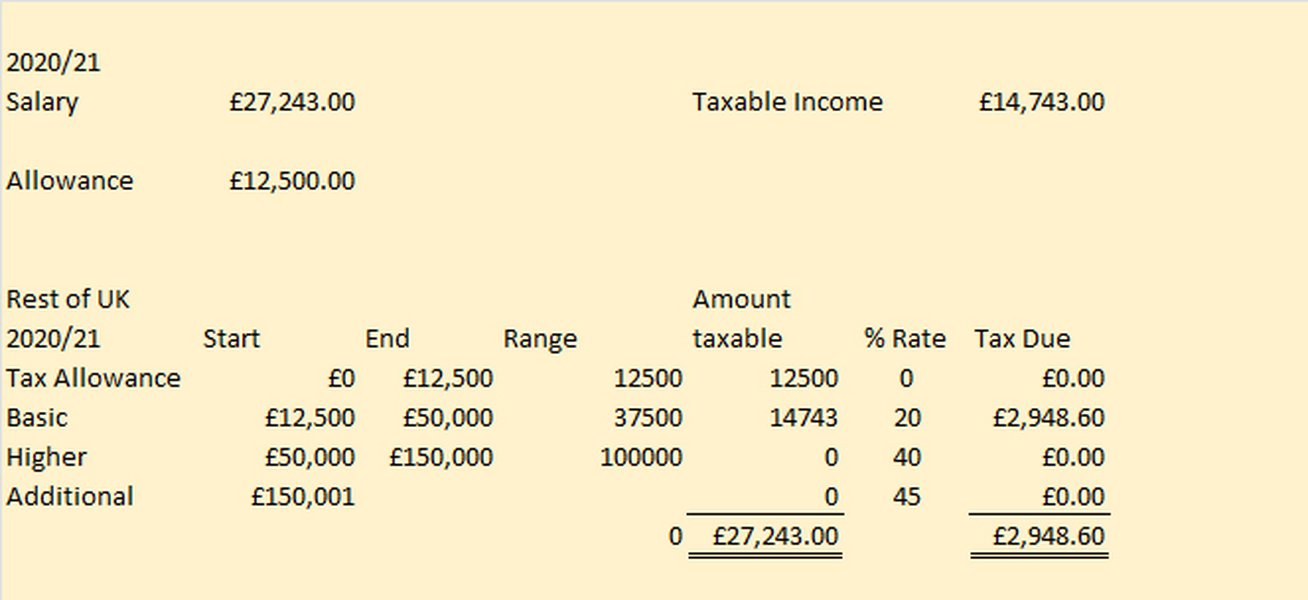
Illustrative example of tax calculations.
Understanding the 2017/18 UK Tax Landscape
The UK tax system for the year ending 5 April 2018 (tax year 2017/18) involved several key components, including allowances that reduce taxable income and different tax rates applied to various types of income. It's crucial to understand how these elements interacted to determine an individual's overall tax liability. Income is generally taxed in a specific order: non-savings income (like employment), then savings income (like interest), and finally dividend income.
Key Allowances Explained
Allowances are amounts of income you can receive tax-free each tax year. For 2017/18, the main allowances relevant to Johnny were:
Personal Allowance (PA)
This was the amount of income most individuals could earn before they started paying Income Tax. For the 2017/18 tax year, the standard Personal Allowance was £11,500. This allowance is typically applied first against non-savings income. Since Johnny's total income (£32,150) was well below the £100,000 threshold where the PA starts to reduce, he was entitled to the full amount.
Personal Savings Allowance (PSA)
This allowance permitted individuals to earn some interest from savings without paying tax. The amount depended on the individual's Income Tax band. For Basic Rate taxpayers (like Johnny in 2017/18), the PSA was £1,000. Higher rate taxpayers received a £500 allowance, and additional rate taxpayers received none. Johnny's £250 interest income fell entirely within his £1,000 allowance.
Dividend Allowance
This allowance applied to income received from dividends. For the 2017/18 tax year, the Dividend Allowance was £5,000. This meant the first £5,000 of dividend income received was not subject to tax, regardless of the individual's tax band. Johnny's £2,400 dividend income was fully covered by this allowance. It's worth noting this allowance was reduced significantly in subsequent tax years.
Income Tax Rates and Bands (2017/18)
After allowances are deducted, the remaining taxable income is taxed according to specific bands. For England, Wales, and Northern Ireland in 2017/18, these were:
| Tax Band | Taxable Income Range (above PA) | Rate |
|---|---|---|
| Basic Rate | £0 to £33,500 | 20% |
| Higher Rate | £33,501 to £150,000 | 40% |
| Additional Rate | Over £150,000 | 45% |
Different rates applied to dividend income that exceeded the Dividend Allowance (7.5% for basic rate, 32.5% for higher rate, 38.1% for additional rate), and savings income exceeding the PSA was taxed at the individual's marginal income tax rate (20%, 40%, or 45%).
Step-by-Step Calculation of Johnny's Tax Liability
Let's break down the calculation for Johnny's 2017/18 tax liability based on his income and the relevant rules.
Step 1: Total Income Calculation
First, we sum up all sources of income:
- Employment Income: £29,500
- Dividend Income: £2,400
- Interest Income: £250
- Total Gross Income: £32,150
Step 2: Applying the Personal Allowance
The Personal Allowance (£11,500) is deducted from the income. It's usually applied against non-savings income first:
- Employment Income: £29,500
- Less Personal Allowance: - £11,500
- Taxable Employment Income: £18,000
The full Personal Allowance is used against the employment income.
Step 3: Calculating Tax on Employment Income
The taxable employment income (£18,000) falls entirely within the Basic Rate band (£0 - £33,500). Therefore, it's taxed at 20%.
- Tax Calculation: £18,000 * 20%
- Tax on Employment Income: £3,600
Step 4: Assessing Tax on Interest Income (Using PSA)
Johnny's total income (£32,150) places him firmly in the Basic Rate tax band. As a basic rate taxpayer, his Personal Savings Allowance (PSA) is £1,000.
- Interest Income: £250
- Applicable PSA: £1,000
- Since £250 is less than £1,000, the entire interest amount is covered by the PSA.
- Tax on Interest Income: £0
Step 5: Assessing Tax on Dividend Income (Using Dividend Allowance)
The Dividend Allowance for 2017/18 was £5,000.
- Dividend Income: £2,400
- Applicable Dividend Allowance: £5,000
- Since £2,400 is less than £5,000, the entire dividend amount is covered by the allowance.
- Tax on Dividend Income: £0
Step 6: Determining Total Income Tax Due
Now, we sum the tax calculated for each income type:
- Tax on Employment Income: £3,600
- Tax on Interest Income: £0
- Tax on Dividend Income: £0
- Total Income Tax Due: £3,600
Visualizing the Tax Components
This radar chart illustrates the relative impact of different factors on Johnny's tax situation compared to a hypothetical higher-income scenario. A higher score (closer to 10) indicates a greater influence on the final tax outcome. We can see how allowances played a major role for Johnny, significantly reducing his taxable income, and how his PAYE deductions perfectly matched his liability, resulting in a zero balance.
Mapping the Calculation Process
This mind map visually outlines the flow of Johnny's tax calculation for the 2017/18 tax year, starting from his income sources, applying the relevant allowances, calculating the tax due on the remaining income, and finally reconciling this with the PAYE already paid.
Applied against Employment Income"] id2b["Dividend Allowance: £5,000
Covers £2,400 Dividends"] id2c["Personal Savings Allowance (PSA): £1,000
Covers £250 Interest (Basic Rate Taxpayer)"] id3["Tax Calculation Steps"] id3a["Taxable Employment Income:
£29,500 - £11,500 = £18,000"] id3b["Tax on Employment Income:
£18,000 @ 20% (Basic Rate) = £3,600"] id3c["Tax on Interest:
£0 (Covered by PSA)"] id3d["Tax on Dividends:
£0 (Covered by Dividend Allowance)"] id3e["Total Income Tax Due:
£3,600 + £0 + £0 = £3,600"] id4["PAYE Reconciliation"] id4a["Total Tax Due: £3,600"] id4b["PAYE Deducted: £3,600"] id4c["Final Balance:
£3,600 - £3,600 = £0"]
Final Reconciliation: PAYE vs. Total Tax Due
The final step is to compare the total income tax calculated (£3,600) with the amount already paid through the Pay As You Earn (PAYE) system (£3,600).
Calculating the Final Balance
The PAYE system is designed to deduct tax from employment income throughout the year. In Johnny's case:
- Total Income Tax Due: £3,600
- PAYE Deducted: £3,600
- Final Tax Liability (Amount Owed / Refund Due): £3,600 - £3,600 = £0
This means the tax deducted via PAYE precisely matched Johnny's total tax liability for the year. He does not owe any additional tax, nor is he due a refund based on this information.
Summary Table
| Description | Amount (£) |
|---|---|
| Employment income | 29,500 |
| Less: Personal Allowance | (11,500) |
| Taxable employment income | 18,000 |
| Income tax on employment (20%) | 3,600 |
| Tax on interest income (within PSA) | 0 |
| Tax on dividend income (within Div Allowance) | 0 |
| Total tax liability | 3,600 |
| PAYE deducted | (3,600) |
| Balance due / (refund) | 0 |
UK Income Tax Explained
Understanding how UK income tax bands work and how tax is calculated is fundamental. While the video below covers basics that apply broadly, remember that specific rates and allowances (like the £11,500 Personal Allowance and £5,000 Dividend Allowance) were particular to the 2017/18 tax year discussed here. Allowances and tax bands change frequently, often annually.
General explanation of UK income tax calculations (note specific rates/allowances vary by year).
Frequently Asked Questions (FAQ)
What happens if income exceeds the allowances?
If income exceeds the allowances, tax becomes payable. For example:
- Interest income above the £1,000 Personal Savings Allowance (for a basic rate taxpayer in 2017/18) would be taxed at their marginal income tax rate (20% for Johnny).
- Dividend income above the £5,000 Dividend Allowance (in 2017/18) would be taxed at the specific dividend tax rates (7.5% for income falling in the basic rate band).
- Income above the £11,500 Personal Allowance is taxed according to the income tax bands (20%, 40%, 45%).
How does the order of income taxation work?
Income is generally taxed in a specific order which affects how allowances and tax bands are utilised:
- Non-savings income: This includes employment income, profits from self-employment, and pensions. The Personal Allowance is usually set against this income first.
- Savings income: This includes bank and building society interest. The Personal Savings Allowance applies here. Savings income uses up the tax bands after non-savings income.
- Dividend income: This is typically taxed last. The Dividend Allowance applies here. Dividends use the tax bands remaining after non-savings and savings income.
This order ensures that allowances like the PSA and Dividend Allowance are applied correctly relative to the individual's overall income and tax bands.
What if the PAYE deducted was different?
PAYE aims to deduct the correct tax, but discrepancies can occur, especially with multiple income sources or changes during the year.
- If PAYE deducted was less than the total tax liability (£3,600 in Johnny's case), he would owe the difference to HMRC. For example, if only £3,000 was deducted, he would owe £600.
- If PAYE deducted was more than the total tax liability, he would be due a tax refund from HMRC. For example, if £4,000 was deducted, he would be due a £400 refund.
Discrepancies are usually settled via self-assessment tax returns or adjustments to tax codes in subsequent years.
Why was the Dividend Allowance higher in 2017/18?
The £5,000 tax-free Dividend Allowance was introduced in April 2016, replacing the old dividend tax credit system. The government stated this was to simplify the tax system for investors and make it fairer. However, this relatively generous allowance only lasted for two tax years (2016/17 and 2017/18). It was reduced to £2,000 from the 2018/19 tax year onwards, significantly increasing the tax burden for individuals receiving substantial dividend income above the new lower threshold.
Recommended Further Exploration
- How did UK tax allowances change after the 2017/18 tax year?
- Explain the UK tax treatment of dividend income in detail for the current year.
- What is the process for filing a UK self-assessment tax return?
- Calculate tax liability for someone with higher income and pension contributions in the UK.
References
Last updated May 2, 2025