
The 2022 Ukrainian War: An In-depth Analysis
Exploring the origins, key events, and global impact of the conflict
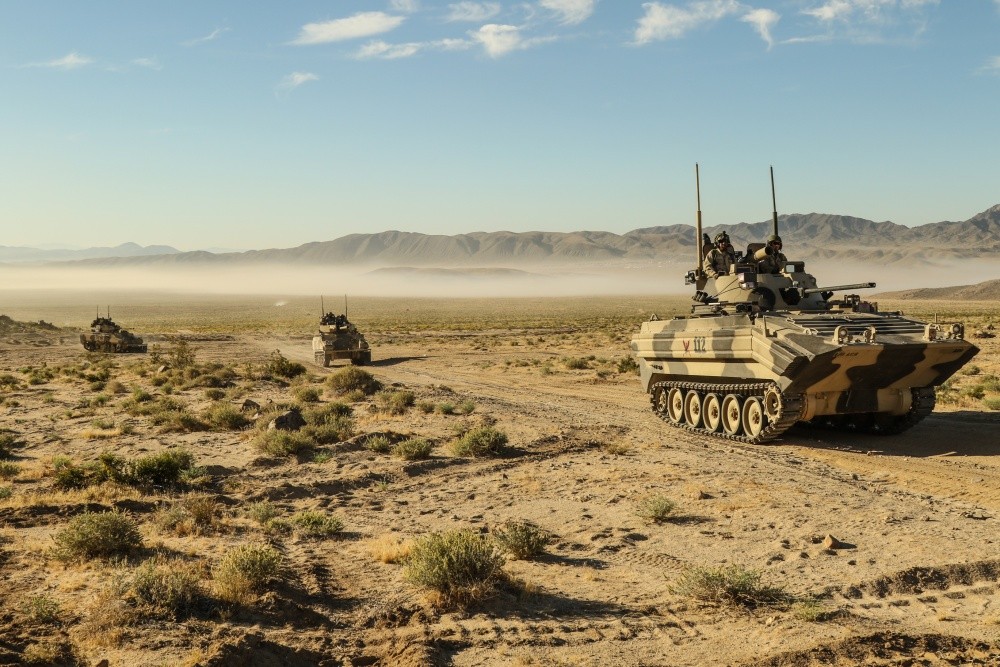
Key Highlights
- Initiation of the Conflict: The full-scale invasion on February 24, 2022, marked a dramatic escalation initiated by Russian military actions.
- Leadership and Motives: Russian President Vladimir Putin spearheaded the operation, citing controversial and unsubstantiated justifications.
- International Impact: This decisive event led to global condemnation, widespread sanctions, and significant geopolitical shifts.
Historical Context and Precursors
The full-scale conflict in 2022 did not emerge in isolation; it was the culmination of longstanding tensions between Russia and Ukraine. The roots of the hostilities can be traced back to events prior to 2022, notably the annexation of Crimea in 2014 and the intermittent conflicts in Eastern Ukraine. Over a period of years, these events fostered an environment of distrust and rivalry, setting the stage for the eventual large-scale military engagement.
Geopolitical Tensions Before the Invasion
In the years leading up to the conflict, Ukraine was already at the center of geopolitical contention. Russia’s annexation of Crimea and support for separatist areas in the Donbas region had created a volatile situation. These actions were seen by many in the international community as violations of international law and Ukraine’s sovereignty. Moreover, repeated military drills, troop deployments near the border, and escalating rhetoric added to the precariousness of the situation.
The Role of NATO and International Perceptions
The expansion of NATO into Eastern Europe further exacerbated tensions. Russian leadership expressed concern over NATO’s growing influence, alleging that the alliance’s eastward movement posed a strategic threat. While such claims were used by Russian officials as part of the justification for military action, they were widely challenged by Western nations and experts who pointed out that these concerns were overblown and served to mask broader strategic ambitions.
The Outbreak of the Full-Scale Invasion
The immediate trigger for the war came on February 24, 2022, when Russian military forces launched a large-scale invasion into Ukraine. This marked a significant escalation from previous skirmishes and separative engagements that had characterized the conflict over the previous decade. The invasion was multifaceted, involving simultaneous attacks from multiple directions including entries from Belarus, southern approaches, and incursions from the territories of previously annexed Crimea.
Details of the Military Operation
Upon the announcement of the "special military operation" by Russian President Vladimir Putin, military forces mobilized from various strategic positions. The operation was characterized by:
- A multi-pronged assault aimed at encircling Ukrainian key cities and administrative centers.
- The strategic movement of troops across several borders to overwhelm defensive positions.
- Escalation of aerial, ground, and naval assaults, indicating a highly coordinated and pre-planned campaign.
Military Justifications and Political Rhetoric
The rhetoric used by the Russian government to justify the invasion was couched in terms of "demilitarization" and "denazification" of Ukraine. These terms were deployed to suggest that the operation was a limited, targeted intervention rather than an act of outright aggression. However, these justifications were met with widespread skepticism and were largely dismissed by the international community, which viewed the move as a pretext for territorial expansion and a means to reassert influence over the region.
The strategic planning behind the invasion also revealed certain miscalculations. Russian leadership appeared to have underestimated the resolve of the Ukrainian forces and overestimated the ease with which control could be established. The unexpected resistance from Ukrainian military and civilian populations swiftly turned what was projected by Russian planners as a rapid, politically motivated maneuver into a prolonged and costly military confrontation.
Assessing Leadership and Motivations
A central figure in this conflict is Russian President Vladimir Putin. His decision to launch the invasion has been attributed to multiple factors, ranging from nationalistic ambitions to geopolitical strategy. The operation was not an isolated military exercise but rather an extension of a broader narrative aimed at reasserting Russian influence in the post-Soviet space.
Strategic Aims and Political Objectives
Putin’s decision-making process encompassed several layers. On the surface, the Russian government framed the incursion as a necessary action to ensure national security and to preempt what it perceived as an encirclement by Western military alliances. Beneath this, however, were more nuanced objectives:
- Restoration of Influence: The invasion aimed at reclaiming what many in Russia believed were historically belonging territories, effectively reestablishing influence over Ukraine.
- Geopolitical Positioning: By challenging Western institutions like NATO and the European Union, Russia intended to assert its role as a dominant power in Eastern Europe.
- Domestic Consolidation: The operation also served a domestic purpose by rallying nationalist sentiments and consolidating internal support for the leadership, particularly amid perceived external pressures.
Controversies and Misinterpretations
The decision to invade was met with controversy and mixed interpretations even within strategic circles. While Russian officials and sympathizers justified the move on the grounds of security and historical legacy, critics argue that the operation was more about undermining Ukraine's sovereignty and expanding Russian hegemony. Many international voices, including those from diplomatic and academic quarters, regard the invasion as a clear case of unprovoked aggression. This perspective is reinforced by the rapid sequence of events following February 24, 2022, which saw a swift international response, including significant sanctions and support for Ukraine.
International Reaction and Geopolitical Consequences
The invasion had immediate and far-reaching implications on both regional and global scales. It disrupted established international norms and led to a substantial realignment of diplomatic relationships worldwide. Governments across the globe, particularly in Western nations, condemned the aggressive actions unequivocally. In tandem with diplomatic protests, a series of rigorous sanctions were imposed on Russia, affecting its economy and further isolating it from the international community.
Sanctions and Diplomatic Isolation
One of the prominent consequences of Russia's actions was the widespread imposition of economic sanctions. These sanctions targeted various aspects of the Russian economy, including:
- Financial institutions and trade networks, aiming to restrict access to international markets.
- Key sectors such as energy and defense, impacting flows of technology and resources.
- High-ranking individuals and oligarchs, applying personal financial pressures to influence decision-making.
The consequence was a significant economic downturn for Russia, affecting its domestic policies and its ability to continue the military campaign over the long term.
Military and Humanitarian Implications
The cascading effects of the invasion were not confined to political and economic spheres alone. The military operations led to extensive casualties, displacement, and destruction of infrastructure. Ukrainian forces demonstrated robust resistance, which further prolonged the conflict. This resistance greatly contributed to the eventual mobilization of international military aid and humanitarian support for Ukraine.
Military engagement data underscores the rapid escalation of conflict:
| Aspect | Details |
|---|---|
| Date of Escalation | February 24, 2022 - Full-scale invasion initiated by Russian forces |
| Primary Leadership | Russian President Vladimir Putin |
| Declared Objectives | "Demilitarization" and "Denazification" of Ukraine; reassertion of historical influence |
| International Response | Widespread sanctions, military aid to Ukraine, diplomatic condemnation |
| Humanitarian Impact | Widespread civilian casualties, significant displacement and infrastructure damage |
Long-Term Global Impact
Beyond the immediate battlefield, the conflict has had lasting implications on global politics, economics, and security frameworks. It has spurred debates on the efficacy of international law, the mechanisms of global governance, and the balance of power in a rapidly shifting geopolitical landscape.
Many nations, both allies and adversaries of Russia, have had to recalibrate their foreign policies in light of the conflict. International security alliances, particularly NATO, have sought to enhance their readiness in response to perceived future threats, while global energy markets have experienced significant fluctuations due to uncertainties arising from the region's instability.
Media Narratives and Public Perception
The events of February 24, 2022, did not only reshape geopolitical boundaries but also influenced the global media landscape. The narrative surrounding the outbreak of the conflict was rapidly disseminated through both traditional and digital media channels, shaping public opinion worldwide. Prominent themes in media coverage included those of invasion, national sovereignty, and the panic induced by rapid escalations in military hostilities.
Framing and Counter-framing of the Conflict
Russian officials labeled the invasion as a "special military operation," a term intended to suggest a controlled and justified intervention rather than outright aggression. However, independent experts and international observers countered this framing by emphasizing the unprovoked and expansive nature of the attack. This counter-framing was essential in rallying international support for Ukraine and galvanizing global condemnation of the actions.
The divergence in narratives has had a lasting effect on public perception. While official channels in Russia propagated self-justifying narratives, the broader international discourse centered on themes of nationalism, resistance, and the defense of democratic values against authoritarian encroachment.
The Broader Picture: Conflict Dynamics and Lessons Learned
The 2022 Ukrainian war serves as a stark reminder of how historical grievances, national identity, and strategic ambitions can converge to ignite large-scale conflicts. The lessons drawn from the early days of the war are multifaceted:
Key Lessons and Strategic Considerations
First, the significance of rapid and coordinated military responses is underscored by the early phases of the invasion. While Russian planners expected a swift victory, the resilience and tactical ingenuity of the Ukrainian forces led to a protracted conflict, emphasizing that military operations can quickly shift from tactical maneuvers to strategic stalemates.
Second, the role of international alliances and support networks proved crucial. The mobilization of global diplomatic and military resources helped to counterbalance the initial advantage held by the invaders, providing Ukraine with the means to sustain its defense over time.
Lastly, the global community’s reaction highlighted the importance of upholding international legal norms. The invasion was not isolated from the broader consensus on sovereignty and territorial integrity. The widespread disdain and subsequent sanctions imposed on Russia reaffirmed the principle that acts of aggression bear significant geopolitical and economic consequences.
Future Considerations for Global Security
Looking forward, the conflict has set a precedent for how global security arrangements may evolve. The heightened tension has prompted many nations to revisit, and in some cases, reformulate their strategic defense policies. As nations navigate an increasingly multipolar world, the balance between military readiness, diplomatic engagement, and economic resilience will be vital.
Conclusion and Final Thoughts
In summary, the inception of the Ukrainian war in 2022 was unequivocally marked by the full-scale invasion launched by Russian military forces on February 24, 2022. This decisive action, orchestrated under the leadership of President Vladimir Putin, represented a significant escalation in hostilities that had been simmering for years. The invasion was driven by a complex interplay of historical grievances, geopolitical ambitions, and strategic miscalculations.
The consequences of the conflict have been profound and far-reaching, affecting not only the immediate region but also the global order. From economic sanctions and diplomatic isolation to military realignments and shifting public perceptions, the reverberations of the conflict continue to shape international relations. The event stands as a critical moment in contemporary history, providing enduring lessons on the dynamics of power, the importance of sovereignty, and the challenges of maintaining global stability in an era marked by rapid change.
References
- Key Moments in the Russia-Ukraine War: A Timeline - The New York Times
- Timeline: How did the recent Ukraine-Russia crisis start? - Al Jazeera
-
Timeline: The events leading up to Russia's invasion of Ukraine - Reuters
- Russian invasion of Ukraine - Wikipedia
Recommended
Last updated February 19, 2025