

- Umbral Calculus provides a powerful, rigorous framework for manipulating polynomial sequences, offering elegant solutions and revealing hidden mathematical relationships.
- At its heart, modern umbral calculus is deeply intertwined with Sheffer Sequences, a broad class of polynomials that unify various classical families.
- The symbiosis of these two concepts extends significantly to Special Functions, enabling new derivations, generalizations, and applications across mathematics and physics.
In the vast landscape of mathematical disciplines, certain concepts emerge as pivotal, capable of bridging seemingly disparate fields and unveiling profound connections. Among these, umbral calculus stands out as a sophisticated symbolic method, originally conceived as a "shadowy" technique to simplify complex combinatorial identities. Modern umbral calculus has evolved into a rigorous mathematical framework, primarily concerned with the elegant manipulation of polynomial sequences.
Central to this modern understanding are Sheffer sequences, named after Isador M. Sheffer, which represent a fundamental class of polynomial sequences. These sequences are not merely academic curiosities; they encompass and generalize many well-known polynomial families, including Appell sequences and those of binomial type. The intrinsic relationship between umbral calculus and Sheffer sequences forms a powerful algebraic toolkit that allows mathematicians to derive, prove, and organize a multitude of identities with remarkable efficiency.
The Core of Umbral Calculus: A Rigorous Framework for Polynomials
Umbral calculus provides a unifying framework for manipulating polynomial sequences and their underlying generating structures. At its essence, it involves linear functionals operating on polynomial algebras, encoding what were historically referred to as "umbrae" or shadow-like operations. While its origins were somewhat heuristic, the field was revolutionized and formalized in the 1970s by mathematicians like Gian-Carlo Rota, Steven Roman, and others. They established it as a rigorous mathematical framework, shifting its perception from a mere computational trick to a foundational theory for understanding polynomial relationships.
The rigorous foundation of umbral calculus lies in its ability to treat sequences of numbers or polynomials as if their indices were exponents, simplifying complex expressions. This symbolic manipulation allows for computational simplifications and conceptual clarifications, making it an invaluable tool for proving polynomial formulas and establishing elegant relationships between various mathematical sequences. The modern theory primarily recasts identities in terms of Sheffer sequences and binomial-type polynomials, which are central to its operational power.
Sheffer Sequences: The Unifying Polynomial Family
Sheffer sequences are a broad and flexible class of polynomial sequences that play a critical role in umbral calculus. Named after Isador Sheffer, who recognized their fundamental relationships in 1939, these sequences satisfy specific functional equations that generalize classical polynomial families. They are governed by a delta operator, which acts as a fundamental building block in their structure and behavior. This broad definition means that Sheffer sequences include important subclasses such as Appell sequences and all sequences of binomial type, providing a powerful unifying concept.
The significance of Sheffer sequences extends beyond their theoretical elegance. They provide a systematic method for handling shifts and deltas within operator algebras, making them indispensable for deriving and classifying numerous combinatorial identities and generating functions. Familiar polynomial families such as Bernoulli, Euler, Laguerre, and Hermite polynomials emerge as natural members of Sheffer sequences, each possessing explicit generating structures that can be elegantly explored using umbral methods.
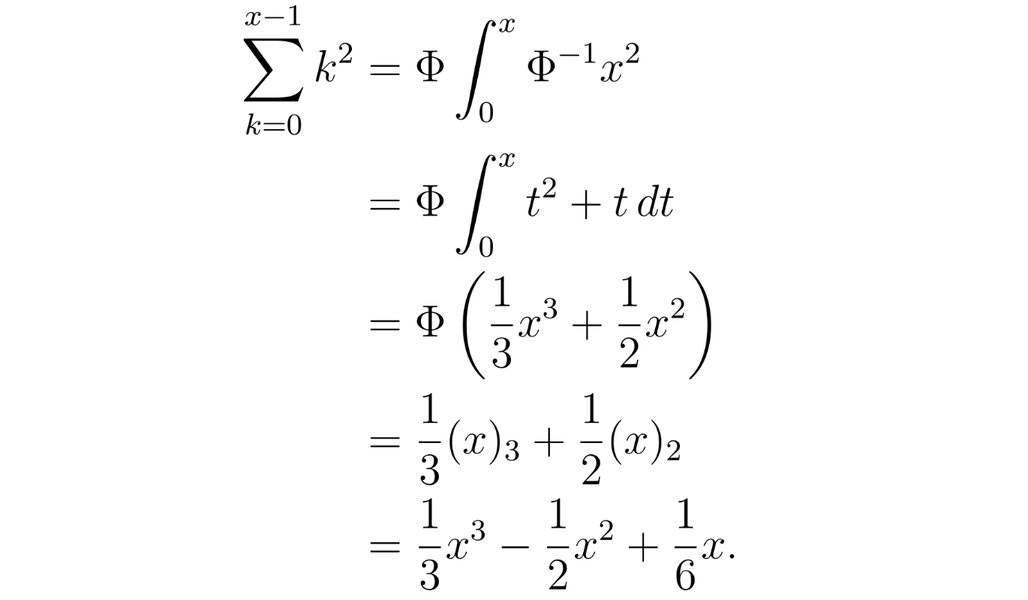
Conceptual representation of umbral calculus symbols and operations.
Understanding the Properties of Sheffer Sequences
A Sheffer sequence \(\{p_n(x)\}\) satisfies the condition \(p_n(D) e^{ax} = e^{bx} p_n(x)\), where \(D\) is the differentiation operator. This defining characteristic highlights their role in operational calculus and their ability to generalize common polynomial behaviors. The properties of Sheffer sequences allow for seamless transitions between formal power series and operator algebra, revealing deep structural analogies that are crucial for advanced mathematical analysis.
The Symbiotic Relationship with Special Functions
The deep interconnection between umbral calculus and Sheffer sequences proves instrumental in understanding and manipulating special functions. Sheffer sequences serve as a unifying framework for diverse polynomial families, including those that are critical in various branches of mathematics and physics. Umbral methods provide powerful techniques for reformulating the theoretical framework of special functions, uncovering new extensions, and deriving identities involving them.
Special functions such as Bessel, Gauss, and Hermite functions admit representations and recurrences that are elegantly handled by umbral methods. By translating analytic questions into operator relations between delta operators and polynomial bases, mathematicians gain a powerful algebraic toolkit. This perspective not only clarifies known results but also guides the construction of new families explicitly tied to special functions. Applications extend to calculating integrals of combinations of functions, providing new trigonometric representations, and exploring q-analogues and other modern extensions.
The embedded video titled "The Strange Case of the Umbral Calculus" provides a historical and conceptual overview of umbral calculus, offering valuable context for its development and its "shadowy" nature. It enhances understanding by illustrating how this symbolic method evolved to clarify complex mathematical problems, making it highly relevant to the discussion of its interconnections with Sheffer sequences and special functions.
Unlocking New Identities and Applications
The umbral-Sheffer framework makes problems like Lagrange inversion, convolution, and addition theorems transparent. This allows for systematic derivation and classification of numerous combinatorial identities and generating functions, which are often crucial in areas ranging from theoretical physics to computer science. The framework supports symbolic manipulation, constructive proofs, and efficient computation of series expansions and integrals. Beyond pure theory, this pairing offers practical tools for approximations and analytic continuations in mathematical physics and engineering, demonstrating its broad interdisciplinary utility.
Practical Workflows and Modern Extensions
A practical workflow often involves identifying a target special function, selecting an appropriate Sheffer pair (a Sheffer sequence and its associated delta operator), and then deriving identities using the delta-operator calculus. This systematic approach streamlines the process of discovering and proving new mathematical relationships. Furthermore, the interconnection extends to modern developments such as λ-calculi, degenerate umbral calculi, and q-umbral calculi, significantly broadening the scope of applications and theoretical exploration.
This mindmap visually outlines the intricate connections between Umbral Calculus, Sheffer Sequences, and their wide-ranging applications to Special Functions and other mathematical domains. It illustrates the foundational concepts, key figures, and the practical implications of their symbiotic relationship.
The Transformative Power of Umbral Methods
The umbral calculus, particularly when combined with the theory of Sheffer sequences, offers a transformative lens through which to view and solve problems in diverse areas of mathematics. This approach moves beyond traditional computational methods, providing a deeper, more structural understanding of polynomial relationships and their generalization to special functions. It facilitates the discovery of novel identities, generating functions, and orthogonality relations that might otherwise remain elusive, ultimately pushing the boundaries of mathematical inquiry.
| Concept | Definition/Role | Relationship to Others | Examples/Applications |
|---|---|---|---|
| Umbral Calculus | A rigorous symbolic method for manipulating polynomial sequences and establishing identities. | Provides the operational framework for Sheffer sequences. | Deriving combinatorial identities, Lagrange inversion. |
| Sheffer Sequences | A broad class of polynomial sequences defined by specific functional equations and governed by delta operators. | Central object of study in modern umbral calculus; generalizes many polynomial families. | Bernoulli, Euler, Hermite, Appell polynomials. |
| Special Functions | Functions that arise in mathematical physics and engineering, often as solutions to differential equations. | Beneficiaries of umbral-Sheffer methods for deriving properties, integrals, and new extensions. | Bessel, Gauss, Gamma functions. |
| Delta Operator | A linear operator on the space of polynomials that is shift-invariant and reduces the degree of a polynomial by one. | Fundamental in defining and characterizing Sheffer sequences within umbral calculus. | Differentiation operator (D). |
This table summarizes the core concepts discussed, highlighting their definitions, interrelationships, and practical applications, providing a quick reference for understanding the symbiosis.
Conclusion: A Foundation for Future Discoveries
The symbiotic relationship between umbral calculus and Sheffer sequences forms a robust foundation for profound advancements in the theory and application of special functions. This powerful combination not only streamlines the derivation and proof of complex identities but also opens avenues for discovering new extensions and generalized forms of functions that are indispensable across numerous scientific and engineering disciplines. By leveraging the systematic nature of umbral methods and the unifying power of Sheffer sequences, researchers are equipped to tackle intricate problems, from enumerating lattice paths to solving initial value problems, thereby continually enriching the mathematical landscape and its practical applications. The study of this interconnection promises to remain a fertile ground for theoretical insights and innovative solutions.
FAQ
What is the primary goal of modern umbral calculus?
Who formalized umbral calculus in its modern form?
What makes Sheffer sequences important in umbral calculus?
How does umbral calculus benefit the study of special functions?
Can umbral calculus be applied to real-world problems?
Recommended Further Exploration
- How has Gian-Carlo Rota's work influenced modern combinatorics and umbral calculus?
- What are the different types of Sheffer sequences and their specific applications?
- Explore the use of umbral methods in quantum mechanics and mathematical physics.
- Advanced techniques for deriving generating functions using umbral calculus.