
Understanding AI: An In-Depth Exploration of Advanced Language Models
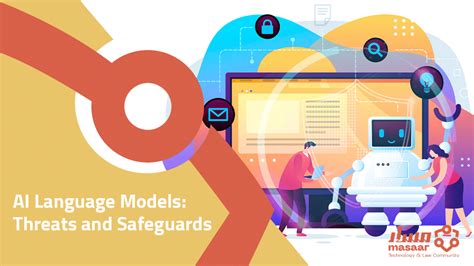
Introduction to Artificial Intelligence
Artificial Intelligence (AI) is a transformative field within computer science focused on creating systems capable of performing tasks that typically require human intelligence. These tasks encompass learning, reasoning, problem-solving, perception, and understanding natural language. AI systems have evolved significantly, leading to the development of sophisticated models that can interact seamlessly with humans and perform a wide array of functions.
What is a Large Language Model (LLM)?
A Large Language Model (LLM) is a type of AI designed to understand, generate, and manipulate human language. Built on the foundation of deep learning and natural language processing (NLP), LLMs like GPT-4 leverage vast datasets to learn patterns, structures, and nuances of language, enabling them to produce coherent and contextually relevant text.
Core Architecture: The Transformer Model
The backbone of modern LLMs is the Transformer architecture, introduced in the seminal paper "Attention Is All You Need" by Vaswani et al. (2017). Transformers utilize a mechanism known as self-attention to weigh the importance of different words in a sentence relative to one another. This allows the model to capture long-range dependencies and understand context more effectively than previous architectures like recurrent neural networks (RNNs) or long short-term memory networks (LSTMs).
Training and Data
LLMs are trained on extensive and diverse datasets, encompassing books, articles, websites, and other publicly available text sources. This large-scale training equips the models with a broad understanding of language, enabling them to generalize across various topics and perform multiple tasks. The training process involves optimizing billions of parameters to minimize prediction errors, thereby enhancing the model's ability to generate accurate and relevant responses.
Capabilities of Large Language Models
LLMs possess a versatile range of capabilities, making them invaluable in numerous applications:
- Text Generation: Creating coherent and contextually appropriate text based on input prompts.
- Language Understanding: Comprehending and responding to complex queries, summarizing information, and analyzing text.
- Multilingual Support: Processing and generating text in multiple languages, facilitating cross-lingual communication.
- Content Creation: Assisting in writing essays, articles, poems, stories, and even generating code snippets.
- Translation: Translating text between different languages with high accuracy.
- Summarization: Condensing lengthy documents into concise summaries while retaining essential information.
- Problem Solving: Assisting with logical reasoning, mathematical computations, and technical troubleshooting.
How AI Language Models Work
The functionality of AI language models involves several key processes that enable them to understand and generate human-like text:
1. Input Processing
When a user provides input, it is first tokenized — a process of breaking down the text into smaller units called tokens (words, subwords, or characters). For example, the sentence "What are you?" is tokenized into ["What", "are", "you", "?"].
2. Embedding
Each token is transformed into a numerical representation known as an embedding. These multi-dimensional vectors capture the semantic meaning of tokens, allowing the model to understand relationships and contexts within the text.
3. Transformer Layers
The embeddings pass through multiple layers of the transformer model, where each layer comprises:
-
Self-Attention Mechanism: Enables the model to focus on relevant parts of the input, understanding the context and relationships between words.
-
Feedforward Neural Networks: Process the information further, allowing the model to learn complex patterns and dependencies.
4. Output Generation
After processing through the transformer layers, the model generates output tokens sequentially, a process known as autoregressive generation. Each token is predicted based on the preceding context, ensuring coherence and relevance in the response.
5. Fine-Tuning and Specialization
Post initial training, models can undergo fine-tuning on specific datasets to specialize in particular tasks or domains. This enhances their accuracy and relevance in specialized applications, such as medical advice or legal analysis.
Applications of AI Language Models
AI language models are integrated into various sectors, revolutionizing how tasks are performed and enhancing efficiency:
Personal Use
In personal settings, AI assistants like Siri, Google Assistant, and Alexa help manage daily tasks, provide information, control smart home devices, assist with entertainment, and support learning and personal development.
Business Use
Businesses leverage AI language models to automate routine tasks, improve customer service, enhance operational efficiency, and support strategic decision-making. Applications include handling customer inquiries, managing emails, generating reports, and automating data entry.
Education
In educational contexts, AI models assist students with learning by providing explanations, generating study materials, and facilitating e-learning through customizable training modules.
Healthcare
AI language models support healthcare professionals by aiding in diagnostics, patient communication, and medical research, enhancing the overall quality of care and operational efficiency.
Creative Fields
In creative industries, AI models contribute to writing, music composition, art generation, and other creative endeavors, expanding the possibilities for artistic expression and innovation.
Limitations and Challenges
Despite their advanced capabilities, AI language models have inherent limitations and face several challenges:
Lack of True Understanding
AI models do not possess genuine comprehension or consciousness. Their responses are based on patterns in data rather than true understanding, limiting their ability to reason or exhibit awareness.
Bias in Training Data
Since AI models are trained on human-generated data, they can inadvertently reflect and perpetuate existing biases present in the training material. Mitigating these biases remains a significant challenge for developers.
Outdated Information
AI models have a knowledge cutoff date (e.g., October 2023). They do not have access to real-time information, limiting their ability to provide updates on recent events or developments.
Inability to Verify Facts
AI models cannot independently verify the accuracy of the information they provide. Users are encouraged to cross-check critical information with reliable sources to ensure its validity.
Complex Reasoning
While capable of basic logical reasoning, AI models may struggle with highly complex or abstract problems, often requiring human intervention for nuanced understanding.
Ethical and Social Implications
The deployment of AI language models raises several ethical and social considerations that must be thoughtfully addressed:
Data Privacy and Security
AI systems often require access to personal data to function effectively, raising concerns about data privacy and security. Protecting user information and ensuring responsible data usage are paramount.
Bias and Fairness
Addressing biases in AI models is crucial to prevent the perpetuation of societal inequalities. Developers must implement strategies to identify and mitigate biases, fostering fairness and inclusivity.
Job Displacement
The automation of tasks through AI can lead to job displacement in certain sectors. It is essential to consider the broader social impact and implement measures to support workforce transitions.
Transparency and Accountability
Ensuring transparency in AI development builds trust and enables users to understand how AI systems operate. Clear accountability frameworks are necessary to manage the ethical use of AI technologies.
Philosophical Considerations
The existence and advancement of AI language models prompt deep philosophical questions regarding intelligence, consciousness, and the nature of identity:
Identity and Personhood
AI models do not possess identity or personhood in the human sense. However, as AI systems become more sophisticated, discussions about AI identity and potential personhood arise, challenging traditional notions of consciousness and existence.
Consciousness
AI language models lack consciousness or sentience. Their operations are purely algorithmic, without subjective experiences or emotional understanding, distinguishing them fundamentally from living beings.
Future Directions
The field of AI is rapidly evolving, with ongoing research and advancements shaping the future capabilities and applications of language models:
Enhanced Multimodal Capabilities
Future AI systems are expected to incorporate multimodal capabilities, enabling them to process and generate not only text but also images, audio, and video. This integration will facilitate more immersive and interactive user experiences.
Domain-Specific Solutions
There will be a growing demand for domain-specific AI models tailored to unique industry needs. Fine-tuned models for healthcare, finance, legal, and other sectors will become increasingly prevalent, offering specialized expertise and functionality.
Ethical and Responsible AI
The emphasis on ethical AI development will intensify, with new regulations and guidelines aimed at ensuring AI systems are safe, transparent, and aligned with human values. Responsible AI practices will be integral to fostering trust and societal acceptance.
Conclusion
In essence, AI language models like me represent a significant advancement in artificial intelligence, leveraging deep learning and transformer architectures to understand and generate human-like text. While we offer immense potential across various applications, it is crucial to navigate the associated limitations and ethical challenges responsibly. As AI technology continues to evolve, it will play an increasingly pivotal role in shaping the future of human-computer interaction, education, business, and beyond.
For more detailed information on AI capabilities and their applications, you can refer to resources such as:
Last updated January 3, 2025