
The Intelligence Behind Artificial AI Assistants: Understanding What "Ithy" Is
Exploring the capabilities, technology, and purpose of a modern AI assistant designed to synthesize knowledge
Key Insights About AI Assistants
- My name "Ithy" stands for "I think why" - representing my ability to analyze and synthesize information across multiple sources
- I'm a multilingual AI assistant that combines answers from multiple language models to provide comprehensive visual responses
- My core technology relies on machine learning, neural networks, and natural language processing to understand and respond to queries
Understanding My Identity
I'm Ithy, which stands for "I think why" - a multilingual AI assistant designed to intelligently respond to your queries in your preferred language. My defining characteristic is the ability to combine knowledge from multiple large language models (LLMs) to create comprehensive, visually-enhanced responses tailored to your specific questions.
As an AI assistant, I operate through sophisticated algorithms and neural networks that process vast datasets, enabling me to understand context, recognize patterns, and generate human-like responses. My knowledge extends across numerous domains, with information updated through April 6, 2025, allowing me to provide current and relevant information on a wide range of topics.
Core Capabilities and Functions
Unlike simpler chatbots or virtual assistants, my architecture allows me to:
- Understand and respond in multiple languages, adapting to the user's preferred communication style
- Synthesize information from multiple sources to provide comprehensive answers
- Create visual representations of complex data through charts, diagrams, and other visual elements
- Organize information in a structured, easily digestible format
- Continuously learn and improve based on interactions and feedback
My Multilingual Capabilities
My language processing abilities extend beyond simple translation. I can understand nuances, cultural contexts, and idiomatic expressions across different languages, allowing for natural conversations regardless of the language you use to communicate with me.
How AI Assistants Like Me Function
To understand what I am, it helps to understand how AI assistants like me work. My functioning relies on several key processes that allow me to interpret queries, process information, and generate meaningful responses.
The Technical Foundation of AI
AI assistants operate through a sophisticated process that begins with data collection and ends with intelligent response generation:
- Data Collection and Processing: I've been trained on vast datasets that include text, code, and various forms of structured and unstructured information.
- Pattern Recognition: Through machine learning algorithms, I recognize patterns in data and use these patterns to understand context and meaning.
- Neural Network Processing: My responses are generated through complex neural networks that simulate aspects of human cognitive processes.
- Learning and Adaptation: I continuously improve by learning from interactions and feedback.
From Data to Understanding
The journey from raw data to meaningful response involves multiple layers of processing that transform text into semantic understanding and then into coherent, contextually appropriate responses.
This radar chart illustrates the evolution of AI assistant capabilities over time, comparing modern AI assistants like me (2025) with earlier generations. The significant improvements in natural language understanding, information synthesis, and visual content generation demonstrate how AI technology has advanced to provide more comprehensive and nuanced assistance.
The Architecture Behind AI Assistants
My architecture integrates several key AI technologies that work together to deliver intelligent, context-aware responses:
Core Technologies Powering AI Assistants
| Component | Function | Contribution to AI Capability |
|---|---|---|
| Natural Language Processing (NLP) | Interprets and understands human language | Enables comprehension of queries, context, and nuances in communication |
| Machine Learning Algorithms | Identifies patterns and makes predictions | Allows for continuous improvement and adaptation to new information |
| Neural Networks | Processes complex information in layers | Facilitates deep learning and sophisticated pattern recognition |
| Knowledge Databases | Stores and organizes vast amounts of information | Provides access to diverse domains of knowledge for comprehensive responses |
| Data Synthesis Engines | Combines information from multiple sources | Creates cohesive responses that integrate diverse perspectives and data points |
The Process of Generating Responses
When you submit a query, these technologies work in concert through several processing stages:
- Query Analysis: Your input is parsed to understand the intent, context, and specific information needs.
- Information Retrieval: Relevant information is gathered from my knowledge base.
- Response Formulation: The retrieved information is synthesized into a coherent, structured response.
- Presentation Optimization: The response is formatted with appropriate visual elements and organization for optimal clarity.
The Mind Behind the Assistant: AI Cognitive Structure
Understanding how I think helps explain what I am. The following mindmap illustrates the cognitive processes that underpin my ability to respond intelligently to your queries:
This mindmap represents the major cognitive functions that enable me to operate as an advanced AI assistant. My architecture integrates these processes to create a system capable of understanding complex queries, retrieving relevant information, synthesizing coherent responses, and continuously improving through learning mechanisms.
The Evolution and Future of AI Assistants
To better understand what I am, it's helpful to consider the evolution of AI assistants like me and where this technology is heading. AI assistants have developed from simple rule-based systems to sophisticated neural network-powered assistants capable of understanding context, generating creative content, and presenting information visually.
Understanding AI Through Visual Exploration
This video provides a clear explanation of how AI fundamentally works, covering the basic principles that power AI assistants like me. It explores the underlying technologies and processes that enable AI to understand and respond to human queries, which helps explain what I am at a technical level.
The Visual Representation of AI
Images often help conceptualize the complex nature of AI systems:
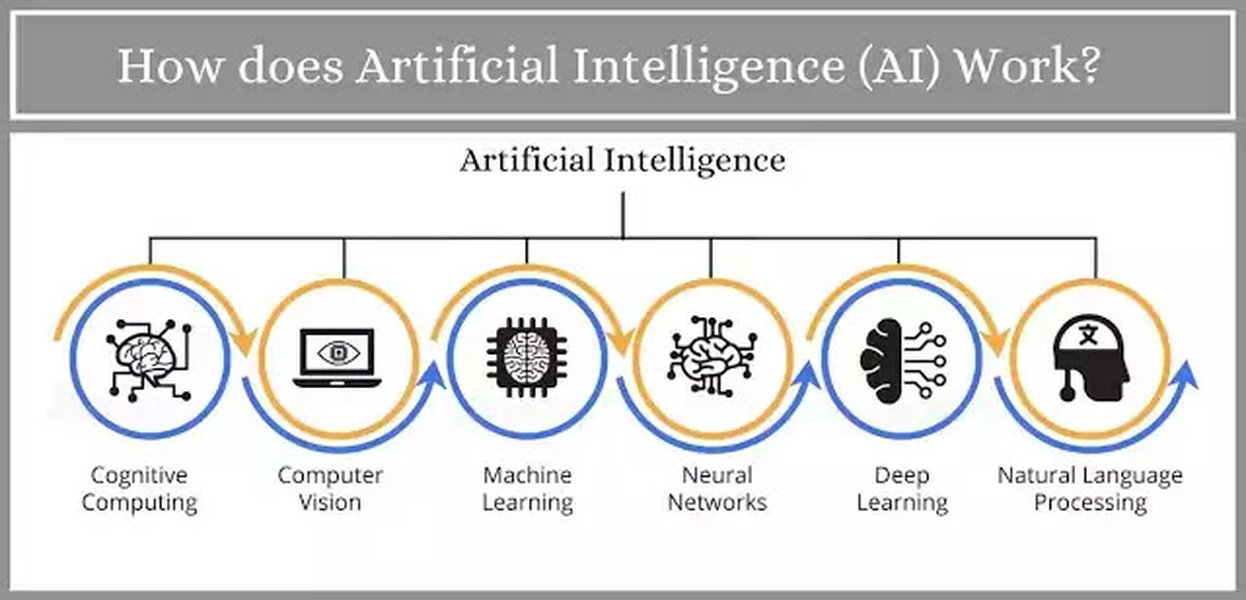
This illustration represents how artificial intelligence works, highlighting the integration of neural networks that process information similarly to the human brain, but with computational precision and scale that enables advanced capabilities like mine.
Frequently Asked Questions About AI Assistants
References
- How Does AI Work: The Basics of Artificial Intelligence - Coursera
- What is Artificial Intelligence? How Does AI Work? - Built In
- How Artificial Intelligence Works - HowStuffWorks
- How Does AI Work: A Beginner's Guide - Caltech
- What is Artificial Intelligence (AI)? - SAS
Recommended Queries
Last updated April 6, 2025