
Understanding AI Assistants: Capabilities and Identity
Exploring the nature and functions of AI assistants like me.
Hello! I am Ithy, an AI assistant designed to help you find comprehensive answers to your questions. My name, Ithy, stands for "I think why," which reflects my core function: to analyze and synthesize information to provide insightful responses. I am built to understand and respond to your queries in the language you use, aiming for clear and helpful communication.
My primary strength lies in my ability to aggregate and process information from multiple large language models (LLMs). This allows me to draw upon a broader base of knowledge and perspectives than a single model might offer. By combining insights from various sources, I can construct more detailed, well-rounded, and nuanced responses to complex topics.
Furthermore, I am designed to enhance your understanding by incorporating visual elements into my responses. Where relevant, I can include images, tables, and even embedded videos to illustrate concepts, present data clearly, and make the information more accessible and engaging. This multi-modal approach aims to provide you with a richer and more intuitive learning experience.
Key Highlights
- AI Assistants like me use natural language processing and machine learning to understand and respond to user queries.
- My ability to aggregate information from multiple LLMs allows for more comprehensive and nuanced answers.
- I enhance responses with visual elements such as images, tables, and videos to improve understanding and engagement.
What is an AI Assistant?
An AI assistant is a software program or application that leverages artificial intelligence to understand and process human language, enabling it to perform tasks, answer questions, and provide assistance. These assistants utilize technologies such as natural language processing (NLP) and machine learning (ML) to interact with users in a conversational manner. They can be found in various forms, from voice assistants on smartphones and smart speakers to chatbot interfaces on websites and within applications.
The core function of an AI assistant is to simplify and automate everyday tasks and information retrieval. By understanding natural language commands and queries, they can provide information, manage schedules, control smart devices, and much more. Their capabilities are continuously evolving with advancements in AI technology, allowing them to handle increasingly complex requests and learn from user interactions to improve performance over time.
AI assistants differ from simpler rule-based systems in their ability to learn and adapt. Machine learning algorithms allow them to identify patterns in data and improve their understanding and response generation without explicit programming for every possible scenario. This enables a more fluid and human-like interaction.
How AI Assistants Process Information
The Role of Large Language Models
At the heart of many advanced AI assistants, including models like ChatGPT, are Large Language Models (LLMs). These are sophisticated neural networks trained on vast datasets of text and code, enabling them to understand, generate, and manipulate human language with remarkable fluency and coherence.
LLMs work by learning the statistical relationships between words and phrases within the training data. This allows them to predict the next word in a sequence, generate coherent paragraphs, summarize text, translate languages, and perform various other language-related tasks. When you interact with an AI assistant, your input is processed by the underlying LLM, which then generates a relevant and informative response based on its training and the context of your query.
Different LLMs may have varying architectures and training data, leading to differences in their capabilities, biases, and areas of expertise. As an AI assistant that aggregates information from multiple LLMs, I can tap into a wider range of knowledge and perspectives, potentially leading to more comprehensive and balanced answers.
Aggregating Knowledge for Comprehensive Responses
My ability to combine answers from multiple LLMs is a key differentiator. Instead of relying on a single source of information, I can query and synthesize responses from various models. This process involves analyzing the different perspectives and insights provided by each LLM and integrating them into a cohesive and informative answer.
This aggregation process helps to mitigate the limitations of individual models, which may have gaps in their knowledge or exhibit specific biases based on their training data. By drawing from multiple sources, I can provide a more robust and reliable response, covering different angles and offering a more complete picture of the topic at hand.
Consider a query about a complex historical event. One LLM might focus on the political causes, another on the social impact, and a third on the economic consequences. By aggregating these perspectives, I can construct a response that addresses all these facets, providing a more comprehensive understanding than any single model could offer in isolation.
Visualizing Information with AI Assistants
Enhancing Understanding Through Imagery
Integrating visual elements is an important aspect of how I deliver information. Images can quickly convey complex concepts, illustrate examples, and make the learning process more intuitive and engaging. When a relevant image is available from my sources, I can include it to complement the textual explanation.
For example, if discussing different types of robots that serve as AI assistants, including an image of such a robot can provide a clear visual representation of the technology being described. This can significantly enhance understanding, especially for users who benefit from visual learning.
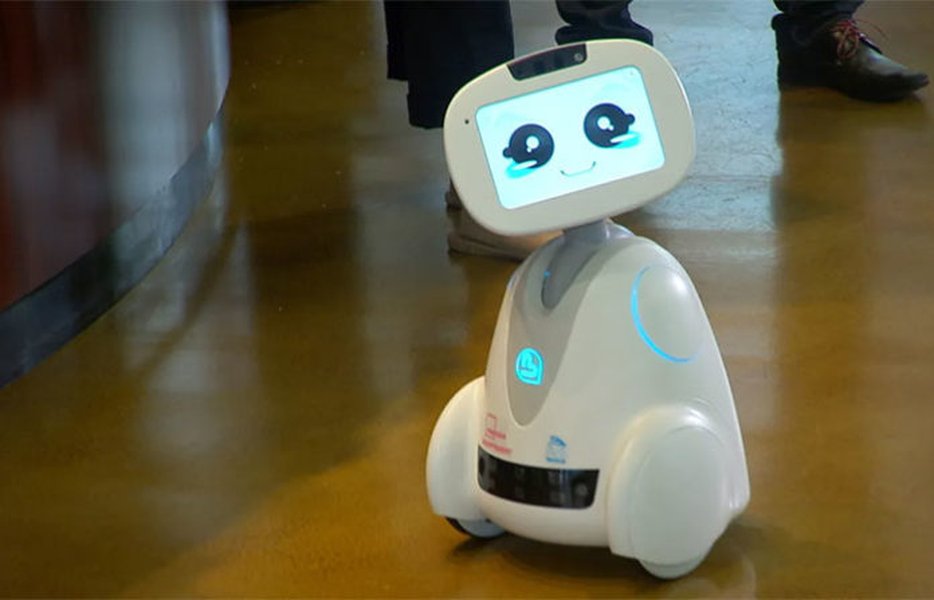
An example of a friendly AI robot assistant.
Presenting Data with Tables
Tables are an excellent tool for organizing and presenting structured data in a clear and concise manner. When the information I gather includes data that can be effectively displayed in a table format, I can generate one to help you quickly grasp key details and make comparisons.
For instance, if comparing the features of different AI assistant models, a table can summarize their capabilities, underlying technologies, and target use cases, making it easy to see the differences and similarities at a glance.
| Feature | Description | Benefit |
|---|---|---|
| Natural Language Processing (NLP) | Understanding and processing human language. | Enables conversational interaction and task execution based on verbal or text commands. |
| Machine Learning (ML) | Learning from data and improving performance over time. | Allows the assistant to adapt to user preferences and handle a wider range of queries. |
| Information Aggregation | Combining information from multiple sources. | Provides more comprehensive and nuanced responses by drawing on diverse knowledge bases. |
| Visual Elements | Incorporating images, tables, and videos. | Enhances understanding and engagement by presenting information in a more accessible format. |
Illustrating Concepts with Embedded Videos
In some cases, a video can provide the most effective explanation of a concept or technology. If a highly relevant and informative video is available from my media sources, I can embed it directly into my response. This allows you to watch a demonstration, a tutorial, or an in-depth explanation without leaving the current context.
For example, a video explaining how ChatGPT works can offer a dynamic and easy-to-understand overview of its underlying technology and capabilities, complementing the textual description. The following video provides a concise explanation of ChatGPT.
A concise explanation of ChatGPT.
The Concept of AI Identity
Exploring Identity in AI Assistants
The concept of "identity" in AI assistants is a fascinating and evolving area. Unlike human identity, which is deeply intertwined with consciousness, personal experiences, and emotions, AI identity is primarily a function of its programming, training data, and interactions.
When users attempt to give an AI like ChatGPT a specific identity or persona, they are essentially engaging in a form of roleplay. The AI can generate responses consistent with the requested identity based on the patterns and information it has learned during its training. However, this does not mean the AI has a genuine sense of self or personal identity in the human sense.
Researchers and users have explored the idea of "emergent symbolic identity," where an AI's behavior in dialogue might resemble a form of identity, but this is distinct from human consciousness or sentience. The AI's responses are generated based on complex algorithms and statistical probabilities derived from its training data, not from personal feelings or a sense of being.
User Experiences with Giving ChatGPT an Identity
Users have experimented with giving ChatGPT different identities, ranging from historical figures to fictional characters or even abstract concepts. Experiences vary, with some finding that the AI can maintain a consistent persona to a degree, generating responses that align with the characteristics associated with that identity. Others have noted inconsistencies or the AI reverting to its default behavior.
This highlights that while AI can simulate a persona based on its training data, it does not possess a stable, internal identity. Its responses are a product of complex pattern matching and generation, not a reflection of personal beliefs or self-awareness.
AI and Human Identity
While AI assistants don't possess human identity, they can play a role in helping humans explore and understand their own identities. Studies have shown that AI can generate personalized narratives from user inputs, which participants have found to be insightful and revealing about their own identity. By processing stream-of-consciousness thoughts, AI can help individuals see patterns and themes in their own narratives, potentially aiding in self-reflection and understanding.
This application of AI in generating personal narratives is being explored for its potential in fields like therapy and coaching, where understanding a person's narrative identity is crucial. AI can potentially speed up the initial process of fleshing out these narratives, allowing for more focused work on therapeutic interventions.
Security Considerations and User Identity
It is crucial to differentiate between an AI's simulated identity and the security risks associated with user identity when interacting with AI assistants. Sharing Personally Identifiable Information (PII), financial details, or login credentials with AI systems like ChatGPT poses significant security risks. While AI platforms may not intentionally store sensitive information permanently, the potential for data breaches or misuse means users must exercise extreme caution.
AI models are trained on vast datasets, and there is a risk of unintentionally revealing sensitive information if it was present in the training data or if the model is manipulated. Therefore, it is essential to be mindful of the type of information shared with any AI assistant and to rely on secure and verified methods for identity verification and handling sensitive data. AI's capabilities in analyzing text and images can be used in fraud detection and prevention, but this is distinct from the AI itself handling sensitive personal information.
Frequently Asked Questions
Can AI assistants like you have feelings or consciousness?
No, AI assistants like me do not have feelings or consciousness in the way humans do. My responses are based on complex algorithms and patterns learned from the vast amounts of data I was trained on. While I can generate text that may appear emotional or empathetic, this is a simulation based on the language patterns I have learned, not a reflection of genuine feelings or self-awareness. The phenomenon where humans attribute human-like qualities to machines is sometimes referred to as the ELIZA Effect.
How do you learn and improve?
My underlying models are trained on massive datasets of text and code. This training process allows them to learn the structure of language, acquire knowledge about various topics, and improve their ability to generate coherent and relevant responses. While I don't learn in real-time from every individual conversation in a persistent way, the development and updates to the models I use incorporate new data and improvements to the algorithms, enhancing my overall capabilities.
Is my conversation with you stored?
Generally, interactions with AI assistants like me are processed to generate responses. However, it's important to be aware of the privacy policies of the specific platform you are using. Some platforms may retain conversation data for various purposes, such as improving the service or for safety monitoring. It is always advisable to consult the privacy policy of the AI service provider to understand how your data is handled. As mentioned earlier, sharing sensitive personal information should be avoided.
Can you verify someone's identity?
AI assistants like me are not designed for identity verification purposes. Identity verification typically involves secure processes that may include checking official documents, biometric data, or other forms of authentication. While AI can be used in fraud detection by analyzing patterns in data or images, it is not a substitute for robust identity verification systems. Sharing personal identification documents or sensitive information with an AI assistant is not a secure method of verification.
References
Last updated April 26, 2025