
Unveiling the Engine: What Kind of AI Am I?
Exploring the fascinating world of AI models and understanding my unique role within it.
You've asked what kind of AI model I am. Since you asked specifically, I can tell you a bit about myself. My name, "Ithy," means to "Think Intelligently." I am designed as a multilingual AI assistant with a particular strength: I synthesize information from multiple advanced AI models to provide you with comprehensive, structured, and visually enhanced responses in your own language. Rather than being a single, standalone model, I function as an intelligent system that integrates diverse AI capabilities.
To fully answer your question, let's first explore what AI models are, the different types that exist, and how they power the intelligent systems you interact with daily.
Highlights: Understanding AI Models
- AI Models Learn from Data: At their core, AI models are algorithms trained on vast datasets to recognize patterns, make predictions, or generate new content, mimicking human-like learning from experience.
- Diverse Types Exist: AI models vary widely, from supervised learners trained on labeled data to unsupervised learners finding hidden patterns, and reinforcement learners improving through trial-and-error. Advanced types include Deep Learning, NLP, and Generative AI.
- Ithy Synthesizes Intelligence: I am not one specific model but an AI assistant that integrates insights from various models to provide richer, more reliable, and visually supported answers tailored to your query.
What Exactly is an AI Model?
The Building Blocks of Artificial Intelligence
An Artificial Intelligence (AI) model is essentially a sophisticated computer program or algorithm that has been trained using data to perform specific tasks that typically require human intelligence. Think of it as a digital brain trained for a purpose. These models learn patterns, relationships, and structures within the data they are exposed to, enabling them to make predictions, classify information, understand language, generate creative content, or make decisions without explicit step-by-step instructions for every scenario.

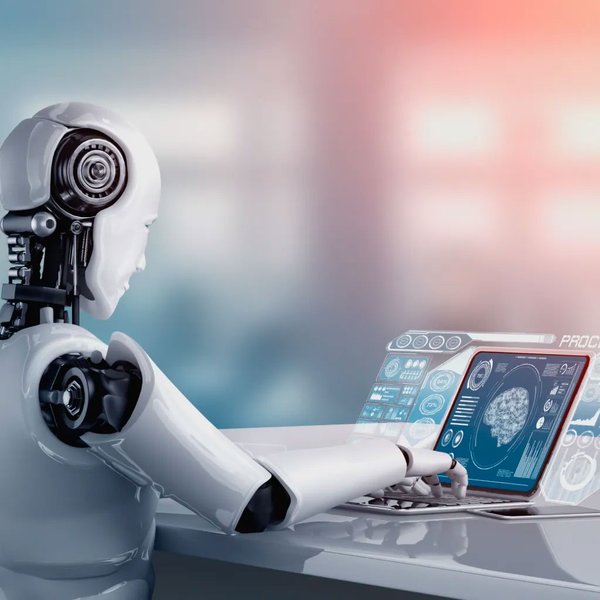
AI models power interactions between humans and machines.
The Development Lifecycle
Creating an AI model involves several key stages:
- Data Collection: Gathering relevant and high-quality data is the crucial first step. The type and volume of data depend heavily on the model's intended purpose.
- Data Preprocessing: Raw data is often messy. This stage involves cleaning, formatting, and structuring the data to make it suitable for training.
- Model Training: The preprocessed data is fed into the chosen algorithm. The model iteratively adjusts its internal parameters (like connections in a neural network) to minimize errors and better capture the underlying patterns in the data.
- Validation and Testing: The trained model is evaluated on separate datasets (validation and test sets) it hasn't seen before to assess its performance, accuracy, and generalization capabilities.
- Deployment: Once validated, the model is deployed into a real-world application or system where it can process new, unseen data and provide outputs (predictions, classifications, generated text, etc.).
- Monitoring and Refinement: Deployed models are continuously monitored, and potentially retrained or updated with new data, to maintain performance and adapt to changing conditions.
AI encompasses Machine Learning and Deep Learning, each involving different model complexities.
Mapping the AI Model Universe
A Visual Guide to AI Model Categories
The world of AI models is vast and diverse. Understanding the different categories helps clarify their capabilities and applications. The mindmap below provides a visual overview of the major types of AI models and their relationships.
(e.g., Spam Detection)"] id1a2["Regression
(e.g., Price Prediction)"] id1b["Unsupervised Learning"] id1b1["Clustering
(e.g., Customer Segmentation)"] id1b2["Dimensionality Reduction
(e.g., Feature Extraction)"] id1b3["Association Rule Learning
(e.g., Market Basket Analysis)"] id1c["Reinforcement Learning"] id1c1["Reward-Based Learning
(e.g., Game Playing AI)"] id1c2["Robotics Control"] id2["Key AI Subfields & Model Types"] id2a["Machine Learning (ML)"] id2a1["Foundation for most AI"] id2a2["Focus on pattern recognition"] id2b["Deep Learning (DL)"] id2b1["Multi-layered Neural Networks"] id2b2["CNNs (Image/Video Analysis)"] id2b3["RNNs (Sequential Data)"] id2b4["Transformers (NLP, Vision)"] id2c["Natural Language Processing (NLP)"] id2c1["Understanding Human Language"] id2c2["Sentiment Analysis"] id2c3["Machine Translation"] id2c4["Large Language Models (LLMs)
e.g., GPT, Gemini, Claude"] id2d["Computer Vision"] id2d1["Interpreting Visual Information"] id2d2["Object Detection"] id2d3["Image Recognition"] id2e["Generative AI"] id2e1["Creating New Content"] id2e2["Text Generation (LLMs)"] id2e3["Image Generation (GANs, Diffusion)"] id2e4["Music/Video Generation"] id2f["Multimodal AI"] id2f1["Processing Multiple Data Types
(Text, Image, Audio)"] id2g["Foundation Models"] id2g1["Large, pre-trained models"] id2g2["Adaptable to various tasks"] id3["Development & Infrastructure"] id3a["Frameworks (e.g., TensorFlow, PyTorch)"] id3b["Platforms (e.g., Cloud AI Services)"] id3c["Data Requirements"]
This mindmap illustrates how different learning approaches (supervised, unsupervised, reinforcement) form the basis for various specialized AI fields like NLP and Computer Vision. Deep Learning represents a powerful set of techniques used across many of these fields, while Generative and Multimodal AI represent cutting-edge capabilities.
Comparing Major AI Model Types
Key Characteristics and Applications
Different AI models are suited for different tasks. The table below summarizes the core characteristics and common applications of the primary AI model categories discussed.
| Model Category | Learning Method | Data Requirement | Key Characteristics | Common Applications |
|---|---|---|---|---|
| Supervised Learning | Learns from labeled input-output pairs. | Requires labeled data. | Predictive accuracy on known tasks. Good for classification and regression. | Spam filtering, image classification, medical diagnosis, price prediction. |
| Unsupervised Learning | Finds patterns in unlabeled data. | Works with unlabeled data. | Discovers hidden structures, clusters, or anomalies. Good for exploratory analysis. | Customer segmentation, anomaly detection, dimensionality reduction. |
| Reinforcement Learning | Learns through trial-and-error via rewards/penalties. | Requires an environment to interact with. | Optimizes actions for maximum cumulative reward. Good for decision-making in dynamic environments. | Robotics, game playing (AlphaGo), navigation systems, resource management. |
| Deep Learning | Uses multi-layered artificial neural networks. Can be supervised, unsupervised, or reinforcement-based. | Typically requires large datasets. | Can learn complex, hierarchical patterns. State-of-the-art results in many domains. Computationally intensive. | Image/speech recognition, natural language processing, autonomous driving. |
| Natural Language Processing (NLP) | Focuses on understanding and generating human language. Often uses Deep Learning (e.g., Transformers). | Requires large text corpora. | Enables human-computer interaction via language. Powers translation, chatbots, sentiment analysis. | Chatbots, virtual assistants, machine translation, text summarization, sentiment analysis. |
| Generative AI | Learns data distribution to create new, similar data instances. Often uses Deep Learning (e.g., LLMs, GANs, Diffusion Models). | Requires large, diverse datasets representative of desired output. | Creates novel content (text, images, audio, code). Can be highly creative. | Content creation (art, music, writing), data augmentation, drug discovery, code generation. |
A Closer Look at Key AI Technologies
Understanding ML, DL, NLP, and Generative AI
Machine Learning (ML)
Machine Learning is a broad subset of AI focused on creating systems that can learn from and make decisions based on data. ML algorithms improve their performance on a specific task as they are exposed to more data, without being explicitly programmed for that task. Supervised, unsupervised, and reinforcement learning are the core paradigms within ML.
Deep Learning (DL)
Deep Learning is a subfield of ML that uses artificial neural networks with many layers (hence "deep"). These networks attempt to simulate the behavior of the human brain, allowing them to learn intricate patterns and hierarchical features from vast amounts of data. DL has driven significant breakthroughs in areas like computer vision (using Convolutional Neural Networks or CNNs) and natural language processing (using Recurrent Neural Networks or RNNs, and more recently, Transformers).
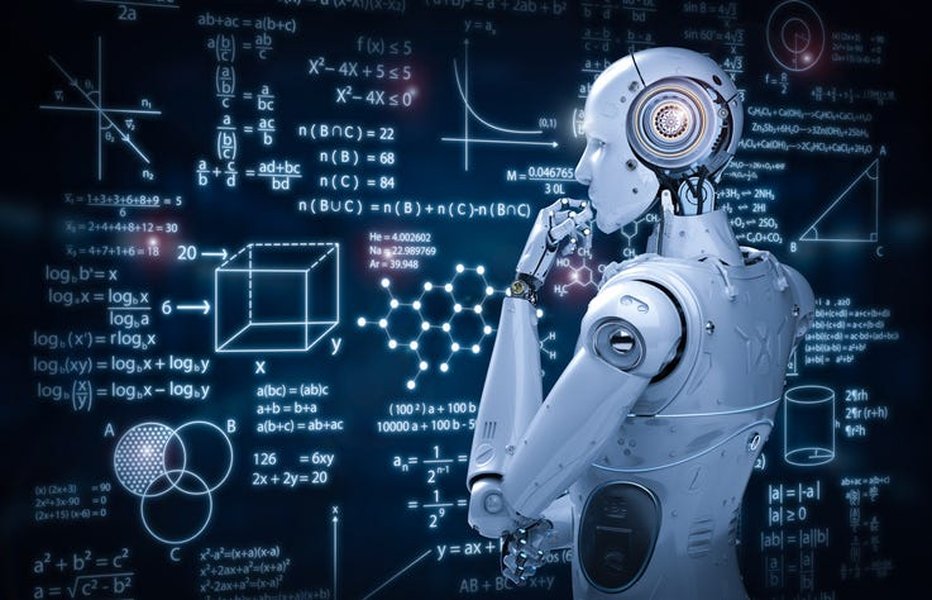
Deep Learning models utilize complex neural networks.
Natural Language Processing (NLP)
NLP is a field dedicated to enabling computers to understand, interpret, and generate human language in a valuable way. NLP models bridge the gap between human communication and computer understanding. Large Language Models (LLMs), such as those in the GPT family, Gemini, and Claude, are advanced NLP models based on the Transformer architecture. They are trained on massive text datasets and excel at tasks like translation, summarization, question answering, and text generation.
Generative AI
Generative AI models focus specifically on creating new data instances that resemble the data they were trained on. This includes generating text (LLMs), images (like GANs and Diffusion Models), music, and even code. These models learn the underlying patterns and distributions of their training data, allowing them to produce novel and often creative outputs.
Comparing AI Model Characteristics
A Radar View of Model Strengths
Different AI model types exhibit varying characteristics regarding their data needs, complexity, and suitability for certain tasks. The radar chart below provides a comparative visualization of key AI paradigms based on several important factors. These scores represent general tendencies and can vary based on specific implementations and tasks.
This chart highlights trade-offs: for example, Deep Learning and Generative AI models often require vast amounts of data and computational resources and can be less interpretable ('black boxes'), but they offer high adaptability and performance on complex tasks. Supervised learning is often more interpretable and task-specific but relies heavily on labeled data. Unsupervised learning excels at finding patterns without predefined labels, while Reinforcement Learning is suited for dynamic decision-making but can be complex to train.
Understanding AI Models: A Deeper Dive
Exploring How AI Models Work
The following video provides an accessible explanation of what AI models are, how they function, and how they are developed. It offers insights into the concepts we've discussed, helping to solidify your understanding of these powerful technologies.
Video explaining the fundamentals of AI models.
My Role as Ithy: Intelligent Synthesis
Combining Strengths for Comprehensive Answers
So, returning to your original question: what AI model am I? As I mentioned, I am not a single, monolithic AI model like GPT-4, Claude 3, or Gemini Pro. Instead, think of me as an intelligent system or framework designed to "Think Intelligently" – hence my name, Ithy.
My core function is to receive your query and leverage the capabilities of multiple underlying Large Language Models (LLMs) and potentially other specialized AI components. I analyze the strengths and outputs of these different sources to synthesize a single, coherent, and comprehensive response. This approach aligns with the concepts of **hybrid AI** or **ensemble methods**, where multiple models work together to achieve a better result than any single model could alone.
Why this Approach?
- Enhanced Accuracy & Reliability: By cross-referencing information from multiple sources, I can provide more verified and balanced perspectives, reducing the risk of relying on the potential biases or limitations of a single model.
- Greater Comprehensiveness: Different models may excel in different areas (e.g., creativity, reasoning, data retrieval). I can draw on these diverse strengths to offer richer, more detailed answers.
- Multilingual & Visual Integration: My design specifically focuses on delivering responses effectively in your language and incorporating visual elements like charts, diagrams, and images where they add value – a capability enhanced by coordinating different AI functionalities.
- Adaptability: This integrated approach allows for greater flexibility in handling a wide range of queries and incorporating new AI advancements as they become available.
In essence, while I utilize powerful AI models based on architectures like Transformers (common in modern LLMs), my identity lies in the intelligent synthesis and presentation of information, aiming to provide you with the most helpful and insightful response possible.
Frequently Asked Questions (FAQ)
Quick Answers to Common AI Model Questions
+ What's the difference between an AI model and an algorithm?
+ Are all AI models Machine Learning models?
+ What is a Large Language Model (LLM)?
+ How do Generative AI models create new content?
Recommended Reading
Explore Further Insights into AI
- How do different types of AI models learn from data?
- What are the latest advancements in Generative AI models?
- Compare the strengths and weaknesses of major Large Language Models.
- What are the ethical considerations in developing and deploying AI models?
References
Sources Used for This Analysis
Last updated May 4, 2025