
Unlocking the Power of Agreement: How Conventional Customs Shape Our Legal Landscape
Discover the unwritten rules that gain legal weight through mutual consent, influencing contracts and daily interactions.
Conventional customs, often referred to as "usages," are fascinating elements of law that derive their authority not from sovereign command or inherent legal status, but from the consensus and agreement of the parties involved. These practices, established over time through repeated behavior, become binding when they are expressly or implicitly incorporated into contracts or understandings. This exploration delves into the nature, characteristics, examples, and legal standing of conventional customs, illuminating how these socially-derived norms function within the legal system.
Key Insights into Conventional Custom
- Agreement is Paramount: Conventional customs gain their legal force primarily through the express or implied acceptance by parties within an agreement, making them a form of "law by agreement."
- Distinct from Legal Custom: Unlike legal customs that possess inherent, universal binding authority, conventional customs are conditional and party-specific, applying only to those who adopt them.
- Practical Application: They are commonly found in trade and commerce (e.g., payment terms, delivery standards) and can also influence social contracts (e.g., specific marriage rituals understood as part of the marital agreement).
A Deep Dive into Conventional Custom: Understanding Agreement-Based Norms
Conventional customs represent a unique intersection of social practice and legal enforceability. They are norms that have emerged from the consistent behavior of individuals or groups and are subsequently adopted as terms of an agreement. Their legitimacy stems not from an overarching legal decree, but from the mutual will of the parties who choose to be bound by them.
Defining Conventional Custom: The Role of Consent
A conventional custom, or usage, is an established practice that becomes legally significant because parties have chosen to incorporate it into their specific agreement. Its authority is conditional upon this acceptance. The renowned jurist Salmond articulated this clearly: "A conventional custom is one whose authority is conditional on its acceptance and incorporation in agreement between the parties." (Salmond on Jurisprudence, 12th Ed., p. 191). This means that if an agreement explicitly excludes a particular conventional custom, it will not apply to those parties.
This characteristic sharply distinguishes conventional custom from legal custom. A legal custom is a rule that has acquired the force of law in a particular locality or among a particular class of people, irrespective of any individual's agreement to be bound by it. It operates proprio vigore – by its own force. In contrast, a conventional custom functions indirectly, gaining recognition as a form of conventional law specifically between the consenting parties.
Origins and Evolution
Conventional customs typically originate from the repeated behaviors and practices of people within a society or a specific sector over an extended period. When these practices become long-standing, consistent, and widely acknowledged within a particular context, they can evolve into conventional customs. Historically, many commercial laws, such as those pertaining to negotiable instruments, grew out of the established usages of merchants and goldsmiths before being codified into legislation.
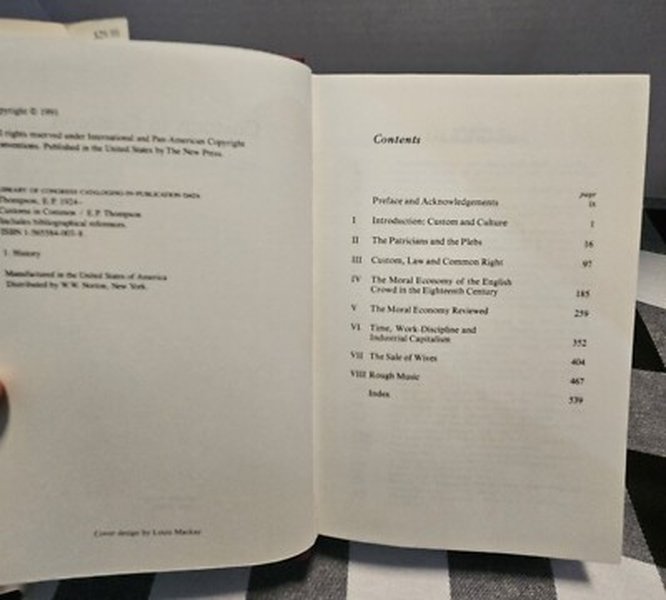
The study of common customs reveals how societal practices can evolve into recognized norms.
The Mechanics of Conventional Custom: How They Operate
The operational framework of conventional customs hinges on their conditional authority and their method of integration into agreements.
Conditional Authority and Party-Specific Application
The binding force of a conventional custom is entirely dependent on the consent of the parties involved. It does not possess universal legal authority. Therefore, a conventional custom binds only those individuals or entities who have adopted it, typically through a contract or a clear, mutual understanding. Its scope is limited to the specific relationship defined by that agreement.
Incorporation into Agreements
Incorporation can be either express or implied:
- Express Incorporation: Parties may explicitly state in their contract that certain trade usages or practices will govern their agreement.
- Implied Incorporation: More commonly, conventional customs are impliedly incorporated. If a practice is so well-known and regularly observed in a particular trade or locality that parties would reasonably expect it to form part of their agreement (unless expressly excluded), courts may deem it incorporated. As noted in legal scholarship, "a usage or conventional custom is an established norm which is legally enforceable, not because of any legal authority independently possessed by it, but because it has been expressly or impliedly incorporated in a contract between the parties concerned." (iPleaders Blog, "Customs as a Source of Law," 2023, p. 2).
Categorization and Scope of Conventional Customs
Conventional customs can be broadly classified based on their prevalence and the context in which they operate.
General vs. Local Conventional Customs
While the core nature of conventional customs remains their reliance on agreement, their scope can vary:
- General Conventional Customs: These are practices widely recognized and followed throughout a particular trade, industry, or even a larger territory, but still require incorporation into specific agreements to be binding on particular parties.
- Local Conventional Customs: These are usages confined to a specific geographical area, a particular market, or a niche trade or transaction type. Their relevance is even more context-dependent and party-specific.
Regardless of being general or local, their enforceability always traces back to the principle of party autonomy and contractual acceptance.
Visualizing the Dimensions of Customary Law
To better understand the distinct attributes of conventional customs compared to legal customs, a visual representation can be helpful. The following radar chart illustrates key characteristics and their relative importance for each type of custom. Conventional customs thrive on party agreement and flexibility, whereas legal customs are defined by their inherent binding force and universality.
This chart highlights how "Party Agreement Dependency" is exceptionally high for conventional customs, while "Universality" and inherent "Binding Force" are hallmarks of legal customs. Both require a degree of established practice, though formal "Antiquity Requirement" is often more stringent for legal customs.
Real-World Manifestations: Illuminating Examples
Conventional customs are not abstract legal theories; they are active in various spheres of life and commerce.
Commercial and Trade Usages
This is perhaps the most fertile ground for conventional customs. Many industries operate on unwritten rules that participants understand and expect:
- Payment Terms: The practice of including "Net 30 days" (payment due within 30 days of invoice receipt) on invoices is a classic conventional custom. While not mandated by a universal law, it's widely accepted and incorporated into countless business agreements.
- Delivery Standards: In certain trades, there might be customary expectations regarding delivery times (e.g., T+2 settlement in some financial markets) or the condition of goods upon arrival, which parties adhere to as part of their contractual understanding.
- Quality Interpretations: Phrases like "merchantable quality" can be interpreted based on the conventional customs and standards prevalent in a specific industry.

Legal texts and case law often interpret and apply conventional customs in contractual disputes.
Social and Cultural Practices
Conventional customs also appear in social agreements, though their legal enforceability depends heavily on clear incorporation:
- Hindu Marriage Customs: Practices such as Kanyadanam (giving away of the bride), Mangalasutradharana (tying the sacred thread), and Saptapadi (seven steps around the sacred fire) are deeply ingrained conventional customs in Hindu marriages. While traditional, their binding legal significance within a specific marriage stems from their acceptance and performance by the parties as integral to their marital agreement and understanding.
- Handshake Agreements: In some business circles or informal dealings, a handshake might conventionally signify the sealing of a deal. While often needing further formalization to be legally robust, the underlying custom reflects a mutual understanding of commitment based on an accepted practice.
Mapping the Concept of Conventional Custom
A mindmap can help illustrate the interconnected concepts surrounding conventional custom, showing its definition, characteristics, types, examples, and its relationship with legal custom and enforceability.
(unlike legal custom)"] id1c["'Usage' or 'established practice'"] id1d["Salmond: authority conditional on
acceptance & incorporation"] id2["Key Characteristics"] id2a["Conditional Authority (depends on consent)"] id2b["Party-Specific (binds only adopters)"] id2c["Incorporated into Contracts (expressly/impliedly)"] id2d["Not Absolute Law (subordinate to statutes)"] id2e["Originates from repeated behavior"] id3["Distinction from Legal Custom"] id3a["Legal Custom: Universal, inherent force,
binds irrespective of consent"] id3b["Conventional Custom: Particular, conditional force,
binds only by consent"] id4["Types/Scope"] id4a["General Conventional Customs
(widespread in a territory/trade)"] id4b["Local Conventional Customs
(specific place, trade, transaction)"] id5["Illustrative Examples"] id5a["Commercial/Trade Usages
(e.g., 'Net 30 days' payment,
T+2 settlement, quality standards)"] id5b["Social/Cultural Practices
(e.g., specific marriage rituals like Kanyadanam,
Saptapadi, if part of mutual understanding)"] id5c["Handshake Agreements (informal commitments)"] id6["Legal Standing & Validity"] id6a["Enforceable if proven part of agreement"] id6b["Must be reasonable and certain"] id6c["Must not contradict express law or public policy"] id6d["Conform to morality and justice"] id7["Sources & References"] id7a["Jurisprudence (e.g., Salmond)"] id7b["Case Law (e.g., Kershaw v. Vickers)"] id7c["Academic Legal Texts & Articles"]
This mindmap provides a structured overview of conventional custom, highlighting its core reliance on agreement and its practical application in various contexts.
Comparative Analysis: Conventional vs. Legal Custom
Understanding the nuances between conventional custom and legal custom is crucial. The following table provides a side-by-side comparison of their key features:
| Feature | Conventional Custom (Usage) | Legal Custom |
|---|---|---|
| Source of Authority | Parties' express or implied agreement within a contract. | Inherent legal force, derived from long-standing, general societal acceptance and recognition by courts. |
| Binding Nature | Conditional; only binding on the parties who have accepted it into their specific agreement. | Absolute; binding on all individuals within its defined jurisdiction (e.g., national, local, or community-specific). |
| Scope of Application | Typically party-specific, limited to the terms of the contract or understanding. | Can be general (applying throughout a country) or local (confined to a particular district or group). |
| Requirement of Antiquity | Not strictly necessary. The focus is on an established, known practice among the relevant parties or trade. | Generally requires proof of long and uninterrupted observance ("time immemorial" in some historical contexts). |
| Relationship with Statutory Law | Operates to supplement or interpret contracts; cannot override clear statutory provisions or public policy. | Can be a direct source of law and, in some legal systems, may even override common law principles (but not typically statutes). |
| Enforcement | Enforced as a term or condition of the contractual obligations agreed upon by the parties. | Enforced by courts as an established rule of law, independent of individual party consent. |
| Example | An industry-specific practice for quality inspection of goods, agreed upon by buyer and seller. | A local agricultural custom concerning water rights that has been recognized by courts for generations. |
This comparison underscores that while both types of custom arise from practice, their legal significance and mode of operation differ substantially. Conventional customs are tools for contractual interpretation and gap-filling based on party will, whereas legal customs are foundational rules of behavior recognized by the legal system itself.
Judicial Perspectives and Requirements for Validity
For a conventional custom to be recognized and enforced by a court, it typically must meet certain criteria, and its application is often scrutinized in legal disputes.
Key Case Law Insights
Judicial decisions have helped clarify the role and limitations of conventional customs:
- Kershaw v. Vickers (1902) 1 KB 53: This English case recognized a custom practiced among commercial traders concerning the usage of certain terms in contracts. The court held the custom binding because of its established acceptance and incorporation among those specific parties.
- Harprasad v. Shivdayal (India): The Judicial Committee of the Privy Council observed that custom could be specific to a particular family, district, sect, class, or tribe for resolving disputes. This highlights how customs, including those conventionally adopted, can impact contractual or relational understandings when accepted by the parties involved. (Referenced in University of Kashmir Law Faculty's study material, pp. 2-4).
- Derry v. Peek (1889) 14 App Cas 337: While primarily a case on misrepresentation, it touches upon how established usages or customs, when adopted by parties in a contractual setting, are considered binding if explicitly or implicitly incorporated into their dealings.
Conditions for Validity
For a conventional custom to be deemed valid and incorporated into an agreement, it generally must satisfy several conditions:
- Reasonableness: The custom must be fair and sensible. A practice that is patently unreasonable or oppressive is unlikely to be upheld.
- Certainty and Clarity: The custom must be clearly defined and understood. Vague or ambiguous practices cannot reliably form part of an agreement.
- Consistency: The usage must be consistently followed in the relevant context. Sporadic or irregular practices do not rise to the level of a conventional custom.
- Notoriety/Knowledge: The custom should be well-known within the specific trade, industry, or context, such that parties can be presumed to be aware of it when entering into an agreement.
- Legality and Public Policy: Critically, a conventional custom cannot contradict express statutory law or fundamental principles of public policy and morality. For example, historical practices like Sati, even if once accepted, would not be considered valid conventional customs today due to their violation of basic human rights and public policy. As stated by the University of Kashmir’s legal study materials, "A conventional custom or usage which does not possess absolute authority... is binding only when it is not expressly excluded by the terms of agreement." (Uni of Kashmir PDF, p. 3).

Courtrooms are where the validity and application of customs, including conventional ones, are ultimately determined in disputes.
Understanding Conventional Custom Through Video
For a concise visual and auditory explanation of conventional custom, the following video offers valuable insights into its definition and basic concepts. It can help solidify understanding of how these agreement-based norms function.
This video, titled "Define conventional custom | what is conventional custom ...", provides a straightforward overview that complements the detailed explanations provided here, focusing on the core meaning and examples of conventional custom.
Frequently Asked Questions (FAQ)
What is the primary difference between conventional custom and legal custom?
The primary difference lies in their source of authority and binding nature. Legal custom has inherent, absolute legal force, binding all within its scope regardless of individual agreement. It's recognized by law as a rule. Conventional custom (or usage) derives its authority conditionally from the express or implied agreement of the parties involved in a specific contract or understanding. It's binding only on those who accept it.
How does a conventional custom become binding on parties?
A conventional custom becomes binding when parties to an agreement either expressly include it (e.g., "This contract shall be governed by the established usages of X trade") or impliedly incorporate it. Implied incorporation often occurs when the custom is so well-known and regularly observed in the relevant context that parties are presumed to have contracted with reference to it, unless they explicitly state otherwise.
Can a conventional custom override a clear statutory law?
No, a conventional custom cannot override a clear, express statutory law. Conventional customs are subordinate to legislation and public policy. They can fill gaps in contracts or help interpret terms where the law is silent or ambiguous, but they cannot contradict what is explicitly laid down by statute or fundamental legal principles.
Does a conventional custom need to be ancient to be valid?
Not necessarily. While legal customs often require proof of antiquity ("time immemorial" in some legal traditions), conventional customs focus more on being an established, certain, and well-known practice within the specific trade or context relevant to the parties' agreement. The emphasis is on its current acceptance and observance by the contracting parties rather than its ancient origins.
In what areas are conventional customs most frequently encountered?
Conventional customs are most frequently encountered in commercial and mercantile law. This includes specific trade usages related to payment terms, delivery methods, quality standards, risk allocation, and dispute resolution within particular industries (e.g., shipping, finance, commodities trading). They also appear in areas like employment contracts (regarding certain workplace practices) and sometimes in social agreements, as seen with certain marriage customs when understood as part of the mutual commitment.
Recommended Further Exploration
- What are the essential requirements for a valid legal custom?
- How do courts determine if a trade usage has been implicitly incorporated into a contract?
- Explore the role of custom in international commercial arbitration.
- Can you provide examples of conventional customs that have been codified into statutory law?
References
 aishwaryasandeep.wordpress.com
Last updated May 12, 2025