
Understanding the Endocannabinoid System
A Comprehensive Overview of Its Components, Functions, and Therapeutic Potential
Key Takeaways
- The ECS is essential for maintaining bodily homeostasis. It regulates numerous physiological processes including mood, pain sensation, and immune response.
- Endocannabinoids, receptors, and enzymes are the core components. These elements work in tandem to ensure the proper functioning of the ECS.
- Therapeutic targeting of the ECS offers promising treatments. Research is ongoing into its potential for addressing a variety of health conditions.
Introduction to the Endocannabinoid System
The endocannabinoid system (ECS) is a sophisticated cell-signaling network that plays a critical role in maintaining the body's homeostasis. Discovered in the early 1990s during research into the effects of cannabis, the ECS is present and active in the human body regardless of cannabis use. It comprises three primary components: endocannabinoids, cannabinoid receptors, and enzymes. Together, these components work seamlessly to regulate a wide array of physiological processes, ensuring balance and stability within the body.
Components of the ECS
Endocannabinoids
Endocannabinoids are lipid-based neurotransmitters naturally produced by the body. They function similarly to neurotransmitters, sending signals between nerve cells to regulate various bodily functions. The two most well-studied endocannabinoids are:
- Anandamide (AEA): Often referred to as the "bliss molecule," anandamide plays a significant role in regulating mood, memory, and appetite.
- 2-Arachidonoylglycerol (2-AG): This endocannabinoid is involved in managing immune functions and pain sensation.
Endocannabinoids are synthesized on-demand, meaning they are produced as needed rather than stored in the body. This allows for precise regulation of their effects, ensuring that they act only when and where they are necessary.
Cannabinoid Receptors
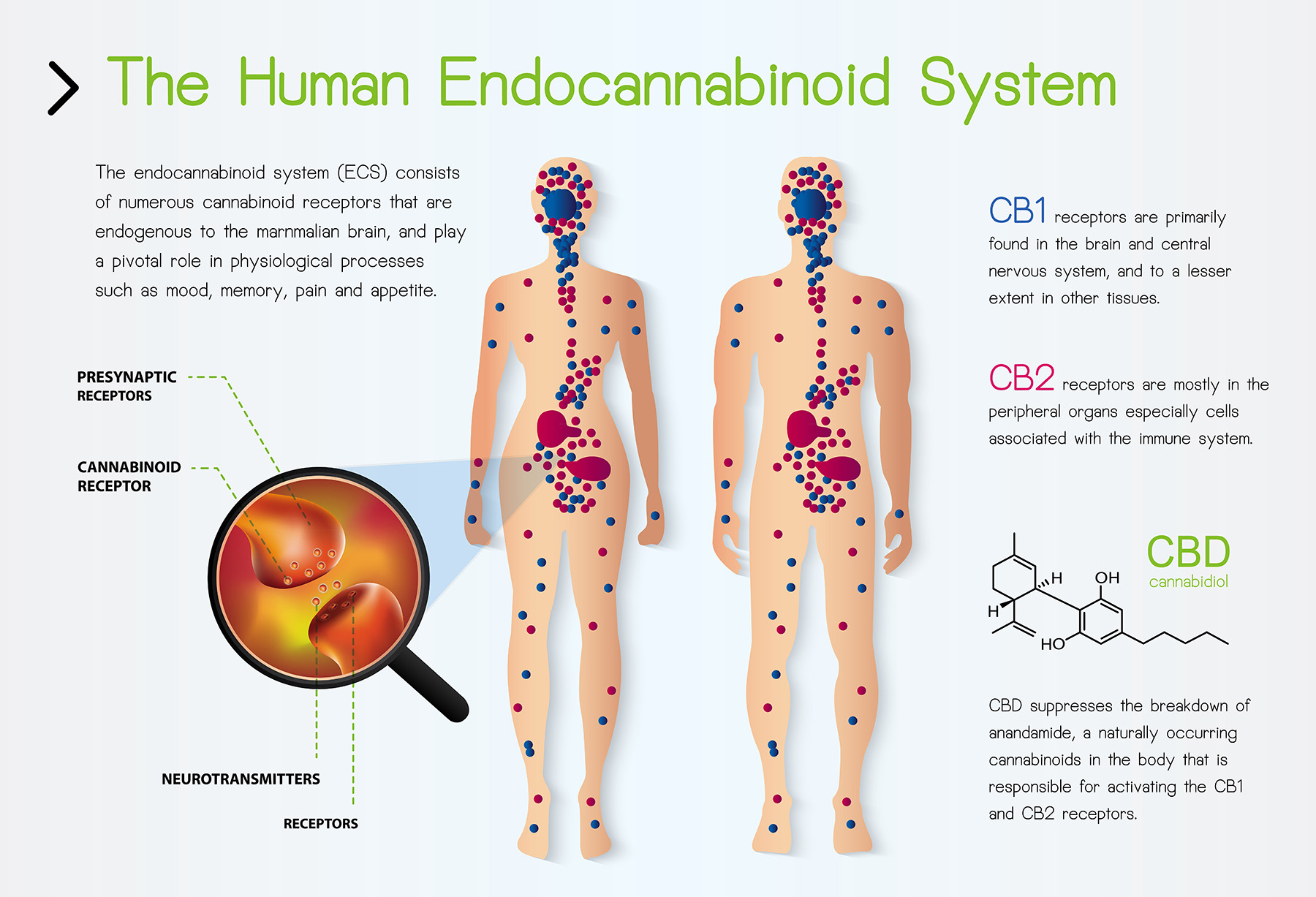
Cannabinoid receptors are specialized proteins located on the surface of cells. They serve as binding sites for endocannabinoids, facilitating their effects on various physiological processes. The two primary types of cannabinoid receptors are:
- CB1 Receptors: Predominantly found in the central nervous system, including the brain and spinal cord. CB1 receptors are crucial for regulating mood, memory, appetite, and motor functions.
- CB2 Receptors: Mainly located in the immune system and peripheral nervous system. CB2 receptors play a vital role in modulating inflammation and immune responses.
The distribution of these receptors throughout the body underscores the ECS's extensive influence on a multitude of physiological functions.
Enzymes
Enzymes within the ECS are responsible for the synthesis and degradation of endocannabinoids, ensuring their precise and timely activity. The main enzymes involved are:
- Fatty Acid Amide Hydrolase (FAAH): This enzyme breaks down anandamide, terminating its signaling effects once its function has been fulfilled.
- Monoacylglycerol Lipase (MAGL): MAGL is responsible for breaking down 2-AG, regulating its levels within the body.
The meticulous control offered by these enzymes guarantees that endocannabinoids exert their effects only when necessary, preventing overactivation or prolonged signaling that could disrupt homeostasis.
Functions of the ECS
Maintaining Homeostasis
The primary role of the ECS is to maintain homeostasis, the body's internal balance, despite external changes. It achieves this by regulating a wide range of physiological processes, including:
- Pain and Inflammation: The ECS modulates pain perception and helps regulate immune responses to control inflammation, providing a balanced approach to injury and immune challenges.
- Mood and Emotional Processing: Endocannabinoids influence emotional states, stress responses, and anxiety management, contributing to overall mental well-being.
- Sleep Regulation: The ECS affects sleep patterns, contributing to the regulation of sleep cycles and quality of rest.
- Appetite and Metabolism: It plays a significant role in controlling hunger and energy usage, impacting overall metabolism.
- Memory and Learning: Through CB1 receptors in the brain, the ECS is involved in memory formation and synaptic plasticity, essential for learning and cognitive functions.
- Immune System Responses: CB2 receptors modulate immune cell activity, influencing how the body responds to infections and injuries.
- Neuroprotection: The ECS offers protective benefits to neural tissues, with potential implications for conditions like epilepsy and multiple sclerosis.
- Temperature Regulation: It helps maintain optimal body temperature, adjusting physiological processes as needed.
- Reproductive Function: The ECS influences reproductive processes, including fertility and reproductive health.
- Stress Response: It regulates how the body responds to stress, aiding in the management of stress-related conditions.
Precision and Regulation
The ECS operates with remarkable precision, ensuring that each physiological function is adjusted only as necessary to maintain balance. For example, when body temperature fluctuates, the ECS activates specific mechanisms to restore the optimal temperature without disrupting other bodily processes. This targeted approach highlights the ECS's role in orchestrating the body's complex responses to internal and external changes.
Therapeutic Potential of the ECS
Cannabis and ECS Interactions
Cannabis-derived compounds, particularly THC (tetrahydrocannabinol) and CBD (cannabidiol), interact with the ECS to produce various therapeutic and psychoactive effects. THC binds directly to CB1 and CB2 receptors, mimicking the effects of endocannabinoids and producing psychoactive effects such as euphoria and altered perception. CBD, on the other hand, interacts with the ECS indirectly. It can inhibit the breakdown of endocannabinoids like anandamide, enhancing their natural effects and offering anti-inflammatory and anxiolytic benefits without the psychoactive effects associated with THC.
Potential Treatments and Applications
Targeting the ECS holds significant promise for developing treatments for a myriad of health conditions, including:
- Chronic Pain: By modulating pain perception, ECS-targeted therapies can offer relief for individuals suffering from persistent pain conditions.
- Inflammatory Diseases: The ECS's role in regulating inflammation makes it a potential target for treating inflammatory conditions such as arthritis.
- Mental Health Conditions: Disorders like PTSD, anxiety, and depression may benefit from therapies that influence ECS activity, given its role in mood and emotional regulation.
- Neurological Disorders: Conditions such as Parkinson’s disease, Alzheimer’s disease, and epilepsy could be managed through ECS modulation, leveraging its neuroprotective properties.
- Metabolic Disorders: The ECS's involvement in appetite and metabolism suggests potential applications in treating obesity and metabolic syndrome.
- Autoimmune Diseases: By regulating immune responses, ECS-targeted treatments could be effective for autoimmune conditions like multiple sclerosis and lupus.
- Sleep Disorders: Enhancing ECS function may improve sleep quality and address sleep-related issues.
Current Research and Innovations
Ongoing research aims to deepen the understanding of the ECS and explore novel therapeutic approaches. Key areas of focus include:
- Pharmacological Manipulation: Developing drugs that can specifically target ECS components, such as receptor agonists or antagonists, to achieve desired therapeutic outcomes.
- Lifestyle and Dietary Influences: Investigating how factors like diet, exercise, and stress impact ECS function, potentially leading to holistic approaches to health and wellness.
- Expanding Receptor Knowledge: Exploring the roles of lesser-known receptors and endocannabinoid-like molecules to uncover new dimensions of ECS functionality.
- Personalized Medicine: Tailoring treatments based on individual ECS profiles, enhancing the efficacy and minimizing side effects of ECS-targeted therapies.
- Neuroprotective Strategies: Developing interventions that leverage the ECS's neuroprotective properties to prevent or mitigate neurodegenerative diseases.
Challenges and Future Directions
While the ECS presents numerous therapeutic opportunities, several challenges must be addressed to fully harness its potential:
-
Complexity of the ECS: The intricate nature of the ECS and its widespread influence across bodily systems necessitate a nuanced understanding to avoid unintended effects.
-
Individual Variability: Differences in ECS composition and function among individuals require personalized approaches to treatment for optimal outcomes.
-
Regulatory Hurdles: Navigating the legal and regulatory landscape surrounding cannabis-derived therapies is essential for their widespread adoption and acceptance.
-
Long-Term Effects: Comprehensive studies are needed to assess the long-term impacts of ECS modulation, ensuring safety and efficacy over extended periods.
Future research will likely focus on overcoming these challenges, paving the way for innovative ECS-based therapies that can significantly improve health and quality of life.
Conclusion
The endocannabinoid system is a pivotal component of human physiology, intricately involved in maintaining homeostasis and regulating a vast array of bodily functions. Its three core components—endocannabinoids, receptors, and enzymes—work in harmony to ensure balance and stability within the body. The ECS not only facilitates essential physiological processes but also presents a promising target for therapeutic interventions across various health conditions. As research continues to unravel the complexities of this system, the potential for innovative treatments and improved health outcomes becomes increasingly attainable. Embracing the therapeutic possibilities of the ECS could revolutionize the approach to managing pain, inflammation, mental health, neurological disorders, and beyond, underscoring the profound significance of this intricate biological network.
References
Last updated January 29, 2025