
Unlocking Global Trade: What Does "Free on Board" (FOB) Really Mean for Your Shipments?
A deep dive into the pivotal shipping term that dictates cost, risk, and responsibility in international commerce.
In the complex world of international trade and logistics, understanding the language of shipping is paramount. Among the most frequently encountered terms is "Free on Board," or FOB. This term, part of the globally recognized Incoterms® rules, plays a critical role in defining the obligations, costs, and risks shared between a buyer and a seller in a transaction involving the movement of goods. Getting FOB right can mean the difference between a smooth, cost-effective shipment and unexpected financial burdens or disputes.
Key Insights into FOB
- Crucial Transfer Point: FOB precisely defines the moment and location where the responsibility for goods, including risk of loss or damage and associated costs, transfers from the seller to the buyer.
- Seller's Obligation Ends at Loading: Under FOB (as defined by Incoterms®), the seller fulfills their obligation when the goods are loaded on board the vessel nominated by the buyer at the named port of shipment.
- Maritime Specific: The Incoterms® FOB rule is specifically designed for goods transported by sea or inland waterway. It is always used in conjunction with a named port of shipment (e.g., "FOB Shanghai").
Decoding FOB: The Basics
"Free on Board" (FOB) is an International Commercial Term (Incoterm®) published by the International Chamber of Commerce (ICC). These terms are essential in international trade contracts to provide a standardized set of rules that clarify the tasks, costs, and risks involved in the delivery of goods from sellers to buyers. As of 2025-05-08, the current version is Incoterms® 2020.
The core purpose of FOB is to stipulate that the seller is responsible for all costs and risks associated with the goods until they are loaded onto the shipping vessel at the designated port of shipment. Once the goods are "on board" the vessel, the responsibility, along with the risk of loss or damage to the goods, transfers to the buyer. The term is always followed by a named port of shipment, for example, "FOB Port of Antwerp Incoterms® 2020."
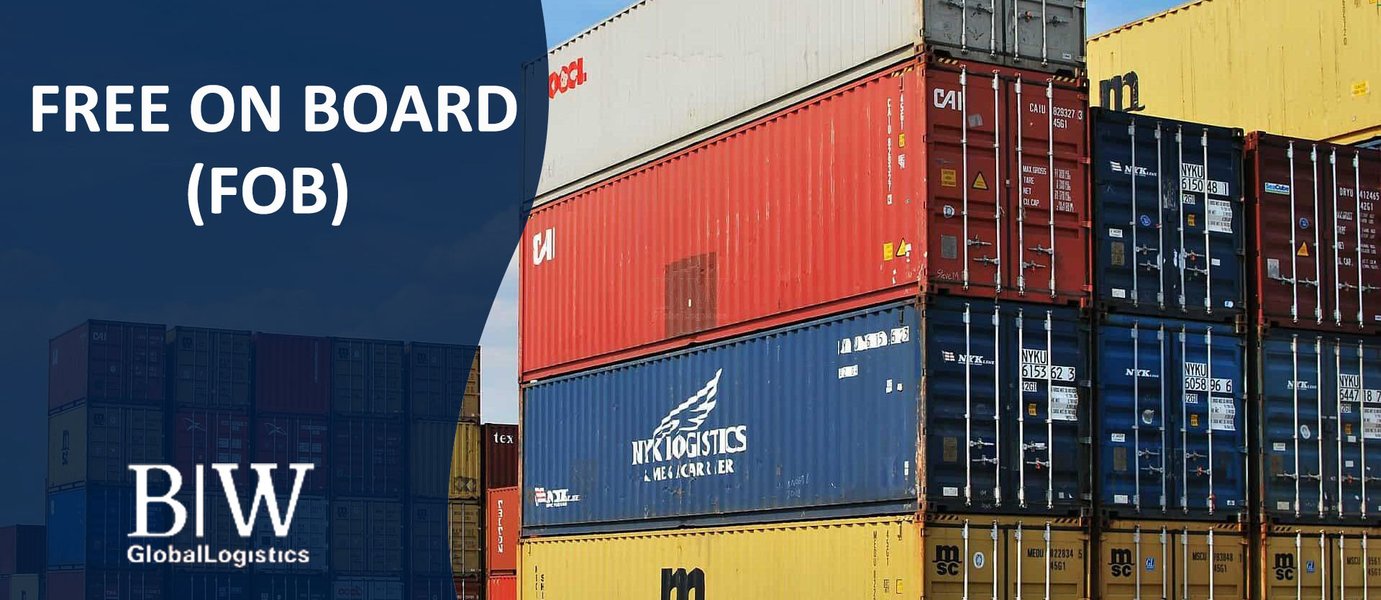
Containers at a port, illustrating the environment where FOB terms are commonly applied.
The Mechanics of FOB: Seller's and Buyer's Roles
Understanding the division of responsibilities is key to utilizing FOB effectively. The transfer point – when goods are loaded on board the vessel – is the critical juncture.
Seller's Responsibilities Under FOB (Incoterms® 2020)
The seller's obligations extend up to and include the point of loading the goods onto the buyer's nominated vessel at the agreed-upon port of shipment. Specifically, the seller must:
- Deliver the goods to the named port of shipment.
- Load the goods onto the vessel nominated by the buyer, at the agreed date or within the agreed period.
- Bear all costs and risks of loss or damage to the goods until they have been loaded on board the vessel. This includes costs related to packaging, inland transport to the port, and export clearance procedures (e.g., licenses, security clearance, export duties, and taxes).
- Provide the buyer with the usual proof that the goods have been delivered on board (e.g., a clean on-board bill of lading).
- Notify the buyer that the goods have been delivered and loaded.

Loading cargo onto a ship signifies the critical transfer point under FOB terms.
Buyer's Responsibilities Under FOB (Incoterms® 2020)
Once the goods are loaded on board the vessel, the buyer assumes all subsequent responsibilities. The buyer must:
- Nominate the vessel and arrange for the main carriage (ocean freight) from the port of shipment to the destination.
- Bear all costs and risks of loss or damage to the goods from the moment they have been loaded on board the vessel.
- Pay for the main freight, insurance (if desired, as it's not an obligation for the buyer to insure under FOB, but highly recommended), unloading costs at the destination port, and any further transportation to the final destination.
- Handle import clearance procedures, including import duties, taxes, and other official charges at the port of destination.
- Notify the seller of the vessel name, loading point, and required delivery time.
Summary of Responsibilities: Seller vs. Buyer
The following table outlines the key responsibilities of the seller and buyer under the FOB Incoterm® (e.g., "FOB [Named Port of Shipment] Incoterms® 2020"):
| Responsibility | Seller | Buyer |
|---|---|---|
| Packaging of Goods | Yes | No |
| Loading Charges (at origin) | Yes | No |
| Delivery to Port of Shipment | Yes | No |
| Export Duty, Taxes & Customs Clearance | Yes | No |
| Origin Terminal Handling Charges | Yes | No |
| Loading on Main Carriage (Vessel) | Yes | No |
| Main Carriage (Ocean/Sea Freight) | No | Yes |
| Insurance for Main Carriage | No (Buyer's option and cost) | Yes (Optional, at buyer's discretion) |
| Destination Terminal Handling Charges | No | Yes |
| Unloading at Port of Destination | No | Yes |
| Import Duty, Taxes & Customs Clearance | No | Yes |
| Delivery to Final Destination | No | Yes |
| Risk Transfer Point | When goods are loaded on board the vessel at the named port of shipment. | |
Note: This table represents typical responsibilities under FOB Incoterms® 2020. Specific agreements in the sales contract can modify these.
Visualizing FOB Responsibilities
To better understand the allocation of costs, risks, and logistical control under FOB compared to another common Incoterm, Cost, Insurance, and Freight (CIF), the following chart provides a visual comparison. Under CIF, the seller is responsible for the cost of freight and minimum insurance cover to the named port of destination, although the risk transfers to the buyer once the goods are on board the vessel at the port of shipment (similar to FOB's risk transfer point).
This chart illustrates that under FOB, the buyer generally assumes a greater share of the costs, risks, and logistical control once the goods are loaded, whereas under CIF, the seller takes on more of these responsibilities up to the destination port (though risk still transfers earlier to the buyer).
FOB in North America: A Point of Distinction
While Incoterms® provide a global standard, it's important to note that the term "FOB" is also widely used in North American domestic trade, particularly for overland shipping by truck or rail. In this context, FOB can have meanings that differ from the Incoterms® definition.
FOB Origin (or FOB Shipping Point)
In North American domestic trade, "FOB Origin" means the buyer assumes title and control of the goods, and becomes responsible for all transportation costs and risks, as soon as the goods leave the seller's shipping dock or place of business. The seller's responsibility ends once the carrier picks up the goods.
FOB Destination
Conversely, "FOB Destination" in North American domestic trade means the seller retains title and control of the goods, and bears all transportation costs and risks, until the goods are delivered to the buyer's specified location. The seller is responsible for filing any claims for loss or damage during transit.
It is crucial for parties involved in North American trade to clearly define which "FOB" they are referring to in their contracts to avoid confusion with the Incoterms® FOB, which is strictly for sea and inland waterway transport and has a different transfer point for risk and cost.
Containers are used across various shipping modes, including those where North American FOB terms might apply.
The Importance of Clarity in Contracts
Given the potential for different interpretations, especially between Incoterms® FOB and North American domestic FOB, clarity in sales contracts is essential. To avoid ambiguity and disputes, contracts should always specify:
- The exact Incoterm® being used (e.g., "FOB").
- The named port of shipment (e.g., "Port of Los Angeles").
- The applicable version of Incoterms® (e.g., "Incoterms® 2020").
For example, a clear contractual term would be: "FOB Shanghai Port, China (Incoterms® 2020)." This precision ensures both buyer and seller have a mutual understanding of their respective obligations.
Benefits of Using FOB
FOB is a popular Incoterm® for several reasons, offering advantages to both buyers and sellers:
For the Buyer:
- Greater Control: The buyer has control over the choice of carrier for the main voyage, potentially allowing them to negotiate better freight rates or select preferred shipping lines.
- Control Over Insurance: The buyer can arrange their own cargo insurance, choosing the level of coverage that best suits their needs and risk appetite.
- Cost Management: By managing the main leg of the transport, buyers may have more transparency and control over these significant costs.
For the Seller:
- Limited Risk and Responsibility: The seller's risk and primary cost responsibility end once the goods are loaded onto the vessel. They are not responsible for issues that arise during the main sea transit.
- Simplified Logistics: The seller's logistical responsibilities are confined to their own territory, up to the point of loading.
- Clear Cost Cut-off: Costs are clearly demarcated, making it easier for the seller to price their goods accurately.
Mapping Out FOB Concepts
The mindmap below illustrates the interconnected concepts surrounding Free on Board (FOB) shipping terms, providing a quick overview of its key elements and context within international trade.
This mindmap helps to visualize how different aspects of FOB, from its definition to the specific roles of buyer and seller, fit together under the Incoterms® framework and how it contrasts with regional usage.
Further Explanation on FOB
For a more detailed verbal explanation of Free on Board (FOB) and its practical implications in shipping, the following video provides valuable insights, especially for those new to Incoterms®.
This video, "Incoterms FOB / Free On Board : Made Easy For Beginners" by AdrianTheLogistician, offers a beginner-friendly guide to understanding the FOB Incoterm.
The video breaks down the meaning of FOB, its function, and how it impacts the responsibilities and costs for both the buyer and seller in international shipping transactions. Understanding these nuances is crucial for effective global trade management.
Frequently Asked Questions (FAQ)
What does "Free on Board" literally mean?
"Free on Board" means that the seller's responsibility for the goods is considered "free" (i.e., fulfilled) once the goods are loaded "on board" the transport vessel at the agreed port of shipment. From that point, the buyer assumes responsibility.
Is FOB only for sea freight?
According to the Incoterms® 2020 rules, FOB is specifically designated for use in transport by sea or inland waterway. It is not appropriate for other modes of transport like air, road, or rail, where terms like FCA (Free Carrier) would be more suitable. However, in North American domestic trade, "FOB" is sometimes used for overland transport with different meanings (FOB Origin, FOB Destination).
Who pays for shipping insurance under FOB?
Under FOB Incoterms®, the buyer is responsible for arranging and paying for any cargo insurance for the main transit (from the port of shipment onwards). The seller has no obligation to insure the goods for this part of the journey. It is highly advisable for the buyer to secure insurance, as they bear the risk of loss or damage once the goods are loaded on board the vessel.
What's the difference between FOB Origin (North America) and FOB Incoterms®?
FOB Origin, common in North American domestic shipping, means the buyer takes title and responsibility for the goods as soon as they leave the seller's premises (e.g., factory or warehouse). Incoterms® FOB, used for international sea/inland waterway transport, specifies that risk and responsibility transfer from the seller to the buyer only when the goods are loaded on board the vessel at the named port of shipment. The transfer point and mode of transport are key distinctions.
Why is specifying the Incoterms® version important when using FOB?
Specifying the Incoterms® version (e.g., "Incoterms® 2020") is crucial because these rules are periodically updated by the International Chamber of Commerce to reflect evolving global trade practices. Each version may have slight differences in obligations or interpretations. Stating the version, along with the named port, ensures that both buyer and seller are operating under the same, clearly defined set of rules, minimizing misunderstandings and potential disputes, especially given regional variations in the use of the term "FOB".
Recommended Further Exploration
- Explore the detailed distinctions between FOB and CIF Incoterms® and when to use each.
- Understand the accounting implications of FOB for both buyers and sellers regarding inventory and revenue.
- Learn about common mistakes and pitfalls when using FOB in international trade agreements.
- Discover the significance of the Bill of Lading document in an FOB transaction.
References

Last updated May 8, 2025