
Unveiling the "Informe": More Than Just a Word, It's a Framework for Clarity
Explore the multifaceted term "informe," from its primary role as a structured report to its diverse meanings across languages.
The term "informe" carries significant weight, primarily in Spanish-speaking contexts, where it denotes a formal document. However, its meaning extends beyond this, encompassing various nuances in other Romance languages and even a specific governmental service in the United States. Understanding "informe" requires a look at its linguistic roots and its practical applications.
Key Insights into "Informe"
- Primary Meaning: In Spanish, an "informe" is most commonly understood as a report – a formal, objective document presenting information, findings, or analyses.
- Multifaceted Term: "Informe" also exists as an adjective in Spanish, French, and Italian, generally meaning shapeless or unformed.
- Specific Entity: "InforME" (Information Resource of Maine) is the proper noun for the State of Maine's eGovernment portal, facilitating online interaction between citizens, businesses, and state government.
"Informe" as a Report: The Spanish Context
Defining the "Informe" Document
In its most prevalent usage, particularly in Spanish, an "informe" refers to a structured text designed to communicate information clearly and objectively about a specific topic, event, investigation, or situation. These documents are staples in academic, professional, business, and governmental settings, serving to convey results, analyses, or recommendations based on observed or collected data.
The core purpose of an "informe" is to present facts and findings in an impersonal manner, focusing on accuracy and objectivity rather than personal opinions. While expert opinions might be included in some specialized reports, the primary goal remains the impartial presentation of information.
Core Characteristics of an Effective "Informe"
A well-crafted "informe" exhibits several key characteristics that ensure its utility and credibility:
- Objectivity and Impersonality: It avoids subjective language, personal opinions, and the first-person perspective. Instead, it often employs the passive voice or impersonal constructions (e.g., "it was observed" rather than "I observed").
- Clarity and Conciseness: Information is presented directly and precisely, without superfluous details or jargon that could obscure the message.
- Accuracy and Data-Driven: Content is based on verifiable facts, evidence, and data. All claims should be supported.
- Structured Format: Reports are organized logically into sections, making them easy to navigate and understand.
- Formal Tone: The language used is professional, rigorous, and exact, appropriate for the intended audience and purpose.
- Purpose-Oriented: Every "informe" is written with a specific objective in mind, whether it's to inform, analyze, persuade (based on evidence), or recommend.
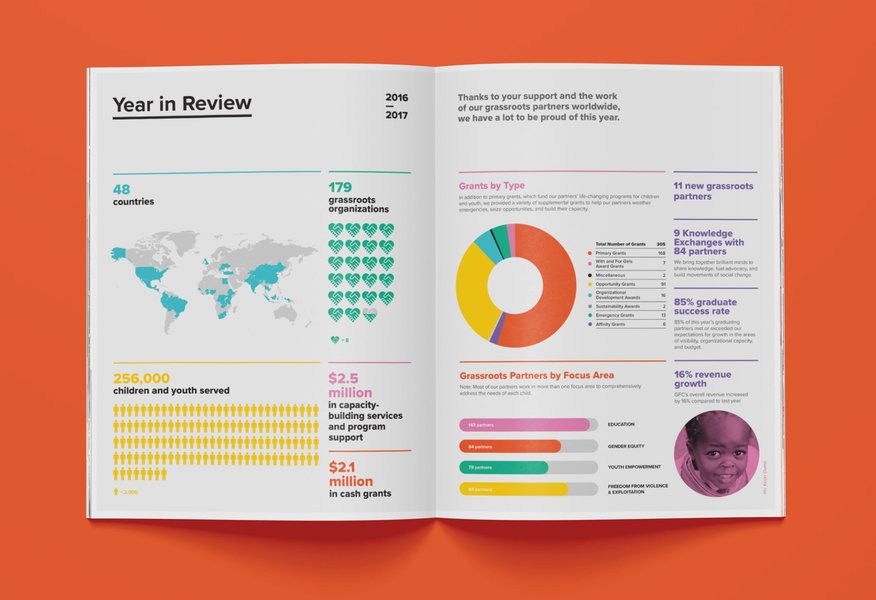
Visual elements and clear structure are key to engaging report design.
Standard Structure of an "Informe"
While the specific structure can vary depending on the type of report and its context (e.g., scientific report, business report, academic report), a typical "informe" generally includes the following components:
- Title (Título): Clear, concise, and descriptive of the report's main topic.
- Introduction (Introducción): Outlines the report's purpose, scope, objectives, and sometimes the methodology used. It sets the context for the reader.
- Body/Development (Cuerpo/Desarrollo): This is the main and longest section, presenting the data, findings, analysis, and discussion. It's often divided into sub-sections with headings for better organization. Information should be presented logically, supported by evidence, and may include comparisons or detailed examinations.
- Conclusions (Conclusiones): Summarizes the key findings and main points derived from the body of the report. No new information should be introduced here. Conclusions should be a direct result of the presented data and analysis.
- Recommendations (Recomendaciones) (Optional): If applicable, this section offers suggestions or courses of action based on the conclusions.
- Appendices/Annexes (Anexos) (Optional): Contains supplementary material that supports the report but is too detailed for the main body, such as raw data, detailed charts, questionnaires, or legal documents.
- References/Bibliography (Referencias/Bibliografía) (If applicable): Lists all sources cited in the report.
Visualizing Report Quality
The effectiveness of an "informe" can be gauged by several quality attributes. The radar chart below contrasts an "Ideal Report" with a "Poorly Written Report" across key dimensions. An ideal report excels in objectivity, clarity, conciseness, being data-driven, having a strong structure, and maintaining a formal tone. Conversely, a poorly written report will lack in these areas, diminishing its credibility and usefulness.
Crafting an "Informe": Best Practices
Steps to Effective Report Writing
Writing a high-quality "informe" involves a systematic approach:
- Define the Objective and Audience: Clearly understand the purpose of the report and who will be reading it. This will influence the tone, style, and level of detail.
- Preliminary Phase - Gather Information: Collect all necessary data from reliable sources. This may involve research, interviews, surveys, experiments, or data extraction. Identify human and material resources needed.
- Analyze and Organize Data: Once data is collected, it needs to be analyzed, interpreted, compared, and organized logically. Create an outline to structure the information effectively. The body of the report is often written first to ensure all key information is covered.
- Draft the Report: Write the content, focusing on the characteristics mentioned earlier (objectivity, clarity, etc.).
- Use formal and precise language.
- Support statements with evidence.
- Maintain an impersonal tone (e.g., use passive voice, nominalization – turning verbs into nouns).
- Ensure coherence and cohesion between paragraphs and sections using appropriate linking words.
- Incorporate Visual Aids (if appropriate): Tables, charts, graphs, and diagrams can often present complex data more effectively than text alone. Ensure they are clearly labeled and referenced in the text.
- Write the Introduction and Conclusion: Once the body is drafted, write the introduction to set the stage and the conclusion to summarize key findings.
- Review and Revise: Proofread carefully for any errors in grammar, spelling, punctuation, and formatting. Check for clarity, accuracy, completeness, and consistency. Ensure the report meets its objectives and adheres to any specific guidelines or requirements (e.g., for IB Spanish reports, specific text type conventions must be followed).
This video provides an introduction to writing information reports, detailing structure and tips. Such guidance is invaluable for mastering the "informe" format.
Contexts Where "Informes" are Used
"Informes" are integral to various fields:
- Academic Settings: Students write reports on experiments, research projects, book analyses, and case studies. The International Baccalaureate (IB) Spanish program, for instance, has "el informe" as a specific text type requiring a rigorous, data-driven approach.
- Business and Corporate Environments: Reports on financial performance, market analysis, project status, sales figures, feasibility studies, and audit results are common.
- Government and Public Administration: Used for policy analysis, public inquiries, audit reports, and impact assessments.
- Scientific and Technical Fields: Researchers and professionals document experiments, findings, and technical specifications in reports.
- Healthcare: Medical reports, patient status reports, and research findings are crucial.
"Informe" Beyond the Report: Other Meanings
While "report" is the dominant meaning, "informe" has other linguistic applications.
Adjectival Use: Shapeless or Unformed
In Spanish, Italian, and French, "informe" can also function as an adjective:
- Spanish (adjective): Informe means formless, shapeless, or misshapen.
- Italian (adjective): Informe means shapeless or unformed.
- French (adjective): Informe means shapeless, unfinished, or without precise form.
This adjectival sense points to a lack of definite structure or organization, contrasting sharply with the highly structured nature of an "informe" as a document.
"InforME": A Specific Governmental Portal
Separate from the general term, "InforME" (Information Resource of Maine) is a proper noun referring to the official eGovernment gateway for the State of Maine, USA. Managed in partnership with a private company, InforME provides online services for citizens and businesses to interact with state government. Since its inception in 1999, it has developed numerous electronic services, including:
- Management of the official State of Maine website (Maine.gov).
- Development of eGovernment applications for public access to government information.
- Creation of state agency websites focusing on user needs and accessibility.
- Provision of enterprise tools and resources for state agencies.
- Secure payment processing services.
- Subscription-based services like Corporate Search, UCC Online, and Crash Reporting.
This usage is distinct and refers to a specific digital platform rather than a type of document or a quality of formlessness.
Summary of "Informe" Meanings
The following table summarizes the different meanings and contexts of "informe":
| Term/Language | Part of Speech | Meaning | Context |
|---|---|---|---|
| Informe (Spanish) | Noun | Report, official document | General, academic, professional |
| Informe (Spanish) | Adjective | Formless, shapeless, misshapen | Descriptive |
| Informe (Italian) | Adjective | Shapeless, unformed | Descriptive |
| Informe (French) | Adjective | Shapeless, unfinished, without precise form | Descriptive |
| InforME (English - Proper Noun) | Proper Noun | State of Maine’s eGovernment service portal | Specific entity (USA) |
Understanding "Informe" at a Glance: A Mindmap
This mindmap provides a visual overview of the term "informe," branching out into its primary definition as a report, its key characteristics, structure, the process of writing one, and its alternative meanings.
(Purpose, Scope, Methodology)"] id3c["Body/Development
(Data, Analysis, Discussion)"] id3d["Conclusions
(Key Findings)"] id3e["Recommendations (Optional)"] id3f["Appendices/References (Optional)"] id4["Process of Writing a Report"] id4a["Define Objective & Audience"] id4b["Gather Information"] id4c["Analyze & Organize Data"] id4d["Draft Content (Body first, then Intro/Conclusion)"] id4e["Incorporate Visuals (if needed)"] id4f["Review & Revise"] id5["Other Meanings & Uses"] id5a["Adjectival Use (Formless/Shapeless)"] id5a1["Spanish: informe"] id5a2["Italian: informe"] id5a3["French: informe"] id5b["Proper Noun: InforME"] id5b1["Information Resource of Maine (USA)"] id5b2["eGovernment Portal"]
Frequently Asked Questions (FAQ)
What is the main difference between an "informe" and an essay?
An "informe" (report) primarily focuses on presenting factual information, data, and findings objectively, often with a specific structure (introduction, body, conclusion, recommendations). Its goal is to inform or analyze based on evidence. An essay, on the other hand, often allows for more subjective argumentation, personal reflection, and persuasive writing, where the author develops a thesis or argument, though it also requires structure and evidence.
Is an "informe" always written in Spanish?
No, while "informe" is the Spanish word for report, the concept of a report is universal. Reports are written in all languages. The term "informe" specifically refers to this type of document within Spanish-speaking contexts or when discussing the term itself. Other languages have their own words for report (e.g., "report" in English, "rapport" in French).
Why is objectivity so important in an "informe"?
Objectivity is crucial because the primary purpose of an "informe" is to provide reliable, unbiased information that can be used for decision-making, understanding a situation, or as a basis for further action. Personal opinions or biases can distort the facts and reduce the credibility and usefulness of the report.
Can an "informe" include persuasive elements?
While the core of an "informe" is objective and informational, some types of reports, especially those that include a "recommendations" section, can have persuasive elements. However, this persuasion should be based on the logical interpretation of the data and evidence presented in the report, rather than on emotional appeals or unsupported opinions. The goal is to convince the reader of a course of action based on factual analysis.
Recommended Further Exploration
- How can I effectively structure a technical report for engineering projects?
- What are the key differences between an analytical report and an informational report?
- Can you provide examples of using impersonal language in academic reports?
- What are the best practices for data visualization in business reports to enhance clarity?
References
 ibyourwayout.wordpress.com
 pj-s3-attachments.s3.amazonaws.com
Last updated May 19, 2025