
Unlocking the Blueprint: Deconstructing the Core Elements of Research
A deep dive into the essential components that shape a rigorous and impactful research study.
Embarking on a research journey requires a clear understanding of its fundamental building blocks. From defining the initial purpose to drawing meaningful conclusions, each component plays a critical role in constructing a coherent, credible, and valuable study. Let's dissect these key elements to see how they interconnect and guide the research process.
Essential Insights: Key Takeaways
- Interconnected Structure: Each research component builds upon the previous one, creating a logical flow from the 'why' (Purpose) to the 'how' (Methodology) and 'so what?' (Conclusion/Implications).
- Clarity is Crucial: Precisely defining the Purpose, Scope, Context, Questions, and Objectives is vital for keeping the research focused, manageable, and relevant.
- Rigor Through Methodology: The chosen Methodology underpins the study's credibility, ensuring that data collection and analysis are systematic, transparent, and appropriate for answering the research questions.
1. The Foundation: Purpose of the Research (What & Why)
Defining Your Research Compass
The Purpose of the Research serves as the cornerstone of any study. It articulates the central reason for undertaking the investigation, essentially answering two fundamental questions: What does the research aim to achieve? And Why is this research important or necessary?
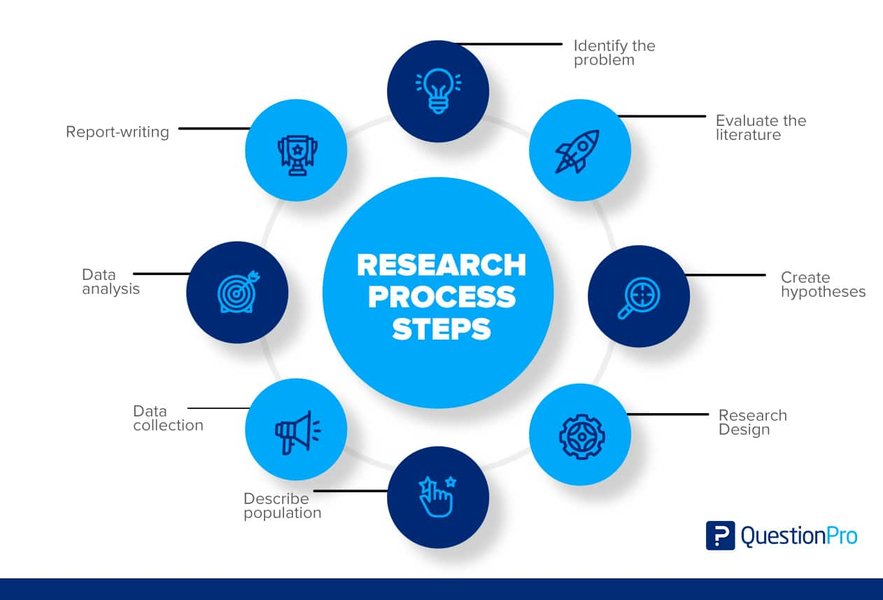
The research process often begins with identifying a problem or question, leading directly to defining the research purpose.
The 'What': Defining the Goal
The 'what' aspect outlines the overall intent or goal of the research. It's a broad statement that encapsulates the primary aim. For example, a study might aim "to explore the effects of remote work on employee well-being" or "to evaluate the efficacy of a new drought-resistant crop variety." This goal provides a general direction for the entire project.
The 'Why': Justifying the Investigation
The 'why' component provides the justification and rationale for the study. It explains the significance of the research by highlighting gaps in existing knowledge, addressing specific practical problems, contributing to theoretical understanding, or responding to societal needs. This justification underscores the value and relevance of the research, answering why it's worth pursuing. For instance, the research on remote work might be justified by the increasing prevalence of remote arrangements and concerns about burnout, while the crop research might be justified by climate change and food security issues.
A clearly articulated purpose statement acts as a guiding principle, ensuring all subsequent steps align with the overarching goal and rationale. It sets the stage for the entire research endeavor.
2. Setting the Stage: Scope and Context
Defining Boundaries and Background
While the purpose sets the direction, the Scope and Context establish the specific boundaries and the broader environment within which the research takes place. These elements are crucial for ensuring the study is focused, feasible, and its findings are properly understood.
Defining the Scope
The scope delineates the precise boundaries of the research. It specifies what aspects the study will cover and, just as importantly, what it will not cover. This involves defining limitations regarding:
- Population or Sample: Who or what will be studied (e.g., specific age groups, types of organizations, geographical areas)?
- Time Period: The timeframe over which the research is conducted or data is collected.
- Variables/Phenomena: The specific concepts, factors, or issues being investigated.
- Geography: The location(s) where the research is situated.
For example, a study's scope might be defined as: "This research focuses on the impact of social media use on the academic performance of undergraduate students aged 18-22 at public universities in California during the 2024-2025 academic year." Clearly defining the scope prevents the research from becoming too broad or unmanageable and clarifies the applicability of the findings.
Establishing the Context
The context situates the research within its relevant background or environment. This could include:
- Academic Context: Placing the study within the existing body of literature and theoretical frameworks.
- Historical Context: Understanding relevant past events or trends.
- Social/Cultural Context: Recognizing societal norms, values, or conditions that might influence the research topic.
- Economic/Political Context: Considering relevant economic factors or policy environments.
Providing context helps readers understand the setting, relevance, and potential influences on the research. For instance, studying renewable energy adoption requires understanding the current policy landscape and economic incentives (political and economic context).
Together, scope and context frame the study, ensuring clarity about its limits and its place within a larger picture.
3. Charting the Course: Research Questions & Objectives
From Broad Goals to Specific Targets
Building upon the purpose, scope, and context, Research Questions and Objectives provide specific, actionable directions for the investigation. They translate the broad research aim into focused inquiries and measurable goals.
This video explains the crucial relationship between research aims (purpose), objectives, and research questions, often referred to as the "Golden Thread" of research.
Research Questions: The Guiding Inquiries
Research Questions are specific, clear, and focused inquiries that the study aims to answer. They guide the entire research process, determining what data needs to be collected and how it should be analyzed. Effective research questions are:
- Focused: Narrow enough to be addressed within the scope of the study.
- Researchable: Can be answered through data collection and analysis.
- Clear: Easily understood and unambiguous.
- Relevant: Directly related to the research purpose and context.
Example Research Question: "To what extent does participation in extracurricular activities correlate with student stress levels among high school seniors?"
Research Objectives: The Actionable Steps
Research Objectives are specific, measurable statements describing what the research project intends to accomplish to answer the research questions. They break down the overall research aim into concrete, achievable steps. Objectives often start with action verbs (e.g., identify, measure, compare, analyze, evaluate, describe).
Well-defined objectives are often described using the SMART criteria:
- Specific: Clearly state what will be achieved.
- Measurable: Define how achievement will be quantified or assessed.
- Achievable: Be realistic given available resources and time.
- Relevant: Align directly with the research questions and purpose.
- Time-bound: Specify a timeframe for completion (often implied by the project duration).
Example Research Objective (related to the question above): "To measure the self-reported stress levels of high school seniors using the Perceived Stress Scale." Another could be: "To identify the types and frequency of extracurricular activities participated in by high school seniors."
Research questions pose the problem, while objectives outline the specific path to finding the answers, ensuring the study remains targeted and systematic.
4. The 'How': Research Methodology
Designing and Executing the Study
The Research Methodology section details the practical "how" of the research study. It's a systematic plan outlining the specific strategies, techniques, and procedures used to collect, analyze, and interpret data. This section is crucial for establishing the credibility, reliability, and replicability of the research.
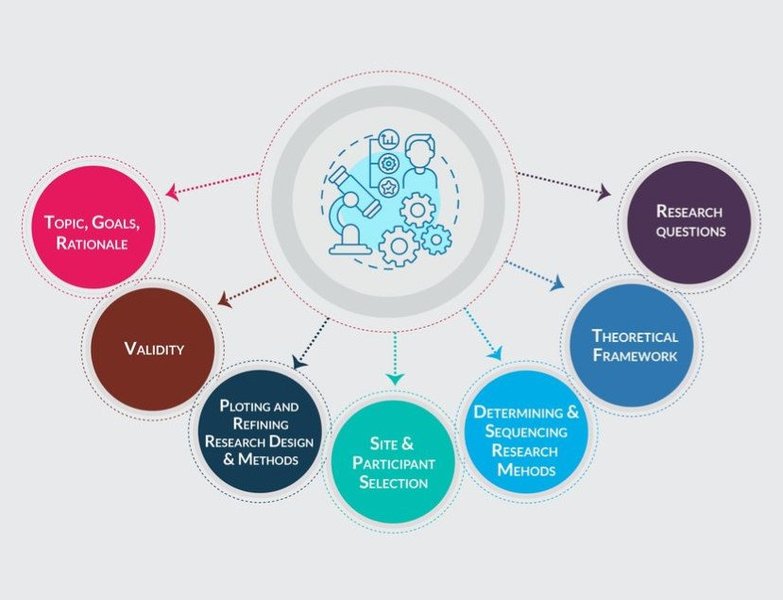
A well-defined methodology follows a structured process to ensure rigorous research design.
Key Components of Methodology
A comprehensive methodology section typically addresses:
- Research Design: The overall strategy chosen (e.g., experimental, survey, case study, ethnographic, correlational).
- Research Approach: Whether the study is primarily quantitative (numerical data, statistical analysis), qualitative (non-numerical data, interpretation), or mixed-methods (combining both).
- Data Collection Methods: Specific tools and techniques used to gather information (e.g., surveys, interviews, observations, experiments, archival research, focus groups).
- Sampling Strategy: How participants or data sources were selected (e.g., random sampling, stratified sampling, purposive sampling, convenience sampling), including sample size justification.
- Data Analysis Procedures: How the collected data will be processed and analyzed (e.g., statistical tests like t-tests or regression for quantitative data; thematic analysis or discourse analysis for qualitative data).
- Ethical Considerations: Steps taken to ensure ethical conduct, such as informed consent, confidentiality, and minimizing harm.
- Rationale: Justification for why the chosen methods are appropriate for answering the research questions and achieving the objectives.
Ensuring Transparency and Rigor
Describing the methodology in detail allows other researchers to understand exactly how the study was conducted. This transparency is vital for assessing the validity and reliability of the findings and potentially replicating the study. The choice of methodology must align logically with the research questions and objectives to ensure the data collected can effectively address the study's aims.
5. The Results: Key Findings
Presenting the Outcomes of the Research
The Key Findings section (often called "Results") presents the main outcomes and discoveries derived directly from the data analysis. This section focuses on objectively reporting what the data revealed in relation to the research questions and objectives, without interpretation or speculation at this stage.

Presenting key findings clearly and often visually is crucial for communicating research outcomes effectively.
What to Include in Key Findings
- Direct Answers: Presentation of data that directly addresses the research questions posed earlier.
- Objective Reporting: Sticking to the facts revealed by the data analysis. Interpretation belongs in the discussion or conclusion section.
- Data Summaries: Use of tables, charts, graphs, figures, statistics (e.g., means, standard deviations, p-values), or thematic summaries (for qualitative data) to present the data clearly and concisely.
- Highlighting Significance: Pointing out statistically significant results or prominent themes/patterns emerging from the analysis.
- Logical Structure: Organizing the findings in a logical sequence, often following the order of the research questions or objectives.
Avoiding Interpretation
It's crucial in the findings section to simply state what was found. For example, instead of saying "This proves that the new teaching method is better," report "The group using the new teaching method scored significantly higher (p < 0.05) on the post-test compared to the control group." The implications and meaning of these results are discussed later.
This section provides the empirical evidence upon which the study's conclusions will be based.
6. The 'So What?': Conclusion and Implications
Summarizing, Interpreting, and Looking Ahead
The final core component, the Conclusion and Implications section, synthesizes the entire study. It summarizes the key findings, interprets their meaning in relation to the research questions and the broader context, discusses the study's limitations, and suggests the wider significance and potential future directions.
Summarizing and Concluding
This part briefly recaps the main findings and provides a direct answer to the primary research questions based on the evidence presented. It offers a final judgment or interpretation of the results, tying back to the study's original purpose and objectives. It reiterates what was learned through the research.
Discussing Implications
This is where the researcher explores the broader meaning and significance of the findings. Implications can be considered in several areas:
- Theoretical Implications: How do the findings contribute to, challenge, or extend existing theories or conceptual frameworks in the field?
- Practical Implications: What are the real-world applications or consequences of the findings? How can the results inform practice, policy, or decision-making?
- Policy Implications: Are there specific recommendations for policymakers based on the research?
- Implications for Future Research: What new questions arise from the findings? What are the next steps for research in this area? Suggestions might relate to addressing limitations, exploring related topics, or using different methodologies.
Acknowledging Limitations
An honest discussion of the study's limitations (related to scope, methodology, sample size, etc.) is essential for contextualizing the findings and demonstrating critical self-awareness. This adds credibility to the research.
This section provides closure, highlights the study's contribution, and points the way forward, answering the crucial "so what?" question about the research.
Visualizing the Research Structure
Connecting the Components
Understanding how these components interrelate is key to appreciating the structure of a research project. The following mindmap illustrates the typical flow and dependencies between the different elements of a research study.
(What & Why)"] id1a["Overall Goal"] id1b["Justification/Rationale"] id1c["Addresses Gaps/Problems"] id2["2. Scope & Context"] id2a["Boundaries (What's Included/Excluded)"] id2b["Limitations (Population, Time, Geo)"] id2c["Background (Academic, Social, Historical)"] id2d["Situates the Research"] id3["3. Research Questions
& Objectives"] id3a["Specific Inquiries"] id3b["Measurable Goals (SMART)"] id3c["Operationalize Purpose"] id3d["Guide Data Collection"] id4["4. Methodology
(How)"] id4a["Research Design & Approach (Qual/Quant/Mixed)"] id4b["Data Collection Tools & Procedures"] id4c["Sampling Strategy"] id4d["Data Analysis Plan"] id4e["Ethical Considerations"] id4f["Ensures Rigor & Replicability"] id5["5. Key Findings
(Results)"] id5a["Objective Report of Data"] id5b["Directly Address Questions/Objectives"] id5c["Use Tables, Figures, Stats"] id5d["No Interpretation Yet"] id6["6. Conclusion &
Implications (So What?)"] id6a["Summary of Findings"] id6b["Interpretation of Results"] id6c["Answers to Research Questions"] id6d["Theoretical Significance"] id6e["Practical/Policy Relevance"] id6f["Limitations"] id6g["Future Research Directions"]
This mindmap shows the logical progression: the purpose sets the stage, scope and context define the boundaries, questions and objectives specify the targets, methodology provides the plan, findings present the evidence, and the conclusion interprets the results and discusses their significance.
Assessing Research Components: A Comparative View
Relative Emphasis in Research Evaluation
When evaluating a research project, different components carry varying weights depending on the context, but all are essential for overall quality. The radar chart below offers an illustrative comparison of the perceived importance or focus placed on each component in an 'Ideal Research Project' versus a 'Developing Research Project'. Note that this is a conceptual representation based on common research assessment criteria, not empirical data.
This chart visually suggests that an ideal research project excels across all dimensions, particularly in methodological rigor and clarity of purpose and questions. A developing project might show strengths in some areas (like objective reporting of findings) but weaknesses in others (like defining scope or drawing deep conclusions/implications). All components are vital for a robust study.
Summary Table: Research Components and Placement
Where to Find Each Element
While the exact structure can vary slightly depending on the field and publication format, research components generally appear in specific sections of a research paper, thesis, or report. The following table provides a typical overview:
| Component | Description | Typical Location in Paper/Report |
|---|---|---|
| Purpose of the Research | Overall goal and justification (What & Why) | Introduction |
| Scope and Context | Boundaries and background setting | Introduction (often part of defining the problem/background) |
| Research Questions/Objectives | Specific inquiries and measurable goals | End of Introduction or beginning of Methodology |
| Methodology | Detailed plan for conducting the research (How) | Dedicated Methodology/Methods section |
| Key Findings | Objective presentation of results/data | Dedicated Results/Findings section |
| Conclusion/Implication | Summary, interpretation, significance (So What?) | Discussion and/or Conclusion section |
Understanding this typical structure helps both in writing and reading research effectively, allowing you to locate specific information efficiently.
Frequently Asked Questions (FAQ)
Clarifying Common Queries
What's the main difference between the Research Purpose and Research Objectives?
The Research Purpose is a broad statement about the overall goal and justification ('why') of the study. It sets the general direction. Research Objectives are much more specific, concrete, and measurable statements outlining the exact steps ('how') you will take to achieve that broader purpose. Objectives break down the purpose into manageable tasks that guide data collection and analysis.
Why is defining the Scope so important?
Defining the Scope is crucial because it sets clear boundaries for your research. It makes the study feasible and manageable by clarifying what will and won't be covered (e.g., specific populations, timeframe, variables). This prevents the research from becoming too broad or vague, helps in focusing resources, and makes the findings more interpretable by clearly stating the limits of their applicability.
Can the Methodology change during the research process?
While a clear Methodology should be planned initially, some flexibility might be necessary, especially in qualitative or exploratory research. Unexpected findings or practical challenges during data collection might necessitate adjustments. However, any significant changes to the methodology must be carefully considered, justified, documented transparently in the final report, and assessed for their impact on the study's validity and reliability.
How do Key Findings differ from the Conclusion?
Key Findings (or Results) present the direct, objective outcomes of your data analysis – simply stating what the data shows, often using statistics, tables, or figures. There's no interpretation here. The Conclusion, on the other hand, interprets these findings. It explains what the results mean in relation to the research questions, discusses their significance and implications, acknowledges limitations, and summarizes the overall contribution of the study.
Recommended Further Exploration
Deepen Your Understanding
- How to write a clear and compelling research purpose statement?
- Examples of defining scope and limitations in different types of research?
- What are the key differences between qualitative and quantitative research methodologies?
- Best practices for presenting research findings and discussing implications?
References
Sources Used for This Analysis
Last updated May 3, 2025