
Understanding Life: A Comprehensive Exploration
Delving into the Biological, Philosophical, and Existential Dimensions
Key Takeaways
- Life is defined by a combination of biological processes, self-sustenance, and the capacity for evolution.
- Philosophically, the meaning of life varies, often centered around purpose, fulfillment, and personal growth.
- Scientific inquiries extend the definition of life beyond Earth, considering diverse forms and the potential for extraterrestrial existence.
Biological Foundations of Life
Core Characteristics
Homeostasis
Homeostasis refers to the ability of living organisms to maintain a stable internal environment despite external fluctuations. This regulation is crucial for sustaining life, ensuring that conditions such as temperature, pH balance, and nutrient levels remain within viable ranges.
Organization
Life exhibits a high degree of organization, structured into cells, which are the fundamental units of living organisms. Multicellular life forms display complex architectures, with specialized cells forming tissues, organs, and systems that perform specific functions.
Metabolism
Metabolism encompasses all chemical reactions that occur within an organism to sustain life. These processes involve the conversion of energy and nutrients into cellular components and the elimination of waste products, facilitating growth, repair, and maintenance.
Growth
Growth is the process by which living organisms increase in size and complexity. This involves anabolic pathways that build larger molecules from smaller ones, contributing to the development and maturation of cells and tissues.
Adaptation
Adaptation refers to the ability of organisms to evolve over time in response to environmental changes. Through natural selection, species develop traits that enhance their survival and reproductive success in specific habitats.
Response to Stimuli
Living organisms can respond to environmental stimuli through various mechanisms. This responsiveness allows them to interact with their surroundings, seek resources, avoid dangers, and communicate.
Reproduction
Reproduction is the process by which organisms produce new individuals, ensuring the continuation of their species. It can occur sexually or asexually, involving the transmission of genetic material to offspring.
Scientific Perspectives
From a scientific standpoint, life is viewed as a dynamic process rather than a static entity. It involves self-sustaining chemical systems capable of Darwinian evolution, emphasizing the capacity for maintenance, growth, repair, and reproduction through genetic variation and selection.
All known life on Earth is carbon-based, relying on elements such as hydrogen, nitrogen, oxygen, phosphorus, and sulfur. This biochemical foundation supports the complexity and diversity of living organisms, enabling a wide range of metabolic pathways and structural complexities.
Biological Complexity
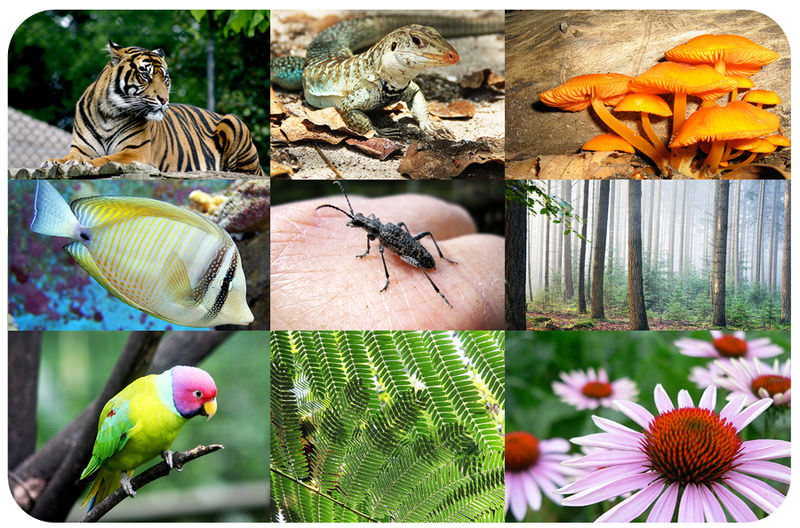
Life ranges from single-celled organisms like bacteria and archaea to complex multicellular beings, including plants, animals, and fungi. This diversity is evident in the various forms life takes, adapted to thrive in environments as extreme as deep-sea vents or arid deserts.
| Characteristic | Description |
|---|---|
| Homeostasis | Maintaining internal stability |
| Organization | Structured into cells and systems |
| Metabolism | Chemical transformations for energy |
| Growth | Increase in size and complexity |
| Adaptation | Evolutionary changes for survival |
| Response to Stimuli | Interaction with the environment |
| Reproduction | Production of new individuals |
Philosophical Perspectives on Life
Meaning and Purpose
Philosophically, the meaning of life is a perennial question that varies across different schools of thought. Some philosophies posit that life's purpose is to seek happiness, achieve personal growth, or contribute altruistically to society. Others argue that individuals must create their own meaning through experiences, relationships, and choices.
Existentialist thinkers suggest that life inherently lacks an objective purpose, placing the onus on each person to imbue their existence with significance through their actions and decisions. This perspective emphasizes personal responsibility and the freedom to define one's own path.
Spiritual and Religious Views
Many spiritual and religious traditions offer interpretations of life's meaning that transcend individual existence. These views may include concepts of a higher purpose ordained by a divine power, reincarnation, enlightenment, or the eternal soul. Such perspectives often connect personal experiences to a broader cosmic narrative, infusing life with a sense of destiny and interconnectedness.
Life as a Journey
Viewing life as a journey emphasizes the process of self-discovery, the development of relationships, and the pursuit of aspirations. This metaphor highlights the dynamic and evolving nature of human existence, where challenges and triumphs alike contribute to personal growth and understanding.
Scientific Challenges and Explorations
Defining Life Beyond Earth
One of the foremost scientific challenges in defining life is the potential discovery of extraterrestrial organisms. Life forms that do not conform to Earth's carbon-based paradigm may require an expanded or revised definition of life. Astrobiology explores these possibilities, considering how life might arise and sustain itself in diverse environments across the universe.
The search for life beyond Earth involves investigating extreme environments where life might exist, such as subsurface oceans on moons like Europa or hydrothermal vents on other planets. These studies push the boundaries of our understanding and encourage the development of new theories and methodologies in the study of life.
Viruses: Living or Non-Living?
Viruses present a unique challenge in defining life, as they exhibit characteristics of both living and non-living entities. While viruses can replicate and evolve, they require a host cell to do so, lacking the autonomy typically associated with living organisms. This ambiguity prompts ongoing debates in the scientific community about the criteria that definitively distinguish life from non-life.
Dynamic and Transformative Nature of Life
Life is inherently dynamic, constantly undergoing changes through processes like metabolism, growth, reproduction, and evolution. This transformative aspect underscores the complexity and adaptability of living systems, highlighting their ability to respond to and shape their environments over time.
Integrating Perspectives
Synthesis of Biological and Philosophical Views
The interplay between biological definitions and philosophical interpretations of life enriches our understanding. While biology provides a framework for recognizing and studying living organisms through observable processes and characteristics, philosophy delves into the existential and subjective aspects of life, exploring questions of purpose, meaning, and consciousness.
This synthesis allows for a more holistic view of life, acknowledging both its measurable, physical dimensions and its intangible, experiential qualities. It bridges the gap between what life is and what life means, offering a comprehensive perspective that encompasses the entirety of living experience.
Life as an Evolving Concept
Our understanding of life continues to evolve as scientific discoveries and philosophical debates progress. Advances in fields such as genetics, molecular biology, and artificial intelligence challenge and expand traditional notions of life, prompting reevaluations of criteria and definitions.
Additionally, as humanity contemplates the possibility of synthetic life forms and explores the frontiers of biotechnology, the boundaries of what constitutes life are increasingly fluid and subject to reinterpretation.
Conclusion
Life is a multifaceted concept that encompasses a range of biological processes, philosophical inquiries, and scientific explorations. Biologically, it is characterized by homeostasis, organization, metabolism, growth, adaptation, response to stimuli, and reproduction. Philosophically, the meaning of life varies, often centered around purpose, personal growth, and the creation of individual meaning. Scientifically, the definition of life continues to expand, especially in the context of potential extraterrestrial forms and the ambiguous status of entities like viruses.
The integration of these perspectives provides a comprehensive understanding of life, acknowledging both its tangible, measurable aspects and its intangible, experiential dimensions. As our knowledge and experiences evolve, so too does our conception of what it means to be alive, reflecting the dynamic and ever-changing nature of life itself.
References
Last updated February 11, 2025