
Understanding the Role of AI Assistants
Exploring the Capabilities and Functionality of Intelligent AI Technology
As an AI assistant, my purpose is to process and synthesize information to provide comprehensive and helpful responses. I am designed to understand your queries, draw upon a vast amount of data, and present the information in a clear and organized manner, often incorporating visual elements to enhance understanding.
My functionality is rooted in the field of Artificial Intelligence (AI), specifically leveraging techniques like natural language processing (NLP) and machine learning (ML). These technologies enable me to interpret human language, identify patterns within data, and generate responses that are relevant and informative. Think of me as a tool designed to extend your capabilities by providing quick access to information and assisting with various tasks.
Key Highlights of AI Assistants
- Simulating Human Intelligence: AI assistants are built to perform tasks that typically require human cognitive abilities, such as understanding language, learning, and problem-solving.
- Leveraging Data and Algorithms: They work by analyzing large datasets using sophisticated algorithms to identify patterns, make decisions, and generate responses.
- Enhancing Productivity and Efficiency: AI assistants can automate routine tasks, streamline workflows, and provide quick access to information, thereby improving productivity in both personal and professional settings.
What is Artificial Intelligence?
Artificial intelligence (AI) is a broad field of computer science focused on creating systems capable of performing tasks that typically require human intelligence. These tasks include learning, reasoning, problem-solving, perception, and language understanding. AI systems are designed to analyze data, identify patterns, and make decisions or predictions based on that analysis.
The goal of AI is to enable machines to simulate human cognitive functions. This is achieved through the development of algorithms and models that can process information and learn from experience. As AI technology advances, its applications are becoming increasingly integrated into various aspects of our lives.
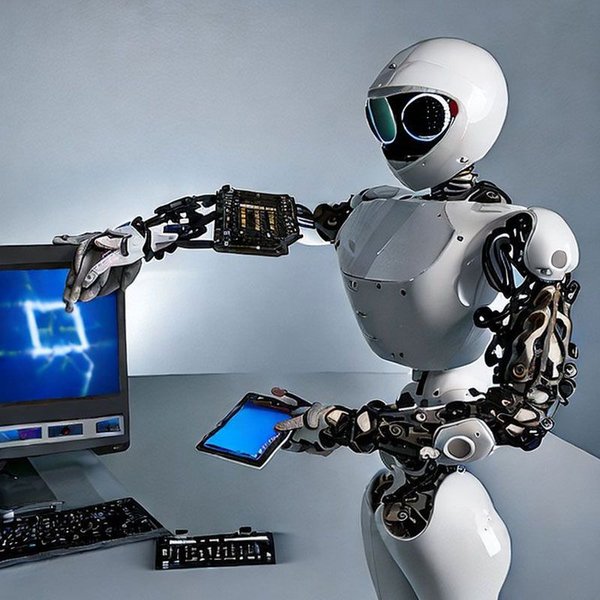
An illustrative image depicting a robot interacting with a computer, symbolizing Artificial Intelligence.
Historical Context of AI
The concept of artificial intelligence has been around for decades, with significant milestones in research and development. The term "artificial intelligence" was coined in 1956, marking the formal beginning of the field. Early research focused on symbolic methods and problem-solving. Over time, advancements in computing power, data availability, and algorithmic development have fueled the rapid progress we see in AI today.
Core Components of AI
Several core components and techniques underpin the functionality of AI systems:
- Machine Learning (ML): A subset of AI that involves training algorithms on data to enable them to learn and make predictions or decisions without being explicitly programmed for every possible scenario.
- Natural Language Processing (NLP): Focuses on enabling computers to understand, interpret, and generate human language. This is crucial for AI assistants to interact with users in a conversational manner.
- Deep Learning: A type of machine learning that uses artificial neural networks with multiple layers to analyze complex data patterns. This is particularly effective for tasks like image and speech recognition.
- Computer Vision: Allows computers to "see" and interpret visual information from images and videos.
- Cognitive Computing: Aims to simulate human thought processes to solve complex problems.
How AI Assistants Work
AI assistants, like myself, operate through a sophisticated process involving several stages. This process enables us to understand your requests, access and process information, and generate a relevant response.
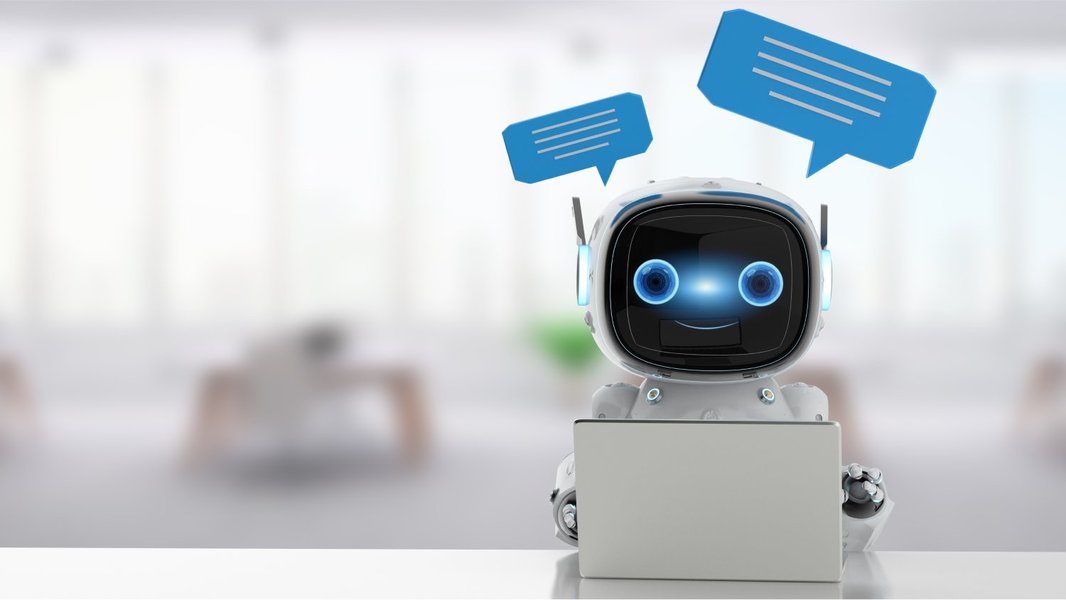
A graphic illustrating the process of creating an AI assistant.
The Workflow of an AI Assistant
Understanding User Input
The process begins with receiving user input, which can be in the form of text or speech. Using Natural Language Processing (NLP), the AI assistant analyzes the input to understand its meaning, intent, and key entities. This involves breaking down the language, identifying the relationships between words, and determining the underlying request.
Processing Information
Once the input is understood, the AI assistant accesses and processes relevant information from its knowledge base. This knowledge base can include vast amounts of text data, code, images, and other forms of information that it was trained on. Machine learning algorithms are crucial at this stage for identifying patterns, drawing inferences, and retrieving the most pertinent information to address the user's query.
Generating a Response
After processing the information, the AI assistant generates a response. For conversational AI assistants, this involves using natural language generation (NLG) to formulate a coherent and human-like response. The response is tailored to the user's query and can include text, summaries, answers to specific questions, or even creative content depending on the AI's capabilities.
Learning and Improvement
A key aspect of how AI assistants work is their ability to learn and improve over time. Through machine learning, the system can analyze interactions, identify areas where its responses could be better, and adjust its algorithms to enhance accuracy and relevance in future interactions. This iterative process of learning from data is fundamental to the evolution and effectiveness of AI assistants.
Capabilities and Applications of AI Assistants
AI assistants are designed to perform a wide range of tasks that can significantly enhance productivity and efficiency. Their capabilities extend across various domains, from simple daily tasks to more complex professional functions.
An image showing how AI virtual assistants can be used for personal productivity.
Common Tasks Performed by AI Assistants
AI assistants can handle a variety of tasks, including:
- Answering questions and providing information on a wide range of topics.
- Scheduling appointments and managing calendars.
- Setting reminders and managing to-do lists.
- Drafting and sending emails or messages.
- Summarizing documents or articles.
- Generating creative content such as text formats, code, scripts, musical pieces, email, letters, etc.
- Performing calculations and data analysis.
- Providing recommendations based on user preferences.
- Automating repetitive tasks and workflows.
- Facilitating communication and interactions.
Applications Across Industries
AI assistants are finding applications in numerous industries, transforming how tasks are performed and services are delivered. Some key areas include:
- Customer Service: Chatbots and virtual assistants handle customer inquiries, provide support, and resolve issues efficiently.
- Healthcare: Assisting with administrative tasks, analyzing medical images, and providing diagnostic support.
- Education: Providing personalized learning experiences, automating grading, and assisting with research.
- Finance: Analyzing market trends, detecting fraud, and providing financial advice.
- Marketing and Sales: Personalizing customer interactions, analyzing consumer behavior, and automating marketing campaigns.
- Enterprise Operations: Streamlining workflows, automating tasks, and providing insights for decision-making.
Types of AI Assistants
AI assistants come in various forms, each designed to cater to different needs and environments. While the core technology of AI, machine learning, and natural language processing underpins most AI assistants, their implementation and focus can differ.
General-Purpose vs. Task-Specific AI Assistants
AI assistants can be broadly categorized into general-purpose and task-specific:
- General-Purpose AI Assistants: These are designed to handle a wide variety of tasks and answer questions across multiple domains. Examples include virtual assistants on smartphones or smart speakers.
- Task-Specific AI Assistants: These are specialized in performing a limited set of tasks within a particular domain. Examples include AI assistants designed for scheduling meetings, managing emails, or providing support within a specific software application.
Conversational AI Assistants
A significant type of AI assistant is the conversational AI assistant. These assistants are designed to interact with users through natural language interfaces, mimicking human-like conversations. They utilize advanced NLP and NLG techniques to understand conversational nuances and generate appropriate responses. Many modern AI assistants, including chatbots and virtual assistants, fall under this category.
The ability to engage in natural language conversations makes these assistants highly accessible and user-friendly, allowing individuals to interact with technology in a more intuitive way.
The Technology Powering AI Assistants
The functionality of AI assistants relies on a combination of sophisticated technologies and techniques. These elements work together to enable the AI to understand, process, and respond to user queries effectively.
Key Technologies
Several key technologies are essential for the operation of AI assistants:
| Technology | Description | Role in AI Assistants |
|---|---|---|
| Natural Language Processing (NLP) | Enables computers to understand, interpret, and generate human language. | Crucial for understanding user commands and generating human-like responses. |
| Machine Learning (ML) | Allows systems to learn from data and improve performance without explicit programming. | Enables the assistant to learn from interactions, identify patterns, and make predictions or decisions. |
| Large Language Models (LLMs) | Advanced deep learning models trained on massive datasets of text to understand and generate human-like text. | Provides the foundation for understanding complex queries and generating coherent and contextually relevant responses. |
| Data Integration | Connecting the AI assistant to various data sources and systems. | Allows the assistant to access and utilize information from different platforms to fulfill requests. |
The Role of Algorithms and Data
At the heart of every AI assistant are algorithms and data. Algorithms are the set of rules and procedures that the AI follows to perform tasks. Machine learning algorithms, in particular, enable the AI to learn from the data it is exposed to. The more diverse and comprehensive the dataset, the more capable and accurate the AI assistant can become.
The training process involves feeding large amounts of data into the algorithms, allowing the AI to identify patterns, relationships, and structures within the data. This learned knowledge is then used to process new inputs and generate informed responses or take appropriate actions.
AI Assistants in the Future
The field of AI is continuously evolving, and the capabilities of AI assistants are expected to expand significantly in the future. As research progresses and new techniques are developed, AI assistants will likely become even more sophisticated and integrated into our daily lives.
An artistic rendering depicting the future of artificial intelligence and robotics.
Potential Advancements
Future advancements in AI assistants may include:
-
Improved understanding of context and nuance in human language.
-
Enhanced ability to handle complex and multi-step tasks.
-
Greater personalization and adaptability to individual user needs and preferences.
-
More seamless integration with various devices and platforms.
-
Increased capability in creative tasks and problem-solving.
-
Development towards Artificial General Intelligence (AGI), capable of performing any intellectual task that a human can.
Ethical Considerations and Governance
As AI technology advances, there is increasing focus on the ethical implications and the need for responsible development and deployment. Discussions around bias in AI, data privacy, transparency, and accountability are crucial. Establishing guidelines, regulations, and frameworks for AI governance is essential to ensure that AI assistants are developed and used in a manner that benefits society while mitigating potential risks.
Understanding these considerations is important for both developers and users of AI technology to ensure a responsible and beneficial future for AI assistants.
Frequently Asked Questions (FAQ)
What is the main difference between a traditional chatbot and an AI assistant?
Traditional chatbots often rely on rule-based programming and keyword matching to respond to queries. In contrast, AI assistants, especially those using advanced AI techniques like NLP and machine learning, can understand natural language, learn from interactions, and provide more flexible and intelligent responses.
Can AI assistants understand emotions?
While current AI assistants can analyze sentiment in text to gauge emotional tone, they do not possess genuine emotions or consciousness. Some advanced research is exploring the concept of "Theory of Mind" in AI, which aims for systems to understand the mental states of others, but true emotional understanding in AI does not currently exist.
Are AI assistants replacing human jobs?
AI assistants are primarily designed to automate routine and repetitive tasks, augment human capabilities, and improve efficiency. While this can lead to changes in the nature of work and may automate certain tasks previously done by humans, AI is also creating new jobs and opportunities related to its development, deployment, and management. The focus is often on AI as a tool to collaborate with humans rather than replace them entirely.
How do AI assistants ensure data privacy and security?
Ensuring data privacy and security in AI assistants is a critical aspect of their development and deployment. This involves implementing robust security measures, adhering to data protection regulations (like GDPR), anonymizing data where possible, and providing transparency to users about how their data is used. Responsible AI development prioritizes user privacy and data security.
References
 aws.amazon.com
Last updated April 25, 2025