
Unveiling the Eucharist: More Than Just Bread and Wine?
Exploring the profound meaning, ancient origins, and diverse interpretations of a central Christian sacrament.
The Eucharist, a term derived from the Greek word eucharistia meaning "thanksgiving," stands as a cornerstone of Christian worship and spiritual life. Also widely known as Holy Communion, the Lord's Supper, or the Blessed Sacrament, this sacred ritual commemorates the Last Supper of Jesus Christ with his disciples on the night before his crucifixion. It is considered a sacrament in most Christian denominations and an ordinance in others, holding deep theological significance and embodying core tenets of the Christian faith.
Key Insights into the Eucharist
- Divine Institution: The Eucharist was established by Jesus Christ himself during the Last Supper, where he instructed his followers to "do this in remembrance of me," making it a direct mandate for Christian practice.
- Diverse Interpretations of Presence: While central to Christianity, the understanding of Christ's presence in the bread and wine varies significantly, from a literal transformation (transubstantiation) to a symbolic memorial, depending on the denomination.
- Core Spiritual Meanings: Across traditions, the Eucharist embodies themes of thanksgiving to God, memorial of Christ's sacrifice, spiritual nourishment, communion with Christ and the Church, and a foretaste of heavenly glory.
The Sacred Origins: The Last Supper
Institution by Jesus
The foundational accounts of the Eucharist are found in the New Testament, specifically in the Synoptic Gospels (Matthew 26:26–28, Mark 14:22–24, Luke 22:17–20) and in the First Letter of Paul to the Corinthians (1 Corinthians 11:23–25). During the Last Supper, a meal shared in the context of the Jewish Passover, Jesus took bread, gave thanks, broke it, and gave it to his disciples, saying, "This is my body which is given for you; do this in remembrance of me." In the same way, after supper, he took the cup, saying, "This cup is the new covenant in my blood, which is poured out for you." This act is universally understood by Christians as the institution of the Eucharist, a command to repeat this ritual in his memory.
The Apostle Paul, writing between 40 and 60 CE, underscored that this tradition originated from Jesus' words and actions, a practice he himself received and passed on to the nascent Christian communities. This indicates the Eucharist's early establishment and central role in Christian worship, even before the New Testament scriptures were fully compiled.
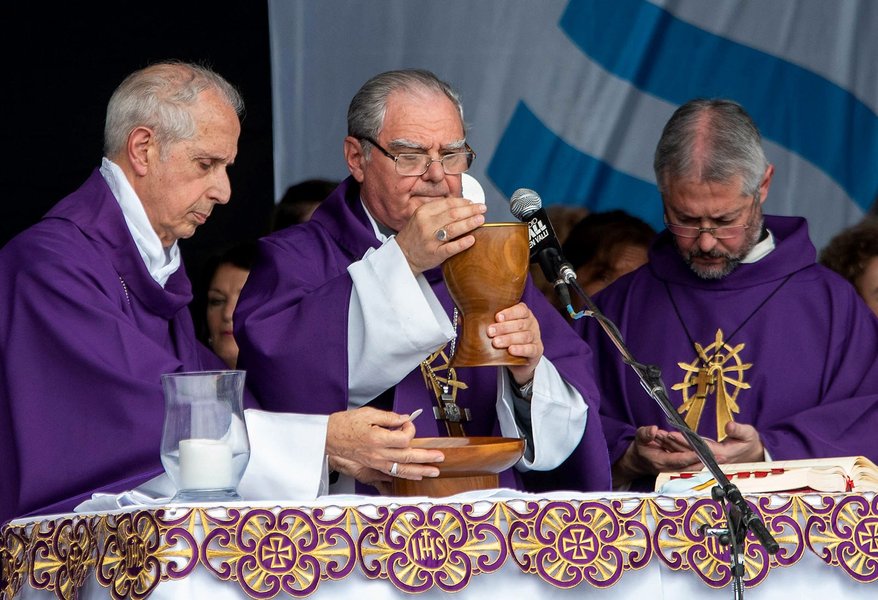
The elevation of the consecrated host during a Eucharistic celebration, a pivotal moment in the liturgy.
Connections to Jewish Traditions
The Eucharist is deeply rooted in Jewish religious traditions. The Last Supper itself was a Passover meal, which commemorates the Israelites' exodus from Egypt. Key Old Testament themes, such as the sacrificial lamb of Passover, the manna in the wilderness, and the offering of bread and wine by Melchizedek, are seen by many Christians as prefigurations of Christ and the Eucharist. The breaking of bread and sharing of wine in a sacred context were familiar elements in Jewish piety.
Theological Significance: A Multifaceted Mystery
The Eucharist is rich in theological meaning, encompassing several key aspects that, while universally acknowledged in principle, are understood with varying nuances across different Christian traditions.
Thanksgiving (Eucharistia)
The very name "Eucharist" highlights its nature as an act of profound thanksgiving to God the Father for all His blessings, especially for the work of creation, the redemption accomplished through Jesus Christ, and the ongoing process of sanctification by the Holy Spirit.
Memorial (Anamnesis) and Sacrifice
The Eucharist is a living memorial (anamnesis) of Christ's Passion, death, and Resurrection. It is not merely a recollection of past events but a ritual that makes present and effective Christ's unique and definitive sacrifice on Calvary. Catholic and Orthodox theology, in particular, emphasize that the Eucharist perpetuates this sacrifice in an unbloody manner.
The Presence of Christ
A central, and often debated, aspect is the nature of Christ's presence in the Eucharistic elements of bread and wine. Interpretations range from a physical transformation to a spiritual or symbolic presence. This is a key area of divergence among Christian denominations (explored further below).
Communion (Koinonia) and Unity
Partaking in the Eucharist fosters communion (koinonia) with Christ and, through Him, with fellow believers. It strengthens the unity of the Church as the Body of Christ, binding members together in charity and shared faith.
Spiritual Nourishment and Foretaste of Heaven
The Eucharist is understood as spiritual food that nourishes the faithful, strengthens them in their Christian journey, and cleanses them from venial sins (in Catholic teaching). It is also seen as an anticipation, a "foretaste," of the heavenly banquet in the Kingdom of God, where believers will be in full communion with God.
A Spectrum of Belief: Denominational Perspectives on Christ's Presence
While the Eucharist is a common heritage, the understanding of how Christ is present in the bread and wine differs significantly among Christian traditions. These varied interpretations have been a source of both profound theological reflection and, historically, division.

The elements of bread and wine are central to the Eucharistic rite across Christian denominations.
Catholic and Eastern Orthodox Understanding
Real Presence and Transubstantiation/Mystery
The Roman Catholic Church teaches the doctrine of the **Real Presence** with definitive clarity. Through the words of consecration spoken by a validly ordained priest during the Mass and the power of the Holy Spirit, the bread and wine are believed to be truly, really, and substantially transformed into the actual Body, Blood, Soul, and Divinity of Jesus Christ. This change is termed **transubstantiation**: the underlying substance (reality) of the bread and wine changes into the substance of Christ, while their outward appearances (species or accidents – taste, color, texture) remain. For Catholics, the Eucharist is considered the "source and summit of the Christian life" (CCC 1324).
The Eastern Orthodox Churches also firmly believe in the Real Presence of Christ in the Eucharist. They teach that the bread and wine are truly changed into the Body and Blood of Christ through the invocation of the Holy Spirit (Epiclesis) during the Divine Liturgy. While not typically using the term "transubstantiation," they refer to this change as a profound **Mystery**, affirming a genuine transformation rather than a symbolic one.
Protestant Understandings
Protestant views on the Eucharist are diverse, reflecting the varied theological streams that emerged from the Reformation.
Lutheran View: Sacramental Union
Martin Luther affirmed a **real presence** of Christ in the Eucharist, but rejected transubstantiation. Lutherans typically believe in **sacramental union** (often imprecisely called consubstantiation by others), meaning that Christ's body and blood are truly present "in, with, and under" the forms of the bread and wine. The elements remain bread and wine, yet Christ is physically present in them.
Anglican/Episcopalian View: Varied Interpretations
Anglicanism encompasses a range of views. Some Anglicans hold a belief in the Real Presence similar to Catholics or Lutherans (often termed "receptionism" – Christ is received by faith in the sacrament), while others lean towards a more symbolic or memorialist understanding. The Book of Common Prayer allows for this diversity, emphasizing the spiritual reception of Christ.
Reformed (Calvinist) View: Spiritual Presence
John Calvin taught a **spiritual presence** of Christ. While rejecting a physical presence in the elements, Calvin believed that through faith, believers spiritually commune with Christ and receive the benefits of his sacrifice when partaking in the Lord's Supper. Christ is present, but in heaven, and believers are lifted up to him by the Holy Spirit.
Memorialist View (Zwinglian and many Evangelical Churches)
Ulrich Zwingli, another Reformer, advocated for a purely **symbolic or memorialist** view. In this understanding, the bread and wine are symbols that represent Christ's body and blood, and the Lord's Supper is primarily an act of remembrance of Christ's sacrifice and a proclamation of faith. Many Baptist, Pentecostal, and other Evangelical churches hold this view, often referring to the rite as an "ordinance" rather than a "sacrament."
Non-Eucharistic Traditions
Some Christian groups, such as the Quakers (Religious Society of Friends) and The Salvation Army, do not traditionally practice an outward ritual of the Eucharist, emphasizing instead direct spiritual communion with God without external sacraments.
Denominational Emphases in the Eucharist: A Comparative Overview
The following chart offers a simplified visual representation of how different Christian traditions might emphasize various aspects of the Eucharist. The scores are illustrative, reflecting general theological tendencies rather than absolute, quantifiable data, and acknowledging diversity within each tradition. The scale typically ranges from 1 (less emphasis) to 5 (strong emphasis).
This chart illustrates that while all traditions value thanksgiving and community, the specific understanding and emphasis on concepts like 'Real Physical Presence' and 'Sacrificial Aspect' vary considerably. Catholic and Orthodox traditions score highest on these, reflecting their doctrines of transubstantiation/mystery and the sacrificial nature of the Mass/Divine Liturgy. Evangelical traditions, while highly valuing the memorial aspect and communal unity, generally place less emphasis on a physical presence or a re-presentation of sacrifice.
Historical Development of Eucharistic Theology and Practice
The Eucharist has been a central practice since the earliest days of Christianity, but its theological understanding and liturgical expression have evolved over centuries.
The Early Church (1st - 4th Centuries)
In the apostolic and post-apostolic era, the Eucharist, often called the "Breaking of the Bread," was celebrated in homes, frequently as part of a communal meal (agape feast). Early Christian writings, such as the *Didachē* (late 1st or early 2nd century) and the letters of St. Ignatius of Antioch (early 2nd century), attest to its centrality and developing liturgical forms. St. Justin Martyr (c. 150 AD) described a rite that included readings from scripture, a homily, prayers, the presentation of bread and wine mixed with water, a prayer of thanksgiving over these elements, and their distribution to the faithful. The early Church Fathers consistently spoke of the consecrated bread and wine as the Body and Blood of Christ, though the precise nature of this presence was not yet subject to the detailed philosophical definitions of later centuries.
The Patristic and Medieval Periods (4th - 15th Centuries)
With the legalization of Christianity under Emperor Constantine in the 4th century, Eucharistic liturgies became more public and elaborate. Distinct liturgical families developed, such as the Roman Rite in the West and various Eastern rites (Byzantine, Alexandrian, etc.). Theologians like St. Ambrose of Milan and St. Augustine of Hippo contributed significantly to Eucharistic theology, often using realistic language to describe Christ's presence. During the Middle Ages, theological reflection on the Eucharist intensified, particularly in the West. Debates arose concerning the manner of Christ's presence, leading to the formal definition of **transubstantiation** by the Fourth Lateran Council in 1215. Thinkers like St. Thomas Aquinas provided a sophisticated philosophical framework for this doctrine. Eucharistic devotion also grew, with practices like the Feast of Corpus Christi and Eucharistic adoration becoming popular.
The Reformation and Counter-Reformation (16th - 17th Centuries)
The Protestant Reformation in the 16th century brought profound challenges to the medieval understanding and practice of the Eucharist. Reformers like Martin Luther, Ulrich Zwingli, and John Calvin proposed alternative interpretations of Christ's presence, as discussed earlier. This led to significant divisions within Western Christianity. The Roman Catholic Church responded to the Reformation at the Council of Trent (1545–1563), which reaffirmed and dogmatically defined its teaching on the Eucharist, particularly transubstantiation and the sacrificial nature of the Mass.
Modern Era and Ecumenical Dialogue
In more recent centuries, especially since the Second Vatican Council (1962-1965) for Catholics, there has been renewed theological study of the Eucharist and a greater emphasis on its communal and paschal aspects. The ecumenical movement has also led to significant dialogue among different Christian denominations regarding the Eucharist, seeking common ground while acknowledging persistent differences. Despite ongoing variations, the Eucharist remains a vital expression of faith for the vast majority of Christians worldwide.
The Eucharist in Visual Summary: A Mindmap
This mindmap provides a structured overview of the core concepts related to the Eucharist, branching out from its central identity to its origins, meanings, diverse interpretations, and practical celebration.
(Holy Communion / Lord's Supper)"] id1["Origins"] id1a["Last Supper
(Institution by Jesus)"] id1b["Biblical Accounts
(Gospels, Paul)"] id1c["Jewish Roots
(Passover, Sacrificial System)"] id2["Theological Meanings"] id2a["Thanksgiving (Eucharistia)"] id2b["Memorial (Anamnesis)"] id2c["Sacrifice of Christ"] id2d["Real Presence of Christ
(Varies by denomination)"] id2e["Communion (Koinonia)
With Christ & Church"] id2f["Spiritual Nourishment"] id2g["Foretaste of Heavenly Banquet"] id3["Denominational Views on Presence"] id3a["Catholicism
(Transubstantiation)"] id3b["Eastern Orthodoxy
(Mystery of Transformation)"] id3c["Lutheranism
(Sacramental Union)"] id3d["Anglicanism
(Spectrum of Beliefs)"] id3e["Reformed/Calvinist
(Spiritual Presence)"] id3f["Memorialism
(Symbolic - Many Evangelicals)"] id4["Liturgical Practice"] id4a["Elements: Bread and Wine"] id4b["Celebrated in Mass / Divine Liturgy / Service"] id4c["Key Parts:
Word, Thanksgiving, Consecration, Communion"] id4d["Administered by Ordained Clergy (most traditions)"] id5["Significance in Christian Life"] id5a["Source and Summit (esp. Catholic)"] id5b["Expression of Faith"] id5c["Bond of Unity"] id5d["Means of Grace"]
Comparative Beliefs about the Eucharist
The table below summarizes key beliefs and practices concerning the Eucharist across several major Christian traditions. It's important to remember that variations exist within each tradition.
| Aspect | Roman Catholic | Eastern Orthodox | Lutheran | Anglican/Episcopalian | Reformed (Calvinist) | Baptist/Many Evangelicals |
|---|---|---|---|---|---|---|
| Name of Rite | Eucharist, Mass, Holy Communion | Divine Liturgy, Holy Communion, Eucharist | Holy Communion, The Lord's Supper, Eucharist | Holy Communion, Eucharist, The Lord's Supper, Mass (Anglo-Catholic) | The Lord's Supper, Holy Communion | The Lord's Supper, Communion |
| Nature of Elements (Bread & Wine) | Become Body & Blood of Christ (Transubstantiation) | Become Body & Blood of Christ (Mystery/Transformation) | Christ's Body & Blood are "in, with, and under" the bread & wine (Sacramental Union) | Varies: Real Presence to Symbolic (consecrated elements) | Symbols representing Christ's Body & Blood; means of grace | Symbols representing Christ's Body & Blood (Memorial) |
| Presence of Christ | Real, True, Substantial (Body, Blood, Soul, Divinity) | Real, True (Body and Blood) | Real Bodily Presence | Varies: Real Spiritual Presence to Symbolic Presence | Real Spiritual Presence; Christ present by Holy Spirit | Symbolic Presence; Christ present in the worshipping community |
| Sacrifice | Re-presentation of Christ's sacrifice on Calvary (unbloody manner) | The Liturgy is a sacrifice, making present Christ's sacrifice | Commemoration of sacrifice; Christ offers Himself | Varies: Sacrifice of praise and thanksgiving, some see it as making present Christ's sacrifice | Memorial of Christ's once-for-all sacrifice | Memorial of Christ's once-for-all sacrifice |
| Administrator | Ordained Priest or Bishop | Ordained Priest or Bishop | Ordained Pastor | Ordained Priest or Bishop | Ordained Minister/Elder | Pastor or designated lay leader |
| Frequency | Daily possible; Obligatory on Sundays/Holy Days | Frequently; common on Sundays/Feast Days | Regularly, often weekly or bi-weekly | Regularly, often weekly | Regularly, often monthly or quarterly | Regularly, often monthly or quarterly |
Early Christian Perspectives on the Eucharist
Understanding how the earliest Christians viewed the Eucharist provides crucial context for its enduring significance. The video below explores scriptural and patristic evidence regarding early beliefs about this central Christian practice. It delves into how those closest to the time of Jesus and the Apostles understood the nature and importance of the "Breaking of the Bread."
As the video discusses, figures like St. Ignatius of Antioch referred to the Eucharist as the "medicine of immortality" and the "flesh of our Savior Jesus Christ." These early testimonies highlight a strong belief in the unique presence of Christ in the elements and the profound spiritual effects of partaking in the Eucharist. This historical foundation is vital for appreciating the later theological developments and the diverse interpretations that exist today.
Frequently Asked Questions (FAQ) about the Eucharist
What does the word "Eucharist" actually mean?
Is the Eucharist the same as Holy Communion or the Lord's Supper?
Why do different Christian denominations have different beliefs about the Eucharist?
What are the common elements used in the Eucharist?
Who can receive the Eucharist?
Recommended Further Exploration
- Explore the historical development and practice of Eucharistic adoration in various Christian traditions.
- Investigate the diverse theological perspectives on whether and how the Eucharist is considered a sacrifice.
- Delve into the connections between the Last Supper and the Jewish Passover, understanding its original context.
- Compare the distinct liturgical forms and symbolic actions in the Eucharistic celebrations of Eastern Orthodoxy and Roman Catholicism.
References
- Eucharist - Wikipedia
- Eucharist | Definition, Symbols, Meaning, Significance, & Facts - Britannica
- The Eucharist | USCCB
- Origin of the Eucharist - Wikipedia
- The Eucharist throughout history: A timeline - Denver Catholic
- The Sacramental Reality of the Eucharist in Church History - Catholic.com
- What Is Eucharist, and How Is It Different from Communion? - Bible Study Tools
- Five views of the Eucharist - Christianity in View
- What is the Eucharist? The Tradition of Communion from the Lord’s ... - Christianity.com
- BBC - Religions - Christianity: Eucharist (Holy Communion)
Unveiling the Eucharist: More Than Just Bread and Wine?
Exploring the profound meaning, ancient origins, and diverse interpretations of a central Christian sacrament.
The Eucharist, a term derived from the Greek word eucharistia meaning "thanksgiving," stands as a cornerstone of Christian worship and spiritual life. Also widely known as Holy Communion, the Lord's Supper, or the Blessed Sacrament, this sacred ritual commemorates the Last Supper of Jesus Christ with his disciples on the night before his crucifixion. It is considered a sacrament in most Christian denominations and an ordinance in others, holding deep theological significance and embodying core tenets of the Christian faith.
Key Insights into the Eucharist
- Divine Institution: The Eucharist was established by Jesus Christ himself during the Last Supper, where he instructed his followers to "do this in remembrance of me," making it a direct mandate for Christian practice.
- Diverse Interpretations of Presence: While central to Christianity, the understanding of Christ's presence in the bread and wine varies significantly, from a literal transformation (transubstantiation) to a symbolic memorial, depending on the denomination.
- Core Spiritual Meanings: Across traditions, the Eucharist embodies themes of thanksgiving to God, memorial of Christ's sacrifice, spiritual nourishment, communion with Christ and the Church, and a foretaste of heavenly glory.
The Sacred Origins: The Last Supper
Institution by Jesus
The foundational accounts of the Eucharist are found in the New Testament, specifically in the Synoptic Gospels (Matthew 26:26–28, Mark 14:22–24, Luke 22:17–20) and in the First Letter of Paul to the Corinthians (1 Corinthians 11:23–25). During the Last Supper, a meal shared in the context of the Jewish Passover, Jesus took bread, gave thanks, broke it, and gave it to his disciples, saying, "This is my body which is given for you; do this in remembrance of me." In the same way, after supper, he took the cup, saying, "This cup is the new covenant in my blood, which is poured out for you." This act is universally understood by Christians as the institution of the Eucharist, a command to repeat this ritual in his memory.
The Apostle Paul, writing between 40 and 60 CE, underscored that this tradition originated from Jesus' words and actions, a practice he himself received and passed on to the nascent Christian communities. This indicates the Eucharist's early establishment and central role in Christian worship, even before the New Testament scriptures were fully compiled.
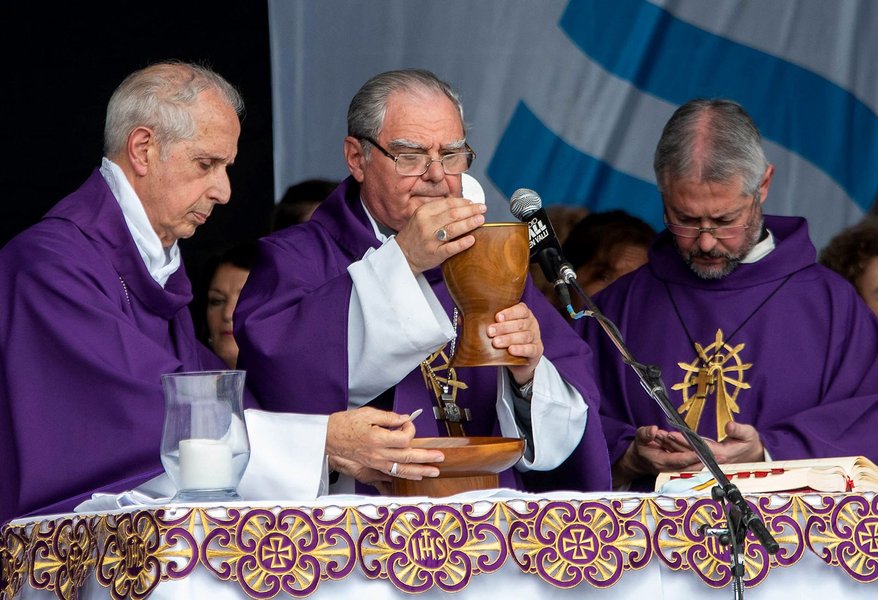
The elevation of the consecrated host during a Eucharistic celebration, a pivotal moment in the liturgy.
Connections to Jewish Traditions
The Eucharist is deeply rooted in Jewish religious traditions. The Last Supper itself was a Passover meal, which commemorates the Israelites' exodus from Egypt. Key Old Testament themes, such as the sacrificial lamb of Passover, the manna in the wilderness, and the offering of bread and wine by Melchizedek, are seen by many Christians as prefigurations of Christ and the Eucharist. The breaking of bread and sharing of wine in a sacred context were familiar elements in Jewish piety.
Theological Significance: A Multifaceted Mystery
The Eucharist is rich in theological meaning, encompassing several key aspects that, while universally acknowledged in principle, are understood with varying nuances across different Christian traditions.
Thanksgiving (Eucharistia)
The very name "Eucharist" highlights its nature as an act of profound thanksgiving to God the Father for all His blessings, especially for the work of creation, the redemption accomplished through Jesus Christ, and the ongoing process of sanctification by the Holy Spirit.
Memorial (Anamnesis) and Sacrifice
The Eucharist is a living memorial (anamnesis) of Christ's Passion, death, and Resurrection. It is not merely a recollection of past events but a ritual that makes present and effective Christ's unique and definitive sacrifice on Calvary. Catholic and Orthodox theology, in particular, emphasize that the Eucharist perpetuates this sacrifice in an unbloody manner.
The Presence of Christ
A central, and often debated, aspect is the nature of Christ's presence in the Eucharistic elements of bread and wine. Interpretations range from a physical transformation to a spiritual or symbolic presence. This is a key area of divergence among Christian denominations (explored further below).
Communion (Koinonia) and Unity
Partaking in the Eucharist fosters communion (koinonia) with Christ and, through Him, with fellow believers. It strengthens the unity of the Church as the Body of Christ, binding members together in charity and shared faith.
Spiritual Nourishment and Foretaste of Heaven
The Eucharist is understood as spiritual food that nourishes the faithful, strengthens them in their Christian journey, and cleanses them from venial sins (in Catholic teaching). It is also seen as an anticipation, a "foretaste," of the heavenly banquet in the Kingdom of God, where believers will be in full communion with God.
A Spectrum of Belief: Denominational Perspectives on Christ's Presence
While the Eucharist is a common heritage, the understanding of how Christ is present in the bread and wine differs significantly among Christian traditions. These varied interpretations have been a source of both profound theological reflection and, historically, division.
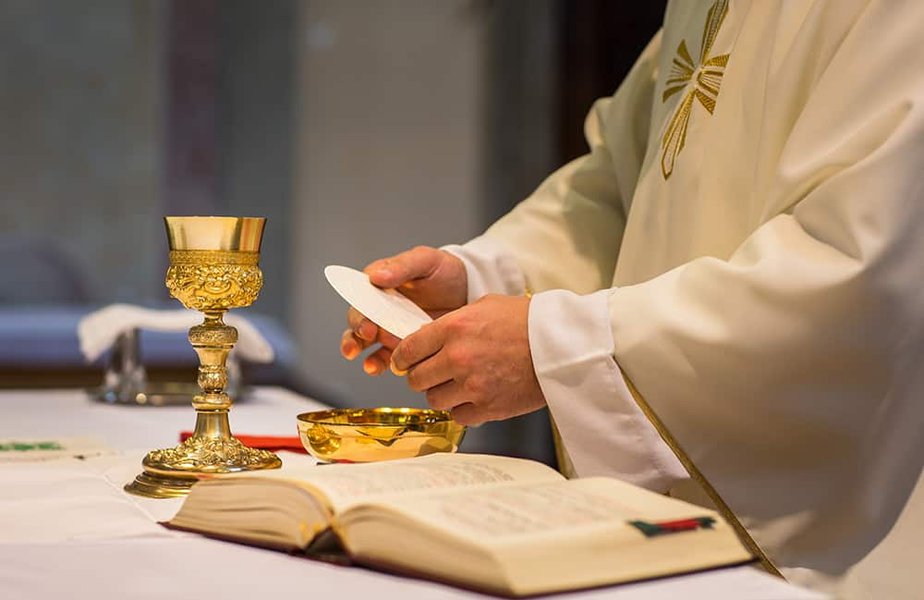
The elements of bread and wine are central to the Eucharistic rite across Christian denominations.
Catholic and Eastern Orthodox Understanding
Real Presence and Transubstantiation/Mystery
The Roman Catholic Church teaches the doctrine of the **Real Presence** with definitive clarity. Through the words of consecration spoken by a validly ordained priest during the Mass and the power of the Holy Spirit, the bread and wine are believed to be truly, really, and substantially transformed into the actual Body, Blood, Soul, and Divinity of Jesus Christ. This change is termed **transubstantiation**: the underlying substance (reality) of the bread and wine changes into the substance of Christ, while their outward appearances (species or accidents – taste, color, texture) remain. For Catholics, the Eucharist is considered the "source and summit of the Christian life" (CCC 1324).
The Eastern Orthodox Churches also firmly believe in the Real Presence of Christ in the Eucharist. They teach that the bread and wine are truly changed into the Body and Blood of Christ through the invocation of the Holy Spirit (Epiclesis) during the Divine Liturgy. While not typically using the term "transubstantiation," they refer to this change as a profound **Mystery**, affirming a genuine transformation rather than a symbolic one.
Protestant Understandings
Protestant views on the Eucharist are diverse, reflecting the varied theological streams that emerged from the Reformation.
Lutheran View: Sacramental Union
Martin Luther affirmed a **real presence** of Christ in the Eucharist, but rejected transubstantiation. Lutherans typically believe in **sacramental union** (often imprecisely called consubstantiation by others), meaning that Christ's body and blood are truly present "in, with, and under" the forms of the bread and wine. The elements remain bread and wine, yet Christ is physically present in them.
Anglican/Episcopalian View: Varied Interpretations
Anglicanism encompasses a range of views. Some Anglicans hold a belief in the Real Presence similar to Catholics or Lutherans (often termed "receptionism" – Christ is received by faith in the sacrament), while others lean towards a more symbolic or memorialist understanding. The Book of Common Prayer allows for this diversity, emphasizing the spiritual reception of Christ.
Reformed (Calvinist) View: Spiritual Presence
John Calvin taught a **spiritual presence** of Christ. While rejecting a physical presence in the elements, Calvin believed that through faith, believers spiritually commune with Christ and receive the benefits of his sacrifice when partaking in the Lord's Supper. Christ is present, but in heaven, and believers are lifted up to him by the Holy Spirit.
Memorialist View (Zwinglian and many Evangelical Churches)
Ulrich Zwingli, another Reformer, advocated for a purely **symbolic or memorialist** view. In this understanding, the bread and wine are symbols that represent Christ's body and blood, and the Lord's Supper is primarily an act of remembrance of Christ's sacrifice and a proclamation of faith. Many Baptist, Pentecostal, and other Evangelical churches hold this view, often referring to the rite as an "ordinance" rather than a "sacrament."
Non-Eucharistic Traditions
Some Christian groups, such as the Quakers (Religious Society of Friends) and The Salvation Army, do not traditionally practice an outward ritual of the Eucharist, emphasizing instead direct spiritual communion with God without external sacraments.
Denominational Emphases in the Eucharist: A Comparative Overview
The following chart offers a simplified visual representation of how different Christian traditions might emphasize various aspects of the Eucharist. The scores are illustrative, reflecting general theological tendencies rather than absolute, quantifiable data, and acknowledging diversity within each tradition. The scale typically ranges from 1 (less emphasis) to 5 (strong emphasis).
This chart illustrates that while all traditions value thanksgiving and community, the specific understanding and emphasis on concepts like 'Real Physical Presence' and 'Sacrificial Aspect' vary considerably. Catholic and Orthodox traditions score highest on these, reflecting their doctrines of transubstantiation/mystery and the sacrificial nature of the Mass/Divine Liturgy. Evangelical traditions, while highly valuing the memorial aspect and communal unity, generally place less emphasis on a physical presence or a re-presentation of sacrifice.
Historical Development of Eucharistic Theology and Practice
The Eucharist has been a central practice since the earliest days of Christianity, but its theological understanding and liturgical expression have evolved over centuries.
The Early Church (1st - 4th Centuries)
In the apostolic and post-apostolic era, the Eucharist, often called the "Breaking of the Bread," was celebrated in homes, frequently as part of a communal meal (agape feast). Early Christian writings, such as the *Didachē* (late 1st or early 2nd century) and the letters of St. Ignatius of Antioch (early 2nd century), attest to its centrality and developing liturgical forms. St. Justin Martyr (c. 150 AD) described a rite that included readings from scripture, a homily, prayers, the presentation of bread and wine mixed with water, a prayer of thanksgiving over these elements, and their distribution to the faithful. The early Church Fathers consistently spoke of the consecrated bread and wine as the Body and Blood of Christ, though the precise nature of this presence was not yet subject to the detailed philosophical definitions of later centuries.
The Patristic and Medieval Periods (4th - 15th Centuries)
With the legalization of Christianity under Emperor Constantine in the 4th century, Eucharistic liturgies became more public and elaborate. Distinct liturgical families developed, such as the Roman Rite in the West and various Eastern rites (Byzantine, Alexandrian, etc.). Theologians like St. Ambrose of Milan and St. Augustine of Hippo contributed significantly to Eucharistic theology, often using realistic language to describe Christ's presence. During the Middle Ages, theological reflection on the Eucharist intensified, particularly in the West. Debates arose concerning the manner of Christ's presence, leading to the formal definition of **transubstantiation** by the Fourth Lateran Council in 1215. Thinkers like St. Thomas Aquinas provided a sophisticated philosophical framework for this doctrine. Eucharistic devotion also grew, with practices like the Feast of Corpus Christi and Eucharistic adoration becoming popular.
The Reformation and Counter-Reformation (16th - 17th Centuries)
The Protestant Reformation in the 16th century brought profound challenges to the medieval understanding and practice of the Eucharist. Reformers like Martin Luther, Ulrich Zwingli, and John Calvin proposed alternative interpretations of Christ's presence, as discussed earlier. This led to significant divisions within Western Christianity. The Roman Catholic Church responded to the Reformation at the Council of Trent (1545–1563), which reaffirmed and dogmatically defined its teaching on the Eucharist, particularly transubstantiation and the sacrificial nature of the Mass.
Modern Era and Ecumenical Dialogue
In more recent centuries, especially since the Second Vatican Council (1962-1965) for Catholics, there has been renewed theological study of the Eucharist and a greater emphasis on its communal and paschal aspects. The ecumenical movement has also led to significant dialogue among different Christian denominations regarding the Eucharist, seeking common ground while acknowledging persistent differences. Despite ongoing variations, the Eucharist remains a vital expression of faith for the vast majority of Christians worldwide.
The Eucharist in Visual Summary: A Mindmap
This mindmap provides a structured overview of the core concepts related to the Eucharist, branching out from its central identity to its origins, meanings, diverse interpretations, and practical celebration.
(Holy Communion / Lord's Supper)"] id1["Origins"] id1a["Last Supper
(Institution by Jesus)"] id1b["Biblical Accounts
(Gospels, Paul)"] id1c["Jewish Roots
(Passover, Sacrificial System)"] id2["Theological Meanings"] id2a["Thanksgiving (Eucharistia)"] id2b["Memorial (Anamnesis)"] id2c["Sacrifice of Christ"] id2d["Real Presence of Christ
(Varies by denomination)"] id2e["Communion (Koinonia)
With Christ & Church"] id2f["Spiritual Nourishment"] id2g["Foretaste of Heavenly Banquet"] id3["Denominational Views on Presence"] id3a["Catholicism
(Transubstantiation)"] id3b["Eastern Orthodoxy
(Mystery of Transformation)"] id3c["Lutheranism
(Sacramental Union)"] id3d["Anglicanism
(Spectrum of Beliefs)"] id3e["Reformed/Calvinist
(Spiritual Presence)"] id3f["Memorialism
(Symbolic - Many Evangelicals)"] id4["Liturgical Practice"] id4a["Elements: Bread and Wine"] id4b["Celebrated in Mass / Divine Liturgy / Service"] id4c["Key Parts:
Word, Thanksgiving, Consecration, Communion"] id4d["Administered by Ordained Clergy (most traditions)"] id5["Significance in Christian Life"] id5a["Source and Summit (esp. Catholic)"] id5b["Expression of Faith"] id5c["Bond of Unity"] id5d["Means of Grace"]
Comparative Beliefs about the Eucharist
The table below summarizes key beliefs and practices concerning the Eucharist across several major Christian traditions. It's important to remember that variations exist within each tradition.
| Aspect | Roman Catholic | Eastern Orthodox | Lutheran | Anglican/Episcopalian | Reformed (Calvinist) | Baptist/Many Evangelicals |
|---|---|---|---|---|---|---|
| Name of Rite | Eucharist, Mass, Holy Communion | Divine Liturgy, Holy Communion, Eucharist | Holy Communion, The Lord's Supper, Eucharist | Holy Communion, Eucharist, The Lord's Supper, Mass (Anglo-Catholic) | The Lord's Supper, Holy Communion | The Lord's Supper, Communion |
| Nature of Elements (Bread & Wine) | Become Body & Blood of Christ (Transubstantiation) | Become Body & Blood of Christ (Mystery/Transformation) | Christ's Body & Blood are "in, with, and under" the bread & wine (Sacramental Union) | Varies: Real Presence to Symbolic (consecrated elements) | Symbols representing Christ's Body & Blood; means of grace | Symbols representing Christ's Body & Blood (Memorial) |
| Presence of Christ | Real, True, Substantial (Body, Blood, Soul, Divinity) | Real, True (Body and Blood) | Real Bodily Presence | Varies: Real Spiritual Presence to Symbolic Presence | Real Spiritual Presence; Christ present by Holy Spirit | Symbolic Presence; Christ present in the worshipping community |
| Sacrifice | Re-presentation of Christ's sacrifice on Calvary (unbloody manner) | The Liturgy is a sacrifice, making present Christ's sacrifice | Commemoration of sacrifice; Christ offers Himself | Varies: Sacrifice of praise and thanksgiving, some see it as making present Christ's sacrifice | Memorial of Christ's once-for-all sacrifice | Memorial of Christ's once-for-all sacrifice |
| Administrator | Ordained Priest or Bishop | Ordained Priest or Bishop | Ordained Pastor | Ordained Priest or Bishop | Ordained Minister/Elder | Pastor or designated lay leader |
| Frequency | Daily possible; Obligatory on Sundays/Holy Days | Frequently; common on Sundays/Feast Days | Regularly, often weekly or bi-weekly | Regularly, often weekly | Regularly, often monthly or quarterly | Regularly, often monthly or quarterly |
Early Christian Perspectives on the Eucharist
Understanding how the earliest Christians viewed the Eucharist provides crucial context for its enduring significance. The video below explores scriptural and patristic evidence regarding early beliefs about this central Christian practice. It delves into how those closest to the time of Jesus and the Apostles understood the nature and importance of the "Breaking of the Bread."
As the video discusses, figures like St. Ignatius of Antioch referred to the Eucharist as the "medicine of immortality" and the "flesh of our Savior Jesus Christ." These early testimonies highlight a strong belief in the unique presence of Christ in the elements and the profound spiritual effects of partaking in the Eucharist. This historical foundation is vital for appreciating the later theological developments and the diverse interpretations that exist today.
Frequently Asked Questions (FAQ) about the Eucharist
What does the word "Eucharist" actually mean?
Is the Eucharist the same as Holy Communion or the Lord's Supper?
Why do different Christian denominations have different beliefs about the Eucharist?
What are the common elements used in the Eucharist?
Who can receive the Eucharist?
Recommended Further Exploration
- Explore the historical development and practice of Eucharistic adoration in various Christian traditions.
- Investigate the diverse theological perspectives on whether and how the Eucharist is considered a sacrifice.
- Delve into the connections between the Last Supper and the Jewish Passover, understanding its original context.
- Compare the distinct liturgical forms and symbolic actions in the Eucharistic celebrations of Eastern Orthodoxy and Roman Catholicism.
References
 theeucharist.wordpress.com
Last updated May 21, 2025