
Unpacking the Meaning: What Does It Really Mean to "Pose"?
Exploring the diverse definitions and applications of the term "pose" in language and visual arts.
The word "pose" carries multiple meanings and nuances depending on the context. While often associated with photography and art, it also appears in discussions about problems, questions, and even pretense. Understanding these different facets is key to interpreting its use accurately.
Highlights
- Multiple Meanings: The term "pose" can refer to physical positioning (especially for art/photos), causing a problem or hazard, asking a question, or affectation.
- Visual Arts Focus: In photography and painting, a "pose" is a deliberate arrangement of the body and face intended for capture or representation.
- Context is Crucial: Determining the intended meaning of "pose" requires careful consideration of the surrounding context, as its interpretation can vary significantly.
What Does "Pose" Mean?
The definition of "pose" extends beyond simply striking a position for a camera. Let's delve into its primary meanings as found in dictionaries and common usage.
Dictionary Definitions
Language resources provide several core definitions for the word "pose":
- As a Verb:
- To assume or hold a particular physical attitude or position, often for artistic purposes like painting or photography. (e.g., "She posed for the portrait.")
- To present or constitute (a problem, danger, or difficulty). (e.g., "The situation poses a threat to public safety.")
- To ask or put forward (a question or matter for consideration). (e.g., "He posed a question to the committee.")
- To pretend to be someone or something else; to affect a particular quality or character. (e.g., "He posed as an expert.")
- As a Noun:
- A particular way of standing or sitting, especially one assumed for a picture or painting. (e.g., "The model held the pose for an hour.")
- An unnatural way of behaving or speaking adopted to impress others; an affectation. (e.g., "His sophisticated air is just a pose.")
The origin traces back to the Late Latin word pausāre, meaning "to stop" or "to cease," reflecting the idea of holding still in a position.
Contextual Meanings
Beyond the dictionary, the meaning shifts based on how it's used:
- Causing Difficulty: When something "poses a problem" or "poses a threat," it means it introduces or creates that difficulty or danger.
- Presenting Ideas: To "pose a question" or "pose a theory" means to formally introduce it for discussion or consideration.
- Pretense: Someone who "poses" might be pretending to have certain qualities or identity, indicating insincerity or affectation. A "poser" is someone who adopts a facade.
Posing in Photography and Visual Arts
Perhaps the most common association with "pose" is in the visual arts, particularly photography and portraiture. Here, it refers specifically to the intentional positioning of the body.
The Concept of "Posing"
Posing in this context is about arranging the body, limbs, and facial expression to create a desired effect, convey an emotion, or achieve a specific aesthetic. It's a collaborative process between the subject and the artist (photographer, painter) to capture a moment or look effectively.
Common Photographic Poses
Photographers utilize a wide range of poses depending on the type of shoot (portrait, fashion, family, engagement) and the desired outcome. Some common examples include:
- Head Tilt: A simple tilt of the head can soften a look, add dynamism, or convey curiosity in portraits.
- Sitting Variations: Posing while seated allows for diverse arrangements of legs and torso – crossing legs, leaning forward, tucking one leg in – to shape the body and create interest.
- Standing Poses: Crossing legs while standing can accentuate hips. In fashion, a dynamic walking pose, sometimes slightly exaggerated, is often used.
- Couple Poses: Engagement or wedding photos often use poses like "tummy-to-tummy" or "T-bone" (one person facing forward, the other perpendicular) for a natural, connected feel. Looking over a partner's shoulder allows for intimate close-ups.
- Lying Poses: Posing while lying down, perhaps on the hip or stomach, can create relaxed or dynamic compositions depending on limb placement.
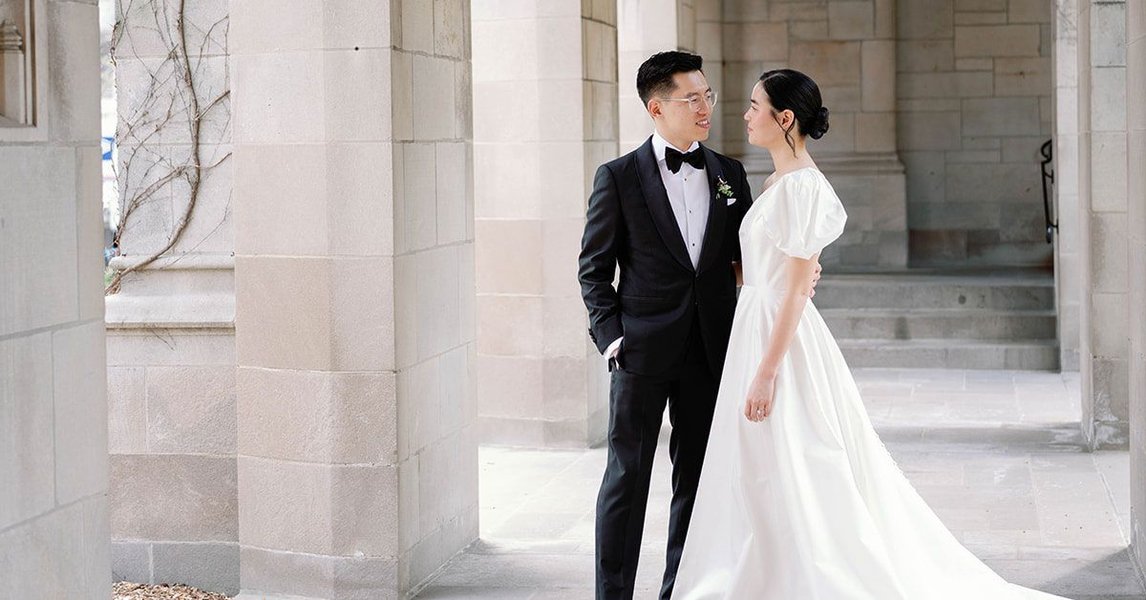
A classic wedding photo pose captures a moment of connection between the couple.
"The Pose" in Popular Culture
Sometimes, specific poses gain informal names or cultural recognition. One such example, occasionally referred to online (e.g., on Urban Dictionary), describes a casual pose where a person lies on their stomach, facing the viewer or camera, with their feet lifted playfully behind them. This specific arrangement is often seen in informal photos, social media, or illustrations, depicted as a relaxed or whimsical stance. It falls under the broader category of intentional body positioning for visual representation, distinct from the other meanings of "pose."
Exploring Different Dimensions of Posing
The concept of "pose" involves various dimensions, from its artistic intent to its perceived naturalness. This chart visualizes some of these facets across different contexts where the term might apply.
This radar chart illustrates how different uses of the word "pose" score against various characteristics like artistic intent, formality, or indication of a problem. For example, a formal photographic pose scores high on artistic intent and formality but low on naturalness and problem indication.
Visualizing Posing Concepts
To better grasp the relationships between the different meanings and contexts of "pose," this mind map outlines the core concepts and their connections.
(Art/Photo)"] id1a["Hold Still"] id1b["Intentional Stance"] id1c["For Visual Capture"] id2["Constitute/Present
(Problem/Threat)"] id2a["Introduce Difficulty"] id2b["Create Hazard"] id3["Ask/Put Forward
(Question/Idea)"] id3a["Propose for Consideration"] id3b["Set Forth"] id4["Pretend/Affect
(Identity/Quality)"] id4a["Feigned Behavior"] id4b["Impersonation"] Noun id5["A Specific Stance
(Assumed for Art/Photo)"] id5a["Arrangement of Body"] id5b["Photographic Subject"] id6["An Affectation/Pretense"] id6a["Unnatural Behavior"] id6b["Facade"]
This mind map branches out from the central term "Pose," separating its functions as a verb and a noun, and detailing the distinct meanings within each category, such as assuming a physical position, presenting a problem, asking a question, pretending, or referring to the stance or affectation itself.
Understanding "Pose" Through Examples
Hearing the word "pose" used in context can help clarify its meaning and pronunciation. The following video provides examples and explains the different ways the word can be understood in English.
This video explains the meaning of "pose," provides examples of its use in sentences, and touches upon related terms like "poser."
Watching this can reinforce the different definitions discussed earlier, showing how "pose" functions both when referring to physical positioning and when used more abstractly to mean presenting something (like a question or problem) or affecting an attitude.
Posing Techniques Summarized
Different types of photography and situations call for specific posing approaches. This table summarizes some common categories and associated tips mentioned in photography resources.
| Pose Category | Key Characteristics & Tips | Common Scenarios |
|---|---|---|
| Portrait Poses | Focus on face and upper body. Head tilts add softness/dynamism. Sitting poses allow varied leg/hip positioning. Use hands expressively. | Headshots, individual portraits, senior photos. |
| Fashion Poses | Often dynamic and sometimes exaggerated. Walking poses with aligned feet are common. Emphasize clothing and body lines. | Model portfolios, editorial shoots, clothing advertisements. |
| Couple Poses | Emphasize connection and intimacy. "Tummy-to-tummy," "T-bone," looking over shoulder. Capture interaction. | Engagement photos, wedding photography, couples portraits. |
| Family Poses | Organize multiple people cohesively. Start with classic arrangements. Vary heights and positions for visual interest. Capture interaction and personality. | Family portraits, group shots. |
| Casual/Informal Poses | Aim for natural and relaxed looks. Lying on stomach with feet up ("The Pose"), leaning against walls, candid movements. | Social media photos, lifestyle photography, personal snapshots. |
| Sitting Poses | Vary leg positions (bent, straight, crossed, tucked). Lean forward or sideways. Use chair edges for flexibility. | Portraits, lifestyle, fashion. |
| Lying Poses | Lie on hip, back, or stomach. Elevate feet or hands for dynamism. Consider background interaction. | Fashion, portraits, boudoir, casual shots. |
This table provides a quick overview of different posing styles and associated techniques commonly used in various photographic contexts, highlighting the versatility required depending on the goal of the image.
Frequently Asked Questions
What is the origin of the word "pose"?
What are some common photography poses?
Can "pose" mean something negative?
What is the difference between posing and positioning?
Recommended
- Explore different portrait photography techniques.
- Learn about the history of posing in art.
- What are common posing mistakes to avoid in photos?
- How does body language relate to posing for pictures?
References
 tenor.com
 unsplash.com
Last updated May 3, 2025