
Understanding "This"
An In-Depth Exploration of the Term and Its Uses
Key Highlights
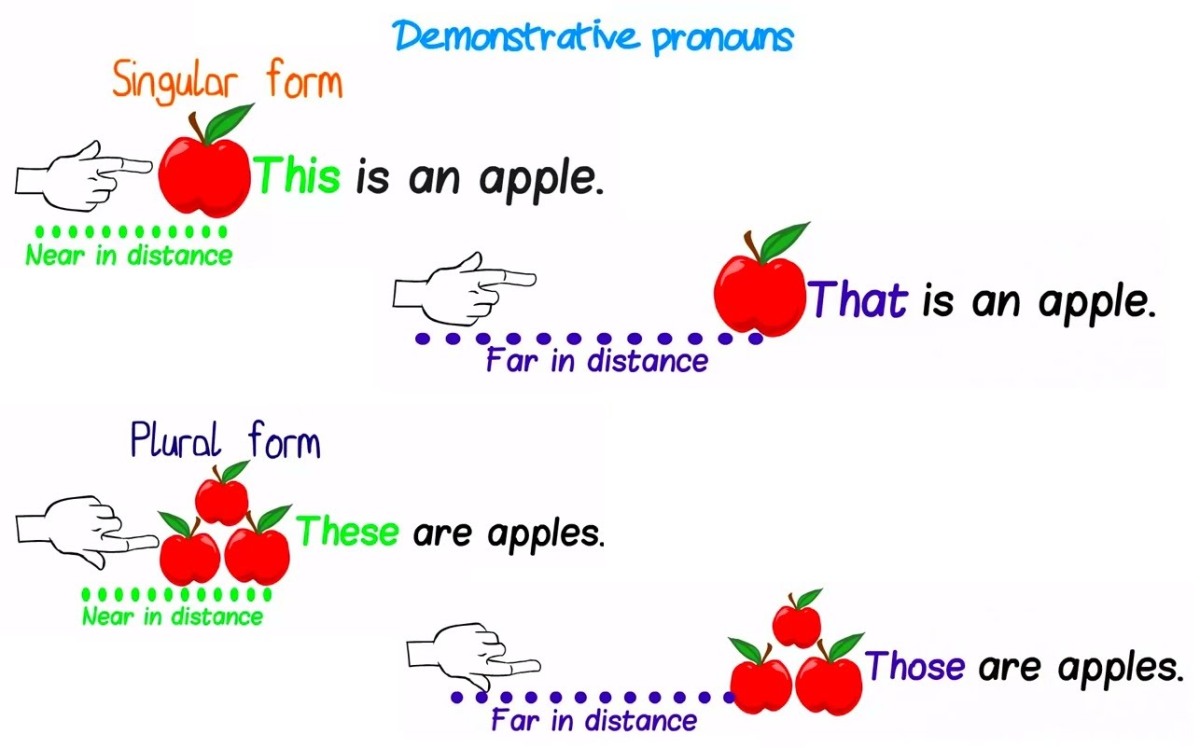
- Grammatical Functions: "This" serves as a demonstrative pronoun, adjective, or adverb to point out specific objects, ideas, or situations near in time or place.
- Contextual Variations: Its meaning adapts based on the context – from everyday language to programming contexts like JavaScript.
- Reference and Identification: "This" can be used to refer to an object or concept that has been mentioned or is immediately present, and its interpretation can extend even into specialized fields such as technology or media.
Comprehensive Analysis
Grammatical and Linguistic Perspectives
The word "this" is one of the simplest yet most frequently used words in the English language. At its core, "this" serves multiple functions, depending on how and where it is used in a sentence. Principally, it operates as a demonstrative pronoun or adjective but can also function as an adverb in certain contexts.
Demonstrative Pronoun
As a demonstrative pronoun, "this" is employed to refer specifically to a person, object, or idea that is immediately identifiable by the speaker and listener. Its function is to single out and bring attention to a particular object or concept that is already known. For example, in the sentence "This is my favorite book," the speaker is designating one specific book that is close at hand or has already been introduced in conversation.
As an Adjective
When used as an adjective, "this" modifies a noun to indicate this proximity or specificity. For instance, "this car" or "this idea" implies that among a set of options, the one being referred to is the one under immediate consideration or discussion. The role of "this" as a modifier enhances clarity and precision in communication.
Adverbial Usage
Although less common, "this" can function in an adverbial role to indicate degree or extent. In some contexts, it might be seen in phrases where it refers robustly to the immediacy or current status of a concept, for example when emphasizing a quality or trait that is characteristic of the subject being described.
Programming Context: The Use of "this" in JavaScript
Outside of its conventional grammatical usage, the term "this" has a specific and significant role in various programming languages, with JavaScript being a prominent example. In programming, "this" refers to the object in context. In JavaScript, for instance, "this" denotes the object to which a function belongs at runtime. Understanding this semantic nuance is crucial for developers, as misinterpretation of "this" can lead to bugs or unintended behavior in code.
Runtime Binding
In JavaScript, the value of "this" is determined during the runtime, and it can vary depending on how the function is called. For example, in the method of an object, "this" points to the object itself, thus allowing the function to access properties and methods associated with that object. It is this dynamic binding that renders JavaScript both flexible and occasionally perplexing, especially for beginners.
Usage in Object-Oriented Programming
Within the context of object-oriented programming, the keyword "this" provides a way to refer to the current instance of a class. It can be used inside methods to invoke other properties or methods of the same object. This self-referential approach is central to encapsulation and proper modular design.
Contextual Variations and Multiple Meanings
The beauty of the word "this" lies in its versatility, molded by the context in which it is used. It is important to recognize that while the grammatical guidelines for "this" are consistent, its interpretation can take on diverse nuances in different situations:
Everyday Language and Communication
In daily conversation, "this" is often used to focus attention on a specific detail or entity. Whether referring to tangible objects such as "this cup" or abstract ideas like "this concept," the demonstrative nature of the word helps to clearly delineate what is being considered. The proximity indicated by "this" not only communicates physical closeness but also a conceptual connection or relevance spawned from a shared context.
Literature and Rhetorical Usage
In literature, authors frequently utilize "this" as a literary device to create immediacy or to highlight significant elements within their work. For example, an author might transition a narrative focus with a statement like, "This was the beginning of a new era," thereby leveraging the word to signal a critical turning point understood as both literal and symbolic.
Alternative Contexts
"This" can also be encountered as part of names or titles. In certain cases, it forms part of an idiomatic expression or brand, such as the rock band sometimes mentioned under names that play off the generic nature of the word. Within these realms, cultural and contextual underpinnings often provide a secondary layer of meaning, which requires a familiarity with a specific subculture or historical context.
Interpretation When Context is Unclear
In situations where the context is not explicit, as can sometimes happen in brief or ambiguous queries, it is crucial to query additional details to provide a truly relevant and useful interpretation of "this." The ambiguity of the query "whts this" could be resolved by asking whether the reference is to a grammatical term, a piece of code, a cultural reference, or any other subject matter that might be implied. Without further context, one can only provide a synthesis of the primary uses and interpretations of the term "this."
It is this layer of inquiry and the search for additional context that underscores the importance of clear communication. Questions about "this" can lead to wide-ranging discussions, and clarifying the background or the desired focus will allow for a more tailored response. Whether it is academic interest, technical programming insight, or a reference to a modern cultural phenomenon, context is key.
Detailed Comparison Table of "This" in Various Contexts
| Aspect | Description | Example |
|---|---|---|
| Grammatical Usage | Acts as demonstrative pronoun, adjective, or adverb to indicate specificity or immediacy. | "This is amazing!" or "This moment is unforgettable." |
| Programming (JavaScript) | Refers to the current object of context during function execution, enabling access to properties. | In a method, this.name refers to the object's attribute. |
| Everyday Conversation | Used to point out a nearby object, idea, or experience. | "This coffee tastes great." |
| Literary and Rhetorical | Employed to highlight a moment of change or importance in narrative flow. | "This was the turning point in his life." |
| Cultural References | It may denote specific entities such as bands or marked events when used in names. | Names or titles incorporating "this" to evoke recognition. |
Applications Across Disciplines
Linguistics
In the study of linguistics, "this" is fundamental for understanding demonstrative systems. It forms part of a broader category of demonstrative words that include "that," "these," and "those." These terms help linguists analyze how language structures indicate spatial, temporal, and conceptual proximity. Scholars debate not only the syntax but also the pragmatic implications of such words in communication.
Education
Educators often begin teaching language structure by introducing demonstratives like "this." By learning the specific attributes that these words convey, students are better able to construct precise, effective sentences. Teaching tools frequently include visual aids, sentence transformation exercise, and the comparison of similar demonstrative words.
Technology
The specialized usage of "this" in technological contexts, especially in dynamic languages such as JavaScript, underscores its importance in programming education. Learning how to correctly bind "this" during function execution is a fundamental concept for aspiring programmers. Misunderstandings can lead to errors that are not strictly syntax-related, but rather conceptual misalignments between expected and actual contexts.
Cultural Commentary
In modern cultural analysis, the usage of "this" may also be observed in audience-driven or situational expressions. It encapsulates both a linguistic specificity and a communal understanding – an agreement on what is currently being addressed. This multifaceted role reinforces its significance in communication strategies across various media forms.
Insight into Ambiguity and Clarification
When encountering a query such as "whts this" without further context, it is essential to approach the term from multiple angles. The response provided here has drawn upon grammatical norms, everyday language applications, and specialized technical usage, ensuring that the answer is comprehensive and pertinent. In scenarios where the context might be ambiguous, it is recommended to seek further details or specify the area of interest, ensuring that the response can be as accurate and meaningful as possible.
Clarifying whether the inquiry is related to language, programming, cultural references, or another domain can vastly improve the relevance of the guidance provided. This multifaceted approach not only empowers the individual asking the question but also enriches the discussion surrounding a term that is often taken for granted. By exploring the various layers of meaning and contextual applications, one gains a deeper appreciation for how language evolves and adapts across different fields.
Historical and Etymological Insights
From an etymological perspective, the word "this" has its roots in the Old English demonstrative system. Historically, demonstrative pronouns have been used across languages to denote immediacy and proximity—both geographical and metaphorical. Over centuries, the usage of "this" has remained remarkably consistent, though its applications have broadened to include literary, technical, and cultural nuances.
Linguists have often pointed out that the evolution of demonstratives like "this" serves as a mirror to the evolution of human communication itself. As societies changed and technology advanced, so too did the ways in which short, context-dependent words could be manipulated to convey more complex meanings. This historical continuity highlights the enduring power of language even as it adapts to new challenges and opportunities.
Bringing It All Together
In summary, the term "this" is a versatile element of language that plays multiple roles—from denoting immediate relevance in conversation to serving as a critical component in programming logic. It functions to specify what is present, noticeable, or of immediate significance, whether in spoken language or in written code. As a demonstrative word, it creates clarity by pinpointing one concept or object among many.
Its adaptability across various fields of study, whether in linguistics, computer science, or cultural commentary, underscores its importance in our daily communication. The thorough exploration provided here aims to meet the diverse needs of anyone seeking a comprehensive understanding of "this" in all its forms. If further clarification or deeper exploration into any of these aspects is desired, each area offers additional rich layers of inquiry.
References
- THIS Definition & Meaning - Merriam-Webster
- THIS Definition & Meaning - Dictionary.com
- THIS Definition - Cambridge English Dictionary
- THIS Definition in American English - Collins Dictionary
- THIS Meaning - Britannica
Recommended Related Queries
 images.google.com

Last updated March 10, 2025