
The Unfolding Clock: How Time Bends and Stretches Across the Cosmos
Delve into the fascinating phenomenon of time dilation, where the universal metronome doesn't tick the same for everyone.
Time, often perceived as a constant and unwavering river, is in reality a more fluid and malleable concept than our everyday experiences suggest. At the heart of this revelation lies time dilation, a cornerstone of Albert Einstein's theories of relativity. It describes how time can pass at different rates for different observers, depending on their relative motion or their position within a gravitational field. This isn't science fiction; it's a fundamental aspect of our universe, with tangible effects on technologies we use daily and profound implications for our understanding of space and existence.
Essential Insights into Time Dilation
- Time is Relative, Not Absolute: Time dilation demonstrates that the passage of time is not universal. Observers moving at different speeds or in different gravitational fields will measure different durations for the same events.
- Two Types of Dilation: The phenomenon arises from two distinct scenarios described by Einstein's theories: velocity time dilation (Special Relativity), where faster-moving clocks tick slower relative to stationary ones, and gravitational time dilation (General Relativity), where clocks in stronger gravitational fields tick slower.
- Real-World Applications and Proof: Far from being a purely theoretical concept, time dilation has been experimentally verified and is crucial for the functioning of technologies like GPS systems, where precise timing adjustments are necessary to account for relativistic effects.
Unpacking the Concept: What is Time Dilation?
In its simplest terms, time dilation means that time can stretch or compress. If you have two perfectly synchronized clocks, and one starts moving at a very high velocity (a significant fraction of the speed of light) or is placed in a region of intense gravity (like near a black hole), that clock will run slower compared to the clock that remained stationary or in a weaker gravitational field. Consequently, less time will have passed for the moving clock or the clock in strong gravity.
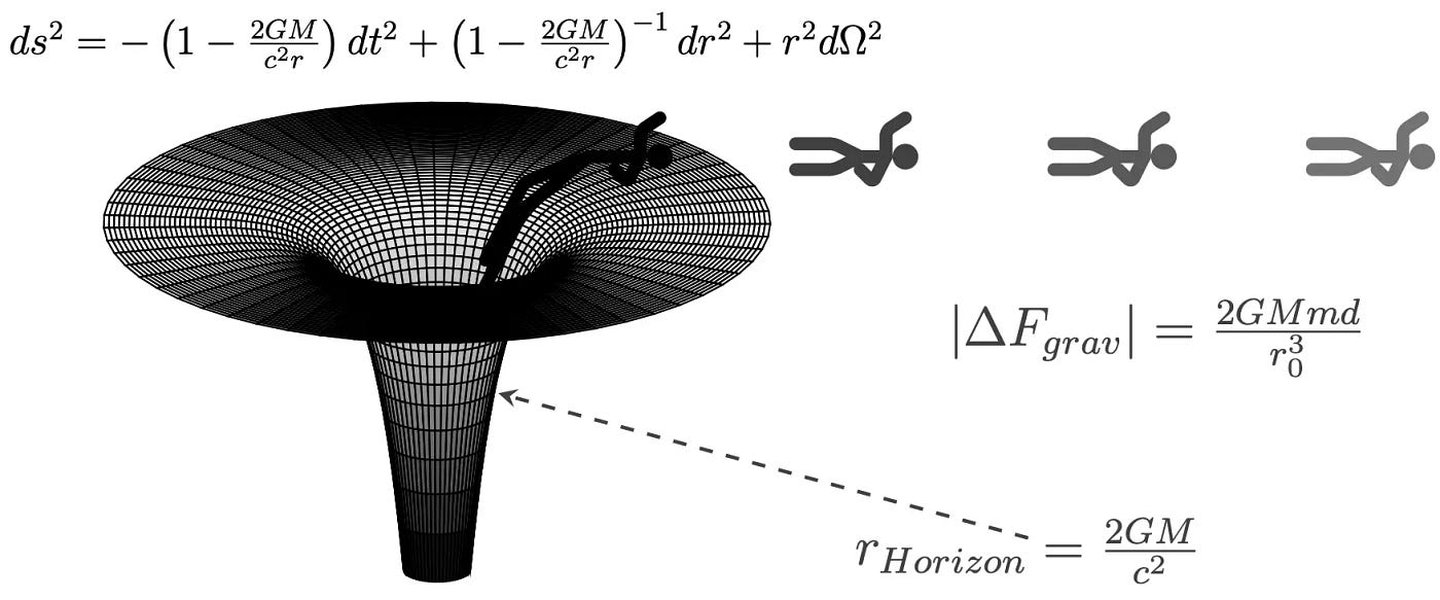
A visual representation of how massive objects warp spacetime, influencing the passage of time.
Velocity Time Dilation (Special Relativity)
According to Einstein's Special Theory of Relativity (1905), the faster an object moves through space, the slower time passes for that object relative to a stationary observer. This effect becomes truly significant only at speeds approaching the speed of light (approximately 299,792 kilometers per second). The Lorentz factor, denoted by the Greek letter gamma (γ), quantifies this effect:
\[ \Delta t' = \gamma \Delta t = \frac{\Delta t}{\sqrt{1 - \frac{v^2}{c^2}}} \]
Where:
- \( \Delta t' \) is the time interval measured by the observer for whom the clock is moving.
- \( \Delta t \) is the proper time, the time interval measured by an observer in the clock's own rest frame (i.e., moving with the clock).
- \( v \) is the relative velocity between the observer and the moving clock.
- \( c \) is the speed of light in a vacuum.
As \( v \) approaches \( c \), the denominator \( \sqrt{1 - v^2/c^2} \) approaches zero, causing \( \gamma \) (and thus \( \Delta t' \)) to approach infinity. This implies that for an object moving at the speed of light, time would effectively stop relative to a stationary observer.
Gravitational Time Dilation (General Relativity)
Einstein's General Theory of Relativity (1915) introduced the concept that gravity is not a force, but a curvature of spacetime caused by mass and energy. This theory predicts that time passes more slowly in stronger gravitational fields. Therefore, a clock placed closer to a massive object (like the Earth or a black hole) will run slower than a clock situated farther away in a weaker gravitational field. This effect is also essential for precise measurements and has been experimentally confirmed.
A Journey Through Time: "The Stargazer's Return"
The following story illustrates the profound and personal impact of time dilation.
Echoes of a Distant Future
Commander Aris Thorne, a pioneer of interstellar travel, bid farewell to his young daughter, Lyra, promising to return from his mission to the Kepler-186f system in what, for him, would be a mere decade. His ship, the *Odyssey*, was a marvel of engineering, capable of reaching 90% the speed of light. As the *Odyssey* tore through the fabric of space, Aris diligently performed his duties, the ship's chronometer marking the steady passage of his ten years.
The journey was awe-inspiring. Nebulae painted the void with colors unseen from Earth, and distant galaxies glittered like scattered diamonds. For Aris, time flowed as it always had. He communicated with Earth, though the messages grew increasingly delayed, carrying news of Lyra's school achievements, her teenage years, then her university graduation—milestones compressed into fleeting updates for him.
Upon his return, as the *Odyssey* decelerated into Earth's orbit, Aris felt a surge of anticipation. Ten years. He'd missed a decade of Lyra's life, a painful but accepted sacrifice for the advancement of science. But as he stepped onto the landing platform, the world that greeted him was not the one he had left. The architecture was futuristic, the air hummed with unfamiliar technologies, and the faces were those of strangers.
An elderly woman with kind, knowing eyes approached him, a faint resemblance to his Lyra in her youth. "Father," she said, her voice gentle, "welcome home."
Aris stared, his mind struggling to bridge the chasm of understanding. "Lyra? But... it's only been ten years."
She smiled sadly. "Ten years for you, Father. For us on Earth, it has been seventy. Your journey near light speed stretched your moments while ours marched relentlessly on."
The weight of gravitational and velocity time dilation, imperceptible to him in his isolated frame of reference, had created an insurmountable temporal gulf. He was a relic, a man out of time, his ten-year voyage costing him a lifetime with his daughter. The stars had offered him wonders, but time, in its relativistic dance, had exacted the ultimate price.
Time Dilation in Our Daily Lives: The GPS Example
One of the most compelling real-world examples of time dilation is its critical role in the Global Positioning System (GPS). GPS relies on a network of satellites orbiting the Earth at altitudes of about 20,200 kilometers and speeds of roughly 14,000 kilometers per hour. For GPS to provide accurate location data, the timing signals from these satellites must be incredibly precise.
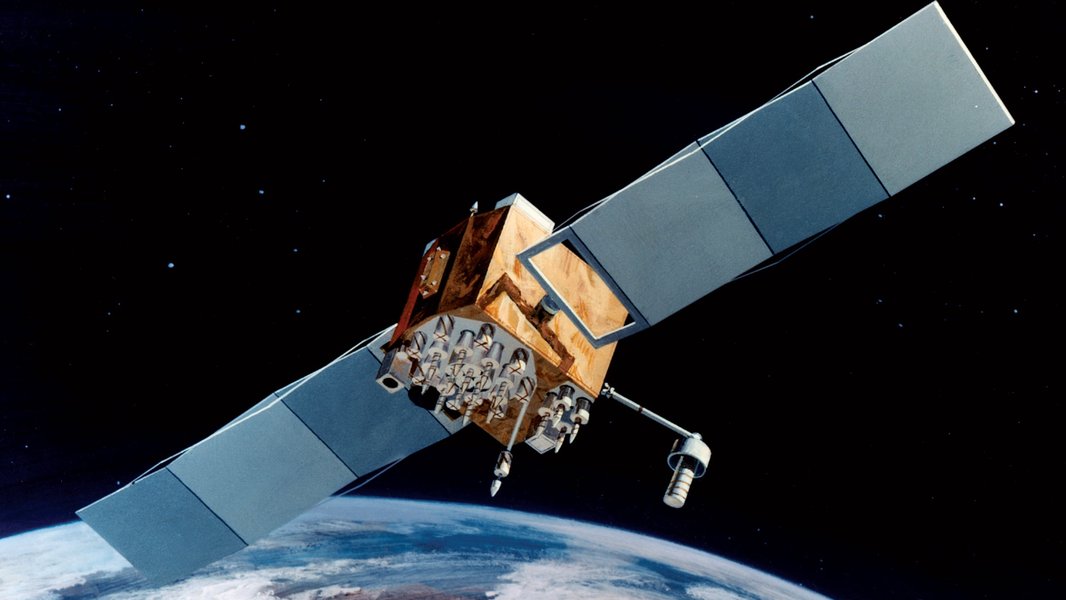
GPS satellites experience both velocity and gravitational time dilation, requiring precise corrections.
Two relativistic effects are at play:
Velocity Time Dilation:
Due to their high orbital speeds, the clocks on GPS satellites experience time passing slower than clocks on the Earth's surface by about 7 microseconds (millionths of a second) per day, as predicted by Special Relativity.
Gravitational Time Dilation:
Because the satellites are in a weaker gravitational field than observers on Earth (further from Earth's center of mass), their clocks run faster by about 45 microseconds per day, according to General Relativity.
The Net Effect and Correction:
Combining these two effects, the clocks on GPS satellites effectively run faster than ground-based clocks by approximately 38 microseconds per day (45 - 7 = 38). While this might seem insignificant, if these relativistic effects were not accounted for, GPS navigation errors would accumulate at a rate of about 10 kilometers each day, rendering the system useless. Engineers must, therefore, precisely calibrate the satellite clocks, slowing them down to match the rate of clocks on Earth, ensuring the accuracy we rely on for navigation and many other applications.
Visualizing Time Dilation: A Conceptual Mindmap
This mindmap provides a conceptual overview of time dilation, connecting its core principles, types, and implications. It illustrates how the theories of relativity lead to the phenomenon and its observable effects.
relative to stationary observer"] id2a3["Lorentz Factor (γ)"] id2b["Gravitational Time Dilation (General Relativity)"] id2b1["Caused by gravity (curvature of spacetime)"] id2b2["Stronger gravity = slower time passage"] id3["Key Effects & Phenomena"] id3a["Different aging rates"] id3b["The 'Twin Paradox' (thought experiment)"] id3c["Length Contraction (related concept)"] id4["Real-World Evidence & Applications"] id4a["GPS Satellites
(corrections for both velocity and gravity)"] id4b["Particle Accelerators
(lifespan of fast-moving particles)"] id4c["Hafele-Keating Experiment
(atomic clocks on airplanes)"] id5["Broader Implications"] id5a["Understanding the Universe"] id5b["Future of Space Travel"] id5c["Fundamental Physics"]
The mindmap shows how the central idea of time's relativity branches into its two main forms (velocity and gravitational), highlights some of its observable consequences, lists concrete examples where it's measured or applied, and touches upon its wider significance in science.
Comparative Magnitude of Time Dilation Effects
The chart below offers an illustrative comparison of the perceived magnitude of time dilation effects across various scenarios. The "Magnitude Score" is a conceptual representation on a scale where higher values indicate more significant time dilation. This is not based on precise calculations for each scenario but aims to provide a relative sense of scale.
This radar chart visually emphasizes that while time dilation is always present, its effects are virtually undetectable at everyday speeds and in common gravitational differences on Earth. However, for objects moving at relativistic speeds (like particles in accelerators or hypothetical near-light-speed spacecraft) or in extremely strong gravitational fields (like those near neutron stars or black holes), the effects become dramatically pronounced. GPS satellites experience moderate, yet crucial, levels of time dilation from both velocity and gravity.
Understanding Time Dilation: A Summary Table
The following table summarizes how different conditions affect the passage of time for a subject relative to an observer in a different frame of reference. "Baseline" refers to the observer's standard perception of time.
| Scenario Condition | Effect on Subject's Clock (Relative to Observer) | Primary Causal Factor | Magnitude of Effect | Relevant Theory |
|---|---|---|---|---|
| Subject at very low relative velocity | Ticks at nearly the same rate as observer's clock | Negligible relative velocity | Extremely small / Undetectable | Special Relativity |
| Subject moving at high relative velocity (e.g., 0.5c or more) | Ticks significantly slower than observer's clock | High relative velocity | Significant to extreme | Special Relativity |
| Subject in a significantly weaker gravitational field than observer | Ticks faster than observer's clock | Weaker gravity | Measurable (e.g., GPS satellites vs. Earth surface) | General Relativity |
| Subject in a significantly stronger gravitational field than observer | Ticks slower than observer's clock | Stronger gravity | Measurable to extreme (e.g., near a black hole) | General Relativity |
| Subject on Earth's surface vs. observer on a high mountain | Ticks slightly slower (due to slightly stronger gravity at surface, but also slightly faster due to less rotational speed - net effect is tiny and complex) | Gravitational potential and Earth's rotation | Extremely small / Barely detectable | General Relativity |
This table clarifies that both velocity and gravitational potential influence time's flow, with the magnitude of these effects varying drastically depending on the specific conditions.
Visualizing Time Dilation: An Explainer Video
For a dynamic and visual explanation of time dilation and its connection to Einstein's theories, the following video offers a clear overview. It delves into the core concepts of Special Relativity and how it leads to the phenomenon of time passing differently for observers in relative motion.
This video, "Time Dilation - Einstein's Theory Of Relativity Explained!", breaks down how Albert Einstein's groundbreaking work reshaped our understanding of time as a flexible dimension, intertwined with space. It helps to visualize why clocks in motion relative to an observer are measured to tick slower, a fundamental consequence of the constancy of the speed of light for all observers.
Frequently Asked Questions (FAQ)
Is time dilation just a theory or has it been proven? ▼
Time dilation is a well-established and experimentally verified phenomenon. Numerous experiments have confirmed its predictions. Key examples include:
- The Hafele-Keating experiment (1971): Atomic clocks flown on airplanes showed time differences compared to stationary clocks on Earth, consistent with both velocity and gravitational time dilation.
- Particle accelerators: Unstable particles like muons, when accelerated to near light speed, are observed to have significantly longer lifetimes than their counterparts at rest, exactly as predicted by time dilation.
- GPS technology: As detailed earlier, GPS systems must account for time dilation to function accurately.
If I'm moving, does my own time feel slower to me? ▼
No, time always passes normally in your own frame of reference. If you are on a spaceship moving at a high velocity, your watch, your heartbeat, and all physical processes around you will seem perfectly normal to you. Time dilation is a relative effect: it's how an observer in a different frame of reference (e.g., someone stationary on Earth watching your spaceship) perceives your time. They would see your clock ticking slower than theirs. Similarly, you would observe their clock ticking slower than yours if they were moving relative to you.
Can time dilation allow for time travel to the past? ▼
Time dilation, as described by Special and General Relativity, allows for "time travel" into the future, but not into the past. If you travel at very high speeds or spend time in a very strong gravitational field and then return, less time will have passed for you than for those who remained in a different reference frame. In effect, you will have jumped into their future. However, current mainstream physics does not provide a mechanism for traveling backward in time via time dilation. Theories involving wormholes or other exotic spacetime geometries sometimes speculate about past time travel, but these are highly theoretical and not supported by experimental evidence.
How much does time dilation affect us in everyday life? ▼
In everyday life, the effects of time dilation are incredibly small and practically imperceptible. The speeds we experience (walking, driving, flying in conventional airplanes) are minuscule compared to the speed of light. For example, a person flying frequently might age a few nanoseconds less than someone who stays on the ground over many years. Similarly, gravitational time dilation between, say, your head and your feet (your head being slightly further from Earth's center of mass) is also extraordinarily tiny. While these effects are real and measurable with highly sensitive atomic clocks, they have no noticeable impact on our daily experiences or biological aging.
Recommended Further Exploration
To deepen your understanding of time dilation and related concepts, consider exploring these queries:
- What is the Twin Paradox and how is it resolved?
- How does length contraction relate to time dilation in Special Relativity?
- Explore the experimental evidence supporting Einstein's theories of relativity.
- How does time dilation feature in science fiction stories and movies?
References
Last updated May 9, 2025