
Transforming Challenges into Opportunities: Unique Project Ideas That Make a Real Difference
Discover innovative concepts designed to tackle pressing real-world issues using technology and creative problem-solving.
Highlights: Key Insights into Problem-Solving Projects
- Focus on Impact: The most meaningful projects directly address specific societal, environmental, or individual challenges, aiming for tangible positive outcomes.
- Leverage Technology: Cutting-edge fields like Artificial Intelligence (AI), Internet of Things (IoT), blockchain, and sustainable technologies offer powerful tools for creating innovative solutions.
- Embrace Interdisciplinary Approaches: Combining knowledge from different areas (e.g., tech, social science, design) often leads to more holistic and effective solutions to complex problems.
Exploring Innovative Project Domains
Finding a unique project that genuinely solves a problem involves identifying a need and creatively applying skills and technology to address it. Many impactful ideas emerge at the intersection of current challenges and technological advancements. Below are several project concepts spanning various fields, designed to inspire solutions with real-world applicability.
Artificial Intelligence (AI) and Machine Learning (ML) for Societal Good
AI and ML offer unprecedented capabilities to analyze data, automate processes, and provide personalized solutions. Projects in this domain often tackle complex issues that require sophisticated analysis and prediction.
AI-Powered Personalized Mental Health Support
Problem: Limited access to affordable and timely mental health care is a global concern.
Solution: Develop a platform (web or mobile app) using AI and Natural Language Processing (NLP). This platform could offer features like mood tracking, personalized coping strategies based on Cognitive Behavioral Therapy (CBT) principles delivered via chatbots, and connections to crisis support or peer groups. Machine learning could analyze user input (anonymously and ethically) to detect early signs of distress and tailor interventions.
Impact & Uniqueness: Enhances mental health accessibility, reduces stigma, and provides continuous support. The uniqueness lies in the personalized, adaptive nature of the support driven by AI, potentially integrating sentiment analysis for proactive care.
Smart Traffic Management System
Problem: Urban traffic congestion leads to wasted time, increased pollution, and economic losses.
Solution: Design an AI system that analyzes real-time traffic data from cameras, sensors, and GPS feeds. This system could dynamically optimize traffic light timings, predict congestion hotspots, and suggest alternative routes to drivers or integrate with public transport systems.
Impact & Uniqueness: Reduces commute times, lowers emissions, and improves urban mobility. Its uniqueness stems from combining real-time data analysis with predictive modeling for adaptive traffic control, moving beyond static signal timings.
AI-Driven Financial Fraud Detection
Problem: Financial fraud, especially in online transactions, poses significant risks to individuals and businesses.
Solution: Create a tool or integrate a feature into a personal finance app that uses machine learning algorithms (like anomaly detection) to monitor spending patterns and flag potentially fraudulent transactions in real-time.
Impact & Uniqueness: Enhances financial security for users. The unique aspect is its proactive, real-time detection capability that learns individual spending habits to improve accuracy, offering more than standard bank alerts.
Sustainability and Environmental Solutions
Addressing environmental challenges is critical. Projects in this area focus on conservation, resource management, clean energy, and mitigating pollution.
Sustainable Smart Farming System
Problem: Traditional agriculture can be resource-intensive, leading to water waste and inefficient use of fertilizers.
Solution: Develop an IoT-based system using sensors to monitor soil conditions (moisture, nutrients), weather patterns, and crop health. This data feeds into an algorithm that optimizes irrigation schedules and fertilizer application in real-time, potentially integrated with automated hardware.
Impact & Uniqueness: Conserves water, reduces chemical runoff, improves crop yields, and promotes sustainable farming practices. The unique integration of real-time monitoring, predictive analytics, and potentially automation distinguishes it from basic sensor setups.
Community-Sourced Environmental Monitoring
Problem: Localized pollution (air, water, noise) often goes unreported or unaddressed due to lack of data.
Solution: Build a mobile application allowing citizens to report pollution incidents with geo-tagged photos, descriptions, and potentially data from low-cost personal sensors. The aggregated data could be visualized on a public map, creating transparency and empowering communities to advocate for change.
Impact & Uniqueness: Democratizes environmental monitoring and increases local accountability. Its uniqueness lies in leveraging crowdsourcing and accessible technology for hyperlocal environmental data collection and advocacy.
AI-Powered Recycling Sorter Assistant
Problem: High contamination rates in recycling streams reduce efficiency and the value of recycled materials.
Solution: Develop a device or application using computer vision (AI) to identify different types of waste materials (e.g., plastic types, paper, glass, metal). It could guide users on correct sorting or even be integrated into a small-scale automated sorting mechanism for households or small communities.
Impact & Uniqueness: Improves recycling accuracy, reduces landfill waste, and supports a circular economy. The use of AI for real-time material identification in a user-friendly format makes it unique.
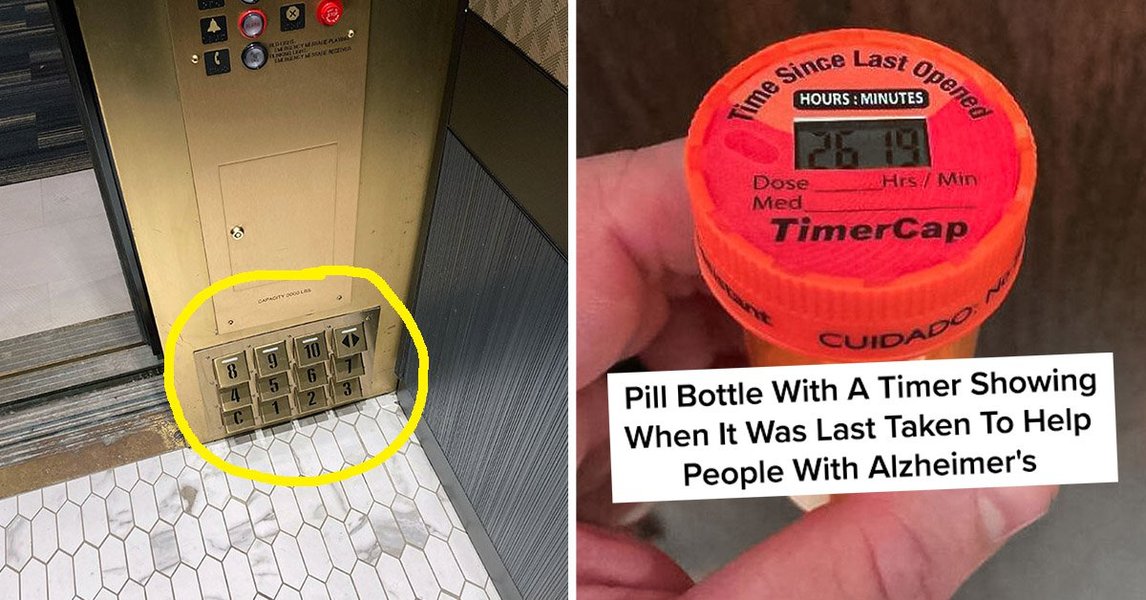
Innovative designs often address simple, everyday problems in clever ways.
Healthcare and Accessibility Technology
Technology can significantly improve health outcomes, quality of life, and access to care, especially for vulnerable populations.
Accessible Education Platform
Problem: Many online learning platforms lack features to support students with disabilities or non-native speakers.
Solution: Create an educational platform incorporating universal design principles. Features could include text-to-speech, speech recognition for navigation and input, adjustable fonts and color contrasts, integrated translation tools, and customizable learning paths.
Impact & Uniqueness: Promotes educational equity and inclusivity. The unique focus is on building accessibility from the ground up, rather than adding it as an afterthought, catering to a diverse range of learning needs.
Low-Cost, Customizable 3D-Printed Prosthetics
Problem: Advanced prosthetics are often prohibitively expensive, especially in developing regions.
Solution: Design and develop open-source models for 3D-printed prosthetic limbs (e.g., hands, arms) that can be customized to individual user needs and printed using affordable materials, potentially including sustainable or recycled filaments.
Impact & Uniqueness: Increases access to functional prosthetics for amputees. The uniqueness lies in the combination of affordability, customization through 3D scanning/modeling, and the potential use of sustainable materials.
Health Data Integration and Prediction App
Problem: Fragmented health data (from wearables, labs, medical records) makes holistic health management and early disease detection difficult.
Solution: Develop a secure mobile application that allows users to aggregate health data from various sources. AI/ML models could then analyze this integrated data to identify potential health risks, predict trends, and provide personalized recommendations for preventive care.
Impact & Uniqueness: Empowers individuals to manage their health proactively and supports clinicians with integrated data. The uniqueness is in the secure aggregation and AI-driven predictive analytics applied to diverse personal health data streams.
Visualizing Project Potential: A Comparative Look
Choosing a project involves considering various factors beyond the core idea. The radar chart below offers a subjective comparison of different project domains based on criteria like innovation potential, potential real-world impact, scalability, technical difficulty, and the typical resources required. This can help visualize the landscape and align project choice with personal interests, skills, and available resources.
Mapping Problems to Solutions
Understanding the relationship between real-world problems and the technologies that can address them is key to developing impactful projects. The mindmap below illustrates how different problem areas can be tackled using various technological approaches, highlighting potential intersections for innovative ideas.
This mindmap shows how technologies like AI, IoT, and Blockchain can be applied to diverse problem areas such as environmental conservation, healthcare access, societal challenges, and infrastructure efficiency. Exploring these connections can spark unique project ideas.
Bringing Ideas to Life: Getting Started
Moving from an idea to a functional project requires a structured approach. While the specifics depend on the project, here are some general steps and considerations:
Define the Problem Clearly
Deeply understand the problem you aim to solve. Who is affected? What are the root causes? What would a successful solution look like?
Research and Ideation
Explore existing solutions. What works, what doesn't? How can your idea be unique or improve upon current approaches? Brainstorm different features and functionalities.
Start Small: Prototyping
Begin with a Minimum Viable Product (MVP) – the simplest version of your project that still solves the core problem. This allows for testing and iteration without investing excessive resources upfront. Paper prototypes or simple digital mockups can be very effective in the early stages.
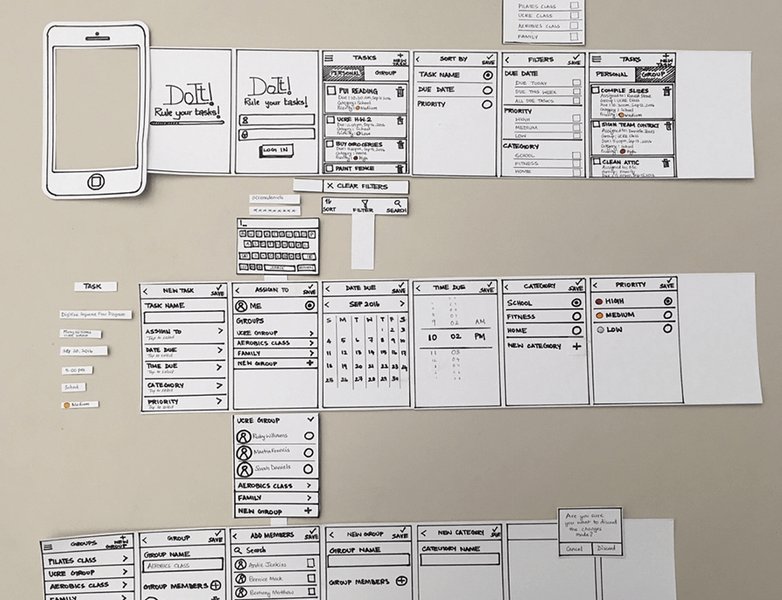
Paper prototyping helps visualize user flows and test concepts quickly and affordably.
Choose Appropriate Technologies
Select tools, programming languages, and platforms that fit the project requirements and your skill level. Consider factors like scalability, cost, and community support.
Develop Iteratively and Seek Feedback
Build your project in stages, testing frequently. Gather feedback from potential users or peers to refine your solution and ensure it truly meets the need it aims to address.
Ethical Considerations
Always consider the ethical implications of your project. This includes data privacy and security (especially for AI and health projects), potential biases in algorithms, environmental impact of hardware, and ensuring accessibility and inclusivity.
Student Innovation in Action
Seeing how other students approach problem-solving can be incredibly motivating. Many educational programs encourage students to design technology that addresses real-world challenges, fostering skills in critical thinking, design, and implementation. The video below showcases examples of student projects aimed at creating tangible solutions.
This video highlights how students are using technology and information design principles to develop solutions for real-world problems, demonstrating the power of project-based learning.
Project Idea Summary Table
To provide a quick overview, the table below summarizes key aspects of some of the project ideas discussed, highlighting the problem addressed, the proposed solution, the core technologies involved, and the potential impact.
| Project Idea | Problem Addressed | Proposed Solution | Key Technologies | Potential Impact |
|---|---|---|---|---|
| AI Mental Health Support | Limited access to mental healthcare | AI chatbot providing personalized resources & CBT techniques | AI, NLP, Machine Learning | Increased accessibility, reduced stigma |
| Sustainable Smart Farming | Inefficient resource use in agriculture | IoT sensors & AI optimizing irrigation/fertilization | IoT, AI, Sensors | Water conservation, improved yields |
| Blockchain Supply Chain Tracker | Lack of transparency, fraud in supply chains | Blockchain platform recording verifiable steps | Blockchain, QR Codes | Increased trust, reduced waste/fraud |
| Community Environmental Monitoring App | Unreported local pollution | Mobile app for citizen reporting with geo-tagging | Mobile Dev, GPS, Data Visualization | Empowered communities, local accountability |
| Accessible Education Platform | Exclusion of learners with disabilities | Platform with built-in accessibility features (TTS, STT) | Web/Mobile Dev, Accessibility APIs | Educational equity, inclusivity |
| AI Recycling Sorter Assistant | Recycling contamination | Computer vision tool to identify & guide waste sorting | AI, Computer Vision | Improved recycling rates, cleaner environment |
Frequently Asked Questions (FAQ)
How do I ensure my project idea is truly unique?
True uniqueness is rare, but distinctiveness comes from how you approach the problem, the specific combination of technologies used, the niche target audience, or a novel feature set. Focus on solving a specific, well-defined problem in a way that significantly improves upon existing solutions or addresses an unmet need. Thorough research into existing projects is crucial to identify gaps and opportunities for innovation. Even applying existing technology to a new context or specific community problem can make a project unique in its impact.
What makes a project effectively solve a real-world problem?
An effective problem-solving project directly addresses a verified need experienced by a specific group of people or a community. It should be practical, feasible to implement (at least as a prototype), and ideally, scalable. Success is measured by the project's actual impact – does it demonstrably alleviate the problem, improve a situation, or provide tangible benefits to its intended users? User feedback and real-world testing are essential to ensure effectiveness.
How can I start building one of these complex projects?
Break the project down into smaller, manageable phases. Start with the core functionality (Minimum Viable Product - MVP). Utilize open-source libraries, APIs, and platforms to avoid reinventing the wheel. For hardware projects, begin with affordable development boards like Arduino or Raspberry Pi. Focus on learning the necessary skills incrementally. Collaborate with others if possible, and don't hesitate to use online tutorials, documentation, and communities for support. Start simple and iterate.
What ethical considerations are important?
Ethical considerations are paramount, especially when dealing with user data, health information, or potentially vulnerable populations. Key areas include:
- Data Privacy & Security: How will user data be collected, stored, anonymized, and protected? Obtain informed consent.
- Bias: Are the algorithms or datasets used potentially biased against certain groups? Strive for fairness and equity.
- Accessibility & Inclusivity: Is the solution usable by people with diverse abilities and backgrounds?
- Transparency: How does the system work? Is it clear to users how decisions are made (especially in AI)?
- Environmental Impact: What is the lifecycle environmental cost of hardware components or energy consumption?
- Potential Misuse: Could the technology be used for harmful purposes? Consider safeguards.
Recommended
- How can I identify pressing problems within my own local community that could be addressed with a project?
- What are the first steps for a beginner wanting to build an AI project focused on social good?
- Can you show examples of successful IoT projects that have demonstrably improved environmental sustainability?
- What methods can be used to measure the actual real-world impact of a completed problem-solving project?
References
Last updated May 5, 2025