
Thoughts on the Universe
Exploring the vast cosmos through science, philosophy, and metaphysical insights
Key Highlights
- Scientific Origins: The Big Bang theory and emerging scientific models provide frameworks for understanding the universe’s inception and evolution.
- Philosophical Inquiries: Deep questions about existence, causality, and the nature of space and time have long been central to human thought about the cosmos.
- Metaphysical Dimensions: Speculative reflections including concepts like a universal mind and structural analogies with complexity offer alternative ways to interpret cosmic phenomena.
Scientific Perspectives on the Universe
The Big Bang and Cosmic Expansion
Modern science largely agrees that the universe began with the Big Bang—a rapid expansion from an extremely hot and dense singularity approximately 13.7 billion years ago. This event not only set matter and energy into motion, but it also laid the groundwork for the large-scale structure we observe today. As the universe expanded, it cooled, allowing subatomic particles to form atoms, gases to coalesce into stars, and stars to cluster into galaxies.
Cosmic Evolution
Over billions of years, the universe has experienced continuous evolution. From the formation of the first stars to the assembly of galaxies and galaxy clusters, cosmic evolution is a process defined by gravitational interactions and astrophysical phenomena. Contemporary research in cosmology not only investigates the early moments following the Big Bang but also explores how dark matter and dark energy shape the ongoing expansion of the universe.
Alternative Theories and Complementary Ideas
While the Big Bang remains the predominant model, alternative theories and extensions have been proposed over time. For example, ideas such as the Ekpyrotic Universe suggest that our cosmos might be the product of colliding branes from higher-dimensional space. Although such models are less widely accepted than the Big Bang theory, they stimulate further debate and research, deepening our understanding of cosmological phenomena.
Reconciling Quantum Mechanics and General Relativity
Among the most captivating challenges in contemporary physics is the quest for a Theory of Everything—a unified model reconciling quantum mechanics with general relativity. These two pillars of modern physics, which describe the very small and the very large respectively, often conflict in extreme conditions such as the singularity at the beginning of the universe or inside black holes. Researchers propose various approaches, from string theory to algorithmic models, all seeking to describe nature’s fundamental forces under one comprehensive framework.
Implications for Understanding the Cosmos
The search for a unified theory transcends simple scientific inquiry. It raises profound questions about the very structure of reality and the “rules” that govern nature. For instance, the existence of finely tuned physical constants necessary for life hints at deeper principles that might be embedded within the fabric of the cosmos, a concept closely linked to the anthropic principle. This principle suggests that the universe must possess certain properties to allow the emergence of conscious observers, which in turn could influence how we gather and interpret scientific data.
Philosophical Perspectives on the Universe
Existential and Metaphysical Reflections
Beyond scientific models, the universe has been a profound source of contemplation for philosophers spanning cultures and eras. Questions such as “Why does the universe exist?” and “What is the nature of reality?” have driven the thoughts of thinkers from ancient civilizations to modern scholars. These inquiries often intersect with issues in metaphysics, epistemology, and ontology, touching upon topics like the nature of time, space, and the underlying principles that govern existence.
Humanity’s Place in the Cosmos
A recurring theme in philosophical discussions is the individual’s relationship to the cosmos. The vastness of the universe can evoke feelings of insignificance, yet it also instills an awareness of the extraordinary conditions and coincidences that have allowed life to emerge. Philosophers debate whether our understanding is a mere consequence of our limited perspective, or if it points toward a deeper, intrinsic connection between human consciousness and the pattern of the cosmos.
Cosmological Cycles and Eternal Questions
Many philosophical traditions, especially those originating from Eastern thought, perceive the universe as composed of cyclical periods of creation and destruction. Ancient cosmologies described vast cycles spanning billions of years, a concept that resonates intriguingly with some modern scientific approximations of cosmic timescales. Whether through cyclic models or multiverse theories, the idea that the cosmos is in perpetual flux demands not just scientific investigation but also profound philosophical introspection into what change, permanence, and existence truly entail.
Metaphysical and Speculative Views
The Universe as a Network of Interconnections
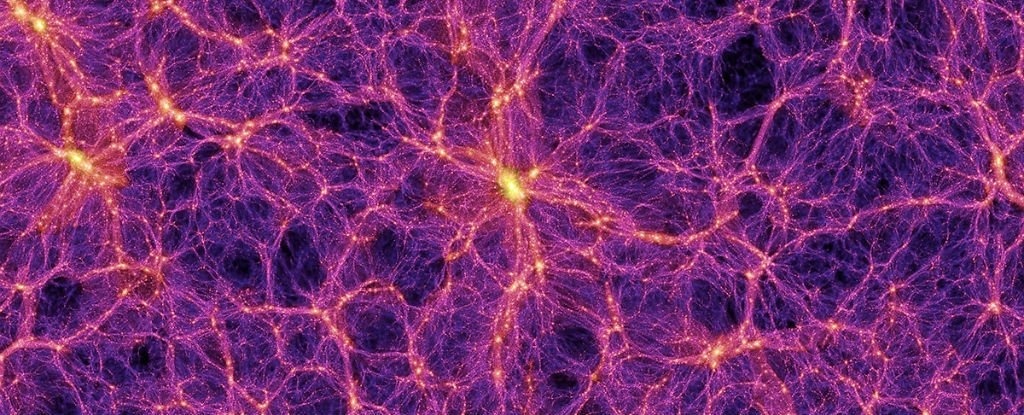
Some modern speculative ideas propose that the universe, with its vast cosmic web, bears similarities to networks found in biology and even within the human brain's connectome. These analogies suggest that the universe might be understood not just in terms of isolated physical phenomena but as an interconnected system, possibly even possessing emergent properties reminiscent of consciousness. Such ideas have led some thinkers to propose that the universe itself might be interpreted as a kind of "giant brain"—a notion that, while controversial, enriches the dialogue between scientific theory and philosophical speculation.
Universal Mind and Consciousness
Building on the notion of interconnectedness, the concept of a universal mind posits that consciousness might be a fundamental aspect of the cosmos. Proponents of this perspective argue that individual consciousness is only a fragment of a larger, cosmic consciousness that underlies reality. This idea finds echoes in both ancient spiritual traditions and modern quantum physics discussions. By considering the universe as a conscious, self-organizing system, this view challenges traditional boundaries between mind and matter, encouraging thinkers to explore integrated models of reality that cross disciplinary lines.
Interplay Between Science and Metaphysics
The dialogue between empirical science and metaphysical inquiry is not new. Many of the questions raised by scientists about the fundamental laws of physics invite metaphysical speculation. As theories evolve and new discoveries emerge—from quantum entanglement to the theoretical constructs of parallel universes—there is an enduring need to interpret these findings through both scientific and philosophical lenses.
Bridging the Divide
Attempts to bridge the perceived gap between science and metaphysics have led to innovative approaches in understanding reality. Some modern theorists suggest that by viewing the universe as a computational or algorithmic entity, we can better reconcile the deterministic laws of classical physics with the probabilistic nature of quantum events. This synthesis not only deepens our scientific understanding but also imbues the study of the cosmos with a sense of wonder that has traditionally belonged to philosophical and spiritual inquiry.
Comparative Overview: Scientific vs. Philosophical Views
To further illustrate the diverse ways we understand the universe, consider the following table that summarizes key points from both scientific and philosophical perspectives:
| Aspect | Scientific Perspective | Philosophical/Metaphysical Perspective |
|---|---|---|
| Origin | The Big Bang theory explains the universe’s expansion from a singularity, with ongoing evolution moderated by physical laws. | Focuses on the deeper existential questions of why anything exists at all, challenging our finite understanding of beginnings. |
| Structure | Cosmic structures such as galaxies and the cosmic web form under the influence of gravitational forces and dark matter. | Emphasizes interconnectedness and suggests patterns that resemble biological neural networks or even a universal mind. |
| Dynamics | Ongoing cosmic expansion influenced by dark energy, with continual evolution across astronomical timescales. | Sees the universe as inherently dynamic, where cycles of creation and destruction reflect larger metaphysical truths. |
| Fundamental Laws | Physics is governed by laws that are finely tuned, hinting at possible underlying unifying principles. | Raises questions about determinism, free will, and whether the laws of nature are contingent or reflect a deeper cosmic order. |
This comparative overview underscores how both scientific and philosophical investigations into the universe address complementary aspects of a grand mystery. While science offers quantifiable models and empirical data, philosophy and metaphysics provide a reflective, interpretative layer that invites us to consider the meaning and implications of our cosmic existence.
Emerging Trends and Future Directions
Interdisciplinary Research
As our methods of inquiry and technology improve, the confluence between scientific observation and philosophical speculation is expected to deepen. Interdisciplinary research projects now often incorporate insights from astrophysics, cosmology, neuroscience, and computer science to construct more integrated models of the universe. These collaborations aim to not only explore the origins and structure of the universe but also to understand the implications of emerging discoveries on our notions of consciousness and reality.
Algorithmic Perspectives
A particularly intriguing development is the view of the universe as an algorithmic system. Drawing parallels between the functioning of a complex computational network and the observed patterns in the cosmos, some researchers argue that simple computational rules might underpin complex cosmic phenomena. This perspective offers a novel framework for understanding the universe, suggesting that what we perceive as randomness may actually be the outcome of hidden, deterministic processes.
The Role of Future Observations
Future missions using advanced telescopes and detectors are poised to further expand our understanding of the cosmos. Observations targeting phenomena such as gravitational waves, cosmic microwave background radiation, and dark matter distribution could yield new insights that either reinforce current theories or inspire entirely new avenues of inquiry. Each discovery adds layers to our collective understanding, blending empirical data with theoretical speculation.
References
- Origins of the Universe 101 - National Geographic Education
- What Are the Current Theories of How the Universe Formed? - Earth
- Philosophy of Cosmology - Stanford Encyclopedia of Philosophy
- Origins of the Universe - National Geographic
- 12 Of The Most Mind-Blowing Scientific Theories - HowStuffWorks
- Why Does the Universe Exist? - Stephen Wolfram
- Origin of the Universe - Philosophy Institute
- Meta Perspectives on Cosmology - Boston University
- The Universe as a Philosophical Problem - Inters.org
- Origins of the Universe Resource - National Geographic Education
Recommended Further Queries

Last updated March 3, 2025