
Pioneering Moments: A Comprehensive History of the U.S. Army's Defining "Firsts"
Exploring the Crucial Milestones that Shaped America's Oldest Military Branch
- Establishment as America's First National Institution: The U.S. Army was officially created on June 14, 1775, by the Second Continental Congress, more than a year before the Declaration of Independence, making it the nation's foundational military force.
- Early Contributions to National Expansion and Infrastructure: Beyond combat, the Army's Corps of Engineers played a critical role in facilitating transportation and navigation, notably with the advent of the steamboat on the Ohio River in 1811.
- Breaking Barriers for Women in Service: Significant strides include the first woman to receive the U.S. Army Distinguished Service Medal in 1945 (Colonel Oveta Culp Hobby) and the first woman to lead U.S. troops in combat (Captain Linda Bray).
The Genesis of American Military Might: Founding and Early Formations
The history of the United States Army is deeply intertwined with the very fabric of the American nation itself. Its origins trace back to the crucible of the American Revolution, even predating the formal declaration of independence. What began as a loosely organized collection of colonial militias rapidly transformed into a cohesive fighting force, laying the groundwork for a standing army that would defend the burgeoning republic.
The Continental Army: Birth of a Nation's Defense
The official "birthday" of the U.S. Army is widely recognized as June 14, 1775. On this pivotal day, the Second Continental Congress, convening amidst the escalating tensions of the American Revolution, authorized the creation of the Continental Army. This act was a profound step, signifying the nascent colonies' commitment to a unified defense against British forces. Initially, this new army adopted the existing militia forces besieging Boston (approximately 22,000 troops) and those in New York (around 5,000). Furthermore, the Congress moved to raise the first ten companies of Continental troops, comprised of expert riflemen from Pennsylvania, Maryland, Delaware, and Virginia, who were enlisted for one-year terms and intended for light infantry roles. These riflemen would later form the 1st Continental Regiment in 1776. The very next day, on June 15, 1775, George Washington was unanimously selected as the Commander in Chief of this new army, receiving his commission on June 19, 1775.
This establishment marked a crucial "first" – the U.S. Army became America's first national institution, a formal military entity established more than a year before the Declaration of Independence was published on July 4, 1776. This initial force, though amateur in many respects, provided a vital, stable nucleus for Washington to build upon throughout the arduous years of the Revolutionary War.
Early Organizational Milestones
Beyond the initial formation of the Continental Army, subsequent organizational developments solidified the Army's structure and capabilities. The Infantry was the first branch of the Army to be formally established. Just two days after the Army's founding, on June 16, 1775, the Adjutant General’s Corps, Corps of Engineers, Finance Corps, and Quartermaster Corps were also established, laying the administrative and logistical foundations necessary for a functional military.
It's important to note that while the Continental Army was established in 1775, the first full regiment of Regular Army infantry, the 3rd Infantry Regiment, was not formed until June 1784, following the Revolutionary War. This transition signified the shift from a temporary revolutionary force to a more permanent national army.
Engaging in Conflict: The Army's First Major Engagements
The U.S. Army has a storied history of engaging in numerous conflicts, defending the nation's interests and expanding its territory. From its very inception, the Army was thrust into significant battles that shaped the nascent nation's destiny.
Revolutionary War and Beyond
The Army's first sustained engagement was, naturally, the American Revolutionary War (1775-1783). While the Battles of Lexington and Concord (April 1775) preceded the formal establishment of the Continental Army, they were crucial in transforming civil disturbances into open warfare, prompting the need for a unified military response. The Army's early battles, such as the defense of Boston and the challenging campaigns in New York, were foundational to its experience.
Following the Revolutionary War, the Army continued to play a vital role in securing the young nation. The War of 1812 (1812-1815) marked another significant "first" as the United States officially declared war on the United Kingdom for the first time. During this conflict, the Army defended the nation against British forces, securing key victories. Although American invasions of British Canada proved challenging, concurrent wars with Native Americans, including Tecumseh's War and the Creek War, were more successful.

The Civil War: First Conscription and Unprecedented Scale
The American Civil War (1861-1865) introduced several "firsts" for the U.S. Army. This conflict necessitated the raising of armies larger than any seen before in U.S. history. Both the Union and Confederate forces initially relied on volunteers, but the scale of the war soon led to the unpopular but necessary measure of large-scale conscription for the first time in U.S. history. The war also featured significant and bloody engagements, such as the Battle of Antietam (September 17, 1862), which remains the bloodiest single-day battle in U.S. history with over 22,000 casualties.
Technological Advancements and Strategic Formations
The U.S. Army has consistently adapted to technological advancements and evolving strategic needs, leading to numerous innovative "firsts" in its structure and operations.
Pioneering Infrastructure and Engineering
The Army's role extended beyond direct combat to encompass critical national development. The Army Corps of Engineers, established shortly after the Army itself, was given full responsibility for facilitating navigation on rivers. A notable "first" in this domain was the use of the steamboat on the Ohio River in 1811, which revolutionized inexpensive travel using the vast river systems, particularly the Mississippi and Missouri rivers and their tributaries. This demonstrates the Army's foundational contribution to American infrastructure and economic development.
The Formation of Modern Divisions
The concept of permanent military divisions, designed to combine various arms and services effectively, percolated within the U.S. Army for decades before its formal implementation. While temporary "divisions" had been formed during the Civil War and the Spanish-American War to consolidate command and combine infantry and field artillery, the modern division structure truly emerged in the context of World War I.
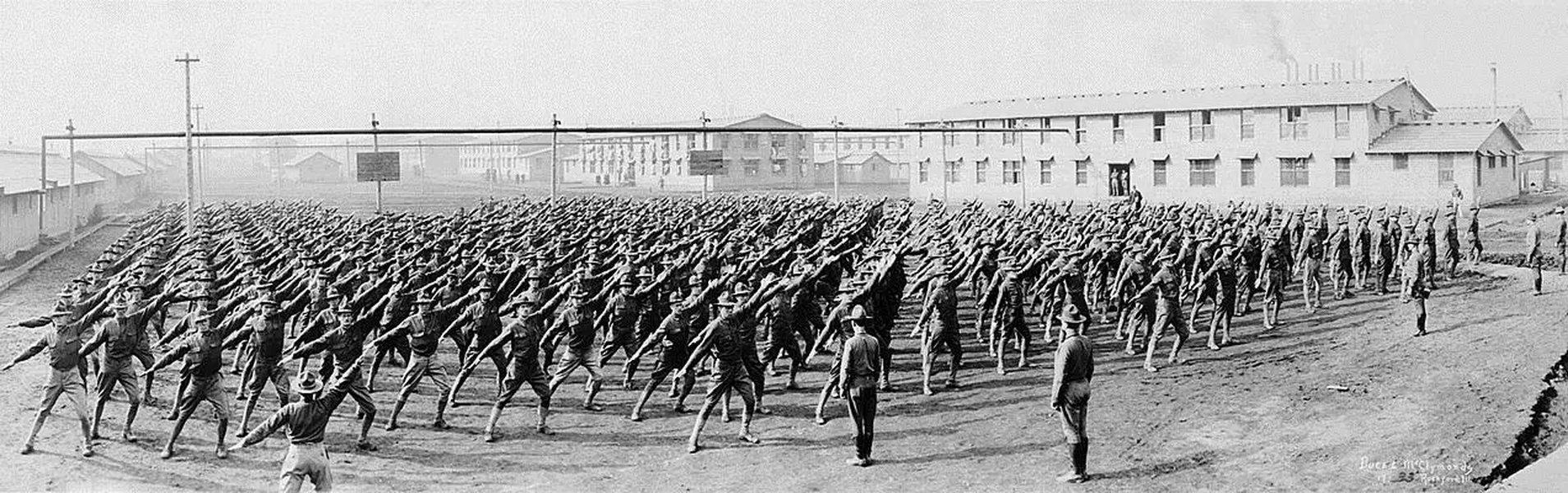
The 1st Infantry Division (1ID) stands as a significant "first" in this regard. Organized in 1917 during World War I, it is the oldest continuously serving division in the Regular Army. Nicknamed "The Big Red One," it played a crucial role in World War I, firing the first American shell of the war towards German lines on October 23, 1917, and suffering the first American casualties two days later.
A Charted Overview of Strategic and Operational Capabilities
To better understand the U.S. Army's evolution and the impact of its strategic and operational "firsts," consider the following radar chart. This chart evaluates the Army's capabilities across various dimensions, reflecting how these "firsts" contributed to its overall strength and development over time.
The radar chart illustrates the progression of the U.S. Army's capabilities from its humble beginnings as the Continental Army to its current status as a modern global force. The "Organizational Cohesion" and "Logistical Prowess" of the Continental Army were rudimentary but essential for its survival. As the Army evolved through the World War I era, it saw improvements in "Technological Integration" with new weapons and vehicle types, alongside enhanced "Strategic Adaptability" as it engaged in large-scale global conflicts. The modern U.S. Army, benefiting from centuries of development and countless "firsts," demonstrates high levels across all categories, especially in "Global Reach" and increasing "Personnel Diversity," reflecting continuous adaptation and innovation.
Groundbreaking Achievements and Social Progress
The U.S. Army's history is also marked by significant "firsts" in breaking social barriers and achieving remarkable feats in various fields beyond the battlefield.
Women in the Army: A Legacy of "Firsts"
The integration and recognition of women in the U.S. Army represent a continuous series of groundbreaking "firsts." These milestones reflect the nation's evolving understanding of military service and equality.
- First Woman to Receive Distinguished Service Medal: In 1945, Colonel Oveta Culp Hobby became the first woman to receive The U.S. Army Distinguished Service Medal, recognizing her leadership as the first Director of the Women's Army Corps (WAC).
- First Woman to Lead U.S. Troops in Combat: Captain Linda Bray made history as the first woman to lead U.S. troops in combat, commanding the 988th Military Police Company. This event challenged traditional perceptions of women's roles in direct combat.
- First Black Woman to Earn Airborne Wings: In 1974, Staff Sgt. Joyce Malone became the first Black woman and the oldest to earn Airborne wings while serving in the Army Reserve, demonstrating exceptional dedication and skill.
These achievements, among many others, highlight the Army's progress towards greater inclusivity and opportunity, breaking down barriers that once limited service to certain demographics.
A Deep Dive into the U.S. Army's Enduring Legacy
To further appreciate the U.S. Army's journey and its many "firsts," this video offers a compelling visual narrative, illustrating the significant events and transformations that have defined its history since 1775. It provides a unique perspective on the challenges overcome and the legacy forged by generations of soldiers.
The video, titled "History of the U.S. Army: 1775 - Today," serves as a valuable resource for understanding the chronological development and key historical moments of the U.S. Army. It visually complements the discussion of the Army's founding, its participation in major conflicts, and its adaptation to new challenges. By showcasing historical footage and reenactments, it brings to life the sacrifices and triumphs that underpin the Army's role in American history, from its first organized efforts during the Revolution to its contemporary global operations.
Key First Events and Their Impact
The following table summarizes some of the most significant "first" events in the U.S. Army's history, categorizing them by their nature and highlighting their lasting impact on the institution and the nation.
| Category | "First" Event | Date | Impact and Significance |
|---|---|---|---|
| Founding & Organization | Continental Army established | June 14, 1775 | Birth of America's first national institution; unified military force for the colonies. |
| Founding & Organization | George Washington appointed Commander-in-Chief | June 15, 1775 | Established central leadership for the Continental Army, crucial for revolutionary success. |
| Founding & Organization | Establishment of Infantry, Adjutant General's, Engineer, Finance, Quartermaster Corps | June 14-16, 1775 | Laying the foundational administrative and logistical structure of the Army. |
| Conflicts & Engagements | First official declaration of war (War of 1812) | June 18, 1812 | Marked the U.S. engaging in declared war against a major power. |
| Conflicts & Engagements | First large-scale conscription (Civil War) | 1862 | Necessitated by unprecedented scale of conflict; significant social and military shift. |
| Conflicts & Engagements | First use of American artillery in World War I | October 23, 1917 | Signaled U.S. entry into modern global warfare. |
| Infrastructure & Development | First use of steamboat on Ohio River for navigation | 1811 | Revolutionized inland transportation and trade, expanding national reach. |
| Social & Diversity | First woman to receive U.S. Army Distinguished Service Medal (Col. Oveta Culp Hobby) | 1945 | Recognized significant contributions of women in leadership roles. |
| Social & Diversity | First woman to lead U.S. troops in combat (Capt. Linda Bray) | 1989 | Broke barriers for women in direct combat roles. |
| Technological Advancements | First successful NIKE AJAX missile interception | November 1951 | Marked a significant milestone in guided missile development and air defense. |
Frequently Asked Questions about U.S. Army "Firsts"
When was the U.S. Army officially founded?
Who was the first Commander in Chief of the U.S. Army?
What was the first major conflict the U.S. Army participated in after its founding?
When did women first serve in formal roles within the U.S. Army?
Conclusion
The U.S. Army's journey is a chronicle of enduring "firsts," each contributing to its evolution from a revolutionary militia into a global military power. From its founding on June 14, 1775, as America's inaugural national institution, to pioneering advancements in infrastructure, social integration, and military technology, the Army has consistently been at the forefront of national service and innovation. Its history is not merely a record of battles fought but also a testament to its foundational role in shaping American identity, defending its freedoms, and adapting to the complexities of a changing world. These early milestones set precedents for future growth, establishing a legacy of resilience, adaptability, and unwavering commitment to the nation's defense.
Recommended Searches
- Role of the U.S. Army in American expansion
- Technological innovations introduced by the U.S. Army
- Major organizational changes in U.S. Army history
- Contributions of the U.S. Army to American society
Referenced Search Results
 thisdayinusmilhist.wordpress.com