
Is the Bastion of Democracy Tilting? Unpacking Conservative Views on U.S. Autocratization Trends
An exploration of how conservative principles interpret the evolving landscape of American governance and potential shifts towards autocracy.
The question of whether the United States is drifting towards autocratization has become a significant point of discussion across the political spectrum. From a conservative perspective, this inquiry evokes a complex interplay of foundational principles, contemporary political realities, and varied interpretations of recent events. This analysis delves into how conservative thought views the current trajectory of American democracy, drawing upon recent data and expert commentary.
Highlights: Key Conservative Concerns
- Erosion of Constitutional Safeguards: Many conservatives express alarm over perceived weakening of checks and balances, expansion of executive power beyond traditional limits, and challenges to institutional independence, which they see as contradicting core tenets of limited government and the rule of law.
- Impact of Political Polarization: Deepening partisan divides are often cited by conservatives as a destabilizing force that could create an environment conducive to autocratic tendencies, where loyalty to party or leader might supersede adherence to democratic norms.
- Divergent Interpretations within Conservatism: While some conservatives view certain governmental actions and political rhetoric as clear indicators of autocratic drift, others may interpret these same phenomena as necessary responses to perceived societal or political threats, or dispute the "autocratic" label altogether.
Understanding Autocratization in the U.S. Context
Autocratization refers to any substantial decline in a country's democratic attributes, potentially leading towards authoritarian rule. This process isn't necessarily a swift coup but often a gradual erosion of democratic institutions, norms, and practices. Recent reports from organizations like the Varieties of Democracy (V-Dem) Institute and the Economist Intelligence Unit (EIU) have flagged concerns regarding democratic health in the United States, noting trends that align with broader global patterns of democratic backsliding.
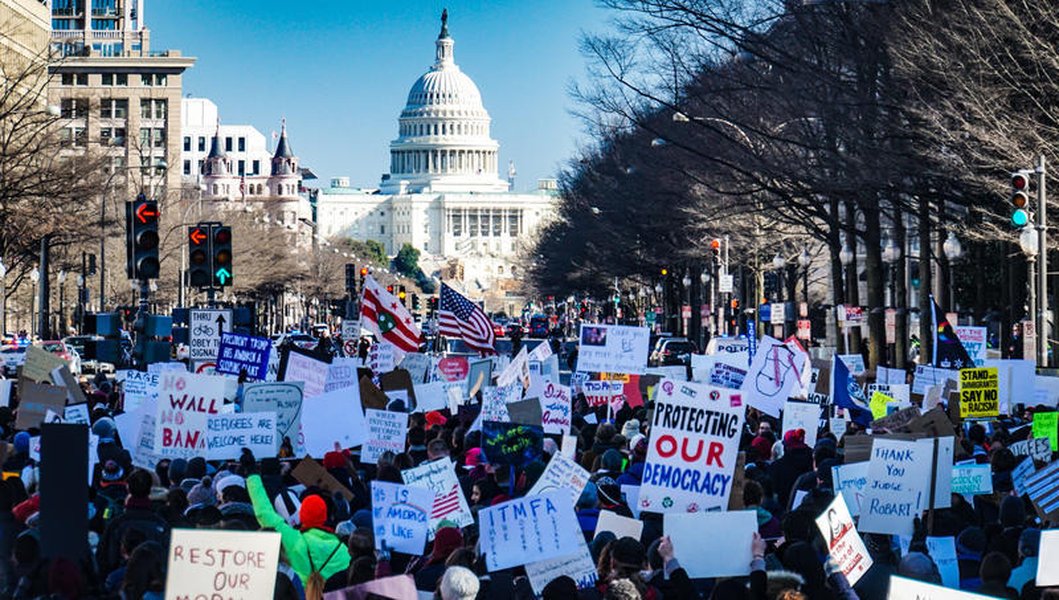
Political events, such as protests at the U.S. Capitol, underscore the tensions and challenges facing American democratic institutions.
Conservative Lenses on Democratic Health
From a conservative viewpoint, the integrity of American democracy is paramount, often rooted in principles of constitutionalism, limited government, individual liberty, and the rule of law. Concerns about autocratization arise when these principles appear threatened.
Government Overreach and Executive Power
A central tenet of traditional conservatism is skepticism towards concentrated power. Any perceived expansion of executive authority at the expense of legislative or judicial branches, or the federal government overstepping state and individual rights, can be viewed as a step towards a more autocratic system. This concern is heightened when executive actions bypass established legal and constitutional processes. The V-Dem report, for instance, highlights expanding executive power and weakening Congressional authority as typical autocratic tactics observed in the U.S.
The Role of Political Polarization
Deep partisan polarization is seen by many conservatives as a significant threat. When political discourse becomes excessively tribal, the willingness to compromise diminishes, and opponents are increasingly demonized. This environment can lead to support for leaders who promise to break through gridlock, sometimes through means that might undermine democratic norms or institutions. The concern is that extreme polarization can erode the shared commitment to democratic processes that underpins a healthy republic.
Challenges to Institutional Integrity
Conservatives traditionally value strong, independent institutions as bulwarks against tyranny. Attacks on the judiciary, the free press, electoral systems, or oversight bodies are therefore viewed with alarm. If these institutions are perceived as being politicized or systematically undermined, it signals a weakening of the democratic framework. The V-Dem report specifically mentions attacking independent institutions and undermining the media as part of the autocratization process.
American Exceptionalism and Democratic Ideals
The concept of American exceptionalism, often embraced by conservatives, posits that the U.S. has a unique mission to uphold liberty and democratic governance. From this perspective, any shift towards autocracy would represent a fundamental betrayal of American values and its historical trajectory. This belief often fuels strong opposition to perceived autocratic trends.
Varying Conservative Perspectives on Current Trends
It is crucial to acknowledge that the conservative movement is not monolithic. Different strands of conservative thought may interpret the signs of autocratization differently, or assign varying levels of importance to them.
The radar chart above offers a hypothetical illustration of how different conservative viewpoints might prioritize or perceive various factors related to autocratization. For instance, a "Traditional Conservative" might highly emphasize the rule of law and checks and balances, showing strong concern for their erosion. A "Populist/Nationalist Conservative" might express greater concern about perceived media bias or the impact of polarization on achieving specific national goals, potentially showing more tolerance for strong executive action if it aligns with their agenda. "Libertarian-Leaning Conservatives" would likely exhibit the highest concern for any form of government overreach and threats to individual liberties.
Empirical Data and Expert Analyses
Several reports underscore the concerns about democratic backsliding:
- The Varieties of Democracy (V-Dem) 2025 report identifies the U.S. as undergoing a significant episode of autocratization, characterized by tactics like expanding executive power and attacking independent institutions.
- The Economist Intelligence Unit’s Democracy Index has previously categorized the U.S. as a “flawed democracy,” citing political polarization and declining public trust.
- Research from institutions like the Pew Research Center highlights deepening ideological divides and declining satisfaction with how democracy is functioning in the U.S. A significant majority, including many conservatives, feel the U.S. is no longer a good example of democracy.
These findings suggest that the trend of democratic erosion is not merely perception but is supported by empirical data, aligning with concerns voiced from various conservative perspectives about the health and stability of U.S. democratic institutions.
Visualizing the Facets of Autocratization from a Conservative Standpoint
The following mindmap illustrates the interconnected elements that contribute to concerns about autocratization within the United States, as viewed through various conservative lenses. It highlights the drivers, ideological frameworks, observed indicators, and the spectrum of conservative reactions to these trends.
(Conservative View)"] id1["Drivers of Concern"] id1a["Executive Overreach"] id1b["Weakening of Institutions
(Checks & Balances)"] id1c["Intense Political Polarization"] id1d["Erosion of Rule of Law"] id1e["Attacks on Media & Judiciary"] id2["Core Conservative Principles at Stake"] id2a["Limited Government"] id2b["Individual Liberties"] id2c["Constitutionalism"] id2d["American Exceptionalism & Democratic Ideals"] id2e["Fiscal Responsibility"] id3["Observed Indicators (Referenced by V-Dem, EIU, etc.)"] id3a["Decline in Democratic Norms"] id3b["Challenges to Electoral Integrity"] id3c["Purging/Dismantling State Institutions"] id3d["Reduced Media Freedom/Increased Hostility"] id4["Spectrum of Conservative Reactions"] id4a["Alarm & Call for Reform/Resistance"] id4b["Concerns about Specific Policies/Leaders"] id4c["Justification as Necessary Response
to Perceived Threats (e.g., cultural, liberal overreach)"] id4d["Disagreement on Severity or Existence of Autocratic Trend"]
This mindmap emphasizes that while there's a shared foundation of conservative principles, the interpretation of current events and the perceived threat level of autocratization can vary. Some conservatives may see actions as defending against other threats, while others view them as direct assaults on democratic foundations.
Indicators of Autocratization and Conservative Interpretations
The table below outlines key indicators often associated with democratic backsliding or autocratization, alongside potential interpretations from different conservative viewpoints. This highlights the nuanced and sometimes divergent ways conservatives might assess these developments.
| Indicator of Autocratization | General Description | Traditional Conservative Concern | Populist/Nationalist Conservative Stance (Potential Variations) |
|---|---|---|---|
| Expansion of Executive Power | Presidents or executive branch agencies acting beyond constitutional or statutory limits, bypassing legislative approval. | High concern; violates separation of powers and limited government principles. | May be tolerated or supported if seen as necessary to overcome obstructionism or advance a particular agenda; concern might be lower if the executive aligns with their views. |
| Weakening of Legislative/Judicial Oversight | Efforts to diminish the power of Congress or the courts to check executive actions, or to politicize these branches. | High concern; undermines checks and balances crucial for preventing tyranny. | May view certain institutional checks as "deep state" opposition or illegitimate hindrances; may support efforts to reshape judiciary or limit congressional interference with a favored executive. |
| Attacks on Independent Media | Government officials discrediting, harassing, or attempting to control media outlets critical of their actions. | Concerned if it stifles legitimate dissent and accountability; values a free (though not necessarily unbiased) press. | Often highly critical of "mainstream media" perceived as biased; may view attacks as justified pushback against perceived misinformation or partisan agendas. Less concern for media freedom if the targeted media is seen as hostile. |
| Challenges to Electoral Integrity / Manipulation | Actions that undermine public trust in elections, restrict voting access unfairly, or enable partisan interference in vote counting or certification. | High concern for actual fraud and the rule of law in elections; supports secure and fair elections. | May voice strong concerns about electoral fraud (often amplified by partisan narratives) and support measures that could be seen by others as voter suppression, framing them as ensuring "election integrity." Can be skeptical of established electoral processes if outcomes are unfavorable. |
| Increased Political Polarization & Demonization of Opponents | Deepening societal divisions along partisan lines, where political opponents are viewed as enemies rather than legitimate adversaries. | Concerned that it erodes civility, makes governance impossible, and can lead to extremism that threatens stable democracy. | May actively contribute to polarization by framing political opponents in stark, existential terms; views compromise as weakness and demonization as a tactic to mobilize support. |
| Erosion of Democratic Norms | Departure from unwritten rules and conventions that facilitate democratic governance, such as respect for minority rights or peaceful transitions of power. | High concern; sees norms as essential for the functioning of the constitutional order. | May view certain norms as outdated or obstacles to "draining the swamp" or achieving "the will of the people"; willing to discard norms if they conflict with desired outcomes. |
This table illustrates that while traditional conservative principles often align with strong democratic safeguards, newer or more populist strands of conservatism might prioritize other goals, leading to different assessments of actions that could be seen as autocratic.
Expert Voices on U.S. Democracy
The concerns are not abstract. Staffan Lindberg, director of the V-Dem Institute, has pointed to the U.S. undergoing its fastest autocratization episode in modern history. The video below discusses predictions from V-Dem regarding the state of U.S. democracy, offering a stark perspective on these trends.
This video features a leader from V-Dem discussing the group's ratings and predictions regarding U.S. democracy. Such analyses contribute to the broader debate by providing data-driven assessments that both align with and challenge various political perspectives, including conservative viewpoints concerned about the trajectory of American governance. These expert opinions underscore the seriousness of the trends observed and emphasize the potential consequences if democratic erosion continues unchecked.
Frequently Asked Questions (FAQ)
What specific actions are typically seen as autocratic from a conservative standpoint?
From a traditional conservative perspective, actions that undermine the Constitution and the rule of law are often viewed as autocratic. These can include:
- Executive overreach, such as issuing orders that bypass Congress or exceed statutory authority.
- Attempts to politicize or weaken independent institutions like the judiciary, law enforcement (e.g., FBI, DOJ), or federal agencies.
- Systematic attacks on the free press aimed at delegitimizing critical reporting.
- Interference with election processes or casting doubt on legitimate election outcomes without credible evidence.
- Suppression of dissent or punishing political opponents through governmental power.
How does political polarization contribute to autocratization concerns for conservatives?
Many conservatives believe that extreme political polarization creates a dangerous environment for democracy. When society is deeply divided:
- It becomes harder to achieve consensus and bipartisan cooperation, leading to gridlock and frustration with democratic processes.
- There's an increased temptation for political actors to abandon democratic norms and fair play in pursuit of partisan advantage.
- The public may become more receptive to strongman leaders who promise to cut through the division and impose order, even if it means curtailing some freedoms or checks and balances.
- Trust in common institutions erodes, as each side may view them as biased or illegitimate if controlled by the opposition.
Are all conservatives aligned on the issue of U.S. autocratization?
No, conservatives are not monolithic on this issue.
- Traditional conservatives and those emphasizing constitutionalism are often highly concerned about any signs of autocratization, viewing them as threats to liberty and the rule of law.
- Populist or nationalist conservatives may be more willing to support or overlook actions that could be seen as autocratic if they believe these actions serve a greater national good, counter perceived liberal overreach, or reflect "the will of the people" against established elites. Some may dispute that such actions are autocratic at all, framing them as necessary tactics in a political or cultural struggle.
- Libertarian-leaning conservatives are typically very wary of any expansion of government power, regardless of the source, and would be highly sensitive to autocratic tendencies.
What is "competitive authoritarianism" and how does it relate to the U.S.?
"Competitive authoritarianism" is a term used by political scientists to describe a type of hybrid regime where formal democratic institutions (like elections and legislatures) exist and are a principal means of gaining power, but the playing field is heavily skewed in favor of incumbents. Key characteristics include:
- Systematic abuse of state resources for partisan gain.
- Media control or bias that disadvantages opposition.
- Harassment or suppression of opposition figures and parties.
- A judiciary that may lack full independence.
- Elections that occur but may not be entirely free or fair.
Recommended Further Exploration
- How do different conservative factions define government overreach in the current political climate?
- What are the historical precedents for concerns about executive power from a conservative viewpoint in the United States?
- What role does the concept of 'American exceptionalism' play in conservative responses to democratic backsliding?
- Explore analyses comparing U.S. democratic trends with those in other established Western democracies.
References
Last updated May 12, 2025