
Latest News on President Trump's Tariff Announcements on EU Countries
An in-depth analysis of recent trade tensions between the U.S. and the European Union
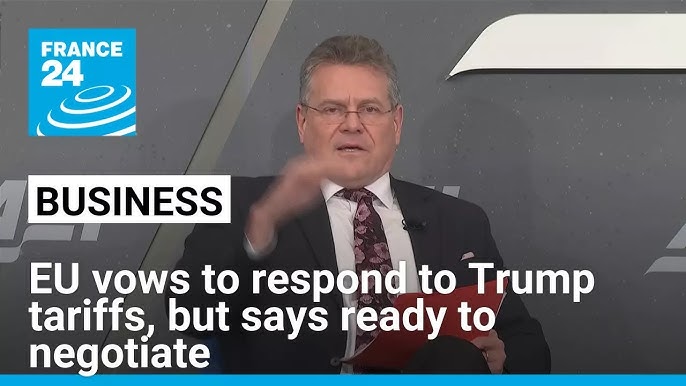
Highlights
- 25% Tariff Announcement: President Trump has publicly threatened a 25% tariff on EU imports, citing unfair trade practices.
- EU's Countermeasures: EU leaders have vowed a robust response, preparing a suite of retaliatory trade actions.
- Global Economic Implications: The tariffs risk an escalation in trade tensions, potentially impacting global markets and specific industries like automotive manufacturing.
Background and Overview
In recent weeks, the world has witnessed another significant chapter in U.S.-EU trade relations, driven primarily by comments and policy proposals from the U.S. administration. President Donald Trump has been at the forefront of these developments, declaring his intention to impose a 25% tariff on imports originating from the European Union. This aggressive stance, which includes targeting key sectors such as automobiles and other high-value goods, is part of a broader strategy aimed at addressing perceived economic imbalances and, as stated by Trump, correcting what he described as trade policies that disadvantage American interests.
During a cabinet meeting that underscored the administration’s readiness to act decisively, Trump elaborated on his rationale by highlighting the longstanding trade deficits with the EU. He controversially remarked that the European Union had been formed “to screw” the United States, using stark language to encapsulate his frustration with what he sees as exploitative trade practices. Beyond the tariff on EU products, discussions within the administration have also considered punitive tariffs on imports from other key trading partners, such as China. This approach is reflective of a broader protectionist agenda that has repeatedly put the U.S. at odds with several of its major trade partners.
Detailed Analysis of the Tariff Announcement
Rationale Behind the Tariffs
The decision to consider a 25% tariff on European goods stems largely from the ongoing debate over trade deficits and what the U.S. administration perceives as unbalanced trade practices. President Trump posits that the European Union’s economic structure is designed in a way that disadvantages the United States, particularly through measures that limit American exports while aggressively promoting the Union's imports into the U.S. market. The auto industry has been singled out as a prominent example, with European car manufacturers being major exporters to the U.S., yet facing high barriers when trying to access American consumer markets.
Economic and Political Justifications
The economic argument presented is twofold. First, there is a strong focus on reducing the trade deficit by curbing imports that put domestic producers at a disadvantage. Second, there is an ideological element where this tariff policy is seen as a countermeasure against what is perceived to be an unfair trading system. This protectionist tactic is aimed at incentivizing domestic production and reducing reliance on foreign goods. Although intended to safeguard American economic interests, the move has raised concerns among economists and industry experts, who warn that such action could backfire by triggering a trade war, thereby adversely affecting a wide range of sectors in both economies.
Scope of the Tariffs
The proposed 25% tariff is not selective in its approach and is likely to cover a broad range of products from the EU. In particular, high-profile items like automobiles—a cornerstone of European exports—are expected to be directly affected. Although the precise list of products might evolve as negotiations continue, it is clear that the measure intends to hit critical sectors that form the backbone of European trade with the United States.
Implementation Timing and Enforcement
While the announcement itself has sent ripples through international markets, details regarding the timeline for implementation have remained somewhat ambiguous. The U.S. administration has emphasized that these tariffs are not merely a threat but a planned action, with discussions indicating that they could be enforced imminently. This uncertainty over timing has already stirred market volatility, with global economic indicators reflecting the anxiety and anticipation of further disruptions.
European Union's Counter-Response
Firm and Swift Retaliation Measures
In response to the tariff threat, EU leaders have maintained a united stance, promising to implement countermeasures to protect their economic interests. The European Union, through its internal mechanisms, has vowed to respond "firmly and swiftly" to what it deems as arbitrarily imposed tariffs by the United States. This reaction includes discussions on imposing reciprocal tariffs on American products that have significant market presence in Europe.
Anti-Coercion Instrument (ACI)
A particularly noteworthy element of the EU’s potential response is the strategic utilization of its Anti-Coercion Instrument (ACI), a policy tool designed to counteract economic pressure. Instituted to serve as a multipronged defense mechanism against coercive trade practices, the ACI enables the European Union to launch a variety of measures ranging from tariffs on U.S. goods to restrictions on market access for American companies. This instrument is part of a broader framework aimed at mitigating any unilateral trade actions that could destabilize global markets.
Potential Sectors for Retaliation
EU countermeasures are expected to target key U.S. exports. Historical patterns from previous trade tensions suggest that American products such as whiskey, motorcycles, and various manufactured goods could face retaliatory tariffs. The strategy is designed to leverage the EU's strong import market, thereby putting pressure on U.S. exporters. By doing so, the EU is not only seeking to balance the economic scales but also to signal its readiness to defend its market interests vigorously.
It is important to note that while the EU is prepared to enforce an assertive response, its actions are also tempered by the broader objective of maintaining long-term diplomatic and economic relations. This complex balancing act underlines the high stakes involved in contemporary global trade dynamics.
Economic Implications and Market Reactions
Impact on Global Trade and Industries
The prospect of imposing a sizable tariff on EU imports has not only heightened bilateral tensions but has also raised alarms across the global economic landscape. Economists and market analysts are deeply concerned about the potential knock-on effects. One of the most immediate impacts could be an escalation of trade tensions, which, if not managed carefully, might spiral into a full-scale trade war. Such a scenario promises to disrupt supply chains, increase the cost of goods, and generate further instability in already tenuous global markets.
Automotive Sector Vulnerabilities
Among the industries most at risk from these new tariffs is the automotive sector. European automakers have a significant market share in the United States; however, the anticipated tariffs could erode their competitive advantage by increasing production costs and forcing higher prices on consumers. This, in turn, may lead to decreased sales volumes and trigger a domino effect impacting related sectors such as parts manufacturing and automotive financing.
Currency and Financial Market Reactions
The announcement of potential tariffs has also perturbed currency markets. The U.S. dollar, traditionally seen as a safe-haven asset in times of economic uncertainty, has experienced fluctuations as investors react to the threat of trade escalation. This volatility is not confined to the U.S.; European currencies have similarly felt the pressure, as the anticipation of retaliatory measures adds an extra layer of uncertainty. Financial markets worldwide are closely monitoring these developments, with the potential for significant shifts in both investment strategies and risk assessments.
A Comparative Table of Tariff Details
| Aspect | U.S. Tariff Policy | EU Response Strategy |
|---|---|---|
| Tariff Rate | 25% on EU Imports | Potential reciprocal tariffs on key U.S. goods |
| Targeted Sectors | Automobiles, industrial products, and other high-value goods | Items such as American whiskey, motorcycles, and various manufactured commodities |
| Economic Justification | Reducing trade deficits and counteracting perceived unfair practices | Protecting EU industries and counteracting U.S. tariff impositions |
| Implementation Timeline | Imminent, though exact dates are subject to administrative procedures | Retaliation measures being discussed; readiness to act swiftly |
| Policy Tools | Punitive tariffs on EU imports | Utilization of the Anti-Coercion Instrument and other trade defense measures |
Broader Geopolitical and Economic Considerations
Bilateral Trade Relationships
This evolving trade dispute between the United States and the European Union is not occurring in isolation. It is part of a larger trend where countries are increasingly underlining economic nationalism and protectionism. The U.S. tariff proposals come at a time when global trade patterns have been disrupted by numerous factors including technological shifts, supply chain reconfigurations, and previous tariff battles. In this context, the decision by President Trump to target EU imports is as much a political maneuver as it is an economic strategy. The move is designed to bolster domestic industries, safeguard U.S. jobs, and reposition the U.S. in global trade negotiations. However, history has shown that such protectionist tactics can also have unintended consequences, including higher consumer prices and a slowdown in economic growth.
Impact on Smaller Economies and Trade Alliances
It is also essential to consider the indirect implications on smaller economies that are heavily integrated into the global trade framework. A protracted trade conflict between two of the world’s major economies can create ripple effects, influencing trade agreements and economic policies in other regions. Nations that rely on transatlantic trade, especially those in the Mediterranean basin and Eastern Europe, may find themselves in precarious positions as both the U.S. and EU recalibrate their economic strategies. This further underscores the interconnected nature of global markets and the need for multilateral cooperation in addressing trade disputes.
Legal and Diplomatic Dimensions
Beyond the economic ramifications, the tariff dispute also has significant legal and diplomatic dimensions. Legal trade disputes of this nature often involve the invocation of international trade laws and can lead to disputes within global arbitration bodies such as the World Trade Organization (WTO). The U.S. administration is confident that any legal challenges by the EU can be managed, but the possibility of prolonged litigation remains a concern.
Diplomatic Interactions and Future Negotiations
Diplomatically, both parties are under pressure to mitigate the fallout from these unilateral decisions. The EU’s planned retaliatory measures are designed not only as economic safeguards but also as signals to Washington regarding the seriousness with which they regard trade fairness. Future negotiations are likely to involve complex assessments of bilateral trade volumes, intellectual property rights, and regulatory standards. These discussions could reshape future trade agreements and influence the strategic directions of both economic blocs.
Key Considerations and Future Outlook
Short-Term and Long-Term Effects
In the short term, market volatility is expected as global investors adjust to the heightened risk and uncertainty associated with these tariff measures. Supply chains might be disrupted, especially in sectors where the U.S. and the EU are deeply intertwined, such as automotive manufacturing and technology components. Consumer prices could rise, reflecting the increased costs of imported goods, while domestic industries might initially benefit from reduced foreign competition.
Long-Term Structural Adjustments
Over the longer term, this episode has the potential to trigger fundamental shifts in trade structures. Both the U.S. and EU are likely to reconsider their dependence on a limited range of suppliers and markets. Diversification in sourcing strategies, the empowerment of regional trade agreements, and increased focus on local production could all emerge as prominent themes in the post-tariff landscape. Although these measures may provide a buffer against future economic shocks, they also carry the risk of fragmenting the global supply chain and leading to less efficient production practices.
Investor and Consumer Sentiments
Investor confidence has been notably shaken by these developments. The prospect of a trade clash means necessity for businesses to reevaluate their risk management strategies. Stock markets across Europe and the U.S. have experienced fluctuations as companies braced for an uncertain period ahead. For consumers, the immediate impact may translate into higher prices on everyday products, particularly those that depend heavily on international supply chains. This sentiment is increasingly influencing discussions within financial circles and policy forums, as stability in consumer markets is crucial for sustainable economic growth.
Conclusion and Final Thoughts
In summary, the recent announcement by President Trump to impose a 25% tariff on EU imports represents one of the latest flashpoints in the ongoing trade disputes between the United States and major global economic players. This decision is rooted in a desire to correct perceived trade imbalances and overcome what the U.S. administration views as a predisposition of the European Union toward practices that harm American economic interests. While the intended target sectors include high-value items such as automobiles, the potential fallout extends to various industries and could have a significant impact on both domestic and global markets.
The European Union has not remained idle in the face of these threats. By pledging a firm and swift counter-response that includes the strategic use of its Anti-Coercion Instrument, EU leaders are clearly prepared to defend their economic sovereignty. The prospect of reciprocal tariffs adds another layer of complexity to an already volatile global trade environment. Both sides appear poised for a series of negotiations and legal battles that will test the resilience of international trade frameworks.
Looking ahead, the interplay between protectionist policies and global economic integration will remain a critical issue. Stakeholders in both the public and private sectors must be prepared for further adjustments and closer scrutiny of trade relationships. This episode underscores the urgent need for dialogue and compromise, as well as a recognition that unilateral trade actions can have far-reaching and often unintended consequences on the global stage.
References
- Trump threatens 25% tariffs on EU, claims bloc was formed to 'screw' US - Al Jazeera
-
EU vows swift, firm response after Trump says tariffs coming on EU imports - Reuters
- Trump threatens to slap 25% tariffs on EU, says bloc was always meant to hurt the U.S. - NBC New York
- Trump says he will slap European goods with 25% tariff - DW
- Trump to impose 25% tariffs on EU - USA Today
Recommended
Last updated February 27, 2025