
The United States' Subtle Influence on the 2016 UNCLOS South China Sea Arbitration
Examining the Role of a Non-Party in a Landmark Maritime Dispute
The 2016 arbitration case brought by the Philippines against China under the United Nations Convention on the Law of the Sea (UNCLOS) resulted in a significant ruling that largely favored the Philippines' position regarding maritime entitlements in the South China Sea. While the United States is not a party to UNCLOS, its presence and policies surrounding the convention and the dispute itself played a discernible, albeit indirect, role in the context and aftermath of this landmark legal challenge. This analysis explores the "invisible hand" of the U.S. in this arbitration by examining its public stance, its advocacy for international law, and the implications of its non-ratification of UNCLOS.
Key Insights into the U.S. Role
- Public Endorsement of the Ruling: The U.S. government publicly endorsed the merits of the 2016 UNCLOS tribunal decision, aligning itself with the ruling despite not being a signatory to the convention.
- Advocacy for International Law: The U.S. consistently advocates for a rules-based international order, including freedom of navigation in the South China Sea, using the principles codified in UNCLOS as a basis for its arguments.
- Impact of Non-Ratification: The U.S.'s non-party status to UNCLOS arguably weakens its position to directly pressure China to abide by the ruling and can be perceived as hypocritical by some nations.
The UNCLOS Framework and the 2016 Arbitration
The United Nations Convention on the Law of the Sea (UNCLOS), which entered into force in 1994, is a comprehensive international treaty that establishes a legal framework for all maritime activities. It addresses various aspects of ocean governance, including navigational rights, economic zones, conservation of marine resources, and the settlement of disputes. A key feature of UNCLOS is its compulsory and binding dispute settlement mechanism, outlined in Part XV of the convention. This mechanism allows states to bring disputes concerning the interpretation or application of UNCLOS to various international bodies, including the Permanent Court of Arbitration (PCA).
The South China Sea arbitration case, initiated by the Philippines in 2013, challenged the legal basis of China's extensive claims in the South China Sea, particularly its "nine-dash line." The case focused on issues such as historic rights, the status of certain maritime features (whether they are islands, rocks, low-tide elevations, etc.), and their corresponding maritime entitlements under UNCLOS. China refused to participate in the arbitration proceedings, asserting that the tribunal lacked jurisdiction and that its claims were based on historic rights that predated UNCLOS.
On July 12, 2016, the arbitral tribunal, constituted under Annex VII of UNCLOS, issued its award. The tribunal ruled overwhelmingly in favor of the Philippines, concluding that China's nine-dash line claim had no legal basis under UNCLOS and that China's actions in the South China Sea had violated the Philippines' sovereign rights. The tribunal also determined the status of various maritime features, finding that none of the disputed features in the Spratly Islands are legally "islands" entitled to an exclusive economic zone (EEZ) or continental shelf of their own.
This radar chart illustrates the perceived influence and positioning of key actors in the context of the 2016 South China Sea arbitration and UNCLOS. It provides a visual representation of aspects such as their adherence to the ruling, their level of engagement with UNCLOS dispute mechanisms, their diplomatic influence, and their perceived commitment to international law. The data points are based on an opinionated analysis of the information available, reflecting the nuanced dynamics of this complex maritime dispute. For instance, the Philippines is depicted as having high adherence to the ruling and engagement with UNCLOS mechanisms, given its role as the claimant state that initiated the arbitration. China's position reflects its rejection of the ruling and non-participation in the arbitration, while the U.S.'s stance highlights its public support for the ruling despite its non-party status to UNCLOS.
The United States as a Non-Party
Despite not being a state party to UNCLOS, the United States has historically stated that it views the convention as a codification of customary international law. This stance allows the U.S. to advocate for the principles of UNCLOS, such as freedom of navigation, without being legally bound by the treaty's provisions, including its dispute settlement mechanisms. The primary reason for the U.S.'s non-ratification is domestic political opposition, particularly in the Senate, where treaty ratification requires a two-thirds vote. Concerns have been raised over issues such as potential limitations on U.S. sovereignty, particularly regarding military activities and submission to international arbitration panels.
However, the U.S. has actively engaged in the South China Sea disputes. It conducts Freedom of Navigation Operations (FONOPs) in the region to challenge what it considers excessive maritime claims and to assert the right of innocent passage and navigation in international waters, consistent with UNCLOS principles. The U.S. has also provided diplomatic and military support to its allies and partners in the region, including the Philippines, who are claimants in the South China Sea.
U.S. Stance on the 2016 Ruling
Following the 2016 arbitral award, the U.S. government publicly acknowledged and endorsed the decision as "final and legally binding on both China and the Philippines." This position was significant because it aligned the U.S. with the international legal process and the findings of the tribunal, which were based on UNCLOS. By supporting the ruling, the U.S. aimed to bolster the international legal framework and underscore the importance of resolving maritime disputes peacefully and in accordance with international law.
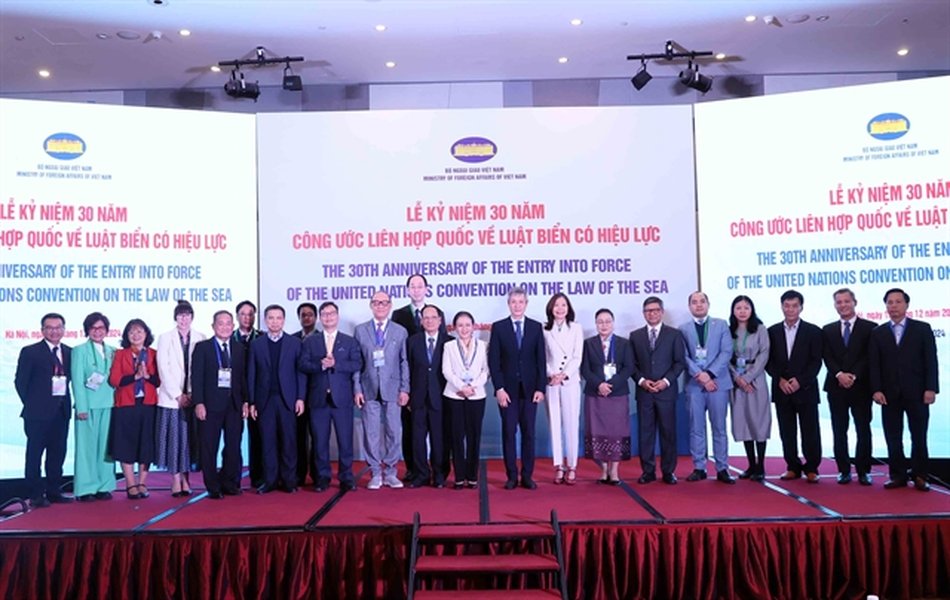
Flags of Vietnam and other countries, highlighting regional interest in maritime law.
The "Invisible Hand" in Action
The "invisible hand" of the U.S. in the 2016 arbitration can be observed through several avenues:
Diplomatic Support for the Philippines:
The U.S. has a long-standing alliance with the Philippines. While not directly involved in the arbitration proceedings, U.S. diplomatic support for the Philippines and its emphasis on a rules-based international order provided a backdrop for Manila's decision to pursue legal action. This support, including statements urging peaceful resolution of disputes and adherence to international law, likely encouraged the Philippines to seek arbitration under UNCLOS.Advocacy for UNCLOS Principles:
Even as a non-party, the U.S. actively promotes key UNCLOS principles, particularly freedom of navigation and overflight. By consistently advocating for these rights in the South China Sea, the U.S. reinforces the relevance and importance of the convention, indirectly supporting the legal framework upon which the Philippines' case was built.Criticism of China's Actions:
The U.S. has been a vocal critic of China's assertive actions in the South China Sea, including its land reclamation activities and militarization of disputed features. This criticism, often framed in the context of international law and the need to respect the rights of other nations, adds international pressure on China and highlights the broader implications of its disregard for the arbitral ruling.Limitations of the "Invisible Hand"
Despite its influence, the U.S.'s non-party status to UNCLOS presents limitations. China and other critics have pointed to the U.S.'s failure to ratify the convention as an instance of hypocrisy, undermining its moral standing and its ability to directly compel China to comply with the ruling. As a non-party, the U.S. cannot directly utilize the dispute settlement mechanisms of UNCLOS against China or other states regarding maritime claims. This limits its legal options and necessitates reliance on diplomatic pressure, FONOPs, and support for allies.
The lack of U.S. ratification also means that the U.S. is not subject to the compulsory binding dispute settlement provisions of UNCLOS, which some argue could be beneficial for resolving potential disputes involving U.S. maritime activities. However, proponents of non-ratification argue that it preserves U.S. sovereignty and prevents it from being subjected to potentially unfavorable international rulings.
The 2016 Ruling and its Aftermath
The 2016 arbitral ruling was a significant legal victory for the Philippines and was welcomed by many countries that support a rules-based international order. However, China rejected the ruling, calling it "null and void" and refusing to abide by it. China has since continued to assert its claims in the South China Sea through various means, including the construction of artificial islands and the deployment of military assets.
The aftermath of the ruling has seen continued tensions in the South China Sea. While the ruling provided legal clarity on certain issues, its enforcement remains a challenge due to China's non-compliance. The U.S. and its allies have continued to conduct FONOPs and advocate for the importance of the ruling, but China's actions have demonstrated the limitations of international legal judgments without strong enforcement mechanisms.
This video discusses the question of why the U.S. has not ratified UNCLOS despite considering it legitimate, highlighting a key aspect of the U.S. stance in maritime affairs.
The U.S. has continued to emphasize the importance of the 2016 ruling in its diplomatic engagements. For example, in recent years, the U.S. State Department has issued statements on the anniversary of the award, reiterating its support for the decision and calling on China to comply with its obligations under international law. This consistent messaging, coupled with FONOPs and diplomatic initiatives, constitutes the ongoing "invisible hand" of the U.S. in seeking to uphold the principles affirmed by the arbitral tribunal.
Arguments for and Against U.S. Ratification of UNCLOS
The debate over whether the U.S. should ratify UNCLOS is ongoing and complex. Proponents argue that ratification would strengthen the U.S.'s position in maritime disputes, enhance its ability to shape the future of ocean governance, provide a more stable legal framework for U.S. maritime activities, and remove the perception of hypocrisy. They contend that joining the treaty would give the U.S. a stronger voice in international forums and bolster its credibility as a defender of international law.
Conversely, opponents of ratification raise concerns about the potential loss of sovereignty, the possibility of being subjected to unfavorable rulings by international tribunals, and issues related to the seabed mining regime established by the convention. They argue that the U.S. already benefits from the principles of UNCLOS as customary international law and that ratification would impose unnecessary constraints on U.S. military and economic activities.
Here is a summary of some key arguments:
| Arguments for U.S. Ratification | Arguments Against U.S. Ratification |
|---|---|
| Strengthens U.S. standing in maritime disputes (e.g., South China Sea). | Concerns about loss of U.S. sovereignty. |
| Enhances ability to shape international maritime law and norms. | Potential for unfavorable rulings from international tribunals. |
| Provides a more stable legal framework for U.S. economic and military activities at sea. | Issues with the International Seabed Authority and seabed mining provisions. |
| Removes the perception of hypocrisy when urging other nations to comply with UNCLOS. | Belief that the U.S. already benefits from UNCLOS as customary international law. |
| Increases U.S. influence in international maritime organizations. | Domestic political opposition and the requirement for a two-thirds Senate vote. |
Ultimately, the decision of whether to ratify UNCLOS rests with the U.S. Senate. While the executive branch has often expressed support for ratification, overcoming the political hurdles has proven challenging.
The South China Sea Arbitration in the Context of International Law
The South China Sea arbitration case highlights both the strengths and limitations of international law and dispute settlement mechanisms. While the arbitral ruling provided a clear legal interpretation of UNCLOS as it applies to the South China Sea, its effectiveness in resolving the dispute is hampered by China's non-compliance. This underscores the fact that the enforcement of international law often depends on the willingness of states to comply and the political and diplomatic pressure that can be brought to bear.
The case also demonstrated the importance of UNCLOS as the foundational legal instrument for governing the oceans. Despite the challenges, the convention provides a framework for addressing complex maritime issues and offers mechanisms for peaceful dispute resolution. The international community's response to the ruling, including statements of support from various countries, reinforces the significance of UNCLOS in maintaining order and stability in the maritime domain.
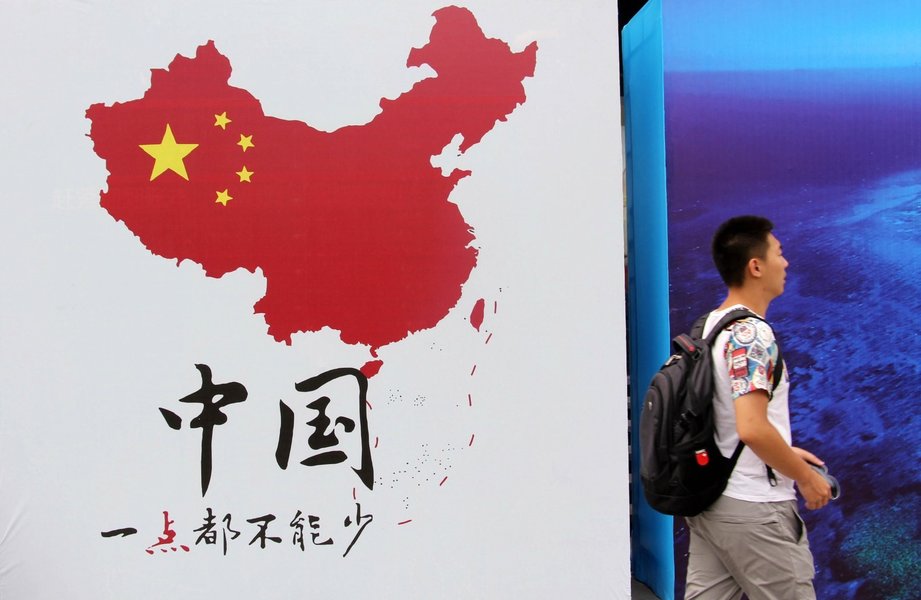
Illustration symbolizing the intersection of law and maritime issues.
The U.S.'s role in the South China Sea, even as a non-party to UNCLOS, remains influential. Its continued advocacy for a rules-based international order, its freedom of navigation operations, and its support for allies contribute to the complex dynamics of the region. While the "invisible hand" of the U.S. may not have directly controlled the outcome of the arbitration, it certainly shaped the environment in which the case took place and continues to influence the ongoing efforts to address the South China Sea disputes.
FAQ
Recommended Further Exploration
- How do US Freedom of Navigation Operations relate to the South China Sea disputes?
- What is the basis of China's nine-dash line claim and how does it conflict with international law?
- What has been the impact of the South China Sea arbitration ruling on regional stability?
- How do the dispute settlement mechanisms under UNCLOS function?
References
Last updated May 20, 2025