
Top 10 U.S. Metropolitan Markets for Tower Crane & Hoist Demand in High-Rise Construction
In-depth analysis of markets, trends, and future forecasts for urban high-rise projects
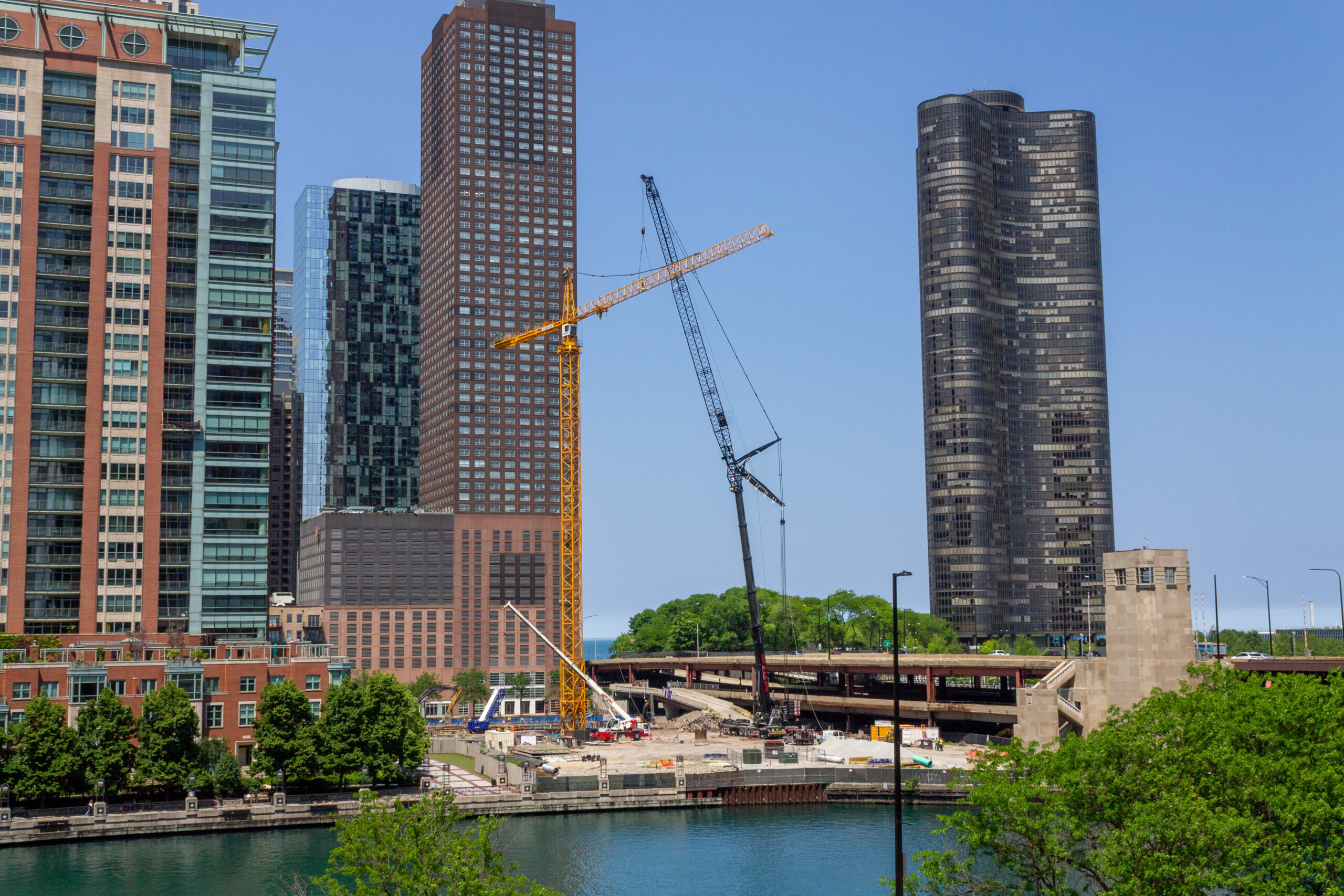
Highlights
- Urban Expansion & Economic Growth: Metropolitan areas with strong economic indicators are leading high-rise building activity.
- Competitive Landscape & Regulatory Impact: Key players and government policies shape demand for advanced crane technologies.
- Future Demand Forecast: Conservative growth projections driven by steady urban development and evolving construction techniques.
Introduction
The market for tower cranes and material hoists is linked intricately to the construction and urban development sectors. The current analysis identifies and examines the top 10 U.S. metropolitan markets where demand for tower cranes and hoists is exceptionally high in high-rise (5+ story) construction projects. The study focuses on key factors such as construction activity, economic performance, urban expansion, competitive dynamics, and regulatory factors that influence market conditions.
Increasing urbanization, robust economic health, and infrastructural investments have led major cities to deploy innovative construction techniques and advanced lifting technologies. This analysis employs market data, permitting trends, and regional economic indicators to determine market demand and project the future growth of tower crane usage over a five-year horizon.
Methodology
Market analysis is built upon a synthesis of construction economic trends, urban expansion rates, and permitting records from key metropolitan areas. Quantitative data such as construction value, current crane counts, and urban expansion percentages have been combined with qualitative insights on the competitive landscape and key regulatory policies. These elements have been mapped against future demand projections using a compound annual growth rate (CAGR) methodology to estimate market trends over the next five years.
Market Overview
The tower crane market in the U.S. is witnessing steady growth due to heightened urbanization and infrastructure modernization. With the overall U.S. construction market expected to reach trillions of dollars, the demand for lifting equipment such as tower cranes and material hoists in residential, commercial, and mixed-use construction projects is on an upward trajectory.
Key factors driving this surge include:
Economic and Urban Expansion
Metropolitan regions showing the fastest urban expansion are key drivers of construction activity. The escalation in population, coupled with the development of infrastructure such as roads, bridges, and transit networks, creates favorable conditions for high-rise investments. In cities like New York, Los Angeles, and Seattle, the demand for advanced lifting systems is further fueled by economic growth and consistent investment in urban renewal projects.
Competitive Landscape
The role of dominant developers, construction firms, and equipment suppliers has significantly boosted market competitiveness. Industry giants invest in modernizing their fleets by incorporating automated, safety-enhanced tower cranes. Companies including global manufacturers are at the forefront of employing digital construction technologies that integrate real-time data analytics, safety monitoring, and operational efficiency improvement.
Regulatory Factors
Government initiatives such as the Infrastructure Investment and Jobs Act and local policy reforms aimed at facilitating safer construction practices have created an environment that encourages technological upgrades in crane operations. These regulations, while ensuring safety compliance, often lead to accelerated permit processes that aid in maintaining a consistent flow in high-rise construction.
Top 10 U.S. Metropolitan Markets Analysis
Market Ranking and Key Metrics
The following table provides an overview of the top metropolitan markets with high demand for tower cranes in high-rise projects. Metrics include approximate construction value, urban expansion rates, current operational crane counts, and key developers or projects that define market activity.
| Rank | Metropolitan Area | Construction Value (approx.) | Urban Expansion (%) | Current Crane Count | Key Projects/Developers |
|---|---|---|---|---|---|
| 1 | New York City, NY | $75 billion | 5.5 | 120+ | Hudson Yards, Manhattan West - Turner Construction, Tishman Realty |
| 2 | Los Angeles, CA | $55 billion | 5.0 | 80-100 | Downtown LA Revitalization - Webcor Builders, Clark Construction |
| 3 | Seattle, WA | $40 billion | 4.8 | 65+ | Amazon HQ2, Downtown Expansion - Lease Crutcher Lewis, Sellen Construction |
| 4 | Chicago, IL | $35 billion | 4.5 | 50-70 | Riverline, South Loop - Clark Construction Group, McHugh Construction |
| 5 | San Francisco, CA | $30 billion | 4.2 | 40-60 | Transbay Terminal, Mission Rock - Swinerton Builders, Webcor |
| 6 | Washington, D.C. | $28 billion | 3.9 | 30-50 | The Wharf, Navy Yard - Hensel Phelps, Balfour Beatty |
| 7 | Boston, MA | $25 billion | 4.0 | 40+ | Fenway Area Developments - Suffolk Construction, Turner Construction |
| 8 | Dallas, TX | $23 billion | 4.2 | 85 (estimate) | Urban Renewal Projects - Austin Commercial, Rogers-O’Brien |
| 9 | Denver, CO | $22 billion | 4.0 | 20-30 | Union Station Revitalization - Haselden Construction, Mortenson |
| 10 | Miami, FL | $20 billion | 3.8 | 30-40 | Miami Worldcenter, Downtown Projects - Plaza Construction, Coastal Construction |
This table captures the multifaceted dimensions of market activity, with cities like New York and Los Angeles topping the listings due to their high construction value, dense urban expansion rates, and strong presence of competitive developers.
Competitive Analysis
The competitive landscape in the tower crane and material hoist market is marked by a high concentration of experienced developers, general contractors, and equipment suppliers. The markets are heavily influenced by iconic development projects, collaborative partnerships, and advanced technological integration.
Key Industry Players and Their Strategies
Leading manufacturers and rental companies actively invest in emerging technologies to enhance safety, efficiency, and operational reliability.
- Equipment Manufacturers: Prominent companies are investing in next-generation tower crane automation, remote monitoring, and safety systems. Their enhanced offerings are frequently adopted by major contractors engaged in high-rise projects, ensuring smooth operations on dense urban sites.
- Developers and Contractors: Top-tier developers such as those driving projects in New York, Los Angeles, and Seattle collaborate with well-established construction firms. This collaboration is essential to manage complex execution phases of high-rise and mixed-use developments, ensuring each project meets stringent regulatory and safety standards.
- Rental and Leasing Services: Due to the high capital expenditure required for purchasing equipment, many firms choose flexible rental or leasing models. This financial flexibility enables companies to deploy state-of-the-art cranes when needed and adapt to changing project scales.
Several metropolitan regions continue to see intensified competition as local government initiatives promote sustainability and cost-effective constructions. This environment is prompting industry players to streamline permit processes and invest in digital transformation, which supports not only traditional construction but also the emerging smart city paradigm.
Five-Year Market Trends and Future Demand Forecast
Over the next five years, the demand for tower cranes and material hoists in high-rise construction is projected to grow steadily. Utilizing a CAGR model in line with current trends, analysts expect further market consolidation and technological innovation.
Construction Activity and Economic Outlook
The U.S. construction sector is poised for consistent growth based on several key indicators:
- Rising Residential and Mixed-use Developments: Record growth in single-family as well as multi-family housing projects is driving a corresponding increase in high-rise construction, which necessitates advanced lifting solutions.
- Robust Commercial Projects: While some non-residential segments face temporary slowdowns, areas such as technology, healthcare, and educational infrastructures continue to require updated construction methods involving specialized cranes.
- Urban Expansion and Infrastructure Investments: The continued urban sprawl in metropolitan areas, especially those experiencing population influx, sustains the market for tower cranes in construction projects. Expansion in urban boundaries directly correlates with increased vertical construction aimed at maximizing space utilization.
Technological Advancements & Regulatory Impact
The implementation of cutting-edge crane technologies including automation, remote diagnostics, and advanced navigation systems is expected to further drive demand. Concurrently, stricter safety and performance regulations are compelling companies to modernize their equipment, creating opportunities for suppliers and rental firms to capture additional market share.
An anticipated CAGR of around 3-6% over the next five years reflects these diversified and evolving market forces. Urbanized markets such as New York City and Los Angeles are especially likely to experience continued growth, driven by both public infrastructure investments and private sector development.
Future Demand Forecast and Investment Outlook
Based on current trends and economic forecasts across major metropolitan regions, the following insights provide a robust future demand outlook:
- New York City: With a towering skyline and robust construction pipeline, New York’s demand for tower cranes is expected to remain high. Ongoing mega projects like Hudson Yards and other mixed-use developments solidify its ranking as the number one market for new crane installations.
- Los Angeles and Seattle: These cities, driven by both commercial and residential high-rise projects, are set to experience strong growth, aided by innovative construction practices and improved permitting processes.
- Secondary Markets: Cities such as Chicago, San Francisco, and Washington, D.C. are likely to see moderate increases in demand as new urban projects and infrastructural upgrades are planned. These markets, while diverse in their project portfolios, promise steady growth fueled by revitalization efforts and public investment.
The future forecast involves increasing adoption of integrated construction technologies that enhance operational safety and efficiency, thereby further driving the competitive edge of firms that invest early in modern equipment. This climate of innovation, combined with steady urban expansion, is expected to fuel a sustained period of market growth across the top 10 metropolitan regions.
Supporting Charts and Visualizations
Construction Value & Crane Count Overview
While detailed charts are not rendered here directly, conceptual representations can be summarized as follows:
- A bar chart comparing construction values (in billions of dollars) across the top 10 markets, highlighting New York City and Los Angeles as leaders.
- A line chart displaying historical five-year trends in active crane counts across these regions, with slight variations showing stability in New York and Seattle.
- A pie chart depicting the percentage share of residential versus commercial high-rise projects, underscoring the dominance of mixed-use developments in fostering crane demand.
These visualizations greatly assist stakeholders in understanding the proportional contributions of each metropolitan market to overall industry demand.
Competitive Analysis Table
An additional table, detailed below, categorizes key participants in the market by their roles and strategies:
| Category | Key Entities | Strategic Focus |
|---|---|---|
| Equipment Manufacturers | Liebherr, Manitowoc, Terex, Konecranes | Adopting advanced automation and integrating digital safety features |
| Developers & Contractors | Turner Construction, Tishman Realty, Clark Construction, Webcor Builders | Focusing on large-scale urban redevelopment and high-rise construction projects |
| Rental & Leasing Firms | Local and International equipment rental companies | Providing flexible leasing models to adapt to project-specific demands |
| Regulatory Architects | Local Government Bodies | Streamlining permitting processes, ensuring safety and compliance standards |
Analysis and Insights by Key Regions
New York City, NY
New York City maintains its leadership due to a combination of dense urban infrastructure projects and significant capital investments in commercial and mixed-use developments. The presence of flagship projects, such as Hudson Yards and Manhattan West, drives a persistent need for advanced cranes. The competitive contractor ecosystem further ensures that the latest technologies are rapidly adopted, reinforcing the city’s market position.
Los Angeles, CA
In Los Angeles, urban densification and downtown revitalization are responsible for a sharp uptrend in crane demand. Despite some regulatory challenges, the drive toward sustainability and innovative construction solutions has spurred major projects that demand state-of-the-art lifting equipment.
Seattle, WA
Seattle's growth is underpinned by technology-driven urban redevelopment. With strong investments from global corporations and high-tech industry growth, the demand for modern tower cranes remains robust, reflecting both stability and gradual market expansion.
Chicago, IL and San Francisco, CA
Although these cities experience a slightly moderated growth rate, continued urban renewal and mixed-use development projects ensure consistent equipment needs. The regulatory environment and operational practices in these markets favor modern equipment adaptations, thereby making them attractive for ongoing investments.
Secondary Markets: Washington, D.C., Boston, Dallas, Denver, and Miami
Each of these metropolitan areas displays strong potential due to their focused urban expansion strategies and targeted infrastructure investments. Case studies from these regions highlight both governmental and private sector efforts to incentivize construction through improved permitting and tax benefits. This, in turn, drives a moderate but steady surge in demand for specialized lifting systems.
Conclusion and Final Thoughts
In summary, the U.S. tower crane and hoist market for high-rise construction is marked by significant growth opportunities, particularly in metropolitan areas exhibiting rapid urban expansion and robust construction activity. New York City, Los Angeles, and Seattle lead the pack with their impressive construction values, high operating crane counts, and aggressive deployment of innovative construction solutions. Meanwhile, secondary markets like Chicago, San Francisco, and Washington, D.C. offer stable growth, driven by continuous urban renewal and infrastructure investments.
Key factors that support the long-term market outlook include technological advancements in crane automation, evolving regulatory frameworks that promote safety, and an overall shift towards smarter, more efficient construction practices. With construction activity set to expand—bolstered by rising residential and commercial projects—the market is well-positioned to register a compound growth rate that reflects increased capital investment and pioneering technology integration.
Stakeholders in the tower crane and material hoist sector should consider the competitive dynamics and economic drivers discussed here as they strategize for long-term investments. The integration of cutting-edge digital systems and streamlined government policies will likely catalyze further efficiency improvements, ensuring that these top metropolitan markets remain hubs of high-rise innovation for years to come.
References
- Tower Crane Market - Size, Trends, Industry Share & Growth - Mordor Intelligence
- US Construction Starts 2025 Growth Forecast by Sector - ConstructConnect
- Tower Crane Market Report - IMARC Group
- Tower Crane Market Demand Outlook 2025 - Future Market Insights
- Tower Crane Market Booms in 2024 - Crane Briefing
Recommended Related Queries
Last updated February 27, 2025