
Unlock Your U.S. Tax Obligations: A Foreign Investor's Guide to U.S. Limited Partnerships
Navigating forms, withholding, and filing requirements as a non-resident partner in a U.S. LP.
Investing in a U.S. limited partnership (LP) as a foreign resident (nonresident alien without U.S. citizenship or a green card) triggers specific U.S. tax responsibilities. Understanding these obligations, the necessary forms, and filing procedures is crucial for compliance. Your tax situation primarily hinges on whether the partnership generates income considered "effectively connected" with a U.S. trade or business.
Essential Insights: Key Takeaways
- Filing Requirement Likely: If the U.S. partnership engages in a U.S. trade or business, generating Effectively Connected Income (ECI), you are generally required to file Form 1040-NR, U.S. Nonresident Alien Income Tax Return, to report your share.
- Partnership Withholding: The U.S. partnership is legally obligated to withhold taxes on your behalf. This includes withholding under Section 1446 on your share of ECI and potentially a 30% withholding (or lower treaty rate) on other U.S. source income like dividends or interest (FDAP income).
- Crucial Forms: You will receive Schedule K-1 (Form 1065) and Form 8805 from the partnership detailing your income share and withheld taxes. You may need to provide Form W-8BEN to the partnership to certify your foreign status and claim treaty benefits.
Understanding Your U.S. Tax Status and Income Types
Nonresident Alien Status
As a foreign resident without U.S. citizenship or a green card investing in a U.S. entity, you are classified as a nonresident alien for U.S. tax purposes. This status dictates how your U.S.-sourced income is taxed.
Income Classification is Key
The nature of the income you receive from the partnership determines your tax obligations:
Effectively Connected Income (ECI)
If the U.S. limited partnership is "engaged in a U.S. trade or business" (e.g., operating a business, providing services, or holding U.S. real estate generating operational income), its activities are attributed to you, the partner. Your share of the partnership's income from these activities is considered ECI. ECI is taxed at the same graduated rates that apply to U.S. citizens and residents. You will need to file a U.S. tax return (Form 1040-NR) to report ECI and calculate the tax due, though the partnership will likely have already withheld tax on this income.
Fixed, Determinable, Annual, or Periodical (FDAP) Income
This category includes U.S.-source income that is *not* ECI, such as dividends, certain types of interest, rents, and royalties. FDAP income is generally subject to a flat 30% withholding tax levied at the source (by the partnership or paying agent). This rate may be reduced or eliminated if a tax treaty exists between the U.S. and your country of residence. Often, if your only U.S. income is FDAP and the correct amount of tax was withheld, you may not need to file a U.S. tax return, but filing might be necessary to claim a refund if too much tax was withheld or if you also have ECI.
The Partnership's Role: Withholding Obligations
A significant aspect of the U.S. tax system for foreign partners involves withholding at the source. The responsibility for this withholding lies with the U.S. partnership.
Section 1446 Withholding on ECI
Under Internal Revenue Code (IRC) Section 1446, U.S. partnerships are required to withhold tax on a foreign partner's allocable share of ECI.
- Rate: The withholding is generally done at the highest applicable U.S. individual or corporate tax rate (currently up to 37% for individuals).
- Payment Schedule: The partnership must typically make quarterly estimated withholding tax payments to the IRS throughout its tax year, using Form 8813, Partnership Withholding Tax Payment Voucher (Section 1446).
- Annual Reporting: Annually, the partnership files Form 8804, Annual Return for Partnership Withholding Tax (Section 1446), summarizing the total ECI and withheld tax for all foreign partners.
- Partner Notification: Crucially for you, the partnership must provide you with Form 8805, Foreign Partner's Information Statement of Section 1446 Withholding Tax. This form details *your* share of ECI and the amount of tax withheld on your behalf. You need this form to claim the withholding as a credit on your U.S. tax return.
Withholding on FDAP Income
For FDAP income distributed or allocated to you, the partnership (or another withholding agent) must withhold tax at a 30% rate, unless a tax treaty provides a lower rate and you have provided the necessary documentation (Form W-8BEN) to claim treaty benefits. This withholding is often reported to you on Form 1042-S, Foreign Person's U.S. Source Income Subject to Withholding.
Your Filing Obligations as a Foreign Partner
Even though the partnership withholds taxes, you likely have your own filing requirements, especially if you have ECI.
When Do You Need to File?
You generally must file Form 1040-NR if:
- You were engaged in a U.S. trade or business during the year. Being a partner in a partnership engaged in a U.S. trade or business usually means you are considered so engaged.
- You have U.S. income on which the tax liability was not fully satisfied by withholding at the source.
- You wish to claim a refund of over-withheld taxes.
- You wish to claim deductions or credits against your ECI.
- You need to claim treaty benefits on certain types of income not automatically granted via withholding agents.
The Primary Form: Form 1040-NR
Form 1040-NR, U.S. Nonresident Alien Income Tax Return, is the main document you'll use.
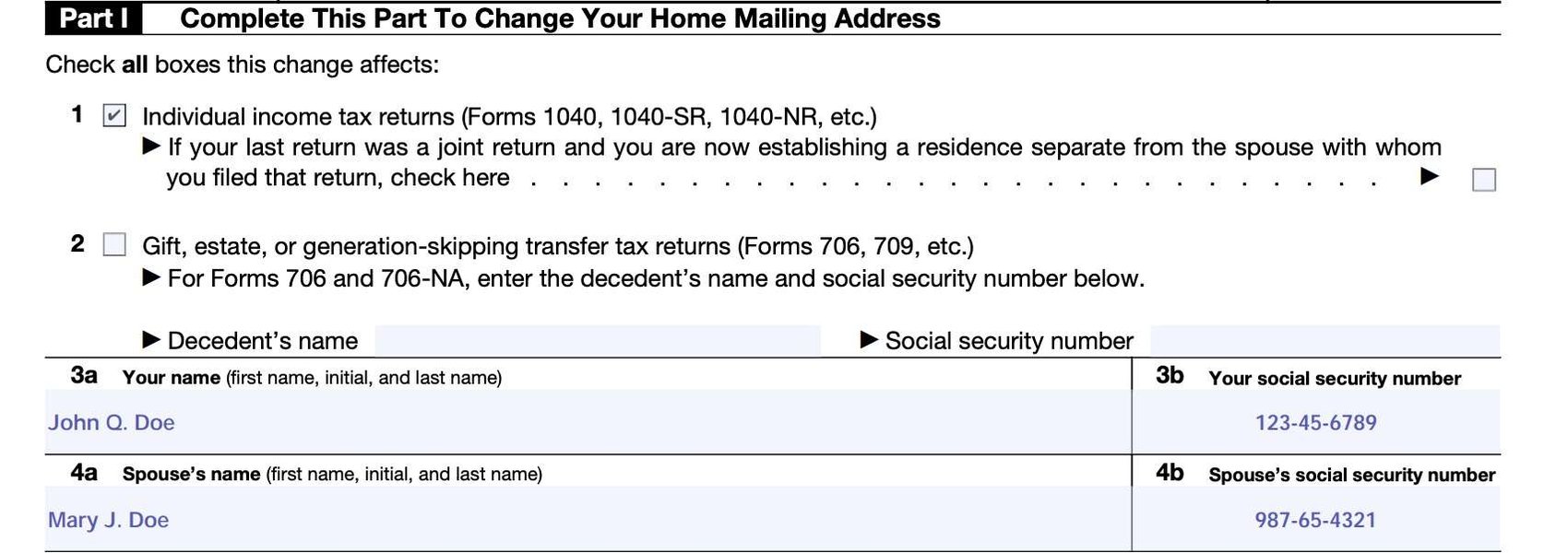
Sample image illustrating the layout of an IRS form. Form 1040-NR is used by nonresident aliens.
- Purpose: To report your U.S.-sourced income (both ECI and potentially FDAP), calculate your U.S. tax liability, claim allowable deductions and credits, and reconcile the tax withheld by the partnership (using information from Form 8805 and potentially Form 1042-S).
- Supporting Documents: You must attach copies of relevant forms you received, such as Schedule K-1 (Form 1065) and Form 8805.
- Schedules: Depending on your situation, you may need to attach other schedules, such as Schedule NEC (for computing tax on income not effectively connected, though ECI tax is calculated directly on Form 1040-NR) or Schedule A (for itemized deductions if applicable).
Information Provided by the Partnership
To complete Form 1040-NR correctly, you will rely heavily on information provided by the partnership:
- Schedule K-1 (Form 1065), Partner's Share of Income, Deductions, Credits, etc.: This crucial form details your specific share of the partnership's various income, loss, deduction, and credit items, categorized appropriately (e.g., distinguishing ECI from other income types).
- Form 8805, Foreign Partner's Information Statement of Section 1446 Withholding Tax: This form shows the amount of Section 1446 tax withheld by the partnership on your share of ECI. You claim this amount as a tax payment credit on your Form 1040-NR.
Example of a Form W-9, used by U.S. persons. Foreign partners typically use Form W-8BEN instead.
Key Tax Forms at a Glance
Navigating the various forms can be confusing. This table summarizes the most relevant forms for a foreign partner in a U.S. LP:
| Form Number | Form Name | Purpose | Who Handles It? |
|---|---|---|---|
| Form 1040-NR | U.S. Nonresident Alien Income Tax Return | Your annual U.S. tax return to report income (esp. ECI) and calculate tax/refund. | You (Foreign Partner) |
| Schedule K-1 (Form 1065) | Partner's Share of Income, Deductions, Credits, etc. | Reports your share of partnership items; needed to prepare Form 1040-NR. | Partnership provides to you. |
| Form 8805 | Foreign Partner's Information Statement of Section 1446 Withholding Tax | Reports Section 1446 tax withheld on your ECI; needed to claim credit on Form 1040-NR. | Partnership provides to you. |
| Form W-8BEN | Certificate of Foreign Status of Beneficial Owner for United States Tax Withholding and Reporting (Individuals) | Certifies your foreign status to the partnership; used to claim treaty benefits for reduced FDAP withholding. | You provide to Partnership |
| Form 8833 | Treaty-Based Return Position Disclosure Under Section 6114 or 7701(b) | Filed with Form 1040-NR if you take a position that a tax treaty overrules or modifies U.S. tax law. | You (if applicable) |
| Form 8804 | Annual Return for Partnership Withholding Tax (Section 1446) | Partnership's annual report to IRS summarizing total Section 1446 withholding. | Partnership files with IRS. |
| Form 8813 | Partnership Withholding Tax Payment Voucher (Section 1446) | Used by partnership to make quarterly Section 1446 withholding payments. | Partnership files with IRS. |
| Form 1042-S | Foreign Person's U.S. Source Income Subject to Withholding | Reports FDAP income paid to you and taxes withheld on it (non-ECI). | Partnership (or other withholding agent) provides to you and IRS. |
Certifying Your Status and Claiming Treaty Benefits
Form W-8BEN: Your Declaration
You will likely be asked by the U.S. partnership to provide Form W-8BEN. This form serves two primary purposes:
- Certify Foreign Status: It establishes that you are not a U.S. person, preventing backup withholding on certain payments.
- Claim Treaty Benefits: If your country of residence has an income tax treaty with the U.S., you can use Part II of Form W-8BEN to claim reduced withholding rates on specific types of FDAP income (like dividends or interest). You must provide a U.S. or foreign Taxpayer Identification Number (TIN) to claim treaty benefits.
Form 8833: Disclosing Treaty Positions on Your Return
While Form W-8BEN is used to claim treaty benefits with the withholding agent (the partnership), Form 8833 is used when filing your Form 1040-NR tax return. You generally need to file Form 8833 if you rely on a tax treaty to take a position that modifies or overrules a provision of the Internal Revenue Code, resulting in (or potentially resulting in) a reduction of U.S. tax. For example, if a treaty allows you to treat certain income as non-ECI when it otherwise would be, you might need to file Form 8833.
Visualizing Your Tax Obligations
This mindmap illustrates the core components of your U.S. tax situation as a foreign partner in a U.S. LP:
Relative Importance of Tax Compliance Aspects
Understanding where to focus your attention can be helpful. This chart provides a relative assessment of the importance and potential complexity of various aspects of U.S. tax compliance for a foreign partner. Scores are based on potential impact and effort required, not official metrics.
Key takeaways from the chart include the high importance of understanding income types (ECI/FDAP), filing Form 1040-NR correctly and on time when required, and properly utilizing the information from Schedule K-1 and Form 8805 to report income and claim withheld taxes accurately.
Where and When to File Form 1040-NR
Mailing Address
The mailing address for Form 1040-NR depends on whether you are enclosing a payment. Always refer to the official IRS instructions for Form 1040-NR for the tax year you are filing, as addresses can change. As of recent guidance, the typical addresses are:
- Without a payment enclosed:
Department of the Treasury Internal Revenue Service Austin, TX 73301-0215 USA - With a payment enclosed:
Internal Revenue Service
P.O. Box 1303
Charlotte, NC 28201-1303
USA
Some nonresident aliens may also be eligible to e-file Form 1040-NR through IRS-approved software providers.
Filing Deadlines
The deadline for filing Form 1040-NR depends on whether you received wages subject to U.S. income tax withholding:
- If you are an employee receiving wages subject to U.S. income tax withholding, the deadline is generally the 15th day of the 4th month after your tax year ends (April 15 for calendar year filers).
- If you did *not* receive wages subject to U.S. income tax withholding (which is common for partners receiving only partnership distributions/allocations), the deadline is generally the 15th day of the 6th month after your tax year ends (June 15 for calendar year filers).
Extensions may be available by filing Form 4868.
Relevant Video: Understanding U.S. Tax for Foreign Owners
While the following video discusses foreign-owned LLCs, many core concepts regarding U.S. taxation for foreign individuals investing in U.S. pass-through entities overlap with limited partnerships. Understanding ECI, withholding, and filing requirements are common themes. Note that LLCs and LPs have different legal structures and sometimes different default tax classifications, but the perspective of a foreign owner facing U.S. tax rules is relevant.
This video provides insights into the tax landscape encountered by foreign individuals involved in U.S. business structures, touching upon filing requirements and the importance of compliance, similar to the challenges faced by foreign partners in a U.S. LP.
Important Considerations
U.S. Taxpayer Identification Number (TIN)
To file a U.S. tax return (Form 1040-NR) and potentially to claim treaty benefits on Form W-8BEN, you will generally need a U.S. TIN. If you are not eligible for a Social Security Number (SSN), you may need to apply for an Individual Taxpayer Identification Number (ITIN) from the IRS using Form W-7, Application for IRS Individual Taxpayer Identification Number.
Penalties for Non-Compliance
Failure to file required returns or pay taxes owed can lead to significant penalties and interest charges. It's crucial to meet your obligations timely.
Seek Professional Advice
U.S. international tax law is complex. The information provided here is a general overview. Given the nuances of partnership taxation, ECI determination, treaty applications, and filing requirements, it is strongly recommended to consult with a qualified U.S. tax professional who specializes in international taxation and advising nonresident aliens. They can provide personalized advice based on your specific investment, income, country of residence, and treaty situation.
Frequently Asked Questions (FAQ)
Do I always have to file Form 1040-NR if I invest in a U.S. LP?
Not necessarily, but it's very likely if the partnership generates Effectively Connected Income (ECI). If the partnership is engaged in a U.S. trade or business, you are generally considered engaged as well and must file Form 1040-NR to report your share of ECI, even if tax was withheld. If the partnership *only* generated U.S.-source FDAP income (like portfolio interest or dividends) and the correct amount of tax was withheld at source (usually 30% or a lower treaty rate), you might not need to file. However, filing is required to claim a refund if too much tax was withheld or to claim deductions against ECI.
What if the partnership only has U.S.-source interest income?
Certain types of U.S.-source interest, like portfolio interest or bank deposit interest, are often exempt from U.S. tax for nonresident aliens. Other types of interest might be subject to the 30% FDAP withholding (or a lower treaty rate). If your *only* income from the partnership is exempt interest, you likely wouldn't need to file. If it's taxable interest (FDAP) and the correct tax was withheld via Form 1042-S, you might not need to file unless you want to claim a refund or have other U.S. filing requirements. However, you rely on the partnership correctly classifying and reporting this on your Schedule K-1 and handling withholding.
What exactly is a Schedule K-1?
Schedule K-1 (Form 1065) is an IRS form that U.S. partnerships use to report each partner's individual share of the partnership's income, losses, deductions, credits, and other relevant tax items. It separates different types of income (like ECI, dividends, interest, capital gains) because they may be taxed differently. You don't file the K-1 directly with the IRS yourself; instead, you use the information on the K-1 provided by the partnership to fill out your own tax return (Form 1040-NR).
What happens if I don't file a required U.S. tax return?
Failure to file a required U.S. tax return (like Form 1040-NR) or pay taxes owed can lead to penalties, including failure-to-file penalties, failure-to-pay penalties, and interest charges on the unpaid amount. Additionally, if you are due a refund, you generally must file within three years of the original due date to claim it. Consistent non-compliance can lead to more significant issues with the IRS.
How do tax treaties affect my U.S. tax obligations?
If your country of residence has an income tax treaty with the United States, it may offer benefits such as reduced withholding tax rates on certain types of FDAP income (like dividends or interest), specific rules for taxing business profits (ECI), or exemptions for certain types of income. To claim these benefits for withholding purposes, you typically provide Form W-8BEN to the partnership. If you take a treaty-based position on your tax return that alters standard U.S. tax rules, you may need to disclose it using Form 8833. Tax treaties are complex legal documents, and their application depends on the specific treaty and your circumstances; professional advice is often needed to interpret them correctly.
Recommended Further Exploration
- How do I apply for an ITIN as a foreign investor in a US partnership?
- What are the specific US tax rates for ECI applicable to nonresident aliens in 2025?
- Can a tax treaty eliminate the U.S. tax on my share of partnership ECI?
- Are there state tax obligations in addition to federal ones for a foreign partner in a U.S. limited partnership?
References
Last updated April 29, 2025